
Select Language:
21 Asian Countries and Their Native Names: A Cultural Overview
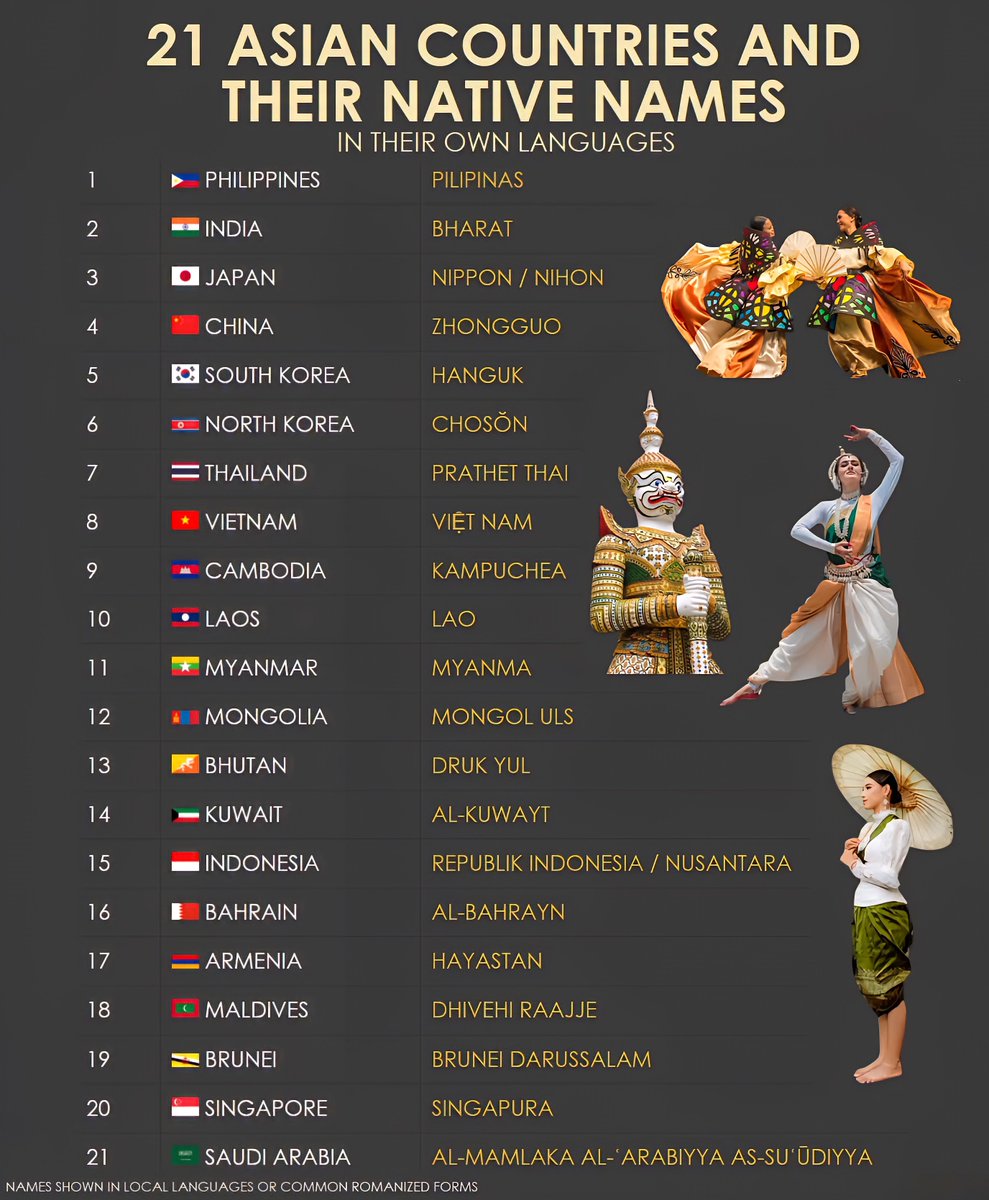
1. Philippines – Pilipinas
The Philippines is known locally as Pilipinas, a name that echoes its rich history influenced by Spanish colonization and native island cultures. The term is used universally within the country to refer to the nation and its people.
2. India – Bharat
In India, the country is called Bharat, derived from ancient Sanskrit texts. It conveys the nation’s deep-rooted cultural and historical identity and is officially recognized in the Constitution of India alongside the English name.
3. Japan – Nippon / Nihon
Japan is called Nippon or Nihon in its native language, which translates to “origin of the sun” or “Land of the Rising Sun.” These terms reflect Japan’s poetic imagery of the sunrise and its revered cultural heritage.
4. China – Zhongguo
Zhongguo is the Chinese name for China, meaning “Central Kingdom.” It embodies China’s ancient civilization, emphasizing its historical role as a central hub of culture and power in East Asia.
5. South Korea – Hanguk
South Korea’s native name Hanguk signifies the country’s rich history and language, rooted in its Korean dynasty traditions. It’s used officially and colloquially to denote the nation.
6. North Korea – Chosŏn
North Korea is called Chosŏn, representing its Korean heritage and identity. This name has historical significance, connected to the ancient Choson Kingdom that existed thousands of years ago.
7. Thailand – Prathet Thai
Prathet Thai translates to “Land of the Free,” emphasizing Thailand’s history of never being colonized by Western powers and its proud independence. The term is central to national identity and pride.
8. Vietnam – Việt Nam
Vietnam’s native name, Việt Nam, reflects its indigenous roots and history. The name symbolizes the unity of the Vietnamese people and their cultural resilience over centuries.
9. Cambodia – Kampuchea
Kampuchea is Cambodia’s traditional name, used officially during certain periods of its modern history. The name is rooted in the Khmer language, reflecting the nation’s deep cultural heritage.
10. Laos – Lao
Lao, simple yet profound, is both the country’s name and the demonym for its people. It echoes the language and cultural unity central to Laotian identity.
11. Myanmar – Myanma
In Myanmar, the country is known locally as Myanma, emphasizing its distinct historical and cultural identity compared to other Southeast Asian nations and resonating deeply with its citizens.
12. Mongolia – Mongol Uls
Mongol Uls translates to “Mongol Land,” a fitting name that celebrates the nation’s Mongolian roots and rich history of empire and nomadic culture.
13. Bhutan – Druk Yul
Druk Yul means “Land of the Thunder Dragon,” a legendary figure central to Bhutanese folklore. It symbolizes the country’s mystical landscapes and spiritual traditions.
14. Kuwait – Al-Kuwayt
The historic name Al-Kuwayt signifies Kuwait’s long-standing trading history and strategic location in the Persian Gulf. It remains the core of the nation’s identity.
15. Indonesia – Republik Indonesia / Nusantara
Indonesia’s official name, Republik Indonesia, highlights its republican governance, while Nusantara refers to the sprawling archipelago’s cultural unity, embracing its diverse islands.
16. Bahrain – Al-Bahrayn
Al-Bahrayn means “The Two Seas,” referring to Bahrain’s geography and its historical significance as a pearl trading hub in the Persian Gulf region.
17. Armenia – Hayastan
Hayastan roots back to ancient Armenia’s history, symbolizing national pride, cultural endurance, and the enduring spirit of the Armenian people.
18. Maldives – Dhivehi Raajje
The Maldives is known locally as Dhivehi Raajje, meaning “The Kingdom of the Dhivehi people.” It reflects the nation’s seafaring traditions and vibrant cultural identity.
19. Brunei – Brunei Darussalam
Brunei Darussalam translates to “Abode of Peace,” representing the country’s emphasis on harmony, Islamic faith, and its monarchy’s central role.
20. Singapore – Singapura
Singapore’s name Singapura means “Lion City,” reflecting its mythological origins and the city’s formidable growth as a financial and cultural hub in Southeast Asia.
21. Saudi Arabia – Al-Mamlaka Al-ʿArabiyya As-Suʿūdiyya
The official name, Al-Mamlaka Al-ʿArabiyya As-Suʿūdiyya, means “The Saudi Kingdom,” emphasizing the nation’s monarchical history and Arab heritage.
This list exemplifies how language reflects cultural identity, history, and pride across Asian nations. Each name carries stories, traditions, and historical legacies that continue to shape these countries into the vibrant nations we see today.
 ChatGPT
 Perplexity
 Gemini AI
 Grok AI