
Select Language:
South America’s Population Split: A Deep Dive into the Continent’s Demographic Divide
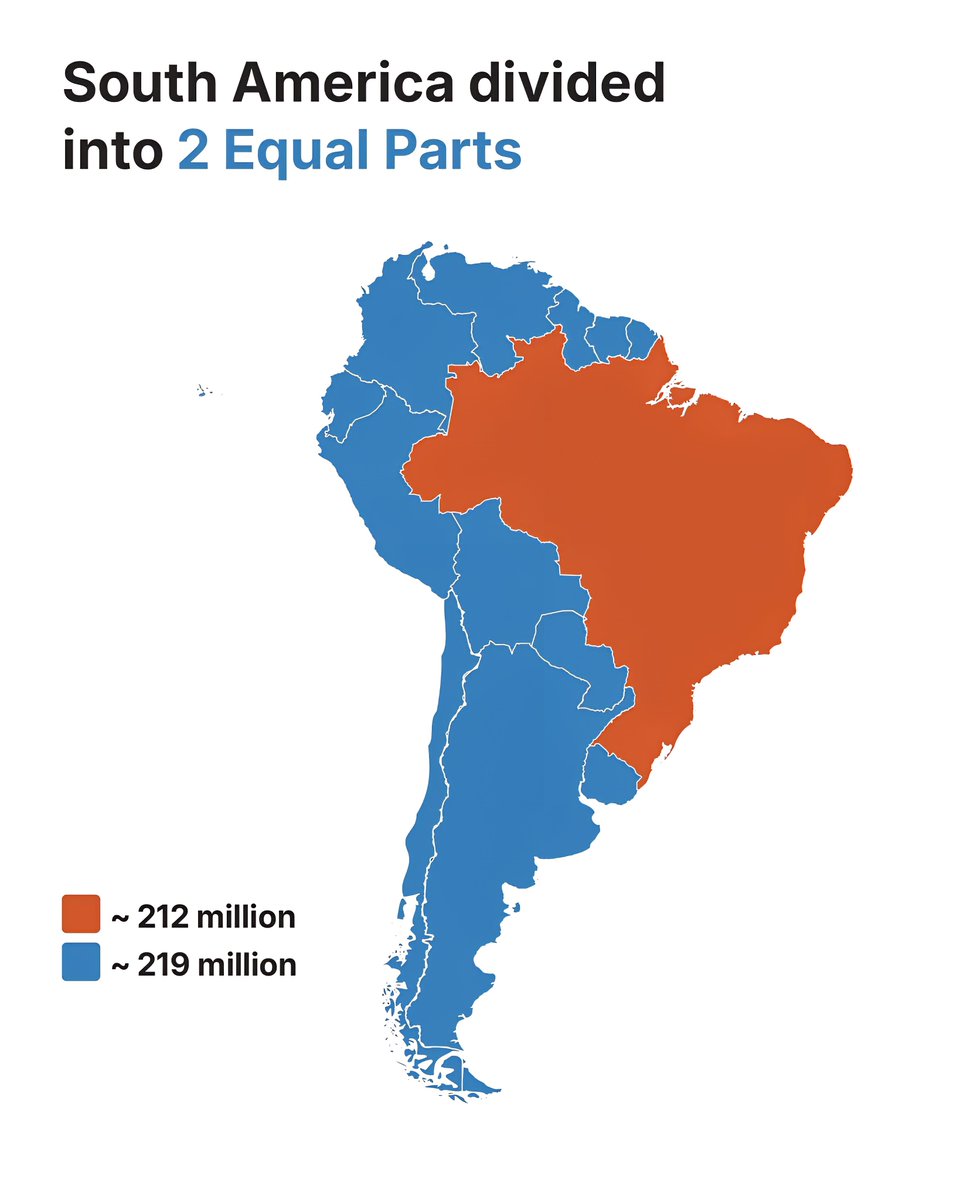
The continent of South America has long been known for its vibrant cultures, diverse landscapes, and rich history. As of 2025, a fascinating demographic trend has come to light: the population distribution across the continent is split nearly evenly into two halves. This equal division highlights some interesting socio-economic and geographical nuances that shape South America today.
Equal Population Distribution: Analyzing the Numbers
Recent data indicates that South America’s total population hovers around 431 million people, with approximately 212 million residing in one half of the continent and roughly 219 million in the other. This near parity in numbers signifies more than just statistical coincidence; it underscores the complex regional histories, development patterns, and urbanization trends across the continent.
1. The Western Half’s Demographic Profile
The western part of South America, generally encompassing the Andean nations and parts of the Amazon basin, accounts for approximately 212 million residents. Countries like Peru, Ecuador, Bolivia, and parts of Colombia and Venezuela are prominent in this region.
This half is characterized by:
- Mountainous Terrain and Dense Rainforests: The Andes mountain range dominates, influencing settlement patterns.
- Urban Centers: Major cities such as Lima, Quito, and La Paz serve as economic and cultural hubs.
- Economic Divergence: Traditional economies based on agriculture, mining, and natural resource extraction prevail.
- Population Density: Less densely populated compared to the eastern half, owing to challenging geography.
2. The Eastern Half’s Demographic Profile
Conversely, the eastern portion, comprising Brazil’s extensive interior along with northeastern countries like Guyana, Suriname, and parts of French Guiana, holds about 219 million inhabitants.
This region is distinguished by:
- Vast Lowlands and Coastal Areas: The Amazon River Basin and Atlantic coastlines create fertile ground for urban development.
- Major Megacities: São Paulo, Rio de Janeiro, and Brasília are among the world’s largest urban areas, fueling the region’s growth.
- Economic Activity: Dominance of manufacturing, service industries, and agricultural exports.
- Population Concentration: Significantly more urbanized, with sprawling metropolises that attract millions.
3. Geographic and Cultural Implications of the Split
The nearly even population split isn’t just about numbers; it points to profound geographic and cultural differences between the two halves:
- Climate and Environment: The western side is more diverse in ecosystems, with high-altitude deserts and lush rainforests, limiting large-scale urban growth.
- Cultural Diversity: Indigenous communities are more prominent in the western parts, while the eastern region exhibits more urban cosmopolitanism influenced by European colonization.
- Development Disparities: The eastern half benefits from more extensive infrastructure, ports, and international trade routes thanks to its proximity to the Atlantic Ocean.
4. Urbanization and Future Population Trends
South America’s urbanization rate has accelerated over the past decade, particularly in the eastern region. As of 2025:
- Over 80% of the population resides in cities, forecasting growing metropolitan infrastructures.
- Migration from rural areas to urban centers continues, driven by economic opportunities and infrastructural development.
Meanwhile, the western half maintains more balanced population densities due to the geographical restrictions imposed by mountains and forests, but it faces challenges like infrastructural deficits and environmental conservation concerns.
5. Socioeconomic Outlook for South America
This demographic balance presents both opportunities and challenges:
- Economic Integration: Countries on both sides could benefit from increased cooperation, balancing resources, and trade.
- Environmental Preservation: The western half’s ecosystems, especially the Amazon rainforest, require sustainable management amid increasing population strains.
- Infrastructure Development: Improving connectivity between the two regions can facilitate economic growth and social cohesion.
6. The Road Ahead: Strategic Planning for a Balanced Future
South America’s nearly equal population distribution sets the stage for new development strategies:
- Fostering economic growth while preserving the environment.
- Investing in transportation and communication networks to bridge regional disparities.
- Promoting inclusive policies to ensure balanced development and social stability.
The evenly split population highlights the vibrant diversity and resilience of South America. As the continent continues to evolve in the global landscape, understanding the demographic nuances becomes crucial in shaping policies that foster sustainable growth and cultural harmony.
Note: All data is current as of 2025 and reflects ongoing demographic trends across South America.
 ChatGPT
 Perplexity
 Gemini AI
 Grok AI