
Select Language:
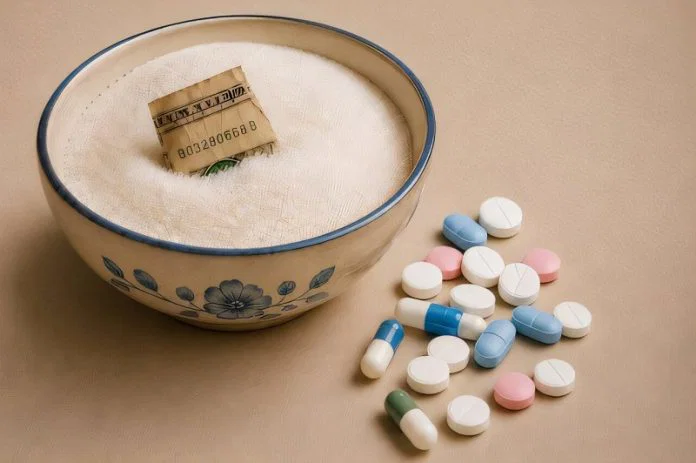
Scientists have found an unexpectedly simple way to produce essential medications using just two common ingredients: table sugar and vinegar. This new approach has the potential to make the manufacturing of life-saving drugs more affordable and accessible, ultimately helping more people worldwide get the medicines they need.
The breakthrough was led by researchers from the University of Bristol in the UK and Scripps Research in the U.S. Their findings appeared in the journal Nature.
This innovative method centers on creating a specific type of molecule known as a C-glycoside. Although the name sounds technical, these molecules are already key components in several widely prescribed medicines. They are especially vital in drugs used to treat type 2 diabetes, heart failure, and chronic kidney disease.
Sugars, or carbohydrates, are crucial for the human body—they store energy and facilitate cell communication. Because of their compatibility within the body, scientists have long sought to harness sugars for medication development. However, modifying sugars to produce drugs often involved complex, costly, and hazardous manufacturing processes, requiring many steps and dangerous chemicals.
Now, the researchers have devised a much simpler method. They discovered that by combining a sugar molecule with a common chemical—acetic acid, the main ingredient in vinegar—they can prepare the sugar to form a stable carbon-carbon bond necessary for creating effective drugs. This approach makes the process faster, safer, and far less expensive.
Professor Varinder Aggarwal from the University of Bristol explained that this discovery could revolutionize drug manufacturing. Thanks to its simplicity and use of inexpensive starting materials, the new method could become the standard for producing these vital medicines.
To test their approach, the team produced several well-known diabetes drugs called SGLT2 inhibitors—dapagliflozin, canagliflozin, and empagliflozin. These drugs work by preventing the kidneys from reabsorbing too much glucose into the bloodstream, which helps lower blood sugar levels. These medications are used by millions worldwide and generate a global market exceeding $20 billion annually.
Professor Phil Baran from Scripps Research highlighted the ease of the process, noting that nearly any basic laboratory could produce these drugs using readily available supplies. The team deliberately chose not to patent the new method, hoping that generic drug companies will adopt it to lower medicine prices and make treatments more affordable.
Furthermore, the researchers demonstrated that their process could be scaled up. Using inexpensive dextrose powder from a local pharmacy and simple household vinegar, they successfully produced several approved diabetes medicines and other complex compounds that had previously required more elaborate manufacturing steps.
Looking ahead, the scientists believe this straightforward chemistry could pave the way for developing many new sugar-based medications. If pharmaceutical companies embrace this technique, it could lead to reduced production costs, faster manufacturing times, and more affordable medicines for people around the world.
 ChatGPT
 Perplexity
 Gemini AI
 Grok AI