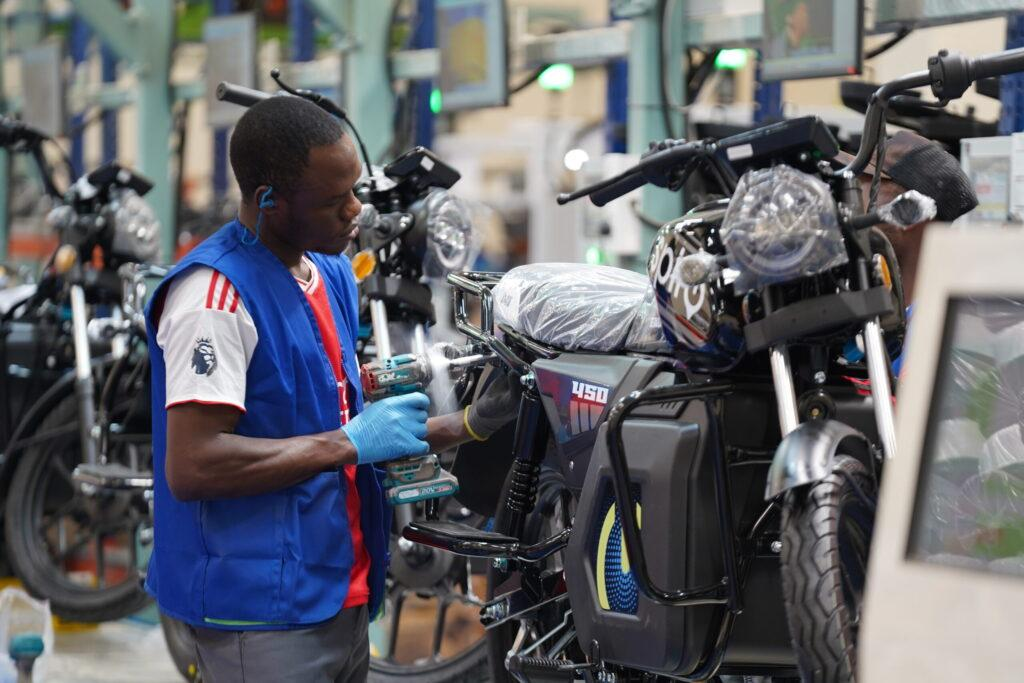
July 14 — Spiro, the leading electric two-wheeler company in Africa, plans to accelerate the expansion of its battery swapping network across the continent, supported by multiple investors, including a prominent Chinese growth-stage investment fund, Gagan Gupta, the company’s founder, disclosed.
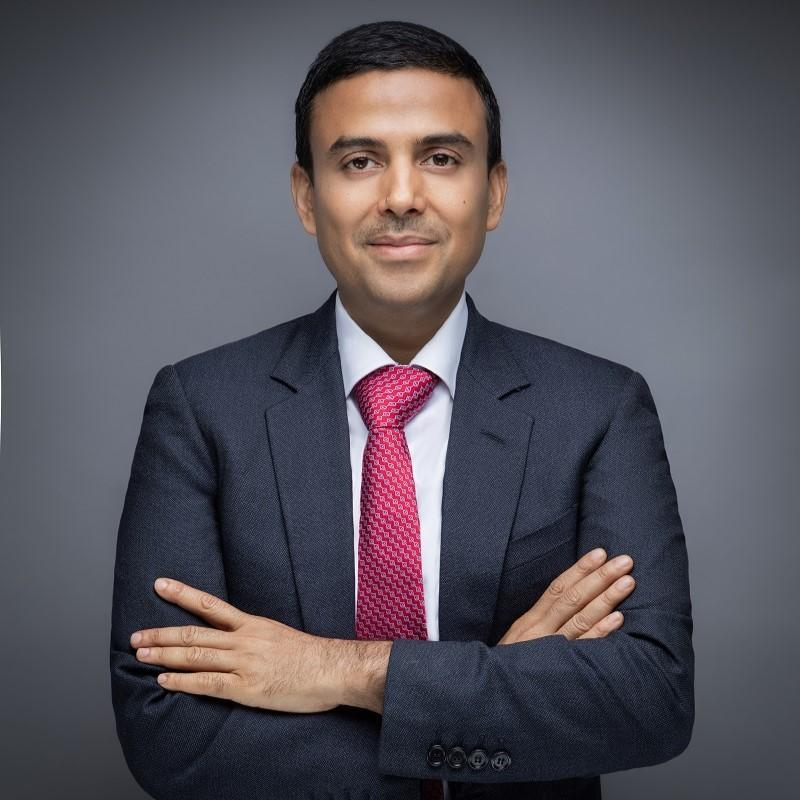
The company recently raised USD 270 million, with USD 55 million coming from this Chinese fund. “We’ve built a strong track record, with 100,000 swaps happening daily on our network, which has attracted additional investment to further develop our infrastructure,” Gupta, also chairman of a private equity firm, stated in an interview.
The focus of this infrastructure is to address the challenge of inconsistent access to reliable charging, especially in markets where grid power can be unstable. Spiro mitigates this issue by installing solar power generation and battery storage units at their swap stations, reducing reliance solely on the electrical grid, Gupta explained.
According to the Dubai-based company, Spiro manages over 2,500 swap stations across seven African nations, supporting more than 100,000 electric motorcycles through its battery swapping network.
This investment is part of a broader effort by the Chinese investment firm in emerging markets, focusing on electric mobility, battery swapping, and digital payment solutions, with offices in Shanghai, Shenzhen, and Nigeria, the company indicated.
According to Zhang Yufan, a founding partner of the Chinese firm, Spiro has the potential to evolve into a business centered on infrastructure. It has systematically integrated vehicles, batteries, energy solutions, payments, and service networks into a comprehensive, African-tailored solution.
As a fund dedicated to advancing Africa’s energy transition and green technology, the firm is encouraged by the increasing role of Chinese supply chains and financing in these developments, Zhang added.
Supply Chains and Local Manufacturing
Chinese companies are already integral to Spiro’s supply chain, including Taiwan-based Hon Hai Precision Industry, known as Foxconn, as a key component supplier, and BAK, a unit of the battery manufacturer Contemporary Amperex Technology. Both are exploring establishing local battery manufacturing plants in Africa, which could be a game-changer for Spiro, shifting from assembling imported parts to developing a more localized value chain, Gupta said.
He emphasized the importance of job creation in Africa, stating, “It’s unsustainable to import all finished products without creating local employment.” Spiro aims to produce 85 to 90 percent of its value-added goods within Africa by next year.
Furthermore, Spiro and its private equity partner are in discussions with the Chinese investment fund to launch a joint “new energy infrastructure fund” to support Chinese and African firms involved in sectors such as IoT, electric trucks, batteries, and related infrastructure, Gupta revealed.
Gupta also highlighted that the industrial zone platform operated by their private equity partner spans 17 African countries. Having a Chinese investor enhances relationships with current supply chain partners and could facilitate relocating manufacturing from China to Africa, he added.
A similar collaboration between Chinese electric mobility firm Tailg Group and Ghana’s Kofa was announced earlier this year, with plans to develop and deploy 200,000 electric motorcycles within the country, utilizing Kofa’s swap network by 2030.
Additionally, the fund has invested in Ofero, a Southeast Asian electric two-wheeler brand that has expanded into more than ten countries including Kenya.
Market Competition
In Rwanda, Ampersand and Kenya’s MAX have recently attracted new funding. Ampersand secured additional equity and working capital to grow its fleet to 13,000 electric motorcycles, while MAX raised USD 24 million to support the deployment of 120,000 e-motorcycles. Other notable competitors include Roam, Zembo, Kiri EV, and Stima.
Ampersand has also entered into an agreement with a major Chinese electric vehicle and battery manufacturer, which will become its primary supplier and enable the production of approximately 40,000 electric motorcycles by year’s end.
Gupta downplayed concerns about industry rivalry, comparing Africa’s EV market to China’s crowded auto industry. “When you dine at a five-star restaurant, you’re not the only guest,” he remarked. “The market is enormous, and we can’t do it alone—they need more players. Our main competition remains traditional fuel-powered bikes, which dominate over 90 percent of our core markets.”
He stressed that businesses should focus on solving real problems for local communities. “Africa isn’t a market where you can create products consumers don’t need,” Gupta said. “You must develop solutions that truly improve lives. I believe within two years, EVs will become widespread, with electric motorcycles constituting 50 to 60 percent of new bike sales in our markets, up from around a quarter or a third today.”
Ultimately, rider support drives the business, Gupta noted. “Our goal is to help low-income riders earn an extra dollar or two each day, allowing them better food and access to education for their children. That impact is immense, and it motivates us to keep pushing forward,” he concluded.