
Select Language:
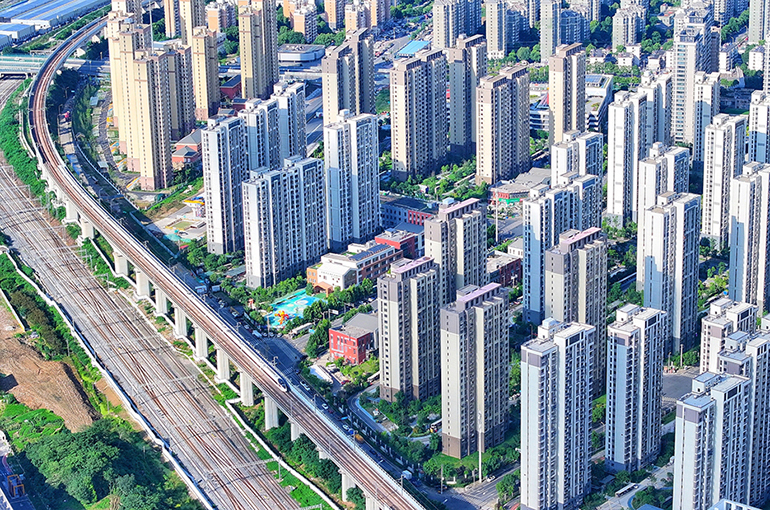
The levels of housing inventory in China’s key urban markets have returned to more balanced levels, with cities like Hangzhou and Hefei leading the way due to deliberate control over new supply. As of June 30, the average months of supply in 30 major Chinese cities stood at 23.9 months, based on data from a leading real estate research center. Hangzhou and Hefei reported nine and eleven months of inventory, respectively, while other cities such as Changsha, Ningbo, Chengdu, Changchun, Shanghai, and Tianjin ranged from 15 to 19 months.
The months of supply metric indicates how long it would take to sell all current new home inventory at the prevailing sales rate. A supply of fewer than six months suggests a tight market, six to twelve months reflects a healthy balance, twelve to eighteen months indicates supply and demand are in equilibrium, and over eighteen months points to an oversupply.
The reduction in new housing inventory is primarily driven by a constrained supply pipeline in major cities. A recent report highlighted that Hefei’s low inventory levels are more a result of strategic supply cuts over recent years rather than an actual shortage of demand. Data shows Hefei’s new residential land plots slated for development this year total only 200 hectares, a 73% decrease from the peak year of 2022. Last year, new home supply was approximately 1.93 million square meters, down from almost five million square meters in 2021.
Despite efforts to stabilize the market, China’s new residential construction area has persistently fallen short of 2022 levels. Experts note that after years of curbing new supply and focusing on absorbing existing stock, the trend of increasing unsold housing inventory that began in July 2021 has reversed as of March this year.
The sustained expansion of housing inventory has been effectively paused, with the stock gradually being absorbed rather than expanding. However, this reduction has largely been a passive process, driven by restricted supply in some cities, rather than a surge in home sales. Consequently, the months of supply in third- and fourth-tier cities remain high.
Data shows that the average months of supply across 50 key cities was approximately 26.1 months at the end of June. First-tier cities recorded 25.3 months, second-tier cities 24.4 months, while third- and fourth-tier cities had an average of 31.6 months. Analysts explain that the prolonged high inventory levels in smaller cities are closely linked to weak local housing demand and sluggish sales activity, indicating that destocking will be a long-term challenge in these areas.
 ChatGPT
 Perplexity
 Gemini AI
 Grok AI