

Select Language:
A photo circulating online as of April 5, 2026, shows wreckage presumed to be from a U.S. aircraft and a helicopter rotor in Isfahan, Iran. Forensic imagery analyst William Goodhind stated that the debris aligns with the characteristics of a US MC-130J or HC-130J, amid ongoing US-Israeli tensions with Iran.— Reuters
- Mechanical issues led to a perilous extraction, resulting in the destruction of a US aircraft in Iran.
- The CIA orchestrated a deception campaign, jamming electronic signals and bombing roads to facilitate the rescue.
- An airman verified his identity to prevent Iran from setting a trap for the rescuers.
The operation took place with remarkable accuracy. Under the cover of night, US commandos infiltrated Iran, successfully scaled a 7,000-foot ridge, and evacuated a stranded American weapons specialist to a clandestine meeting point before sunrise on Sunday. Everything then came to a halt.
Two MC-130 aircraft that transported the roughly 100 special operations forces into the rugged region south of Tehran experienced mechanical failures and couldn’t depart, a US official told Reuters anonymously. The elite team risked being stranded behind enemy lines.
In response, their commanders took a bold risk, directing additional aircraft into Iran to rescue the team in multiple waves — a decision that resulted in waiting for several tense hours. “If there was a ‘holy cow’ moment, that was it,” the official remarked, praising quick thinking for saving the operation. The same official, along with others speaking to Reuters, chose anonymity to speak freely about the mission.
The rescue was successful, with troops evacuating in stages. Instead of leaving behind sensitive equipment, the US destroyed the disabled MC-130s and four other helicopters inside Iran.
The Pentagon has not yet responded to requests for comment.
This daring rescue concluded one of the most dangerous episodes of the five-week-old conflict, preventing a potentially devastating loss of American lives and alleviating a mounting crisis for President Donald Trump, who faces the decision of whether to escalate a war that has already resulted in thousands of casualties.
Downed pilot made contact
The American weapons specialist rescued was the second of two crew members aboard an F-15E Strike Eagle, which Iran claimed Friday had been hit by its air defenses. According to the US official, the plane was flying over Isfahan province when it was shot down. The two pilots ejected separately; the pilot was rescued, but the second crew member remains in Iran.
US air crews are trained in Survival, Evasion, Resistance, and Escape (SERE) techniques for downed personnel, but many are not fluent in Persian, making it difficult to stay covert while seeking rescue. An inspector familiar with some operational details said the officer, identified by Trump as a colonel, sprained his ankle and hid in a crevice atop a hill.
He later contacted US forces and verified his identity—a crucial step to prevent falling into an Iranian trap. Earlier, the CIA had run a deception campaign, planting false information inside Iran to suggest US forces had already located and moved the airman before the operation.
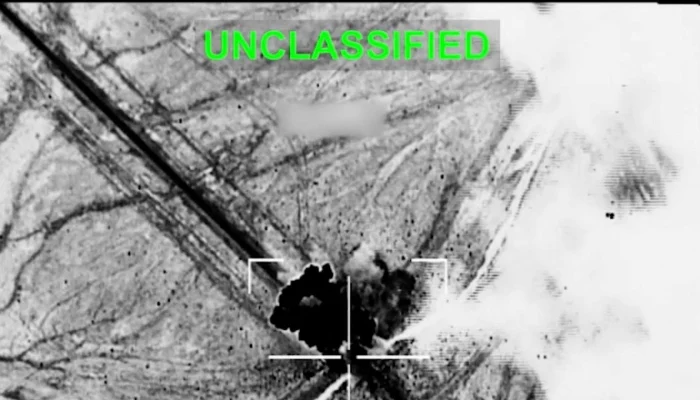
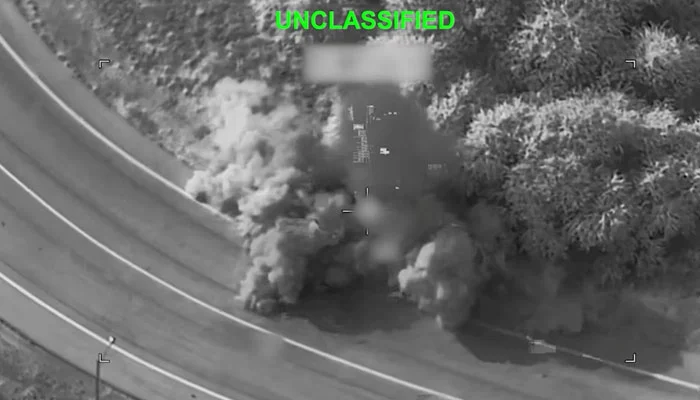
US military efforts also included jamming electronics and bombing roads around the site to prevent anyone from approaching. The rescue team was flown in on smaller turboprop aircraft capable of landing on modest airstrips and carrying lighter loads.
Throughout the operation, the White House, Pentagon, and US Central Command maintained an unusually low profile. Trump remained mostly silent, leading some to wonder if he was at Walter Reed Hospital.
Once the mission was complete, Trump publicly praised the effort. “Over the past several hours, the U.S. military executed one of the most daring search and rescue operations in history,” he stated, noting that the airman was injured but assured he would recover.
US aircraft struck
The initial rescue effort met fierce Iranian resistance on Friday, shortly after the F-15 pilot was rescued. Reuters reported that two Black Hawk helicopters involved in the search were hit by Iranian fire but managed to escape Iranian airspace.
In a separate incident, an A-10 Warthog fighter jet was shot over Kuwait, forcing the pilot to eject. The extent of injuries within the crew remains uncertain.
Since the conflict began, 13 US service members have been killed, with over 300 wounded, according to US Central Command. No American troops have been captured by Iran.
While Trump has repeatedly spoken about Iran’s military being weakened, Iran’s ability to consistently strike US aircraft highlights its resilience. Iran’s Khatam al-Anbiya joint military command announced Saturday that it employed a new air defense system to target a US fighter jet. Recent US intelligence indicates Iran still controls substantial missile and drone capabilities.
Until recent weeks, the US believed it had destroyed roughly one-third of Iran’s missile stockpiles. The remaining and partially damaged arsenals are thought to be hidden in underground tunnels and bunkers, as per sources.
After the successful rescue, Trump issued a stern warning to Tehran, threatening it if it refuses to reopen the Strait of Hormuz, a vital conduit for global oil shipments.
 ChatGPT
 Perplexity
 Gemini AI
 Grok AI