

Select Language:
Richest Countries by Natural Resource Wealth in 2025
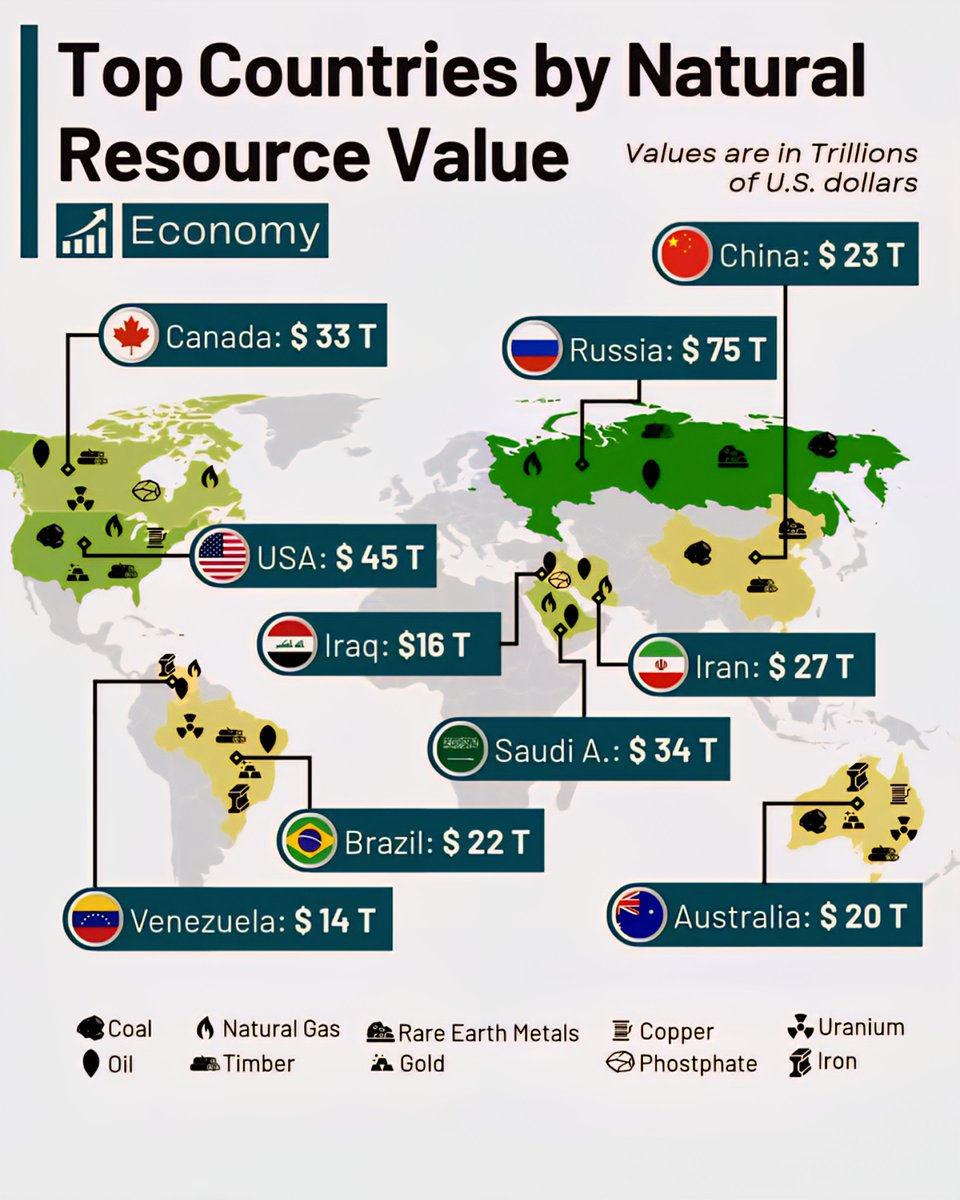
Russia Maintains Its Top Spot With a $75 Trillion Resource Vault
Russia continues to dominate as the nation with the most valuable natural resources, boasting an astonishing valuation of $75 trillion in 2025. Its vast expanse of untapped oil, natural gas, minerals, and timber continues to fortify its economic stature. The country’s strategic investments in resource extraction and modernized infrastructure have kept its position at the top, reaffirming its global influence in energy markets.
United States Holds Strong at $45 Trillion, Leading Technological and Energy Innovation
Following closely behind, the United States holds an impressive natural resource valuation of $45 trillion. The U.S. benefits from abundant oil reserves, natural gas fields, and a vast array of minerals critical for technological manufacturing. Innovative extraction techniques and sustainable practices are boosting the nation’s resource efficiency, paving the way for continued economic resilience.
Saudi Arabia’s $34 Trillion Wealth Fueled by Oil Reserves
Saudi Arabia’s rich oil reserves continue to be its economic backbone, with a resource valuation standing at $34 trillion. The kingdom’s strategic focus on diversifying energy sources and investing in renewable energy projects is shaping its future beyond oil dependence. Its influence remains pivotal in shaping global energy policies.
Canada’s $33 Trillion in Natural Wealth
Canada ranks fourth with a resource valuation of $33 trillion, primarily driven by its extensive reserves of oil sands, minerals, and forests. Ongoing advancements in clean extraction technologies are helping Canada maintain its position as a leading supplier of natural resources while actively pursuing sustainability initiatives.
Iran Embarks on Resource Expansion with a $27 Trillion Valuation
Iran’s natural resource assets are valued at $27 trillion, primarily derived from vast oil and natural gas fields. Despite geopolitical challenges, Iran continues to leverage its resource wealth to promote economic growth and negotiate better terms in international markets.
China’s $23 Trillion in Strategic Resources
With a resource valuation of $23 trillion, China remains a dominant player, benefiting from abundant mineral deposits, rare earth elements, and energy supplies. The nation’s focus on securing vital raw materials for its manufacturing sector sustains its position as an economic powerhouse.
Brazil’s Rich Tapestry Valued at $22 Trillion
Brazil’s diverse landscapes harbor a resource wealth valued at $22 trillion. Its vast forests, minerals, and freshwater reserves are central to its economic development. Sustainable management of these resources is a key priority to ensure long-term prosperity.
Australia’s $20 Trillion in Natural Assets
Australia’s resource sector, valued at $20 trillion, is powered by extensive mineral deposits, including iron ore and coal, along with diverse energy sources. Continued exploration and investment aim to balance economic growth with environmental responsibility.
Iraq’s $16 Trillion in Oil and Minerals
Iraq, with a valuation of $16 trillion, holds significant oil reserves alongside other mineral deposits. Restoration efforts and political stability are critical for unlocking the full potential of its natural wealth.
Venezuela’s $14 Trillion Reserves and Economic Challenges
Venezuela possesses approximately $14 trillion in resource wealth, mainly from oil. However, economic sanctions, political unrest, and mismanagement have hampered its capacity to capitalize fully on these assets, emphasizing the need for stability to realize its resource potential.
This list highlights the significance of natural resources in shaping global economic powerhouses. As countries evolve, sustainable management and innovation will determine their ability to leverage these assets for long-term growth in 2025 and beyond.
 ChatGPT
 Perplexity
 Gemini AI
 Grok AI