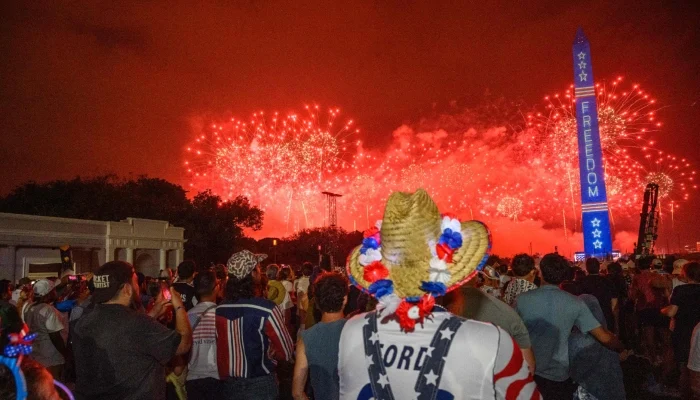
On July 4, 2026, crowds gathered along the National Mall in Washington to watch fireworks light up the sky after the city reopened following a brief closure. The scene was vibrant, with spectators enjoying the colorful display, as captured in images showing people watching from The Great American State Fair.
However, the celebrations came with an unexpected side effect: Washington temporarily became the most polluted major city worldwide, based on data from IQAir. This spike in air pollution followed a massive fireworks display promoted by the Trump administration as “spectacular.” The company responsible for the pyrotechnics, Pyrotecnico, had aimed to set a new world record by launching approximately 850,000 fireworks in just 40 minutes. Experts had expressed concerns about the health risks of such an intense show in a short period.
The holiday fell during an unprecedented heatwave that disrupted traditional festivities like parades, block parties, and barbecues, which normally mark Independence Day in the U.S. The fireworks, initially scheduled as the day’s grand finale, were delayed over an hour because of thunderstorms, and they finally erupted just before midnight.
Air quality monitors in Washington started registering higher levels of pollution around 8 p.m., correlating with fireworks displays across the city. During the main event, fine particulate matter levels soared, creating a haze of smoke that obscured the view for many downwind. These tiny particles, less than 2.5 micrometers in diameter, can penetrate deep into the lungs, potentially causing serious health issues both immediately and over time. At one monitored site, pollution levels exceeded 200 micrograms per cubic meter—significantly above the EPA’s 24-hour standard limit of 35 micrograms.
The city issued “Code Purple” alerts, warning residents that the air quality was considered very unhealthy for everyone, not just vulnerable groups. The region, including parts of Virginia and Maryland, was also affected. According to IQAir’s data, which aggregates information from various sources, Washington ranked as the world’s most polluted significant city on the early morning hours of July 5.
In response, EPA spokesperson Brigit Hirsch told AFP, “Fireworks are incredible, and we hope everyone enjoyed the shows in and around our nation’s capital celebrating America’s 250th anniversary.” The EPA’s policies had been criticized during Trump’s second term for relaxing regulations and supporting industries that contribute to pollution.
Fortunately, heavy rain began clearing the smoke, and by noon the air quality had returned to normal. Atmospheric scientist Russell Dickerson from the University of Maryland reflected, “We narrowly avoided a disaster. It was very bad, but it could have been much worse.”
Pyrotecnico had hoped to beat the current world record for the largest fireworks display, set on New Year’s Day in the Philippines with approximately 811,000 fireworks. While an application was filed with Guinness World Records, the organization clarified that they could not confirm whether the record was broken until they review the evidence submissions.