الوسم: air quality

  • Air Pollution Might Accelerate Bladder Cancer Spread

    Air Pollution Might Accelerate Bladder Cancer Spread

    Most people associate polluted air primarily with lung issues. Healthcare professionals have long warned that inhaling contaminated air increases the risk of asthma, cardiovascular problems, and strokes. However, emerging research suggests that pollution could have lingering effects on the body even after it leaves the lungs.

    A recent study conducted in Taiwan reveals that tiny air particles known as PM2.5 might make bladder cancer more aggressive. Published in *Particle and Fibre Toxicology*, the study provides insights into why high pollution exposure may lead to poorer cancer outcomes.

    PM2.5 particles are roughly thirty times smaller than a human hair’s width. Due to their minuscule size, they can penetrate deep into the lungs and enter the bloodstream. The kidneys work to filter out some of these harmful particles, but some chemicals tend to concentrate in urine, remaining in contact with the bladder lining. This repeated exposure could allow pollutants to directly affect bladder cells regularly.

    Researchers examined bladder cancer cells after exposure to PM2.5 and discovered that the particles cause changes that could facilitate cancer growth and spread. The affected cells showed increased ability to move and invade surrounding tissues.

    This phenomenon is part of a process called epithelial-mesenchymal transition, where cancer cells lose their normal structures and gain enhanced mobility, increasing their capacity to spread throughout the body.

    The scientists also identified several molecular signals activated by the particles. These signals might serve as future targets for therapies aimed at slowing down cancer progression. Blocking these pathways could potentially minimize some of the adverse effects linked to prolonged air pollution exposure.

    This research has broader implications for public health. Billions worldwide are exposed to polluted air, especially in crowded urban areas and industrial regions. Even non-smokers can inhale hazardous levels of PM2.5 daily. Improving air quality could, therefore, have positive effects on multiple organs, including the urinary system.

    The study emphasizes the intertwined relationship between environmental health and human health. Preventing pollution is often more straightforward and less costly than treating advanced illnesses. Strategies like cleaner transportation, stricter industrial emission controls, and robust environmental policies could significantly reduce long-term health risks.

    While these findings are promising, they are still in the early stages. The evidence provides a biological explanation for how pollution might worsen cancer behavior, but larger, clinical studies involving patients are necessary before doctors can incorporate these insights into treatments. Further research is needed to determine if reducing pollution exposure after a cancer diagnosis can improve patient outcomes.

    The study was published in *Particle and Fibre Toxicology*. A key strength is that it identifies specific biological pathways through which PM2.5 exposure may lead to more aggressive bladder cancer, offering stronger evidence than population-based research alone. However, these findings should be approached with caution until validated by extensive clinical trials.

    Overall, this research serves as a critical reminder of how air pollution can influence cancer progression, underscoring the importance of cleaner air and ongoing scientific investigation into targeted therapies.

    If you’re interested in cancer-related topics, consider reading about how a low-carb diet might increase overall cancer risk or new methods to enhance the longevity of cancer survivors.

    For broader health insights, explore recent studies on anti-cancer superfoods and the potential benefits of daily vitamin D3 supplementation in reducing cancer mortality risk.

    Source: *Particle and Fibre Toxicology.*
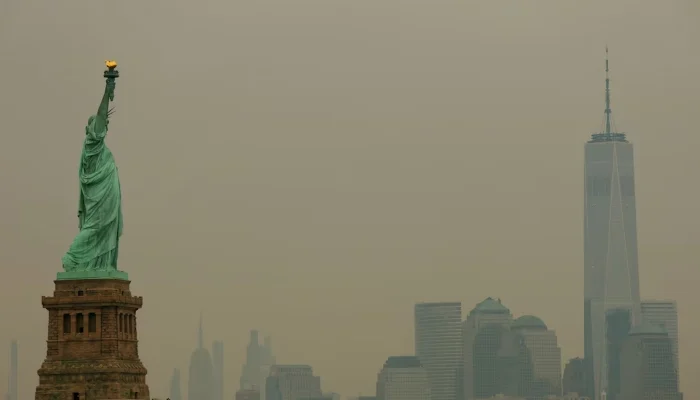
  • Canada wildfire smoke shrouds US Midwest and Northeast with dangerous air

    Canada wildfire smoke shrouds US Midwest and Northeast with dangerous air

    Wildfires burning across Canada have released thick smoke, drifting into parts of the U.S. from the Midwest to the Northeast on Thursday. Officials warn residents to stay indoors when possible and steer clear of the toxic air. Detroit hit the highest air quality risk worldwide, with a pollutant index of 600—twice the level deemed “hazardous” by the U.S. EPA.

    Dangerous smoke levels have been detected across Minnesota, Michigan, northern Illinois, northern Ohio, and Ontario, affecting major cities like Minneapolis, Milwaukee, and Toronto. At least 10 states are experiencing at least some areas with unhealthy air quality, stretching from Minnesota to Maryland.

    Chicago resident Stephanie Villanova, 33, described the scene: “It looks like fog outside, but it’s smoke. It completely covers the city, and it burns when you go outside,” she said during a morning walk with her 68-year-old father, both wearing masks.

    Minnesota has canceled outdoor activities, including shows, fairs, and concerts such as a Creed performance at Mystic Lake Amphitheater. Parks, golf courses, outdoor programs, and public pools in Minneapolis are also closed due to the poor air.

    In the northeastern Iron Range region along Lake Superior, cities like Duluth and Hibbing recorded particulate levels as high as 900 micrograms per cubic meter, triple the hazardous threshold.

    Atmospheric scientist Emily Fischer of Colorado State University explained, “It’s essentially a river of smoke pouring into the Midwest right now—directly linked to climate change. This is the air people are breathing.”

    The situation is expected to worsen throughout the day. In New York, the sky has taken on an orange hue, and the air smells strongly acrid. Officials urge residents to limit outdoor activities, especially vulnerable groups like the elderly, pregnant women, and those with pre-existing health issues.

    This unhealthy air risk coincides with the upcoming FIFA World Cup final in nearby New Jersey, scheduled for Sunday with over 80,000 spectators. New York City Mayor Zohran Mamdani warned, “Today could be the worst day of this event. At unhealthy levels, everyone—regardless of health status—may experience health effects. Everyone should take precautions.”

    The city is distributing free KN95 masks at libraries, police stations, and firehouses. As of Thursday morning, Canada reports 858 active wildfires, with 111 out of control, mostly in Manitoba, Saskatchewan, and Ontario. The wildfire season has burned approximately 5.9 million acres, with scientists attributing the increase to rising global temperatures, which intensify and extend wildfire activity worldwide.

    Wildfire smoke, capable of lingering in the atmosphere for weeks and traveling thousands of miles, is more hazardous than typical pollution. Studies link exposure to higher rates of heart attacks, strokes, cancers, pregnancy complications, and immune system weakening.

  • Trump’s Fireworks Turn Washington Into World’s Most Polluted City

    Trump’s Fireworks Turn Washington Into World’s Most Polluted City

    On July 4, 2026, crowds gathered along the National Mall in Washington to watch fireworks light up the sky after the city reopened following a brief closure. The scene was vibrant, with spectators enjoying the colorful display, as captured in images showing people watching from The Great American State Fair.

    However, the celebrations came with an unexpected side effect: Washington temporarily became the most polluted major city worldwide, based on data from IQAir. This spike in air pollution followed a massive fireworks display promoted by the Trump administration as “spectacular.” The company responsible for the pyrotechnics, Pyrotecnico, had aimed to set a new world record by launching approximately 850,000 fireworks in just 40 minutes. Experts had expressed concerns about the health risks of such an intense show in a short period.

    The holiday fell during an unprecedented heatwave that disrupted traditional festivities like parades, block parties, and barbecues, which normally mark Independence Day in the U.S. The fireworks, initially scheduled as the day’s grand finale, were delayed over an hour because of thunderstorms, and they finally erupted just before midnight.

    Air quality monitors in Washington started registering higher levels of pollution around 8 p.m., correlating with fireworks displays across the city. During the main event, fine particulate matter levels soared, creating a haze of smoke that obscured the view for many downwind. These tiny particles, less than 2.5 micrometers in diameter, can penetrate deep into the lungs, potentially causing serious health issues both immediately and over time. At one monitored site, pollution levels exceeded 200 micrograms per cubic meter—significantly above the EPA’s 24-hour standard limit of 35 micrograms.

    The city issued “Code Purple” alerts, warning residents that the air quality was considered very unhealthy for everyone, not just vulnerable groups. The region, including parts of Virginia and Maryland, was also affected. According to IQAir’s data, which aggregates information from various sources, Washington ranked as the world’s most polluted significant city on the early morning hours of July 5.

    In response, EPA spokesperson Brigit Hirsch told AFP, “Fireworks are incredible, and we hope everyone enjoyed the shows in and around our nation’s capital celebrating America’s 250th anniversary.” The EPA’s policies had been criticized during Trump’s second term for relaxing regulations and supporting industries that contribute to pollution.

    Fortunately, heavy rain began clearing the smoke, and by noon the air quality had returned to normal. Atmospheric scientist Russell Dickerson from the University of Maryland reflected, “We narrowly avoided a disaster. It was very bad, but it could have been much worse.”

    Pyrotecnico had hoped to beat the current world record for the largest fireworks display, set on New Year’s Day in the Philippines with approximately 811,000 fireworks. While an application was filed with Guinness World Records, the organization clarified that they could not confirm whether the record was broken until they review the evidence submissions.

  • Top 10 Countries Achieving 30+ Microgram Air Quality Gains

    Top 10 Countries Achieving 30+ Microgram Air Quality Gains

    Understanding the Global Shift in Air Quality Improvement

    The battle against air pollution has gained momentum in recent years, especially as the world grapples with the effects of the COVID-19 pandemic. A recent report by IQAir has highlighted some remarkable advancements in air quality among various nations, showcasing both the challenges and the triumphs experienced in this crucial sector.

    Major Improvements in Central and Southeast Asia

    As noted by the IQAir report, nations in Central and Southeast Asia have made the most significant strides in improving air quality since the onset of the pandemic.

    The Case of Mongolia

    Mongolia has emerged as a leader in this effort, demonstrating a remarkable decrease in average annual air pollution by over 30 micrograms per cubic meter of air from 2019 to 2024. While the country still struggles with pollution during the winter months due to coal-burning stoves in urban settings, initiatives aimed at assisting low-income families in shifting to electric heating have proven effective. This monumental improvement has positioned Mongolia close to reaching the World Health Organization’s (WHO) interim goal of 2 out of 4, representing a step towards their ultimate objective of achieving an average annual PM2.5 pollution level of 5 micrograms per cubic meter.

    Indonesia’s Steady Progress

    Indonesia is another noteworthy mention on this list. Known for its significant air pollution crisis, particularly in its capital, Jakarta, the country has managed to gain ground in recent years. Once the seventh most polluted capital globally, Jakarta improved its standing to the tenth place in the latest IQAir ranking. This transformation has been fueled by better cooking fuels and enhanced pollution control measures for transportation and industries. However, despite these improvements, Indonesia narrowly missed achieving the first interim goal set by the WHO.

    Gulf Nations Leading the Charge

    The Gulf region has also made noticeable advancements in air quality regulations.

    Bahrain’s Regulatory Progress

    Bahrain stands out as an example of effective regulatory measures across various Gulf countries. Thanks to new policies aimed at reducing fossil fuel consumption, Bahrain achieved the WHO’s first interim goal for the first time in 2024. This significant milestone showcases the positive outcomes of committed governance in tackling environmental challenges.

    China’s Evolution and Commitment

    China has been a focal point in discussions about air pollution for years. The country has made substantial progress, meeting the first interim goal set by the WHO since 2020. Acknowledged as the 11th most improved country in 2024, China’s ongoing commitment to tackle air pollution demonstrates the broader trend of improvement seen in many nations.

    European Nations and Their Unique Challenges

    Among the countries improving air quality, several European nations are also leading the way. Kosovo, Bulgaria, and Greece have been notable advances; however, they have only reached interim goal 3 in their air quality efforts.

    Household Contributions to Pollution

    A common theme across these European nations is the significant contribution of private households to air pollution through the burning of wood and coal for heating. This issue peaked in 2022 as energy prices soared in the aftermath of geopolitical events, such as Russia’s invasion of Ukraine. The interplay between economic pressures and environmental responsibility poses ongoing challenges for these nations as they strive to balance immediate energy needs with long-term air quality improvements.

    Conclusion

    As various countries continue to pursue cleaner air, the insights from the IQAir report illuminate the paths taken and the hurdles overcome in this critical global endeavor. The improvements seen in Mongolia, Indonesia, Bahrain, and several European countries highlight a collaborative spirit and a commitment to a healthier environment for future generations.

  • 2023’s Most Polluted Capitals: PM2.5 Levels Revealed

    2023’s Most Polluted Capitals: PM2.5 Levels Revealed

    The State of Air Quality in Global Capital Cities

    Understanding PM2.5 and Its Implications

    Particle Matter (PM) is categorized based on its size, with PM2.5 referring to particulate matter that is 2.5 micrometers or smaller in diameter. These tiny particles are a significant concern for public health as they can penetrate deep into the lungs and even enter the bloodstream, leading to various health issues such as respiratory diseases, cardiovascular problems, and exacerbation of pre-existing health conditions.

    A Global Overview of Air Quality Trends

    According to the 2023 World Air Quality Report published by IQAir, air pollution remains a pressing global issue, particularly in urban centers. The report analyzed data from 134 capitals worldwide, drawing attention to the alarming levels of PM2.5 concentrations in these regions.

    The Most Polluted Capital: New Delhi

    Among these capitals, New Delhi, India emerged as the most polluted city, with an average annual PM2.5 concentration of 92.7 micrograms per cubic meter. This level far exceeds the World Health Organization’s recommended limit, which often cites an acceptable annual mean of 5 micrograms per cubic meter, highlighting a grave public health crisis in the city.

    Factors Contributing to New Delhi’s Pollution

    New Delhi’s high pollution levels can be attributed to multiple factors:

    • Transportation Emissions: A significant contribution comes from the vehicular emissions resulting from a high population density and urban traffic congestion.
    • Energy Production: The reliance on coal-fired power plants and other fossil fuels further aggravates air pollution.
    • Construction and Industrial Activities: Continuous urban development activities and industries in the region increase particulate emissions.
    • Seasonal Factors: In winter months, crop burning in neighboring states exacerbates the already critical air quality situation.

    Other Major Contenders for Pollution

    Following New Delhi in the rankings is Dhaka, Bangladesh, with a reported PM2.5 concentration of 80.2 micrograms per cubic meter. This places it second in the list of polluted capitals and highlights the struggles cities in South Asia face regarding air quality.

    Pollution in Dhaka and Contributing Factors

    The challenges in Dhaka mirror those in New Delhi:

    • Rapid Urbanization: The growth in population and urban sprawl leads to increased demand for energy and transportation.
    • Industrial Emissions: Factories and workshops contribute to the high levels of air pollutants.
    • Relative Geography: Being situated in a basin, Dhaka often suffers from stagnant air conditions, further worsening pollution levels.

    Other Notable Polluted Capitals

    In the following ranks, Ouagadougou (Burkina Faso) reported 46.6 micrograms, and Dushanbe (Tajikistan) recorded 46.0 micrograms. Baghdad (Iraq) followed closely with 45.8 micrograms. Each of these cities faces unique challenges, often related to local economic activities, governance, and environmental policies.

    A Step Beyond Asia and Africa

    The first capital city to appear outside of Asia or Africa is Sarajevo, Bosnia and Herzegovina, where the PM2.5 concentration was documented at 28.6 micrograms. This indicates that pollution is not solely a problem faced by developing nations; urban centers in developed regions also grapple with air quality issues.

    The Role of Human Activity in Air Pollution

    According to a 2021 study published in Nature Communications, a substantial portion of PM2.5 emissions is directly linked to human activity, particularly in developing nations. This study highlighted:

    • Transportation: Emissions from vehicles are a primary source, especially in densely populated areas.
    • Energy Sector: The combustion of fossil fuels for electricity generation plays a vital role.
    • Agricultural Practices: In some regions, practices such as the burning of agricultural waste contribute significantly to air quality degradation.

    Conclusion

    As air quality continues to decline in numerous capitals around the world, comprehensive strategies targeting pollution sources must be developed and implemented. By understanding the details of PM2.5 emissions and their impacts, cities can take meaningful steps toward improving air quality and protecting public health.