الوسم: Independence Day

  • India’s Independence Day: Strikes and Protests in IIOJK & Northeast

    India’s Independence Day: Strikes and Protests in IIOJK & Northeast

    Several regional groups across northeastern India and Indian Illegally Occupied Jammu and Kashmir (IIOJK) marked India’s Independence Day with protests, boycotts, and strikes, often referring to the day as a “Black Day.” Calls for nationwide shutdowns and complete boycotts from political parties, communities, and ethnic organizations in IIOJK, the Sikh community, and northeastern regions challenged the Indian government’s narrative of “One India.”

    In New Delhi, notable opposition leaders like Congress President Mallikarjun Kharge and Rahul Gandhi did not attend the official Independence Day ceremony hosted by Prime Minister Narendra Modi. Analysts interpreted their absence as a sign of underlying political tensions and disagreements over protocol.

    Insurgent and nationalist factions throughout northeastern states—such as Assam, Nagaland, Manipur, and Arunachal Pradesh—organized a joint call for a complete shutdown during celebrations. Nagaland’s Naga groups commemorated August 14 as the 80th anniversary of their independence declaration, asserting their long-standing history, flag, and political identity, which predate their integration into India—citing the 1951 plebiscite as a mandate for self-determination. Videos circulated on social media showed protests where youths burned or protested against the Indian national flag, with senior Naga leader Thuingaleng Muivah emphasizing that their sovereignty and quest for a separate constitution remained non-negotiable. The Naga Students’ Federation rejected the compulsory singing of “Vande Mataram,” citing religious beliefs and personal freedoms.

    In Manipur, several umbrella organizations, including the Coordination Committee of six groups, the Socialist Revolutionary Party, and local Naga student bodies, enforced a 12-hour general strike, hoisting black flags in key districts to express dissent. Similarly, in Assam and border regions, groups like ULFA (Independent) and the NSCN called for complete operational shutdowns, condemning Indian administrative presence as “colonial occupation.” Heightened security measures were deployed around vital installations in Upper Assam and Arunachal Pradesh to manage the protests.

    Experts argue that the widespread display of black flags, public non-participation, and civil resistance across Kashmir and the northeastern states reveal that true national unity cannot be achieved solely through military presence or formal ceremonies. Instead, genuine cohesion depends on mutual respect for diverse regional, cultural, and political identities, rejecting forced assimilation and emphasizing the importance of consent.
  • Trump’s Fireworks Turn Washington Into World’s Most Polluted City

    Trump’s Fireworks Turn Washington Into World’s Most Polluted City

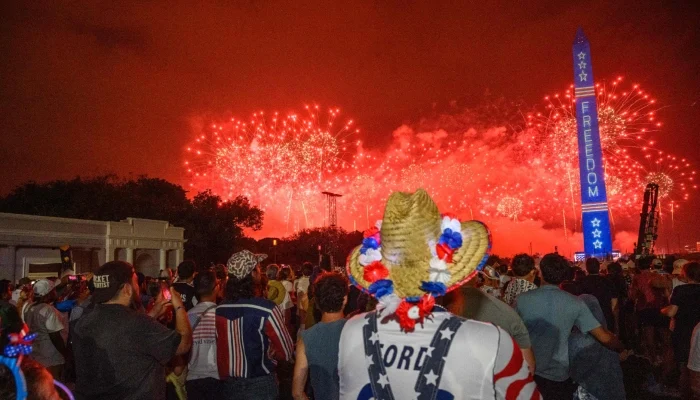
    On July 4, 2026, crowds gathered along the National Mall in Washington to watch fireworks light up the sky after the city reopened following a brief closure. The scene was vibrant, with spectators enjoying the colorful display, as captured in images showing people watching from The Great American State Fair.

    However, the celebrations came with an unexpected side effect: Washington temporarily became the most polluted major city worldwide, based on data from IQAir. This spike in air pollution followed a massive fireworks display promoted by the Trump administration as “spectacular.” The company responsible for the pyrotechnics, Pyrotecnico, had aimed to set a new world record by launching approximately 850,000 fireworks in just 40 minutes. Experts had expressed concerns about the health risks of such an intense show in a short period.

    The holiday fell during an unprecedented heatwave that disrupted traditional festivities like parades, block parties, and barbecues, which normally mark Independence Day in the U.S. The fireworks, initially scheduled as the day’s grand finale, were delayed over an hour because of thunderstorms, and they finally erupted just before midnight.

    Air quality monitors in Washington started registering higher levels of pollution around 8 p.m., correlating with fireworks displays across the city. During the main event, fine particulate matter levels soared, creating a haze of smoke that obscured the view for many downwind. These tiny particles, less than 2.5 micrometers in diameter, can penetrate deep into the lungs, potentially causing serious health issues both immediately and over time. At one monitored site, pollution levels exceeded 200 micrograms per cubic meter—significantly above the EPA’s 24-hour standard limit of 35 micrograms.

    The city issued “Code Purple” alerts, warning residents that the air quality was considered very unhealthy for everyone, not just vulnerable groups. The region, including parts of Virginia and Maryland, was also affected. According to IQAir’s data, which aggregates information from various sources, Washington ranked as the world’s most polluted significant city on the early morning hours of July 5.

    In response, EPA spokesperson Brigit Hirsch told AFP, “Fireworks are incredible, and we hope everyone enjoyed the shows in and around our nation’s capital celebrating America’s 250th anniversary.” The EPA’s policies had been criticized during Trump’s second term for relaxing regulations and supporting industries that contribute to pollution.

    Fortunately, heavy rain began clearing the smoke, and by noon the air quality had returned to normal. Atmospheric scientist Russell Dickerson from the University of Maryland reflected, “We narrowly avoided a disaster. It was very bad, but it could have been much worse.”

    Pyrotecnico had hoped to beat the current world record for the largest fireworks display, set on New Year’s Day in the Philippines with approximately 811,000 fireworks. While an application was filed with Guinness World Records, the organization clarified that they could not confirm whether the record was broken until they review the evidence submissions.

  • Bill Maher Urges Americans to Preserve July 4 Celebrations from Trump

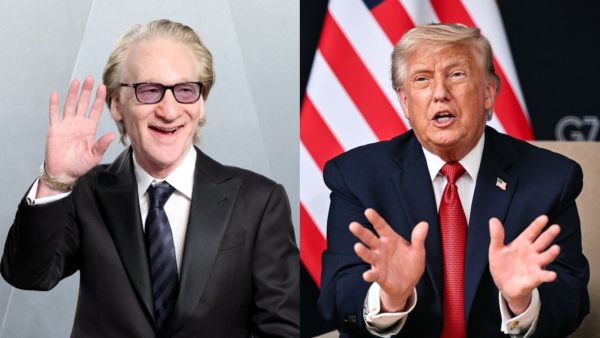
    Bill Maher Urges Americans to Preserve July 4 Celebrations from Trump

    Digital Phablet – Bill Maher encourages Americans not to let Trump overshadow Independence Day celebrations.

    Prior to the nation’s 250th birthday, Bill Maher urged viewers not to allow President Donald Trump to dampen their spirits, emphasizing that no political party “owns the right to be enthusiastic about the country.”

    During his “New Rule” segment on Friday’s “Real Time With Bill Maher,” the comedian voiced his frustration with individuals boycotting July 4th because Trump is the sitting president.

    “Everyone needs to get a little more excited about America’s birthday,” Maher said. “Come on, our big 250th is approaching. It’s on July 4th for our public school kids. And honestly, I see that as a significant issue.”

    He added, “The problem is there’s a bit of a stain on it because, as you know, who is president now. And he’ll probably make the anniversary about himself, which many on the left fear.”

    Maher highlighted that the core concern was whether Americans “will help him do it.”

    “We shouldn’t. This nation is the focus of the celebration. He isn’t an American—he’s America’s temporary caretaker,” Maher explained. “America’s worker. And the message should be that America isn’t actually his to own, and no side has exclusive rights to be enthusiastic about the country. So, I don’t support this attitude of, ‘Well, we’re having a party, but if Trump’s attending, I’m not.’”

    Maher jokingly criticized this mindset, calling it “so high school” that it should “be in the Epstein files.”

    “Go to the celebration. It’s a grand event,” Maher teased. “You probably won’t run into him. This country is 3.8 million square miles—excluding Greenland.”

    He continued: “Look, I’m not claiming Trump doesn’t want to blur the line between himself and the nation. He’s as confident as—well, you know. Wannabe authoritarian types behave this way—they try to conceal the distinction. Don’t be an accomplice to that.”

    Despite this, Maher reminded everyone that there’s still much hopeful about the country, noting that Trump’s attempts to “act like a king” have been repeatedly thwarted over the last decade.

    “America may currently be the country Donald Trump presides over, but it’s also everything that prevents him from becoming the king he dreams of,” Maher said. “So this Fourth of July, let’s celebrate the brilliant American concept of checks and balances, which—yes—is under threat and taking on water, but is still afloat.”

    Watch the full segment here.

  • Modi’s Tax Reform Challenges Finances, Boosts Image Amid US Tensions

    Modi’s Tax Reform Challenges Finances, Boosts Image Amid US Tensions

    India’s Prime Minister Narendra Modi delivered a national address during Independence Day celebrations at the historic Red Fort in Delhi on August 15, 2025. — Reuters

    – Modi reveals the most significant tax reform in eight years
    – This move may boost consumer spending but could reduce tax revenue
    – Seen as a strategic move to strengthen his standing in trade disputes and domestic politics

    NEW DELHI: India’s Prime Minister Narendra Modi has introduced the most comprehensive tax cuts in nearly a decade, potentially straining government income yet earning praise from businesses and political analysts who believe it will enhance his image amid ongoing trade tensions with Washington.

    In the largest tax overhaul since 2017, Modi’s administration announced on Saturday a series of sweeping changes to the complex goods and services tax (GST) system, set to lower prices on essential goods and electronics starting in October.

    Meanwhile, during his Independence Day speech on Friday, Modi called on Indians to favor domestic products, echoing supporters’ urges to boycott U.S. imports after Donald Trump announced tariffs raising import duties from India to 50% starting August 27.

    While the tax cuts are expected to lift India’s GDP by approximately 0.6 percentage points over the following year, they will also cost the government around $20 billion annually, according to IDFC First Bank. The revenue reduction comes despite benefits to the stock market and political gains ahead of a crucial state election in Bihar.

    Rasheed Kidwai, a researcher at the Observer Research Foundation in New Delhi, commented, “Reducing GST will impact everyone, unlike income tax cuts, which only apply to about 3-4% of the population. Modi is making this move partly due to pressure from US policies.”

    He added, “This will also give a boost to the stock market, which has become politically significant given the retail investor base.”

    India’s initial GST rollout in 2017 integrated state levies into a unified, nationwide system aimed at economic consolidation. However, it faced criticism for its intricate design, applying multiple rates — 5%, 12%, 18%, and 28%.

    For example, last year, caramel popcorn was taxed at 18%, whereas salted popcorn was at 5%, highlighting the system’s complexity. Under the new plan, India will eliminate the 28% slab—including cars and electronics—and shift most items from the 12% to the 5% category, broadening benefits for consumers and packaged foods.

    Data shows that the 28% and 12% brackets together contributed about 16% of last fiscal year’s GST revenue, which totaled roughly $250 billion.

    Bihar remains a key battleground ahead of elections in November. A recent VoteVibe survey indicates Modi’s opposition faces challenges mainly due to job shortages.

    “Any tax reduction is popular among the public, but timing is often politically motivated,” said Dilip Cherian, a communications expert and co-founder of Perfect Relations. “This likely reflects both frustration with high taxes and a recognition of public pushback.”

    The ruling Bharatiya Janata Party (BJP) has highlighted Modi’s tax measures, promoting on social media that Diwali will bring “a brighter gift of simpler taxes and more savings for every Indian.”

    Modi has also committed to protecting farmers, fishermen, and cattle herders, especially amid recent trade tensions following Trump’s abrupt tariffs and stalled negotiations over India’s agriculture and dairy sectors, as well as Russian oil imports. The planned trade discussions from August 25-29 have been postponed.

  • India’s Modi commits to self-reliance amid US tariffs

    India’s Modi commits to self-reliance amid US tariffs

    India’s Prime Minister Narendra Modi delivered his Independence Day speech from the historic Red Fort in Delhi on August 15, 2025. During his address, he pledged that India is striving toward self-reliance through energy independence and the development of robust defense systems, vowing to safeguard the nation’s interests “like a wall.” Modi emphasized that self-sufficiency forms the bedrock of a developed India, stating, “Self-reliance is the foundation of a developed India.”

    He underscored that true freedom loses meaning if a country becomes overly dependent on others. The speech came at a time when India is under significant pressure from the United States, facing threats of increased tariffs and strained international relations, especially relating to its dealings with Russian oil amidst the ongoing conflict in Ukraine. India expressed its willingness to support diplomatic efforts to resolve the Ukraine crisis and endorsed a summit between former President Trump and Russian President Vladimir Putin scheduled for Alaska.

    The U.S. has announced plans to double tariffs on Indian imports from 25% to 50% if India does not change its crude oil suppliers by August 27. Modi acknowledged the country’s current energy dependence on other nations but reaffirmed that achieving energy independence is crucial for India’s true self-sufficiency.

    He called on scientists and engineers to focus on advancing key sectors such as fighter jet engines, semiconductor chips, and military hardware. Modi announced plans to have India-made semiconductor chips on the market by the end of the year and mentioned ongoing efforts to build a domestic space station and establish a defense shield within the next decade, without providing further specifics.

    Although he didn’t directly reference Trump, Modi stated that he would “stand like a wall” against policies that harm farmers, emphasizing the importance of agriculture, which employs a large segment of the population and remains a critical aspect of trade negotiations.

    “With rising economic self-interest day by day, we must not just worry about crises but instead harness our strengths,” Modi stressed, highlighting the importance of resilience and self-reliance in addressing national challenges.