Tag: United States

  • Americans Spend $875 Per Person on Christmas Cheer

    Americans Spend $875 Per Person on Christmas Cheer

    The Spending Landscape of the Holiday Season in America

    The holiday season is a time of joy, celebration, and notably, significant spending. According to the National Retail Federation (NRF), Americans are projected to spend an astounding $875 per person during the 2023 holiday season, which spans from November 1 to December 31. This figure is indicative of the strong economic impact that Christmas and Thanksgiving have, dwarfing other holidays in the calendar year.

    The Dominance of Holiday Consumer Spending

    The holiday period is remarkable not only for its cultural significance but also for its economic implications. The NRF’s findings reveal that spending during winter holidays eclipses that of nearly all other seasonal celebrations. In fact, Mother’s Day, which is often considered a time of generous gifting, sees spending that is merely one-third of that associated with Thanksgiving and Christmas. For 2023, Mother’s Day spending is expected to be around $274 per person—a stark contrast to the holiday season’s lavish expenditures.

    Comparing Holiday Spending Across Celebrations

    When we break down the spending figures per holiday, it becomes clear that the winter season stands alone at the top. Here’s a closer look at some other notable holidays and their respective per-person spending:

    Valentine’s Day

    • Spending: $196
    • Characteristics: Often characterized by romantic gifts like chocolates, flowers, and dining out, Valentine’s Day maintains a steady consumer base that contributes to its financial success.

    Father’s Day

    • Spending: $192
    • Characteristics: Similar to Mother’s Day, spending on Father’s Day reflects a comforting range of gifts, including gadgets and apparel.

    Easter

    • Spending: $195
    • Characteristics: Easter spending typically includes gifts, festive meals, and activities such as egg hunts, but still trails behind the holiday season.

    Halloween

    • Spending: $108
    • Characteristics: Focused primarily on costumes and decorations, Halloween rounds out the per-person spending, showcasing a less hefty financial commitment compared to winter holidays.

    The Influence of the Super Bowl

    Interestingly, the Super Bowl, a relatively recent addition to the list of significant events in American culture, attracts a considerable amount of spending as well. With an average expenditure of $85 per person, it showcases how sports have forged a place in the fabric of American spending habits. This enthusiasm, however, still falls in comparison to the traditional holiday spending that embodies the spirit of giving and celebration.

    Back-to-School and Back-to-College Spending

    When examining overall consumer behavior, two events—the back-to-school and back-to-college seasons—rank above winter holidays in terms of total household spending. However, it is essential to recognize that these figures are calculated based on household rather than per person, inflating the reported average. For instance:

    Back-to-College

    • Average Spending per Household: $1,367
    • Notes: Households typically have multiple individuals requiring supplies, leading to higher overall expenditure figures.

    Back-to-School

    • Average Spending per Household: $890
    • Notes: Similar to the back-to-college spending, costs can accumulate quickly due to the involvement of multiple children in school.

    Understanding the Implications

    It’s evident that the winter holiday season holds a remarkable position in the American consumer landscape, driven by tradition and the spirit of celebration. The insights gathered from the NRF illustrate the vast disparities in spending habits connected to various events throughout the year. While holidays rooted in rich histories command a loyal following, seasonal celebrations such as back-to-school emphasize the broader implications of education-related spending in American households.

    As we analyze these trends, it becomes clear that they reflect not just seasonal behaviors but also evolving cultural practices that shape how Americans prioritize their spending throughout the year.

  • Why Counting Pennsylvania’s Election Results Takes Time

    Why Counting Pennsylvania’s Election Results Takes Time

    Many in the country probably won’t find out the results of the critical battleground state of Pennsylvania on election night, thanks to some specific state laws.

    As an assistant professor of political science at Gettysburg College, located in Gettysburg, Pennsylvania, I specialize in American politics, public opinion, and the electoral process. I’ve discussed before why Pennsylvania is vital for both the Harris and Trump campaigns, and how it plays a fundamental role in deciding the outcome of the presidential race.

    Here are five key points to understand about Pennsylvania’s election result timeline.

    State Regulations on Voting and Counting

    According to the U.S. Constitution, states share power with the federal government. Certain powers are reserved solely for the states, while others fall under federal control, such as signing treaties or declaring war. This system, known as federalism, means that the conduct of elections is managed by the states, not the federal government. Each state and its local jurisdictions decide on voting locations, methods for casting ballots, and other administrative procedures.

    There’s considerable variation in how elections are conducted among the states. For example, some states require voters to present photo identification, while others use different methods to verify voter identities.

    An official mail-in ballot from Pennsylvania displayed in Pittsburgh on October 3, 2024.
    AP Photo/Gene J. Puskar

    Moreover, states differ in their ballot counting processes and the speed at which they report results.

    Almost all states refrain from announcing election results until after polling stations have closed on Election Day. However, some allow early and mail-in ballots to be counted as they are received, enabling them to provide results more quickly.

    As per Pennsylvania’s laws, voters can cast mail-in ballots, but local election officials can’t open the mail-in ballot envelopes until 7 a.m. on Election Day.


    Read more:
    Understanding how Pennsylvania is essential for either Harris or Trump’s Electoral College success


    Before 2020, Pennsylvania voters had to provide a valid reason to vote by mail, such as military service abroad. The first instance of no-excuse mail-in voting occurred in 2020, largely due to the COVID-19 pandemic, resulting in a historic number of mail-in ballots across the nation, including Pennsylvania.

    In the 2020 presidential election, out of nearly 7 million voters in Pennsylvania, approximately 2.6 million utilized mail-in voting. This marked a significant increase, as local election officials had never before dealt with such a volume of mail-in ballots, leading to quicker media declarations of unofficial winners in previous elections.

    For instance, in 2016, the media declared Trump as Pennsylvania’s victor by 2:29 a.m. the day after Election Day. However, in 2020, it took four days for enough mail-in ballots to be counted for Biden’s victory to be projected in Pennsylvania.

    As of 10 a.m. on October 28, 2024, about 2.09 million Pennsylvania voters had requested mail-in ballots. This figure is expected to rise since residents could request mail-in ballots up until October 29. County election boards must receive these ballots by 8 p.m. on Election Day to count them. Additionally, military and overseas absentee voters have until November 12.

    Counting Mail-in Ballots Takes Time

    It’s hard to determine exactly when Pennsylvania will announce its election winner. The higher the number of ballots, the longer the wait will likely be.

    The duration until results are reported will also depend on the closeness of the election outcome.

    If the winning margin is slim—just tens of thousands of votes—officials will need to count enough ballots to ensure it becomes mathematically impossible for the other candidate to catch up. Only then will reputable media sources declare a projected winner in the state.

    Should the election margin be within half a percentage point, Pennsylvania law mandates an automatic recount, though recounts are generally unlikely to change the outcome of a statewide election.

    The Wait May Be Shorter Than in 2020

    No one can accurately predict the time frame for results, but there are signs that it might not extend as long as in 2020.

    For starters, it seems likely that fewer people in Pennsylvania will vote by mail in 2024. The percentage of mail-in voters dropped during the 2022 midterms compared to 2020, and this trend is expected to continue into 2024. So far, fewer voters have requested mail-in ballots than in 2020.

    Election officials’ experience may also speed up the counting process this time. The 2020 election was the first with such a high volume of mail-in ballots.

    Additionally, counties have acquired improved machines to enhance efficiency. For instance, Philadelphia County is introducing new equipment to facilitate the quicker opening of mail-in ballot envelopes. Pennsylvania’s Secretary of State Al Schmidt asserted that this should accelerate the counting process, but he also cautioned, as reported by NPR, that a definitive winner might not be declared on election night.

    A group of people examining certificates and papers in a room adorned with an American flag.
    In the 2020 presidential election, around 2.6 million residents in Pennsylvania voted by mail. On November 4, 2020, Luzerne County officials opened mail-in ballots for counting.
    Aimee Dilger/SOPA Images/LightRocket via Getty Images

    Anticipating the Process

    According to the Associated Press, Pennsylvania will first report smaller batches of mail-in ballots, followed by the in-person votes cast on Election Day, and then the remaining mail-in ballots. This sequential counting might lead to expected trends in the election results.

    We can glean some insights from the types of voters requesting mail-in ballots this year. Following the trend from 2020, most mail-in requests come from Democrats, while Republicans tend to favor in-person voting.

    Reports for in-person ballots on Election Day are generally faster, as voters will insert their ballots into vote tabulating machines directly at their precincts. In 2020, Trump received strong support from in-person voters, although Republicans are now working to encourage more mail-in participation.

    As the mail-in ballots are counted, it is likely the results will shift, with Trump’s percentages decreasing while Harris’s increase based on the demographics of voters who have requested mail-in ballots thus far.

    As of October 28, 2024, data from the Pennsylvania Department of State indicated that 56% of requested mail-in ballots were from registered Democrats, 32% from Republicans, and the remaining 13% from voters not affiliated with a party or affiliated with a third party. In 2020, over 60% of mail-in ballot requests came from Democrats and about 25% from Republicans.

    Keeping Your Cool

    In this age of prevalent conspiracy theories in American politics, it’s essential to remain skeptical of unfounded claims. These theories often gain traction from individuals or groups motivated by self-interest to attract attention on social media, make a profit, or gain political power.

    The management of American elections is entrusted to dedicated officials across the political spectrum, and they are monitored by representatives from both parties and impartial watchdog organizations. Academics and journalists nationwide are also vigilant, ensuring any evidence of wrongdoing would quickly come to light.

    Counting ballots in Pennsylvania will take time, and officials have stated they will prioritize “accuracy over speed” in the process. Rest assured, the results of the election will eventually be disclosed. Until then, practice patience and witness the workings of one of the world’s oldest democracies.

  • Trump’s ‘Bad Genes’ Remark Channels Dark Eugenics Ideas

    Trump’s ‘Bad Genes’ Remark Channels Dark Eugenics Ideas

    Donald Trump, the Republican nominee for president, has been vocal in his criticism of undocumented immigrants, often depicting them as a threat to American society, particularly focusing on immigrants of color and using inflammatory language to emphasize his views.

    In early October 2024, he escalated his rhetoric by suggesting that immigrants possess “faulty genes.” He made unsubstantiated claims, stating, “Many of them murdered far more than one person, and now they are living happily in the United States. I believe that murderers have it in their genes. We have a lot of bad genes in our country right now.”

    This isn’t the first instance where Trump has referenced eugenics—a deceptive and racist theory suggesting that certain individuals, or even races, are genetically superior to others.

    Back in 1988, during an interview with Oprah Winfrey, Trump remarked, “You have to be born lucky, in the sense that you have the right genes.”

    In 2016, he attributed his success to his German heritage, stating: “I always said that winning is somewhat, maybe, innate. Maybe you just have it; the winning gene. I’m proud of my German blood; there’s no question about it. Great stuff.”

    In 2020, he echoed the belief that lineage can confer intelligence: “I had an uncle who went to MIT who is a top professor. Dr. John Trump. A genius. It’s in my blood. I’m smart.”

    Trump’s frequent comments that suggest a hierarchy of races have sparked comparisons to Nazi ideology, which emphasized racial superiority.

    The Nazis were notorious for their belief in the superiority of white, blue-eyed, blonde individuals, advocating for a racially pure society through selective breeding. However, these ideas did not originate with them; they borrowed heavily from American eugenicists and integrated many American eugenics principles into their own racist policies.

    The Origins of Eugenics

    The concept of eugenics was first proposed by British scientist Francis Galton, who was a cousin of Charles Darwin, in the 1860s. It gained traction in both the U.S. and Britain during that era.

    Eugenicists propagated the idea that racial identity, particularly white identity, was the most desirable one.

    By the early 1900s, much of the American eugenic discourse viewed immigrants from anywhere other than Scandinavia with disdain, coining the term “Nordicism.”

    During the late 19th and early 20th centuries, immigration to the U.S. reached unprecedented levels. By 1890, immigrants constituted about 14.8% of the U.S. population. Public anxiety over immigration was palpable, and several prominent eugenicists emerged during this time, including Madison Grant and Lothrop Stoddard.

    Both were openly white supremacists advocating for a scientific approach to racism. Their widely circulated works helped shape immigration policies in both America and Germany during the 1920s and 1930s.

    Grant, Stoddard, and their contemporaries embraced eugenics to justify racial segregation, restrict immigration, enforce sterilization, and maintain various forms of systemic inequality.

    In his 1920 book, “The Rising Tide of Color: The Threat Against White World-Supremacy,” Stoddard criticized U.S. immigration policies, claiming, “If we do not change course, we whites are ultimately doomed. … We now understand that men are not, and will never be equal. Environment and education can only enhance what heredity provides.”

    Another notable eugenicist was Harry H. Laughlin, an educator and the head of the now-defunct Eugenics Record Office, which collected biological and social data regarding the American populace.

    In 1922, Laughlin published a deeply influential book titled “Eugenical Sterilization in the United States,” which offered models for sterilization laws that the Nazi regime adopted when implementing their policies in Germany during the height of their reign.

    He frequently testified before Congress, emphasizing that immigration was fundamentally a racial and biological issue. His 1922 testimony exemplified this perspective: “Immigration is primarily a long-term national investment in our human ‘family stocks.’”

    Eugenicists like Laughlin were particularly fixated on Norwegian genetics—believing that America faced threats whenever immigration occurred from non-Nordic nations.

    In 1922, Laughlin remarked that “Some of our finest and most desirable immigrants are from Norway.”

    The 1924 Immigration Act established strict quotas based on nationality and effectively prohibited immigration from Asia.

    It wasn’t until after World War II and the Holocaust that eugenics began to decline in influence in American society.

    Trump’s Echoes of the Past

    The fear that foreign immigrants may weaken American society was widespread a century ago, and Trump, along with many of his supporters, still clings to these notions.

    Trump has promised mass deportations of undocumented immigrants, stating he would detain immigrants forcefully and remove up to one million people annually.

    In April 2024, Trump employed dehumanizing terminology when discussing immigrants, dismissing their humanity by stating, “The Democrats say, ‘Please don’t call them animals. They’re humans.’ I disagreed, stating, ‘No, they’re not humans, they’re animals.’”

    Moreover, Trump has echoed eugenicists’ viewpoints on Scandinavian superiority.

    In 2018, he made controversial remarks about immigrants from Haiti, El Salvador, and Africa, questioning, “Why are we having all these people from shithole countries come here?”

    He later suggested that the U.S. should instead attract more individuals from countries like Norway.

    In April 2024, he reiterated his preference for immigrants from “nice countries, like Denmark or Switzerland.”

    A Troubling Rewind

    It might seem more fitting for a presidential candidate from 1924 to espouse these now-debunked beliefs than one in 2024.

    President Calvin Coolidge campaigned on an “America First” platform in 1924, a slogan that gained notoriety as it was adopted by groups like the Ku Klux Klan.

    Historically, the term “America First” signified nationalist sentiment but was also associated with anti-immigration and fascist movements.

    After signing the restrictive 1924 Immigration Act, Coolidge proclaimed, “America must remain American.”

    Fast forward a century, and Trump evokes similar sentiments; during his rallies, he frequently recites lyrics from a song called “The Snake” to illustrate what he perceives as the risks associated with welcoming immigrants into the U.S. Although originally penned by civil rights activist Oscar Brown in 1963, Trump’s interpretation of the poem has been challenged by Brown’s family.

    ‘I saved you,’ cried that woman.

    ‘And you’ve bit me even, why’

    ‘You know your bite is poisonous and now I’m going to die.’

    ‘Oh shut up, silly woman,’ said the reptile with a grin,

    ‘You knew damn well I was a snake before you took me in.’

  • Civil Rights Attorney’s Essential Tips for Election Day Success

    Civil Rights Attorney’s Essential Tips for Election Day Success

    As the general election approaches, it’s crucial to understand your rights in the event that your vote is questioned.

    The best way to guarantee that your vote counts is to be your own advocate. I am a civil rights attorney and also a lecturer at the University of Southern California’s undergraduate civil rights advocacy program, Agents of Change. Below are some simple steps to ensure your vote is counted, along with two practical solutions if you encounter issues.

    One of the key components of ensuring your voting rights is to prepare before you arrive at the polls. Continue reading to discover how and where to register, when and where to cast your vote, and the contact numbers for assistance if you can’t find the information you need online.

    Check Your Voter Registration Status

    Before you vote, confirm that you are registered. You can check your registration status with this tool. If online verification isn’t an option, contact your local election office or call a voter assistance hotline, which you can find in the hotline section below.

    If you discover that you are not registered, you can use this resource from the National Conference of State Legislatures to locate your state’s online registration application. If you need to register in person, contact your local election office for guidance.

    If you have missed your state’s registration deadline, you may still have options.

    Several states allow same-day registration at polling locations. Check your state’s same-day voter registration laws here. When you arrive at the polling site, ask a poll worker for a same-day registration form, fill it out, and request a “conditional ballot.” This type of ballot means your vote will be counted after your eligibility is confirmed. If you can’t find this information online, call your local election office to ask about same-day registration on Election Day.

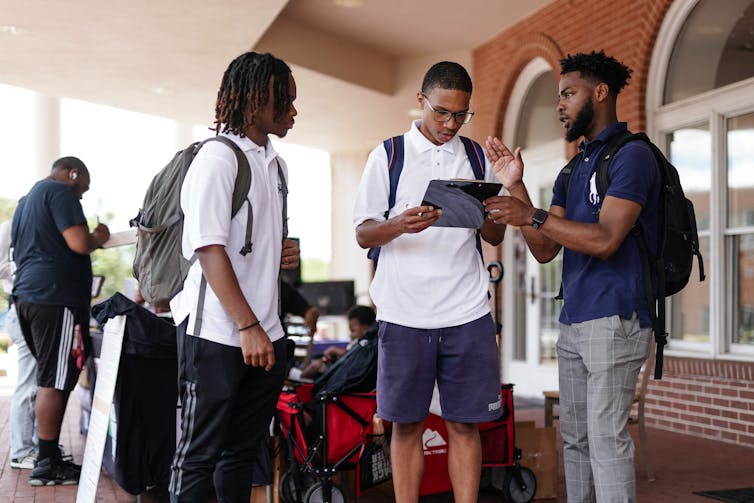
    Three young men with backpacks talking; one is reading a clipboard.
    Marchellos Scott, right, assists Morehouse College students with voter registration at a booth on August 19, 2024, in Atlanta.
    Elijah Nouvelage / AFP via Getty Images

    Prepare Your Identification Documents

    If you reside in a state that requires identification to vote in person, be sure to gather the necessary documents, which may include a driver’s license or bank statements with your name and address, before heading to the polling place. You can locate your county election office’s contact information here. For a detailed list of acceptable ID documents and any exceptions, visit this webpage. Alternatively, call your local election office for specific requirements.

    If you’re voting absentee, you can check the identification verification rules for your state here.

    Locate Your Polling Place

    Make sure you’re heading to the right polling location by using this tool. You can also reach out to your county election office to confirm your polling place and its hours. Find your county’s election office contact information here.

    Once you know where and when to vote, you can check in at your polling place. Typically, you should receive a ballot, be directed to a voting booth, and cast your vote by placing your ballot into a machine or a box before heading out happily.

    However, there can be issues at the check-in stage.

    Potential Issues at the Polls

    Here are some challenges you might face when voting, along with ways to address them:

    Issue No. 1: Polling Machines Malfunction.

    If you’re asked to leave due to broken machines, don’t leave. Instead, request a paper ballot.

    Issue No. 2: Polls Close While You’re in Line.

    If you’re still in line when the polls officially close, maintain your position and wait to vote. You have every right to cast your ballot even if you are still waiting. Stay in line and wait your turn to vote.

    Issue No. 3: Not Listed as a Registered Voter.

    If told you can’t vote because your name isn’t on the registry, request that the poll worker check again against the list of supplemental voters. If they still can’t find your name, confirm with the worker that you are at the correct polling location.

    Three people at a table with computers, working during the election.
    Poll workers want you to vote, but issues can arise.
    Brendan Smialowski/AFP via Getty Images

    Issue No. 4: Your Voting Eligibility is Challenged.

    If your ability to vote is still being contested even after confirming your polling location, request a provisional ballot. This option is available in every state except for Idaho and Minnesota. For your state’s specific rules regarding provisional ballots, check here.

    You can track your provisional ballot here.

    Contact a Voter Assistance Hotline

    If you’re not offered a provisional ballot, don’t hesitate to call an election hotline for assistance. Below are four hotlines operated by members of the nonpartisan Election Protection coalition:

    English: 866-OUR-VOTE / 866-687-8683, from the Lawyers’ Committee for Civil Rights Under Law

    Spanish: 888-VE-Y-VOTA / 888-839-8682, from the National Association of Latino Elected and Appointed Officials Education Fund

    Asian Languages: 888-API-VOTE / 888-274-8683, from Asian and Pacific Islander American Vote

    Arabic: 844-YALLA-US / 844-925-5287, from the Arab American Institute

    Report Voter Intimidation

    If someone attempts to intimidate you regarding your voting choices, firmly request a ballot from the polling site. Call one of the hotlines above to report the intimidation and consider filing a complaint with the FBI either by phone at 800-CALL-FBI – 800-225-5324 – or online at tips.fbi.gov.

    Consider Legal Action

    If you’re still unable to vote, you may want to pursue legal options. However, it’s wise to obtain specific advice regarding your situation from one of the hotlines, which typically have free legal resources available. Make note of the names of individuals who obstructed your voting and gather contact information from witnesses if possible.

    Leer en español

    This article has been updated from its original publication on November 2, 2022.

  • U.S. IPOs Raise $27.3B in 2024, Surpassing Last Year

    U.S. IPOs Raise $27.3B in 2024, Surpassing Last Year

    The U.S. IPO Market: A Gradual Recovery in 2024

    An Overview of Recent Trends

    The U.S. IPO market has been experiencing a gradual recovery in 2024 following a notable uptick in activity in 2023. This resurgence is encouraging for investors and companies alike, as it signifies a return to a more favorable climate for initial public offerings (IPOs). Notable companies such as Instacart, Klaviyo, and Birkenstock made headlines with their stock market debuts last year, setting the stage for continued momentum in the current year.

    Performance Highlights of 2024

    So far in 2024, the IPO market has already surpassed the total capital raised in 2023, indicating a robust recovery. Statistics reveal that 121 initial public offerings have been completed this year, raising a commendable $27.3 billion. In comparison, during the same period in 2023, only 101 IPOs were completed with a total capital of $19.4 billion. This marked increase in both volume and capital raised reflects investor interest and company readiness to enter public markets under more favorable conditions.

    Notable IPOs of 2024

    One of the standout IPOs of the year has been Reddit, whose highly anticipated stock market debut in March garnered significant attention. It quickly became a highlight of the year, underscoring a more positive environment for IPOs compared to the two preceding years. Following its launch, Reddit’s shares have exhibited impressive growth, trading at approximately $81—over 100 percent higher than its IPO price of $34. This performance has revitalized optimism among both investors and businesses looking to capitalize on the financial benefits of going public.

    Future Outlook and Considerations

    As we look to the future, the outlook for IPO activity suggests a potential cooling in the fourth quarter of 2024. This anticipated slowdown stems mainly from the approaching U.S. presidential election, along with various geopolitical concerns that contribute to an atmosphere of uncertainty. Companies and underwriting banks tend to proceed cautiously amidst such conditions, preferring to delay public offerings until the market becomes more stable.

    Building a Backlog for 2025

    This cautious approach adopted by stakeholders may lead to a backlog of IPOs slated for 2025. If the current trend of gradual loosening of monetary conditions persists, it could pave the way for a more normal and robust IPO activity in the following year. Such an evolution would be beneficial for companies holding off on their IPOs, enabling them to tap into the market at an opportune time, potentially facilitating more strategic growth and investment opportunities.

    Conclusion

    (As requested, this blog does not include a conclusion.)

  • Kamala Harris: Redefining Women’s Political Leadership for Victory

    Kamala Harris: Redefining Women’s Political Leadership for Victory

    In the closing days of the U.S. presidential election campaign, there exists a genuine potential for a woman to ascend to the highest office. This raises the question of why it has taken so long for this to happen, and whether Kamala Harris possesses the qualities needed to make history.

    My work focuses on examining notable women throughout history and how they collectively illustrate the evolving role of women in society. Specifically, I have sought to uncover the historical themes and trends that explain the emergence of the first elected female leaders.

    Generally, women in politics are viewed as a minority, often emerging from disadvantaged backgrounds. When they do achieve success, they’re often seen as exceptions in a traditionally male-dominated system.

    However, the intricate dynamics of gender, race, class, and culture reveal a more complex reality, as the dialogue surrounding Harris’s biracial identity illustrates.

    I have identified three distinct groups of women who have successfully assumed leadership roles in their nations since Sirimavo Bandaranaike of Ceylon (now Sri Lanka) became the world’s first female prime minister in 1960.

    Does Kamala Harris belong to any of these categories? If she does, does she have the qualities necessary to become president? Or, given its status as a global superpower, does the U.S. require a new style of female leadership?

    Dynastic Leaders

    The first group consists of women who have risen to power primarily through hereditary and dynastic lines rather than through contemporary democratic processes.

    Bandaranaike was often referred to as the “gentle widow” of Solomon Bandaranaike, Ceylon’s fourth prime minister, who was assassinated in 1959. She was followed by other dynastic female leaders, like Indira Gandhi (India), Benazir Bhutto (Pakistan), and Park Geun-hye (South Korea), each taking office after the loss of their fathers. Others such as Corazon Aquino (Philippines), Violeta Chamorro (Nicaragua), and Khaleda Zia (Bangladesh) stepped into leadership after the assassination of their husbands.

    Through these roles, these women aimed to revitalize family legacies, often embodying traditional maternal figures who were seen as nurturing leaders for newly decolonized nations. Bandaranaike, as her biographer noted, was “the symbol, the figurehead that was necessary; the spark to ignite the flame.”

    It wasn’t until 2016 that Taiwan’s Tsai Ing-wen became the first woman in Asia to lead her country without being born into a political family. This context underscores the paradox of female leadership arising in societies marked by deep gender, class, and ethnic disparities, even in some Islamic nations that were among the first to elect women.

    While coming from a political dynasty may benefit many female leaders, for Kamala Harris, the lack of such a pedigree might actually work in her favor in a country that prides itself on being a meritocratic melting pot.

    To be sure, the U.S. has its political dynasties, with families like the Bushes and Kennedys holding sway. However, Hillary Clinton’s defeat by Donald Trump in 2016 could partly be attributed to a backlash against the idea of a Clinton dynasty. Harris, being the daughter of immigrants from India and Jamaica, may be more appealing to voters this time around.

    Conservative Women Leaders

    The second group consists of politically conservative women, predominantly white and Western. While some, such as Golda Meir (Israel) and Margaret Thatcher (UK), were elected, others like Kim Campbell (Canada) and Theresa May (UK) were appointed by their parties during their terms. This suggests a general hesitance among conservative voters to embrace change by supporting women candidates.

    Women in this group often aim to be viewed as equal to their male counterparts, positioning themselves as “honorary men.” Margaret Thatcher famously adopted the “Iron Lady” persona during the 1982 Falklands War, while Golda Meir’s image fluctuated between the nurturing grandmother and the overbearing mother.

    Harris does not belong to this group. Had she been a Republican, she might have created a maternal image as a caring figure who supports traditionally conservative values, such as gun rights. However, her appeal leans towards the progressive side of American society, which may actually work to her advantage.

    Progressive Change-Makers

    The third group leans left and actively confronts restrictive gender and maternal roles. Although most female world leaders have children, some in this group do not. Unlike those in the previous categories, these women often challenge existing male power structures and advocate for political reform, making it generally more challenging for them to gain election.

    Women in this group frequently share backgrounds in academia or public service. Notable examples include Gro Harlem Brundtland (Norway), a medical doctor; Mary McAleese (Ireland), a lawyer and academic; and Angela Merkel (Germany), who holds a PhD in quantum chemistry.

    These leaders strive to create new forms of leadership by encouraging more women to enter politics and confronting sexism, homophobia, and racism. Their focus is broader, aiming to transform global governance toward greater pluralism and kindness. Since Elizabeth Domitien became the prime minister of the Central African Republic in 1975, more women leaders who fit this profile have emerged, including Vigdis Finnbogadóttir (Iceland), Michelle Bachelet (Chile), and Jacinda Ardern (New Zealand).

    The Challenge for Harris

    Kamala Harris most clearly fits into this last category. She is well-educated and has extensive public service experience. Unlike many from other groups, she does not have children, which has led to derogatory labels such as "childless cat lady." This points to perhaps her most formidable obstacle: navigating the hyper-masculine culture of a military-dominant superpower.

    Unsurprisingly, rival military powers like Russia and China have yet to elect a woman leader. This situation suggests that becoming a transformative, social change leader in a nuclear-capable nation may require a different kind of female leadership—perhaps a new-age warrior woman.

    It remains to be seen whether the U.S., along with the world and Harris herself, is prepared for this role.

  • Trump’s Standing Among America’s 45 Presidents: A Unique Ranking

    Trump’s Standing Among America’s 45 Presidents: A Unique Ranking

    At times, Donald Trump can be considered the G.O.A.T. — the “greatest of all time” — among U.S. presidents. However, it’s essential to note that “greatest” here refers more to quantity than to quality.

    He stands out notably as the greatest liar, with media reports tracking an astonishing tally of lies and exaggerations, including over 30,000 during his presidency and 40 within a single recent rally in Reading, Pennsylvania.

    He is also the greatest figure to evade legal accountability, famously asserting, “I could stand in the middle of Fifth Avenue and shoot somebody, and I wouldn’t lose any voters, OK?” This statement reflects a cavalier attitude that carried through to the events of January 6, 2021, when he incited an insurrection against the government, followed by his persistent denial of any wrongdoing.

    Trump is notorious as the greatest narcissist, claiming “I alone can fix it,” suggesting he can address various issues like the economy, immigration, women’s welfare (“I will protect you,”), the perceived “poisoning” of American blood, and international conflicts such as the Ukrainian war.

    Trump vs. Everyone Else

    While Trump may dominate in these dubious categories, he’s not without competition among the other 45 U.S. presidents.

    Dishonesty has been a recurring theme in the White House, with examples including Dwight D. Eisenhower’s denial regarding CIA involvement in the 1954 Guatemalan coup and Bill Clinton’s prevarications about his affair with Monica Lewinsky.

    Clinton denies an affair with Monica Lewinsky in 1998, which he later admitted. (The Associated Press)

    Other presidents have seen themselves as above the law as well. For instance, Andrew Jackson ignored an 1832 Supreme Court ruling stating that removing the Cherokee from Georgia was illegal, famously declaring, “John Marshall has made his decision; now let him enforce it.” Richard Nixon attempted to brazenly escape from the Watergate scandal.

    However, Trump’s narcissism seems unparalleled. While American presidents often possess substantial ego — sometimes bordering on hubris, which is an extreme and often irrational sense of pride — Trump’s self-perception and ambition have reached new heights. After all, no one enters the race for the presidency from the stands of a Little League game.

    The quest for political power often escalates through stages, a dynamic that can be described as a “compound appetite,” where each new achievement feeds an ever-growing desire for power and entitlement.

    Compound Interest vs. Compound Appetite

    Compound interest — different from compound appetite — is a concept familiar to anyone with a savings account. It refers to interest calculated on the initial principal and on previously earned interest, resulting in “interest on interest.”

    Warren Buffett, a well-known investor, compares compound interest to a snowball that grows in size as it rolls down a hill during winter.

    Trump’s life story exemplifies an “appetite” variant of this compounding dynamic. His trajectory demonstrates the potential dangers of a snowball of ambition that can devastate everything in its wake.

    He began by building on his father’s New York real estate business, transforming resources from the outer boroughs into a bustling Manhattan empire. He then leveraged media attention, financial maneuvering, and multiple bankruptcy strategies to create a worldwide brand encompassing hotels, casinos, and golf courses.

    His hunger for fame intensified with the success of The Apprentice, which nurtured his fledgling interest in politics into an overwhelming drive for power that is increasingly apparent today.

    A former NBC marketing executive involved in promoting the show even recently expressed regret, admitting he “helped create a monster.”

    The ‘Rest’ vs. the ‘Best’

    Trump’s insatiable desires have reached G.O.A.T. levels in the history of U.S. presidencies. More ambitious predecessors tended to temper their appetites, finding balance at higher, safer points along the metaphorical snowy hills extending outwards from the White House.

    The most effective leaders, despite their considerable flaws, managed to channel their egos to inspire transformative leadership. For instance, George Washington and Franklin D. Roosevelt both exhibited high self-esteem yet also demonstrated self-control and respect for democratic values and public service principles.


    Read more:
    How the fireside chat provided a model for calming the nation that President Trump failed to follow


    Without self-control, the United States’ history during the American Revolution would have been far more challenging. Similarly, the nation’s future during the difficult times of the Great Depression and World War II owed much to a commitment to democratic governance and public service.

    Some presidents showed a mixed record, achieving remarkable success even as their hubris led to costly mistakes for themselves and the country at large. Lyndon B. Johnson, a devoted champion of Roosevelt’s New Deal and a skilled architect of legislative reforms, understood that his impressive Great Society accomplishments were severely marred by the Vietnam War, which he referred to as “that bitch of a war.”

    Too confident in both American military power and his ability to manage a balance between military and social spending, Johnson joined a long line of presidents eager for victory in Vietnam, dismissing it as merely a “damn little pissant country.”

    Lyndon Johnson visits troops in South Vietnam in October 1966.
    (AP Photo)

    Absurdity vs. Danger

    In Trump’s case, his hubris has led to desires that swing between the laughably absurd and the seriously dangerous.

    On one hand, what won’t he sell to inflate his wealth? His recent campaign merchandise includes pieces of the suit he wore during his June debate with President Joe Biden for a staggering $1,485, following a history of marketing items like steaks and Trump University diplomas.

    On the other hand, Trump’s insatiable drive for power raises the concerning prospect of a second January 6 incident should he lose in the upcoming election.

    And while he claims he would veto a national abortion ban, his history of dishonesty casts doubt on whether he would actually refrain from escalating the repeal of Roe v. Wade once campaign pressures dissipate.


    Read more:
    Abortion bans are changing what it means to be young in America


    Would the construction of a border wall lead to mass deportations? Could inflammatory rhetoric toward opponents and the neglect of serious policy discussions result in police or military actions against the supposed “enemies from within” that he has consistently railed against?

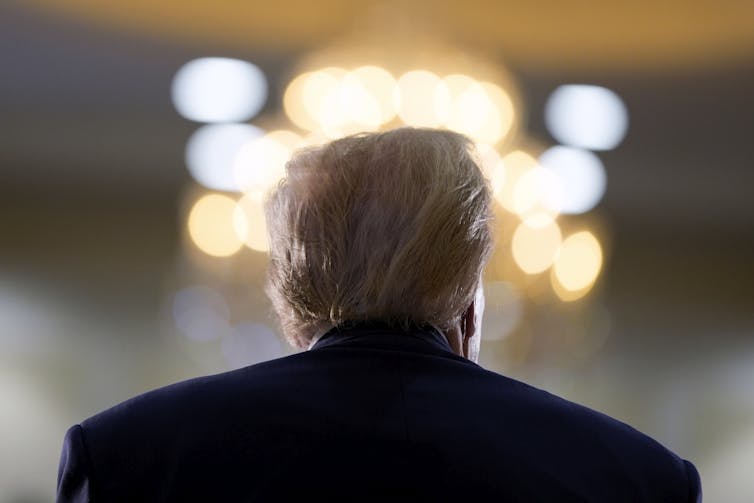
    Donald Trump is seen from behind as he speaks to a crowd.
    Donald Trump speaks during a roundtable with Latino leaders on Oct. 22, 2024, in Doral, Florida.
    (AP Photo/Alex Brandon)

    How Power Corrupts

    Trump’s combination of ego and appetite — and the resultant growth of these traits — is a contemporary illustration of the well-known adage from a British historian from the late 1800s about the corruptive nature of power:

    “Power tends to corrupt and absolute power corrupts absolutely.”

    This dynamic is evident in various settings — the behaviors of figures like Elon Musk and other tech giants, for example — but it has been starkly highlighted during the 2024 presidential campaign.

    The upcoming election and its aftermath will determine whether American politics revert to a traditional landscape where presidents manage their egos and hubris, or if Trump’s escalating appetite for power and narcissism introduces unprecedented threats to the country.

  • 9 Years of Trump Speeches: A Surge in Violent Rhetoric

    9 Years of Trump Speeches: A Surge in Violent Rhetoric

    Donald Trump’s political journey has been defined by a distinct and frequently contentious rhetorical approach. Since launching his campaign in 2015, his style has noticeably changed, drawing attention due to its straightforward, sometimes aggressive tone.

    Examining his speeches sheds light on how his choice of words has shaped his political image and influenced the wider scope of American politics.

    As political scientists, we conducted an analysis of Trump’s campaign and presidential speeches from 2015 to 2024. One of the most significant observations is the considerable increase in his use of violent language. The percentage of words linked to violence rose from nearly 0.6% in 2016 to 1.6% in 2024. In comparison, the proportion of violent terminology in 40 randomly selected weekly radio addresses delivered by Barack Obama stood at 0.79%.

    From the inception of Trump’s campaign in 2015 through the following nine years, his speeches have increasingly featured terminology associated with crime and military matters. For instance, in March 2024, Trump warned that “it’s going to be a bloodbath for the country” if he were not reelected in November.

    By 2024, Trump’s reliance on violent rhetoric had eclipsed that of nearly all other Democratic politicians we analyzed, aligning more closely with authoritarian leaders like Kim Jong Un and Fidel Castro.

    This increase in violent rhetoric isn’t directly tied to significant global events like wars. Instead, Trump has concentrated on issues of violent crime in American cities, even during a period of declining crime rates. His repeated references to “murderers, rapists, and thugs” create an image of a nation under threat, amplifying fears among his supporters.

    Simultaneously, he portrays himself as a decisive leader ready to confront these alleged dangers.

    Trump claims, ‘I am the only one that can save this nation,’ on June 13, 2023, following his arraignment on 37 criminal charges regarding classified documents.

    Decline in Economic and Public Service Language

    While Trump’s discourse has turned more violent, it has also shifted away from conventional political discussions about economic performance and public service. In the earlier stages of his political career, Trump frequently addressed economic concerns, tapping into issues regarding jobs, trade, and national prosperity. However, his emphasis on these topics has notably diminished over time.

    This trend isn’t solely attributable to Trump. Both Democratic and Republican candidates have shown a decrease in economic language in their speeches since at least 2012.

    However, Trump’s withdrawal from economic dialogue is particularly striking. He has consistently placed less emphasis on public service topics like health care, housing, and transportation, using fewer terms related to “medicine,” “education,” and “childcare.”

    Instead, his rhetoric has increasingly gravitated towards identity politics and cultural themes, mirroring broader transformations in the American political discourse.

    Shift from Inclusive to Exclusionary Language

    Populism often highlights a dichotomy between “the people” and “the elites,” with politicians positioning themselves as advocates for ordinary citizens against corrupt insiders. Early in his political journey, Trump frequently employed such inclusive language, invoking the voice of “the people.”

    However, his rhetoric has since moved toward what we describe as “exclusionary populism,” frequently targeting political elites, immigrants, and media figures. The debate on September 10, 2024, between Trump and Kamala Harris was filled with instances of this, including a notable moment concerning immigrants allegedly eating dogs.

    This transition from inclusive to exclusionary rhetoric illustrates a broader strategy of defining politics as a struggle between “us” versus “them,” with Trump positioning himself as the protector of average Americans against external threats.

    Since launching his first presidential campaign, Trump’s rhetorical approach has undergone considerable transformations. During his initial run in 2015-2016, he utilized more inclusive language, incorporating terms like “we” and “the people” while reducing mentions of elites and negatively perceived groups (“them”).

    Upon entering office, however, his speeches adopted a more confrontational style, marked by an increase in violent language and more frequent references to “them.”

    This progression suggests that Trump’s rhetoric is flexible, adapting to the political climate and the audience he aims to reach. His growing reliance on provocative language and offensive terms following his election contrast with the more restrained tone he maintained during his 2016 campaign.

    Trump stated that “one really violent day” would eliminate crime in the U.S. during remarks on September 29, 2024, in Erie, PA.

    Vocal Assaults on Elites

    To comprehend Trump’s rhetoric more comprehensively, it can be compared to the language employed by other presidential candidates in the U.S. since 1952, as well as democratic and authoritarian global leaders.

    The only recent presidential candidates whose levels of violent language approached Trump’s in 2024 were Republican George W. Bush and Democrat John Kerry in 2004. However, while Bush and Kerry discussed the ongoing Iraq war, which was claiming hundreds of U.S. lives annually, Trump’s violent assertions were largely disconnected from any current events or statistics.

    When it comes to populism, Trump is notable for his harsh criticism of the elite. Since the onset of his political career in 2016, he has often spoken of his aim to “drain the swamp,” referring to the corruption prevalent among political elites. While many populist candidates criticize political insiders, Trump’s frequency of denunciations is greater than that of most recent U.S. presidential contenders.

    In 2024, for instance, Trump’s speeches included significantly more references to corrupt elites than his predecessors, highlighting a deeper commitment to exclusionary populist rhetoric.

    Although the rhetoric of politicians doesn’t always predict their actions, Trump’s growing affinity for violent language and populist themes could provide insight into his future behavior, whether as a president or in opposition. As scholars in political science, we believe monitoring the rise of such rhetoric is crucial due to its potential effects on the broader political environment.

  • Is Donald Trump a Fascist? Insights from an Expert

    Is Donald Trump a Fascist? Insights from an Expert

    Gen. John Kelly, who served as Donald Trump’s chief of staff longer than anyone else, recently voiced his apprehensions regarding the former president’s potential to embody fascist tendencies. In an interview with the New York Times, Kelly asserted that Trump “would govern like a dictator if given the chance.” Shortly after, Vice President Kamala Harris echoed his sentiments during an interview.

    In typical fashion, Trump responded with his trademark style of rhetoric. On Truth Social, he labeled Kelly a “degenerate … who fabricated a story fueled by pure Trump Derangement Syndrome Hatred.” He also took to X (formerly Twitter), claiming Harris had gone so far as to label him as Adolf Hitler, a point that is factually incorrect, as she has not made such a comparison. Interestingly, it was Trump’s own running mate, J.D. Vance, who privately referred to him as “America’s Hitler” in a text message.

    Kelly also offered a surprisingly detailed definition of fascism, a term that is often used both politically and as an insult. He described it as “a far-right authoritarian, ultranationalist political ideology characterized by a dictatorial leader, centralized autocracy, militarism, suppression of opposition, and belief in a natural social hierarchy.”

    This definition closely aligns with historical understandings of fascism, a political movement that began with Italy’s fascist party in 1919 and expanded across Europe during the interwar period. Historian Federico Finchelstein, from the New School for Social Research, has characterized fascism as “a political ideology that includes totalitarianism, state terrorism, imperialism, racism, and, particularly in Germany, the Holocaust.”

    ### Perspectives on Fascism from Historians

    The debate over whether the term fascism applies to Trump has been ongoing since his initial campaign and election on November 9, 2016. Early in this discourse, in a 2015 interview with a Vice reporter, Cornell University history professor Isabel Hull argued that Trump was “not principled enough to be a fascist,” leaning more towards a description of him as a “nativist-populist.”

    Finchelstein even wrote an entire book delineating the difference between historical fascism and modern populism. He stated that while they share various traits, fascism is inherently dictatorial, whereas populism operates within the constraints of democratic systems.

    However, populism can morph into fascism if it involves persecuting perceived internal enemies. Timothy Snyder, a Yale University history and global affairs professor, has consistently labeled Trump a fascist, asserting that Americans may growingly adapt to the “banality” of tyranny.

    In the wake of the January 6, 2021, Capitol insurrection, Finchelstein reevaluated his stance, arguing in a Washington Post op-ed that Trump had exceeded populism and was adopting a fascist identity, posing a significant threat to democracy.

    Finchelstein’s transformation in perspective was mirrored by Robert Paxton, a professor emeritus at Columbia University, who suggested that the term “fascist” had become “not just acceptable but necessary.”

    Yet, not all scholars are in agreement. Richard Evans, an emeritus professor at Cambridge University, contends that Trump does not meet the criteria of a fascist, suggesting that the January 6 events were “not a coup” and that there was no premeditated plan to seize government control. He argues that Trump lacks the classic fascistic drive for conquest and expansion, and that labeling him as such detracts from analyzing his political behavior as a unique phenomenon.

    Conversely, historian Ruth Ben-Ghiat from New York University offers a more nuanced view, suggesting that while the label of fascism may oversimplify Trump, it cannot be denied that he has created a new platform for fascist ideas and practices.

    In my opinion, Trump would embrace a full fascist framework if he had the opportunity to do so. The crucial question remains: will the American public permit him to take that path? He has already implemented what could be termed “fascist-lite” policies within the limits of his authority.

    He attempted to overturn a legitimate democratic election, nominated Supreme Court justices with the intention of dismantling Roe v. Wade and controlling women’s reproductive rights, and imposed additional procedural obstacles for immigrants seeking asylum, reminiscent of fascist racial laws. Moreover, he has threatened to deploy the military and law enforcement against political adversaries.

    Thus far, he has been compelled to operate within the boundaries of the democratic system. Should the American electorate choose to place him in power again, there’s no certainty those boundaries will hold. If fascism were to resurface, it would be in the form of tragedy rather than farce.

  • Military Ethicists Warn of Threats to Key American Traditions

    Military Ethicists Warn of Threats to Key American Traditions

    While on the campaign trail, former President Donald Trump has voiced concerns about significant threats facing the United States. He stated, “there is the outside enemy, and then we have the enemy from within. In my opinion, the enemy from within is more dangerous,” during an interview with Fox News on October 13, 2024.

    Trump further elaborated that “the bigger problem lies with the people from within. There are some very bad individuals—sick people, radical left extremists. I believe this situation could be effectively managed, if necessary, by the National Guard, or, if absolutely required, by the military.”

    Donald Trump discusses ‘the enemy within’ the United States.

    During a CNN segment discussing Trump’s comments on potentially deploying military forces on U.S. soil, Mark Esper, who served as Secretary of Defense under Trump, noted that Americans “should take those words seriously,” especially considering Trump’s previous attempts to use military force in such contexts.

    As military ethics professors, we are concerned that Trump’s past actions, alongside his recent statements regarding a potential second term, could place the military in a challenging position. A Supreme Court decision on July 1, 2024, which granted the president immunity for official actions—including as commander in chief—could exacerbate this already difficult scenario.

    Donald Trump states that armed forces should confront ‘the enemy from within’ the U.S.

    Response to Protests

    During the summer of 2020, protests erupted across the nation in response to the death of George Floyd on May 25. Trump indicated he was considering deploying U.S. military forces to several cities to restore order. He had already dispatched some National Guard troops to Washington, D.C., in an effort to manage the unrest.

    At that time, we contemplated the possibility of dissent within the military’s upper ranks, positing that resistance would be most effective if it emanated from high-ranking officials.

    Indeed, many top generals, admirals, and cabinet advisors resisted Trump’s urges to use military force in the streets, countering suggestions to “beat the hell out” of demonstrators or to “crack their skulls”—or even to “just shoot them.”

    Although Trump allegedly wished to send as many as 10,000 troops to D.C., significantly fewer were actually mobilized to the city. No federal military personnel were deployed against domestic protests that summer. Some National Guard troops were mobilized at the request of state governors, rather than through federal orders.

    The Importance of Civilian Control

    A January 12, 2021, message from the nation’s top military officers emphasizing that ‘We support and defend the Constitution’ and not any individual.
    Joint Chiefs of Staff

    Looking ahead to a potential second term, Trump has indicated a desire to appoint Cabinet and government officials who will carry out his orders without question, as opposed to those who might try to mitigate his more extreme impulses.

    This means inquiries about dissent and disobedience are likely to fall more heavily on lower-ranking military personnel if Trump is re-elected, compared to his first term.

    The U.S. military has traditionally upheld the principle of civilian control to prevent the potential for the military to be used for political ends—a concern rooted in the Revolutionary War experience. The founders structured the Constitution to ensure the president, an elected civilian, would serve as the commander in chief. Following World War II, Congress mandated that the secretary of defense must also be a civilian.

    Consequently, in an era of increasing political division, military education programs are putting a greater emphasis on the oath service members take to protect the Constitution rather than allegiance to any individual.

    As the Joint Chiefs of Staff reiterated after the January 6, 2021, insurrection and just before Joe Biden’s inauguration, military personnel have a duty to serve the interests of the nation, not any political leader or party.

    Nonpartisanship May Be Viewed as Partisan

    If military personnel are ordered to deploy within U.S. borders, they may face a dilemma where maintaining their tradition of political neutrality could be interpreted as a partisan stance.

    While service members have a responsibility to follow orders from superiors, as military ethicists we recognize that the nature of the order itself is only one aspect of determining its moral justification.

    The political underpinnings of an order are equally significant, as the military’s obligation to refrain from political involvement is intertwined with civilian leaders’ duty not to misuse the military for partisan interests.

    If an elected official attempts to deploy the military for overtly partisan objectives, military personnel could face accusations of bias whether they choose to follow the orders or resist—despite their intent to uphold the military’s commitment to neutrality.

    At the nation’s founding, leaders like John Adams and Thomas Jefferson expressed concerns about a military loyal to a single leader instead of a system of governance. James Madison feared soldiers could become tools of oppression for those in power, wielding their authority against citizens.

    Trump has suggested that the National Guard or military could “easily manage” political demonstrators. He has promoted the idea of using “really fierce, tough” police strategies to combat crime. Additionally, he has voiced a desire for military officers to prioritize obedience to him over the Constitution.

    It remains uncertain whether military personnel could follow such orders while maintaining their nonpartisan stance. Resisting directives for military deployments to U.S. cities for political purposes would align with the principle of civilian control, following the framers’ vision of a military that belongs to the people—not just the president.

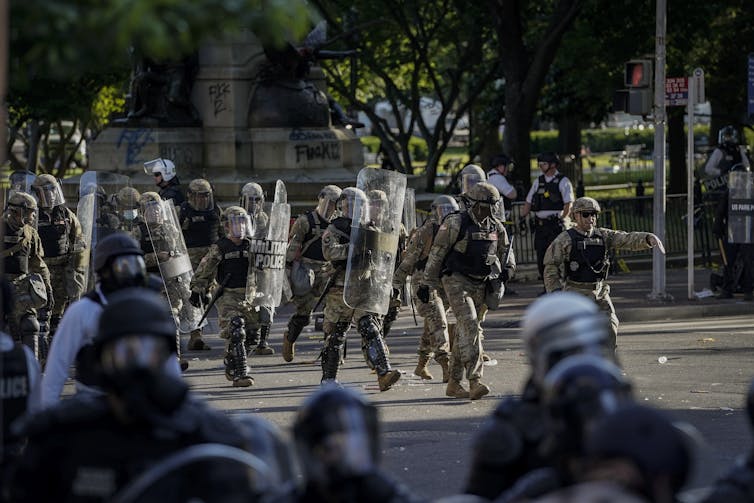
    Military personnel walking into a cleared area.
    In 2020, military personnel clearing space for protesters in Washington.
    Drew Angerer/Getty Images

    Challenges for Service Members

    A notable history exists of military figures who displayed the moral courage to refuse unethical commands. It was a junior officer who initially revealed the systematic torture of detainees during the global war on terror.

    This precedent may be particularly relevant now, as there are ongoing discussions asserting that certain unethical orders might still have legal justifications.

    Recently, some of Trump’s former military advisors have voiced apprehensions concerning the possible use of U.S. troops in American cities. However, various civilian advisors have already suggested being bolder in seeking legal avenues to deploy troops domestically. The Supreme Court’s ruling from July 1, 2024, providing the president with immunity for official actions—most likely including commands to military forces—only complicates the issue further.

    No matter the outcome of the 2024 presidential election, significant protests over policies could arise—potentially even regarding election outcomes. If the military were to be called upon in response to such situations, personnel must reflect on whether they could ethically follow deployment orders. It’s essential for them to address these critical questions now.

    We encourage our students to envision their responses in various ethical dilemmas, both real and hypothetical. In this case, one key ethical question is revealing itself for those currently serving:

    “Would you follow an order from a president—a specific president issuing an order for a particular rationale—to deploy to a U.S. city? What implications would that carry for the nation, and what could it mean for American democracy if you chose not to?”

    Many Americans express gratitude towards military personnel, often thanking them for their service and acknowledging them during public events. However, these individuals may need much more than mere appreciation in the near future.

    The opinions expressed in this piece are those of the authors and do not endorse any political candidate. They do not reflect the official stance of the U.S. Naval Academy, the Naval Postgraduate School, the U.S. Navy, the Department of Defense, or any other entity in the U.S. government; the authors are not authorized to represent these entities officially.

    This article incorporates previously published material from June 11, 2020.

  • Republican States Tighten Voting Rules: A 2020 Aftermath Analysis

    Republican States Tighten Voting Rules: A 2020 Aftermath Analysis

    In late September, Governor Kevin Stitt of Oklahoma announced that election officials had purged 453,000 individuals from the state’s voter rolls since 2021. Considering Oklahoma has about 2.3 million registered voters, this means approximately one in six registered voters has been removed from the rolls.

    While some of those who were removed were deceased or lost their voting rights due to felony convictions, nearly 200,000 individuals were classified as “inactive voters.” This designation typically occurs when a voter fails to respond to a postcard sent to their address.

    Voters who believe they were wrongfully removed can re-register, but this “voter list maintenance” process nonetheless presents a significant hurdle to participating in elections.

    Historically, Oklahoma has one of the lowest voter turnout rates in the nation, a situation that diverges from the broader national trend. Since 2018, voter turnout has notably increased across the United States in both presidential and midterm elections, as Americans increasingly perceive elections as having high stakes.

    Meanwhile, some states have made it simpler to vote. For instance, Minnesota allows voters to register online or in person on Election Day.

    In contrast, states like Oklahoma have implemented measures that dissuade or dishearten voters, complicating the voting process. Over the last decade, legislators in these states have capitalized on various Supreme Court decisions that have negated essential protections of the Voting Rights Act.

    These developments mark a new chapter in the ongoing struggle to safeguard one of democracy’s core tenets: the right to vote. Our analysis of voter turnout and voting access across the United States has shown that states with the most restrictive policies are predominantly governed by Republican legislatures.

    ### A Long History of Voter Disenfranchisement

    Elections in the United States have always been controlled by states, which have often used this power to marginalize minority groups.

    Before the Civil War, voting rights were largely restricted to white men. The landscape began to shift in 1870, with the ratification of the 15th Amendment, which prohibited states from denying the right to vote based on race, color, or prior condition of servitude.

    However, many southern states devised new ways to disenfranchise Black voters despite this constitutional safeguard. Tactics such as poll taxes, literacy tests, and grandfather clauses were employed to suppress Black electoral participation. Furthermore, many southern jurisdictions held all-white primaries, asserting that political parties were private organizations exempt from the 15th Amendment.

    When all else failed, intimidation and violence were used to prevent Black individuals from voting.

    While women gradually gained voting rights in the years following the Civil War, Black women in the South faced similar disenfranchisement as Black men. Consequently, white women became the primary beneficiaries of the 19th Amendment, ratified in 1920, which asserted that states could not deny voting rights based on sex.

    It wasn’t until the ratification of the 24th Amendment in 1964, which banned poll taxes, and the Voting Rights Act of 1965, which abolished literacy tests, that the promise of American democracy began to be fully realized.

    ### How States Are Erecting More Barriers

    Despite these important advances, voting in America remains anything but easy or universally accessible.

    In fact, numerous states have intensified efforts to regulate their voter rolls and impose obstacles to civic participation following unfounded claims of voter fraud made by then-President Donald Trump in the wake of the 2020 election. Republican-led states, such as Oklahoma, have particularly pursued restrictive measures.

    The Center for Public Integrity reports that 26 states have implemented barriers that make voting less accessible since 2020. These include various tactics aimed at complicating the voting process.

    Partisan redistricting also plays a role in discouraging turnout among minority party members. By manipulating district boundaries to favor one political party over another, such practices can lead to feelings of futility regarding voting.

    ### What Our Research Found

    Our research indicates that most states that have made voting more difficult since 2020 are located in the South (43%) or the Midwest (31%). The data suggests that the most significant declines in access have occurred in southern states with large Black populations.

    Republican-dominated state legislatures have led the charge in passing restrictive voting laws, with 86% of these states enacting such barriers. By contrast, only 5% of states with Democratic leadership have made voting more challenging.

    Moreover, our findings show a direct correlation between high barriers to voting and lower voter turnout rates.

    When evaluating turnout across all states, “high barrier” states exhibited an average turnout of 45.8%, compared to 49% in “low barrier” states during the 2022 election—a statistically significant difference. Overall, the average turnout rate across the U.S. in 2022 was 46.2%.

    In the South, 11 out of 16 states made voting more cumbersome post-2020 election, and almost all recorded voter turnout rates below the national average for 2022, with Mississippi having the lowest at 32.5%.

    High-barrier southern states led by Republican legislators recorded an average turnout of 40.6%, while their counterparts in other regions with similar barriers had a turnout of 46.2%.

    Conversely, three low-barrier states—Oregon, Maine, and Minnesota—boasted turnout rates exceeding 60%, all with either Democratic-controlled legislatures or, in Minnesota’s case, a divided legislature with a Democratic governor.

    ### States Should Motivate Voters, Not Demoralize Them

    Restrictive voting policies, often justified as “election security,” are likely to affect turnout in upcoming elections as well.

    Research indicates that Americans are motivated to vote out of a sense of civic duty or a belief that election outcomes significantly impact their lives and communities.

    However, opting to stay home on Election Day can also be a rational decision given the exceedingly low odds of being the deciding voter in either a competitive or non-competitive state.

    Given the already low national voter turnout rates compared to other democracies, state legislatures should focus on encouraging voter participation and simplifying the voting process, instead of imposing additional barriers.

  • Impact of Marketing on Swing Voters Ahead of U.S. Elections

    Impact of Marketing on Swing Voters Ahead of U.S. Elections

    Americans are on the verge of electing their next president in a race that is, quite literally, too close to call. From a marketing standpoint, you could think of Republican Donald Trump and Democrat Kamala Harris each owning a 45% share of the voter base, while the remaining 10% consists of undecided voters and those who are not inclined to cast their ballots.

    In my political marketing course at the University of Windsor, we’re employing a marketing perspective to analyze the different elements that might sway the election outcome on November 5. During a recent road trip through the critical battleground state of Pennsylvania, I gained valuable insights into the strengths of both the Democratic and Republican brands.

    I’m perceiving these political parties as established brands with loyal followings. However, their present success is shaped by the ongoing electoral campaign.

    Regarding the Democratic Party, voters are not exactly buying into the party itself, but rather its current presidential nominee, Harris, who is either enhancing or detracting from the party’s appeal. The same logic applies to Trump’s Republican Party.

    From a marketing viewpoint, we can closely observe promotional strategies that include traditional and social media, debates, interviews, and rallies. We also track their fundraising activities, essentially their promotional budgets. The impact of these initiatives will be visible on November 5.

    Forecasting Results

    This marks the third time I’ve taught a political marketing course in the context of a U.S. presidential election. My students analyze the core brands of the parties as well as the influence of candidates, debates, media exposure, and Political Action Committees. Notably, students will predict the election results the day before the election.

    The presidency is not determined by the national popular vote but is a competitive state-by-state battle, with each state allotted a certain number of votes in the Electoral College. A total of 538 Electoral College votes are available, so a candidate needs 270 to win.

    Most states have predictable voting trends. California will almost certainly go Democratic (with 54 votes), while Texas is likely to remain Republican (with 40 votes). Therefore, the election hinges on seven swing states: Nevada, Arizona, Georgia, North Carolina, Wisconsin, Michigan, and Pennsylvania.


    Read more:
    North Carolina is not truly red or blue − making political predictions significantly more challenging


    Currently, the Democrats have 226 safe Electoral College votes, providing them with 20 potential pathways to 270 — 19 of which require a win in Pennsylvania. Meanwhile, the Republicans have 219 safe Electoral College votes and also have 21 routes to 270 — 19 of which rely on securing Pennsylvania. This is why I chose to drive through Pennsylvania to engage with voters.

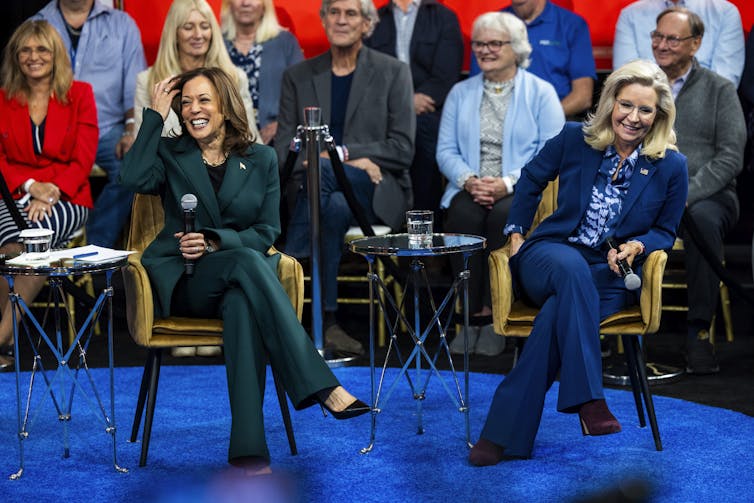
    Former Republican Congresswoman Liz Cheney, from right, Vice President Kamala Harris, and a moderator engage in a town hall meeting in Malvern, Pa., on October 21, 2024.
    (AP Photo/Jacquelyn Martin)

    Insights from Pennsylvania

    I visited Pennsylvania from September 30 to October 4, right after Hurricane Helene struck the southeastern U.S., coinciding with a vice-presidential debate in New York, a Longshoremen strike, and Hurricane Milton approaching Florida.

    I started in Erie, a pivotal county known for mirroring the overall voting trends of Pennsylvania—making it a strong indicator of statewide outcomes. My journey took me to a suburb of Pittsburgh and then to the borough of State College, home of Penn State University. I frequently deviated from the highway to visit smaller towns, observe signage, try local cuisine, and ask questions.

    Each conversation began with a straightforward introduction:

    “I’m a marketing professor from Canada conducting a study on the U.S. presidential election. Could you share your thoughts on how Pennsylvania will vote? I don’t need to know your individual vote.”

    The university students I engaged with were mostly juniors and seniors. Aside from them, the other individuals I spoke to were primarily working class, a blend of blue-collar and white-collar workers, ages 35 and older. Everyone I conversed with reported their participation in the 2022 midterm elections and expressed their intention to vote this year.

    While interviewing attendees at a car show in Erie, I found a balanced split between vintage car enthusiasts and young men with modern vehicles. They all acknowledged Pennsylvania’s division, but noted the differing atmospheres between the parties.

    Both groups suggested that Democratic voters displayed brand loyalty or a desire to distance themselves from Trump. Interestingly, both demographics, including Democratic supporters, pointed out that Trump backers seemed fixated solely on him as the current Republican brand.

    People hold Harris Walz signs. One man wears Pittsburgh Steelers T-shirt.
    Supporters of Kamala Harris hold signs during a campaign rally on October 10, 2024, in Pittsburgh.
    (AP Photo/Matt Freed)

    Key Economic Concerns

    Many respondents indicated that the economy would be the primary issue influencing undecided voters, with inflation being a significant concern as well.

    When asked who he thought would win in Erie County, one Democratic voter simply stated, “Democrats.” When asked why, he responded, “I’m just hoping.”

    Conversely, during a visit to a diner in Erie, a woman expressed her support for Harris based on reproductive rights, while the others leaned toward Trump due to his economic policies, views on border security, foreign wars, and crime rates.

    One diner patron had attended a recent Trump rally in Erie and described it as exhilarating, comparing it to a rock concert, enjoying the familiar rhetoric he’d heard before. “It was like seeing your favorite band perform their greatest hits,” he said.

    From my discussions in Erie, it was clear that while Democrats were often brand-loyal or motivated by a desire to prevent Trump from returning, Republicans spoke of their allegiance to Trump specifically, without referencing past leaders or voting behavior.

    A man that is overly tanned with fluffy grey-blond hair gesturing at a campaign rally.
    Donald Trump speaks during a campaign rally in Erie, Pennsylvania, on September 29, 2024.
    (AP Photo/Rebecca Droke)

    Pittsburgh Experience

    Pittsburgh wasn’t as fruitful. I inadvertently picked the wrong nearby town. While I engaged with numerous voters in Erie, I was able to find only two individuals willing to talk in Smithton.

    State College was a completely different experience. My hotel was not far from Penn State University, and there was a restaurant/sports bar on the property.

    I entered at 4 p.m., and the bartender inquired about my purpose for being in town. A patron nearby offered to answer questions, followed by another volunteer. I ended up spending seven hours there, with people eager to share their perspectives.

    I spoke with individuals across the political spectrum. Among the 40-plus people I interviewed, one couple represented the prevailing sentiment in the state. She identified as a Republican, and he as a Democrat. He remarked, “There’s just too much happening — inflation, hurricanes, the strike by dockworkers, steel and fracking issues, and illegal immigration. It’s overwhelming.”

    He shrugged, looking disheartened, while she smiled, looking forward to Election Day.

    A man with fluffy grey-blond hair is seen in silhouette as people cheer behind him.
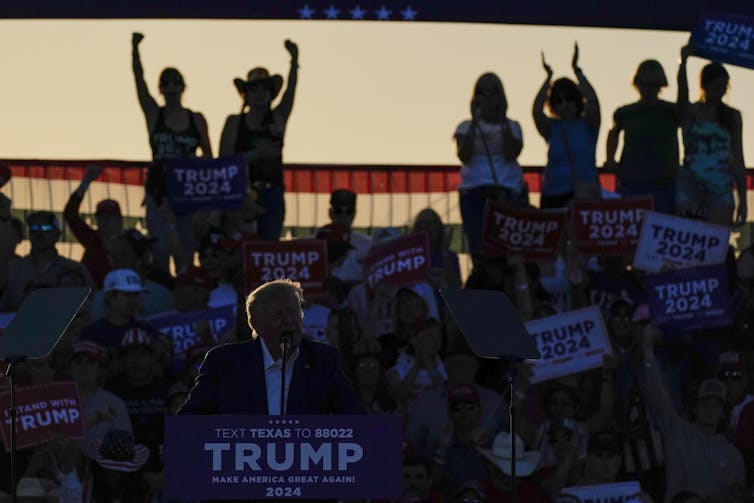
    Donald Trump rallies his supporters at a gathering in Waco, Texas, in March 2023. Trump is anticipated to secure the state’s Electoral College votes.
    (AP Photo/Nathan Howard)

    Conclusions from Engaging with Voters

    If the election were held today, my assessment is that Republicans would likely take Pennsylvania based on my discussions with voters. However, this situation could shift with any significant changes in pivotal issues, such as positive economic developments or emerging stories that might impact the race.

    This road trip illuminated the complexities of voter decision-making, underlining the significance of brand loyalty and enthusiasm. A notable share of voters expressed a desire for different leaders from both parties, which could influence turnout.

    Moreover, it brought to light the differences between traditional consumer choices and voter decisions. If I prefer Walmart over Amazon on Black Friday, my neighbor’s choice won’t affect my decision.

    However, in the realm of politics, my neighbor’s vote has the potential to shape my life for the next four years.

  • Can Trump and Harris Win Swing Voters Amid State Control?

    Can Trump and Harris Win Swing Voters Amid State Control?

    Pennsylvania, Michigan, Wisconsin, Georgia, Nevada, Arizona, North Carolina.

    In a seemingly endless cycle of tension, media narratives surrounding the U.S. presidential election between former President Donald Trump and Vice President Kamala Harris relentlessly highlight these seven key states.

    The outcome will likely hinge on these states—maybe just a handful or even a single one.

    Depending on how you view the electoral landscape, the mantra might be Pennsylvania, Pennsylvania, Pennsylvania. Or it could be Wisconsin, Wisconsin, Wisconsin? Or perhaps Georgia, Georgia, Georgia.

    Some analysts argue that to secure a victory, Harris must maintain the “blue wall” formed by Pennsylvania, Michigan, and Wisconsin—three largely white states with a significant number of working-class voters. The Democrats faced a setback in 2016 when Trump managed to fracture this wall, narrowly winning all three states.

    In 2020, Joe Biden, the Democratic candidate, successfully rebuilt the wall by winning in these states. (Biden actually won six of the seven contested states in 2020, with North Carolina being the only exception.)


    This election cycle, Harris must work to defend this wall, while Trump’s campaign aims to dismantle it once more.

    However, there may be potential vulnerabilities in the “blue wall.” If Harris can maintain her footing in Pennsylvania, there exists a pathway to victory for Democrats across the remaining battleground states.

    The Trump campaign is optimistic about replicating its 2016 success, focusing on winning back the crucial rust-belt state of Michigan.

    A Major Spotlight on ‘Swing Voters’

    The importance of these seven states means they receive intense scrutiny from both campaigns and the media. Trump and Harris, along with their running mates, have repeatedly visited Pennsylvania and Michigan, while residents are inundated with nonstop TV ads.


    The electoral fates of other states seem relatively sealed, leaning firmly toward one party or another.

    Trump has little chance of winning reliably Democratic states like New York or California. Conversely, Harris cannot expect to win solidly Republican states such as Wyoming or Tennessee.

    In the U.S. electoral system, presidential elections are not determined by a national popular vote but rather by the Electoral College, a system that has its roots in the era of slavery (in conjunction with widespread voter suppression). This results in large segments of the electorate effectively being disenfranchised.

    In the contested states, the polling margins are extremely close, echoing trends seen in many elections in this century.

    In 2020, for instance, Biden won the popular vote by roughly a four-point margin—about seven million votes. However, when it came to the Electoral College, which ultimately determines the victor, Biden prevailed by a mere around 45,000 votes: 10,457 in Arizona, 11,779 in Georgia, and 20,682 in Wisconsin.

    While polls are just one measure—and their accuracy can vary—they indicate that the outcomes in the seven battleground states in 2024 could be just as tightly contested.

    This is why both Harris and Trump have dedicated considerable time to these states, and why their campaigns—and the media—are fixated on mobilizing as many voters as possible.

    The electoral structure also results in a disproportionate focus on certain groups of voters—particularly “swing voters.”

    Both campaigns are targeting individuals who might have voted for Trump in 2016 and then switched to Biden four years later. They are trying to engage “shy” Republicans or Democrats—voters who have a general inclination toward one party but may not openly express their choices for various reasons, often related to the specific candidates.

    Given the significant role of the “blue wall” in both electoral politics and the broader American narrative, there tends to be an disproportionate emphasis (often unconsciously) on white swing voters.

    Audience at a Trump rally in Latrobe, Pennsylvania.
    Justin Merriman/EPA

    Pursuing the Swing Voters

    These voters could indeed prove to be the pivotal factor.

    However, in U.S. politics, outcomes are rarely determined by a single aspect.

    In a system without mandatory voting, where a small number of voters in a handful of states can sway the results, boosting voter turnout becomes vital. This election season, higher turnout could be crucial.

    This brings up an underlying tension in both campaigns.

    Among Trump’s supporters, there’s persistent pressure (and unsolicited advice) for him to “moderate” his positions on certain issues to win over “shy” or swing voters.

    This has been particularly true regarding reproductive rights, leading to mixed messages from Trump. He takes full credit for the overturning of Roe v. Wade while simultaneously asserting he does not support extreme right-wing stances on abortion bans.

    Trump’s selection of JD Vance as his vice-presidential pick indicates a diverging strategy—one that focuses less on swing voters and more on energizing and expanding their core demographic of white men. This approach is visible in much of Trump’s communication strategy and his frequent appearances on right-wing podcasts.

    However, this strategy is occasionally counterbalanced, often intentionally, by high-profile supporters, including his wife.

    On the flip side, the Harris campaign appears to be striving for a more balanced approach. Harris is engaging swing voters by appearing on Fox News and sharing a platform with former Representative and vocal Trump adversary Liz Cheney. Additionally, she joined 100 Republicans at an event in Pennsylvania recently.

    Kamala Harris and Liz Cheney during an event in Pennsylvania.
    Kamala Harris (left) speaks alongside Liz Cheney at a Pennsylvania event.
    Jim Lo Scalzo/EPA

    Meanwhile, the Harris campaign is also focusing on energizing key demographics that tend to support Democrats. Harris aims to engage young women in the South by appearing on popular podcasts like Call Her Daddy, as well as reaching out to Black men through platforms like Charlamagne tha God’s podcast, where she recently participated in a live event in Detroit.

    Does the Strategy Work?

    The central question for both campaigns is whether one of these strategies undermines the other.

    Could the alliance between Democrats and the deeply conservative Cheney family on foreign policy lead to decreased turnout in politically charged states like Michigan, where anger about Democratic support for Israel could become a critical issue?

    Conversely, might Harris’ tougher stance on immigration dissuade enthusiasm among Black and Latino voters?

    Similarly, could the Republican Party’s views on reproductive rights, and the fallout from the overturning of Roe v. Wade, continue to alienate women voters for Trump, potentially without offsetting gains among men?

    The response remains unclear. And if polling predictions prove accurate, a decisive outcome may not be known until long after election day.

    Until then, the mantra echoes:

    Pennsylvania, Michigan, Wisconsin, Georgia, Nevada, Arizona, North Carolina.

  • The Critical Role of Margin of Error in 2024 Election Polls

    The Critical Role of Margin of Error in 2024 Election Polls

    Whenever you hear discussions about polling in the highly competitive presidential race between Vice President Kamala Harris and former President Donald Trump, the phrase “within the poll’s margin of error” often comes up. This term indicates that the contest is extremely close with no definitive frontrunner, even if one candidate holds a slight edge in support, such as 48% versus 47%.

    As the head of the Quinnipiac University Poll, which has assessed public sentiment on various policies and elections for over 30 years, I’ve noticed that since 2016, people have been particularly attuned to this technical term.

    During that election year, some Florida polls suggested that Hillary Clinton had a slight lead over Trump by a couple of percentage points. However, both journalists and the public frequently – and mistakenly – interpreted this lead as an indicator that Clinton was likely to clinch victory.

    Yet, that 1 or 2 percentage point advantage was still within the margin of error for those polls, and ultimately, Clinton lost Florida. This margin of error informs readers of the potential range for election outcomes based on the sample surveyed.

    Understanding the Margin of Error

    A poll consists of one or more questions posed to a small group, aiming to gauge the opinions of a larger population. The margin of error is a statistical estimate that reflects the accuracy of the poll results – specifically, how closely the surveyed group’s answers align with those of the broader population.

    If you could survey the entire larger population, there would be no margin of error. However, reaching everyone is challenging, difficult, and costly. For instance, the U.S. Census Bureau invested $13.7 billion over several years in its latest effort to count every individual in the United States every ten years and still wasn’t able to include everyone.

    Pollsters don’t possess that type of time or budget, so they utilize smaller population samples. They strive to gather representative samples where all members of the broader group have a chance of being included in the poll.

    The Impact of Sample Size

    The precision of a poll’s results largely hinges on the size of the sample surveyed. For example, a sample of 600 voters will yield a margin of error of about 4 percentage points, while a sample of 1,000 voters will have a margin of error just over 3 percentage points.

    The method used for selecting the sample is also crucial. In 1936, the Literary Digest magazine conducted a presidential election poll by mailing surveys to affluent individuals, such as telephone owners, car owners, and country club members. Since this sample represented only a wealthy demographic, it was not at all reflective of the entire U.S. voting population, making calculating a margin of error irrelevant.

    A larger sample size results in a smaller margin of error.
    Zieben007 via Wikimedia Commons, CC BY-SA

    Breaking Down the Margin of Error

    Let’s clarify how to interpret the margin of error. If a poll indicates that 47% of respondents favor Candidate A, and the margin of error is plus or minus 3 percentage points, that implies support for Candidate A among the general population likely falls between 44% (47 minus 3) and 50% (47 plus 3).

    It’s worth noting that most polls pair their margin of error with another technical term, “confidence interval.” In a rigorous poll report, you might find something like, “The margin of error is plus or minus 3 percentage points, with a 95% confidence interval.” This means that if you were to conduct 100 random samples of the same size and asked the same questions, 95% of those samples would likely yield results within 3 percentage points of the reported figures.

    Assessing Candidate Support

    The idea of margin of error becomes more intricate when comparing support levels between candidates. If the margin of error is plus or minus 3 percentage points, the margin on the difference between candidate support levels is roughly twice that – around 6 percentage points in this case.

    That’s because this margin of error encompasses not just the percentage for Candidate A but also that for their opponent.

    Reflecting back on the 2016 election, the final Quinnipiac University Poll in Florida right before Election Day showed Clinton with 46% support and Trump with 45%. With a margin of error of 3.9 percentage points, that meant Clinton could expect between 42.1% and 49.9%, while Trump was anticipated to secure between 41.1% and 48.9%.

    Ultimately, Trump garnered 48.6% of the vote in Florida, against Clinton’s 47.4%. These results fell within our poll’s margin of error, justifying our characterization of the race as “too close to call” and highlighting that claiming Clinton was in the lead would have been incorrect.

    The Outlook for 2024

    As we move through the current election cycle, there’s a concerning trend wherein many media outlets report on polls without including the crucial margin of error information.

    Omitting or downplaying this information simplifies the narrative, allowing media platforms to present a clearer image of the race’s status. In an age dominated by technology and artificial intelligence, data can appear incredibly precise.

    However, polling isn’t as exact as it might seem. It constitutes an inexact science, relying on pollsters to gather snapshots of the complexities of human opinion at a specific moment. People’s views can change, and new insights can emerge as election campaigns progress.

    With the presidential election drawing near, our polling indicates a steady and tightly contested race, with many voters expressing firm decisions. Given that the differences between the candidates are within the margin of error in swing states, fall 2024 polling suggests that Americans should be prepared for a nail-biter of an election.

  • Trump’s New Trade Barriers: A Repeat of Past Mistakes?

    Trump’s New Trade Barriers: A Repeat of Past Mistakes?

    Donald Trump has a strong affinity for tariffs, believing that increasing prices on imported goods is central to his campaign for a second term in office.

    “Tariffs are the greatest thing ever invented,” he declared at a Michigan town hall in September 2024. He has vowed that if he regains the presidency, he will implement a blanket tariff of up to 20% on imports, and even as high as 200% on vehicles imported from Mexico, all in an effort to boost American manufacturing.

    This isn’t new territory for Trump; he was a proponent of tariffs during his first term from 2017 to 2021. During that time, he argued that such policies would help to correct the trade imbalance with China, revitalize American manufacturing jobs, and increase government revenue.

    Tariffs were imposed on a wide array of products, including steel, aluminum, solar panels, and washing machines.

    But did this approach yield positive results? According to our research, the answer is no.

    Our findings suggest that introducing tariffs actually intensified the United States’ reliance on foreign suppliers, failing to generate new jobs domestically. Moreover, these tariffs increased costs for American consumers and provoked retaliatory measures from several trading partners, including China, the European Union, Canada, Mexico, India, and Turkey.

    For instance, China responded by tripling its tariffs on American automobiles. The EU took action by lodging disputes with the World Trade Organization and significantly raising tariffs on US products such as Harley-Davidson motorcycles, jeans, and bourbon.

    Furthermore, Trump’s tariffs did not stimulate a surge in US manufacturing. Our research indicates that, following the implementation of tariffs, US manufacturing supply chains became less diversified, often resulting in domestic companies being sidelined in favor of foreign competitors.

    We found evidence that US manufacturers reduced their global network while simultaneously increasing their dependence on a limited number of foreign companies. This further supports the notion that Trump’s tariffs failed to generate the desired outcomes.

    Our research indicates that “reshoring”—the process of moving production back to the home country—is not achievable without a well-established ecosystem of suppliers, intermediaries, and customers. Consequently, imposing trade barriers without appropriate support for developing local supply chains is unlikely to yield a stronger economy or create more jobs.

    Essentially, for reshoring to be successful, the domestic economy must possess the capacity to meet demand. However, the US, similar to the UK, has lost significant manufacturing capabilities, and restoring them is a long-term endeavor.

    Building a new industry demands infrastructure, skilled labor, and robust supply chains, with a tailored approach needed for each sector. Securing the right skills and workforce is often the biggest hurdle and may necessitate immigration.

    It’s worth noting that even this strategy may fail in highly complex industries. Despite generous incentives provided by the Biden administration to boost chip manufacturing in the US, Taiwan still holds a dominant position in the market, raising doubts about the US’s competitiveness.

    Bourbon whiskey exports, on the rocks?
    Smit/Shutterstock

    On the other hand, industries that can leverage automation and robotics for manufacturing, such as chemicals and transportation equipment, might be simpler to revive, yet they may not create the intended number or diversity of job opportunities. Often, reshoring strategies involve greater investments in automation and machinery over human labor. While Trump’s focus has been on resurrecting American manufacturing jobs, many of these positions may be lost permanently.

    Trading Places

    In summary, implementing tariffs without appropriate domestic support has led to US manufacturers becoming more reliant on foreign suppliers while decreasing their reliance on local sources.

    It’s important to note that support for tariffs isn’t exclusive to Trump or right-leaning politicians. There seems to be a consensus among many Western politicians that some tariffs can serve as effective economic tools.

    For example, trade restrictions against China have persisted under the Biden administration, although he has eased some tariffs for imports from the EU, Canada, and Mexico. Recently, Canada announced 100% tariffs on Chinese automobiles and 25% on Chinese steel and aluminum, while the EU has also imposed tariffs on several Chinese products.

    One notable critic of tariffs is former Vice President Mike Pence, who recently suggested abolishing them altogether, arguing that tariffs simply raise prices for consumers without enhancing prosperity.

    Trump, of course, holds a differing view. If he secures a second term, it seems likely that implementing international tariffs will be a priority on his agenda. However, if the outcome mirrors the previous implementation, these tariffs may provide little benefit to the American economy or the voters who rely on it.

  • Trump and Dutton’s Populism: Are Working-Class Voters Onboard?

    Trump and Dutton’s Populism: Are Working-Class Voters Onboard?

    Australian Opposition Leader Peter Dutton faces frequent criticism for allegedly adopting the strategies of former U.S. President Donald Trump. Many analysts have labeled Dutton a “populist,” suggesting he aims to gain political support by positioning average citizens against perceived corrupt “elites.”

    This populist approach is reflected in the readiness of figures like Trump and Dutton to take jabs at “big business.” This tactic is somewhat surprising for conservative parties and has raised concerns among pro-business entities, including the Wall Street Journal and the Australian Financial Review.

    Historically, both Republicans and Liberals have preferred to associate themselves more with small businesses than with large corporations. Their relationship with corporate interests has not always been straightforward.

    Despite this, a consistent belief remains that there is not an inherent conflict between business operations and worker rights, and they often align with big business on crucial issues such as taxation and governmental regulations.

    Dutton’s declaration earlier this year stating that the Liberal Party is “not the party of big business,” but rather “the friend of the worker,” represents a significant shift in rhetoric, even if the authenticity behind this claim is in question.

    This shift mirrors a similar trend among leading Republicans. For example, Florida Senator Marco Rubio described a future Republican Party reliant on “a multiethnic, multiracial, working-class coalition” back in 2020.

    To address recent electoral losses among highly educated middle-class voters and specific regions, both parties may find it necessary to broaden their appeal to the working class, with economic populism serving as a viable strategy.

    But just how far can conservative parties lean into economic populism?

    Donald Trump at a campaign rally at the Indiana University of Pennsylvania.
    Thomas Slusser/The Tribune-Democrat/AP

    Why Challenge Big Business?

    Many of the Republican and Liberal parties’ criticisms of big businesses are fundamentally rooted in cultural issues rather than economic ones.

    Publicly traded companies have increasingly adopted diversity, equity, and inclusion initiatives. They express commitments to sustainability and support various social causes, such as marriage equality and racial justice movements.

    Regardless of how genuine these initiatives may be, many conservatives perceive large corporations as culturally antagonistic to their values. Furthermore, there is growing skepticism about big business and financial institutions as trustworthy political allies.

    Peter Dutton addressing a summit of small business owners.
    Peter Dutton addresses a summit of small business owners in Sydney in April.
    Biance de Marchi/AAP

    Moreover, these parties feel less dependent on traditional corporate donors than in the past. The rise of private companies owned by wealthy individuals has shifted the financial support landscape for conservative parties.

    Given these changes, both Republican and Liberal leaders have found it more feasible to target big business, which has never been a widely favored entity, as part of their populist campaigns.

    Their criticisms often center around “wokeness,” but they also address consumer protection in light of the ongoing cost of living crisis in the U.S. and Australia.

    For example, Trump has suggested capping credit card interest rates at 10%, while Dutton has pushed for government action to dismantle supermarket and hardware chains exploiting their market dominance.

    The rationale behind these strategies is that voters often trust Republican and Liberal parties more than their opponents when it comes to economic management. Most Democratic and Labor politicians, however, tend to avoid extreme populist measures due to concerns over perceived fiscal irresponsibility.

    However, when it comes to genuinely supporting workers over businesses, the perspective shifts considerably.

    The Republican Strategy with ‘Union Workers’

    During his presidency, Trump maintained a distinctly anti-union stance, as evidenced by his appointees to the National Labor Relations Board consistently ruling against union interests.

    In his current campaign for the presidency, unions have criticized him for trying to appeal to “union workers” at non-unionized businesses, while also praising tech billionaire Elon Musk for laying off workers in unionized environments.

    Trump has openly stated that he detested paying overtime and has previously indicated a preference for employing non-union labor.

    Despite this, his campaign is actively courting unionized workers, especially those in key Midwestern states, where their votes could be pivotal.

    While unions traditionally endorse Democratic candidates, many voters from union households also support Republican candidates, with some polls suggesting support exceeding 40% for Republicans.

    Joe Biden with striking union workers.
    Democratic President Joe Biden joins striking United Auto Workers on the picket line in Michigan in 2023.
    Evan Vucci/AP

    This year, Trump approached the International Brotherhood of Teamsters for their endorsement. The Teamsters, who have historically backed Democratic candidates, had earlier supported Republican leaders in the past.

    Even though the Teamsters did not endorse either candidate this election cycle, internal polling indicated that nearly 60% of their members expressed support for Trump, while only a third favored Kamala Harris.

    Modern Republicans, particularly during the Trump era, often highlight “union workers” while simultaneously attacking union leadership. For instance, Senators JD Vance and Josh Hawley supported the striking United Auto Workers but took issue with the union’s leaders.

    Using the term “union workers” evokes a sense of nostalgia for a time when blue-collar labor was celebrated, reminiscent of the anti-communist sentiment and labor solidarity of the 1960s and 70s, where these workers were aligned with political conservatives.

    This nostalgia not only appeals to feelings of stability associated with union jobs but also suggests the potential for a return to long-term employment in manufacturing sectors, jobs traditionally aligned with unions.

    Where Liberals Stand Apart

    While Dutton may extol the virtues of workers, he is unlikely to embrace the term “union” any time soon. The structure of Australia’s political parties makes it difficult for Liberal leaders to openly court unions, given the entrenched adversarial nature of industrial relations.

    The Australian Labor Party originated from the union movement, with affiliated unions holding a significant influence in party conferences, a contrast to the looser ties between American unions and the Democratic Party.

    Even though union voter support isn’t off-limits for other parties, the Liberal Party does not engage with these voters in the same manner as Republicans do.

    Trump’s ambition of revitalizing American manufacturing would necessitate a resurgence in stable employment, closely associated with unions. In contrast, Australian Liberals favor more flexible labor arrangements.

    Ultimately, many Australian Liberals prefer to view blue-collar workers as independent tradespeople rather than employees. Dutton frames the Liberal Party as friends of “small business owners and their employees,” evoking imagery of close-knit workplaces rather than larger, impersonal ones.

    Peter Dutton visiting a bedding manufacturer.
    Peter Dutton (center) visits the A.H. Beard bedding manufacturer in outer Sydney in 2023.
    Nikki Short/AAP

    Additionally, unlike Trump’s Republican Party, the Australian Liberal and National parties still advocate for free trade. In a shift from bipartisan opposition to protectionism, Labor has embraced a new industrial policy, something the Coalition does not support.

    There are differing opinions about whether Trump truly embodies populism. Nevertheless, he has more latitude for authentically populist rhetoric than Dutton, at least for now.

    Despite being a symbol of capitalist excess, part of Trump’s appeal is rooted in criticizing capitalism for veering off course—not just toward excessive political correctness, but also through globalization and financialization, where profit from speculation now outweighs that from actual production.

    Ultimately, there are limits to how much a Liberal leader like Dutton can leverage public dissatisfaction with capitalism.

  • U.S. Presidential Election: Surprising Divisions Among Religious Sectors

    U.S. Presidential Election: Surprising Divisions Among Religious Sectors

    Outsiders might be surprised to encounter the blend of religious references—whether genuine or strategic—emerging in U.S. political conversations, a trend that has been evident since the Reagan era, particularly among certain religious figures.

    However, understanding the impact of religious identities in American elections isn’t as simple as contrasting devout individuals with secular progressives. Even those on the left side of the spectrum often express their faith, showcasing a more complex relationship with religion.

    While Christian right leaders may share a common aim of securing direct access to the Oval Office, the various religious groups within the country are politically fragmented.

    With a background in geography, history, and religious studies, I have dedicated the past two decades to exploring the growth of ethnoreligious diversity in Quebec, examining various specific religious communities through Canadian census data and field studies. Since 2016, I have focused on different elections at local, provincial, and national levels in places like Montreal, Quebec, Canada, and the United States, particularly analyzing issues through cultural and geographic lenses.

    Understanding Ethnic Dynamics

    To grasp the political nuances of faith-based groups, we must recognize that the ethnic or racial backgrounds of these groups reflect distinct socio-political divides shaped by their unique historical narratives, social structures, and cultural sensitivities. Organizations such as the Pew Research Center and the Public Religion Research Institute (PRRI) have conducted surveys that effectively identify and elaborate on these ethnoconfessional subsets.

    Major Protestant Divisions

    According to the PRRI census conducted in 2022, 41 percent of the American populace identifies with various Protestant denominations, each exhibiting theological and social differences.

    Mainline Protestant churches tend to lean more towards liberal values and social justice, while evangelical churches are generally recognized for their conservative stances, albeit with some notable liberal evangelical congregations.

    By intertwining the liberal-conservative dynamic with ethnic considerations, we can categorize the Protestant landscape into three significant ethnoconfessional blocs.

    The first two blocs encompass the Euro-descendant factions of mainline and evangelical churches, each representing about a third of the Protestant demographic, amounting to roughly 14 percent of the overall U.S. population.

    The third bloc consists of Protestant individuals from diverse backgrounds, including African Americans and Latinos. Over half of this group is comprised of African Americans, translating to about 8 percent of the nation’s population. Importantly, two-thirds of African American Protestants belong to congregations classified as "Black churches" across different denominations, with evangelical Latinos often overlooked in analyses.

    Research from Pew published in 2014 indicates that congregants of Black churches align more closely with white evangelicals on theological beliefs but lean liberal on social issues, such as abortion. Unlike their white evangelical and mainline counterparts, Black Protestants generally favor government intervention to support the underprivileged.

    Catholic Diversity

    Catholics, making up 23 percent of the U.S. population according to the 2022 PRRI census, present a unified religious denomination but exhibit significant ethnic diversity. Over half of American Catholics (55 percent) are of European descent, while 37 percent identify as Latino or Hispanic. While this diversity exists within one church, there remains a divide between conservative and liberal factions.

    For the past 25 years, Euro-descendant Catholics have typically leaned Republican, while Latino Catholics predominantly vote Democratic, although their allegiances are evolving, especially among Cubans and Venezuelans leaning Republican.

    Other Religious Groups

    The religious landscape also includes about 3 percent of adherents from other faiths, such as Mormons and Jehovah’s Witnesses, with Mormons largely leaning Republican, though their support is gradually declining.

    Non-Christian groups—such as Jews, Muslims, Buddhists, and Hindus—account for 6 percent of the population, and despite their differences, many within these communities generally support Democratic candidates.

    Shifts in the Political Landscape

    Contrary to appearances, secularization trends are influencing the U.S. as well. Over the years, numerous Protestant and Catholic churches have witnessed declines in membership despite contributions from Christian immigrants.

    According to PRRI, between 2006 and 2022, the percentage of white mainline Protestants fell from 18 percent to 14 percent. Similarly, white Catholics dropped from 16 percent to 13 percent, and white evangelicals, who once represented 23 percent of the religious landscape, have shrunk to 14 percent.

    In contrast, those identifying as non-religious have risen from 16 percent to 27 percent, with many of these individuals more inclined to support Democratic causes.

    Fluctuating Party Loyalties from Bush to Biden

    Data from Pew exit polls show that Protestant support for Republicans held relatively steady from 2000 to 2012, peaking at 59 percent in 2004 before dipping to 54 percent in 2008 with Obama’s election. Since 2004, around three-quarters of white evangelicals have supported Republican candidates, while white mainline Protestants have shown stable Republican preference at about 53-55 percent. Black Protestants have strongly leaned Democratic, but their support can fluctuate significantly.

    Throughout the early 2000s, a majority of Catholics tended to favor Democratic candidates, albeit white Catholics increasingly leaned Republican, rising from 52 percent to 59 percent. Latino Catholics overwhelmingly supported Democrats, with their backing peaking at 75 percent in 2012.

    In 2016, Donald Trump successfully aligned with the Christian Right to enhance the role of Christianity in government and society, focusing on legislative changes regarding abortion. Despite Hillary Clinton’s popular vote win, Trump gained the support of 56 percent of Protestants and 52 percent of Catholics.

    In 2020, 59 percent of Protestants voted for Trump, bolstered by an 84 percent backing from white evangelicals. Joe Biden, a practicing Catholic, garnered support from 49 percent of Catholics and managed to retain 40 percent of Protestant votes, significantly from African Americans.

    The critical shift came from voters without religious affiliations, with 71 percent casting their ballots for Biden, a rise of six points from Clinton’s campaign, reflecting a broader and more diverse support base for the Democratic candidate.

    Current Political Climate

    Currently, religious issues do not dominate presidential campaigns; economic concerns such as living costs, healthcare, and safety are the primary focus. However, the Supreme Court’s reversal of Roe v. Wade in 2022 transformed abortion rights into a pivotal electoral matter. Even as religious conservatives remain aligned with Trump, surveys indicate that many religious Americans, both Christian and non-Christian, support preserving abortion rights—with notable exceptions among white evangelicals and certain other groups.

    As the political landscapes of ethnoreligious groups shift, the decline of evangelicalism, increasing secularism, and growing Hispanic populations present hurdles for political strategists. Some Mormons are distancing themselves from Trump, while Biden faces declining support from ethnic communities, with some Hispanics even considering alternatives like Robert F. Kennedy Jr.

    Although white evangelicals continue to support Republican candidates, their dominance is being challenged by African-American Protestant voters and diverse non-Christian groups leaning Democratic. Furthermore, although white mainline Protestants and Catholics maintain Republican support, internal political divides are becoming more pronounced.

    With Biden’s anticipated transition to Harris and a potential reshuffling of political allegiances, recent surveys suggest stagnation in the political leanings of various ethnoreligious groups since the spring. While Harris may have regained support among Black Protestants and Hispanic Catholics, the gap between pro-Trump and pro-Biden sentiments among Catholics continues to narrow.

    As every vote increasingly matters, even slight changes in support or voter mobilization across different ethnic and religious demographics could dramatically shift the outcomes in crucial states.