الوسم: Samsung

  • Samsung Promises Better Animations in One UI 7

    Samsung Promises Better Animations in One UI 7

    Users of the Samsung Galaxy S24 have been testing the One UI 7 beta for about a week, and some noticeable issues have already come to light. The One UI subreddit is buzzing with discussions about stuttering and various animation glitches. Fortunately, Samsung has acknowledged these concerns, stating they are actively working on solutions to enhance user experience. Their response includes a commitment to delivering “smoother and more dynamic transitions” in future updates.

    This scenario illustrates the purpose of beta testing. Although One UI 7 is functional, it still requires refinements. By introducing the update to a select group of users in advance, Samsung can pinpoint problematic areas and address them before the full rollout.

    Animation plays a crucial role in shaping the user’s experience with software. While it may seem like a minor detail, the smoothness of transitions can significantly impact how users interact with their devices. Take the case of Amazon’s Kindle Paperwhite: older models exhibited jarring page turns that disrupted the reading experience, whereas enabling the optional page-turn animation led to a more enjoyable encounter.
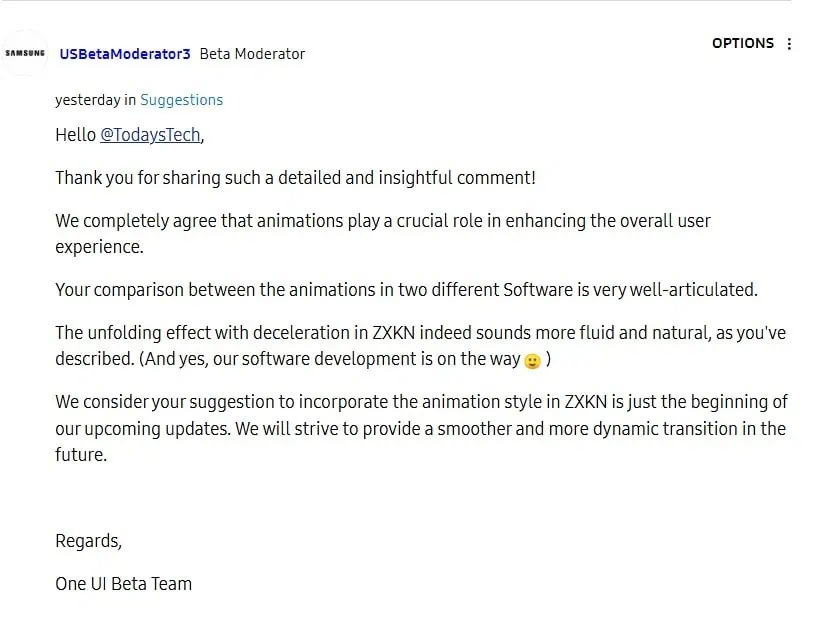
    Screenshot showing comments from a Samsung developer regarding the One UI 7 beta's animations.
    Samsung

    Some users have reported issues with the One UI 7 beta, complaining of sluggish performance and a delay in gradient animations. A Reddit user, u/teneman, shared a series of screenshots highlighting these problems. The images indicated cases of unexpected blurring where it shouldn’t have occurred and a lack of blur where it was needed. Another user noted that the notification panel had become slow to open and the animation could not be interrupted during the process.

    In response to these user observations, Samsung confirmed it is working to improve the situation. The company noted that the current animations aren’t as refined as they were during the initial testing phase. Samsung is dedicated to enhancing these animations to meet its standards and encourage users experiencing any irregularities with the One UI 7 beta to report them via the Samsung Members app.

  • Will The Samsung Galaxy S25 Be More Expensive It’s Complicated

    Will The Samsung Galaxy S25 Be More Expensive It’s Complicated

    As we continue to follow the developments regarding the Samsung Galaxy S25, we discussed yesterday the possibility that it could be priced higher than its predecessor. However, new information indicates that the situation is more complicated. It appears that pricing may vary across different regions globally, but the base models of the Galaxy S25 and Galaxy S25 Plus are expected to maintain their prices similar to the previous generation in European markets.

    The Galaxy S25 is anticipated to retail for 899 euros for the 128GB model, matching the launch price of the Samsung Galaxy S24. The 256GB variant will be available for 959 euros. The Galaxy S25 Plus is projected to start at 1,149 euros for the 256GB version and rise to 1,269 euros for the 512GB option. Again, these prices align with those of the earlier generation, indicating no significant cost increases in this segment.

    However, this trend may not hold true everywhere. Reports from South Korea have suggested an expected increase in prices, and given the volatility of exchange rates, the prices for various regions may fluctuate closer to the actual launch date.

    In terms of pricing within the Western market, speculation abounds. Samsung lacks production facilities in the United States, primarily assembling its devices in Vietnam and India. If tariffs proposed by the U.S. government are enacted, it could elevate the price significantly in America. Nonetheless, this is purely conjecture and should be taken with caution.

    Person holding the Samsung Galaxy S24 Plus, displaying the weather application.
    Joe Maring / Digital Trends

    Additionally, manufacturing costs are on the rise. Qualcomm, the manufacturer of the Snapdragon 8 Elite chip, has indicated a potential price hike of up to 30%. Such increases in production costs typically lead to higher retail prices for consumers.

    The Galaxy Unpacked event is expected to be held in January, where the Galaxy S25 is likely to be officially unveiled. By that time, we hope to have clearer insights into the pricing for the various models.

  • Samsung Removes Handy Lock Screen Feature From One UI 7 Beta

    Samsung Removes Handy Lock Screen Feature From One UI 7 Beta

    It appears that support for lock screen widgets might soon be phased out on Samsung devices. A user on Reddit recently pointed out that the latest beta version of One UI 7 lacks this feature. If this omission carries over into the first public version of One UI 7, it would bring Samsung’s customized interface more in line with Google’s Android, which eliminated native support for lock screen widgets starting with Android 5.0 Lollipop.

    Currently, in One UI 6, Samsung users can add full-sized widgets to a special carousel displayed on the lock screen by tapping the clock. This feature operates alongside smaller widgets that are also available. However, in the ongoing One UI 7 beta, only mini widgets are usable, as the carousel function has been removed.

    Prior to the One UI 7 beta, users could access lock screen widget settings by going to Settings > Lock screen and AOD. In earlier versions, such as One UI 6.1.1, this section allowed selecting useful information to show when tapping the clock on the lock screen. It included a variety of full-sized widgets, including options for Weather, Calendar, and Digital Wellbeing.

    Lock screen widgets on One UI 6.1.1.
    Lock screen widgets on One UI 6.1.1. Android Authority

    After several months of development, One UI 7 is expected to launch alongside Android 15 with Samsung’s forthcoming Galaxy S25 lineup. This updated user interface will initially be available on the Galaxy S25, Galaxy S25 Plus, and Galaxy S25 Ultra, which are anticipated to be unveiled next month. Following this launch, it will gradually roll out to existing devices, including the Galaxy S24 Ultra, which is currently the company’s flagship model.

    Interestingly, while Samsung may be discontinuing full-size lock screen widgets in One UI 7, Google could be bringing them back in Android. They were included in Android 15 QPR1 and have also appeared in Android 15 QPR2, at least for tablet devices.

  • Future Samsung Phones Could Take This Google Pixel Feature

    Future Samsung Phones Could Take This Google Pixel Feature

    There’s plenty of talk about the remarkable photo-taking abilities of our smartphones, but they also excel at video recording. However, it’s common for such footage to pick up unwanted background noise during filming.

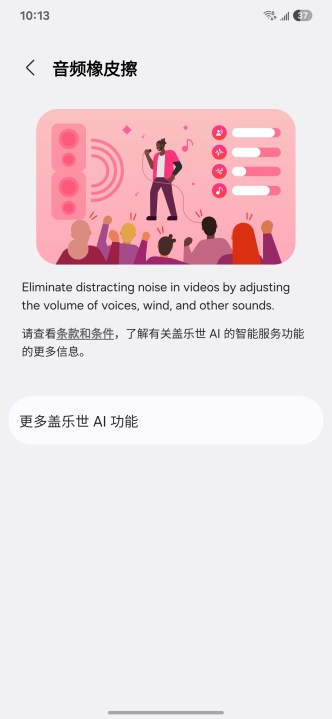
    The Audio Magic Eraser is an impressive feature that uses artificial intelligence to remove unwanted sounds from videos. Although this tool is currently available only on Google Pixel 8 and later models, including the Google Pixel 9 Pro XL, there are indications that a similar tool may soon appear on Samsung devices.

    According to a leak from Ice Universe on Weibo, Samsung is developing an audio eraser feature for its Galaxy S24 series, which may be included in the forthcoming One UI 7 update. The leaker even shared a screenshot demonstrating the function in action.

    Image possibly showing an audio eraser tool from Samsung.
    Ice Universe

    Google’s Audio Magic Eraser employs sophisticated machine learning to identify and separate sounds, including speech, music, and ambient noise. This innovative technology allows users to selectively reduce or eliminate distracting sounds while keeping key audio intact. For instance, you can effectively lower the noise of a crowded venue or the wind in an outdoor video while maintaining clarity in conversations. The Audio Magic Eraser acts as a virtual sound engineer, enhancing your video productions to be more engaging and polished, resulting in videos with improved audio quality.

    From the leaked screenshot, it appears that Samsung’s version may provide comparable functionalities, including options to adjust the volume of voices, wind, and other background sounds. This tool could feature volume sliders, enabling users to fine-tune audio levels manually within their videos.

    Samsung has started rolling out the initial beta version of One UI 7, bringing Android 15 to compatible devices. The public rollout of this software is anticipated in the near future. However, the “next” version of One UI 7 mentioned by Ice Universe is not expected until later.

    When could this happen? It’s likely that Samsung will debut the newer iteration of One UI 7 alongside the upcoming Galaxy S25 series, which is speculated to be unveiled next month. If this occurs, any audio eraser features may be exclusive to the new devices. The Galaxy S25 lineup is expected to comprise the standard Galaxy S25, the Galaxy S25 Plus, and the Galaxy S25 Ultra.

    If this rumor holds true, it’s exciting news for Samsung users. Improvements in video recording features by major companies like Apple, Google, and Samsung are advantageous for both casual and professional videographers alike.

  • Samsung Galaxy S25 Spec Leak Is Disappointing News

    Samsung Galaxy S25 Spec Leak Is Disappointing News

    The Samsung Galaxy S25 series is just a few months away from its debut, but a recent leak from the Federal Communications Commission (FCC), initially highlighted by 91Mobiles, has provided valuable insights into what we can anticipate. While some specifications were already on our radar, a few aspects are surprisingly underwhelming.

    According to the FCC documentation, the S25 lineup appears to consist of three variants: SM–931U, SM–936U, and SM–938U. Each of these models will offer support for 5G connectivity, dual-band Wi-Fi, Bluetooth, GNSS, and NFC. Notably, the documentation indicates that two of the models will feature ultra-wideband (UWB) technology, specifically the Galaxy S25 Plus and S25 Ultra, which means the standard S25 model will not be equipped with UWB capabilities. This feature is essential for precise location tracking, such as finding lost items or devices, so users selecting the base S25 will miss out on these functionalities.

    The Ultra variant will also include the S Pen, identified by model number EJ-PS938.

    The Samsung Galaxy S24 Ultra and the S Pen stylus.
    Andy Boxall / Digital Trends

    Other details from the leaked information suggest that the standard Galaxy S25 was evaluated with a travel charger labeled EP-TA800. This means that the S25 will only support up to 25W wired charging, similar to the existing Galaxy S24. Moreover, the wireless charging capability is reportedly being dialed back to 9W, down from the 15W offered by the S24.

    The S25 Plus and S25 Ultra models, however, are said to have been tested with the EP-T2510 adapter, which allows for 45W wired charging, matching the specifications of the S24 Plus and S24 Ultra.

    In terms of battery life, it looks like all three models will maintain battery capacities comparable to those found in the S24 series. Additionally, the latest Snapdragon 8 Elite chipset is expected to power the S25 lineup.

    These specifications are largely what one might expect. Since the base S24 also lacked UWB, it’s not surprising that the S25 doesn’t include it either. However, it is perplexing that Samsung opted to reduce the wireless charging capability in the base model S25 rather than enhance it, especially with the availability of Qi2 wireless charging technology. It would be ideal if wired charging speeds for the base model could see an increase as well, though at least they haven’t decreased.

    This leak certainly helps paint a clearer picture of what to expect when the series arrives in early 2025.

  • Are Sony or Samsung TVs Better?

    Are Sony or Samsung TVs Better?

    When it comes to choosing a television, two brands often rise to the top of conversations: Sony and Samsung. Both companies have built a strong reputation for high-quality displays, innovative features, and cutting-edge technology. This article will explore the strengths and weaknesses of each brand, helping you decide which TV might be the best fit for your needs.

    Picture Quality

    Sony: The Master of Color

    Sony is widely known for its exceptional picture quality, largely attributed to its proprietary technologies. Here’s what sets Sony apart:

    • Color Accuracy: Sony TVs deliver vibrant colors that stay true to the original content.
    • HDR Performance: With HDR capabilities, Sony makes bright scenes pop while maintaining detail in darker images.
    • Triluminos Technology: This helps to widen the color gamut, leading to richer and more lifelike visuals.

    Samsung: A Bright Alternative

    Samsung’s displays are renowned for their brightness and clarity, thanks to innovative technology. Key features include:

    • QLED Technology: Samsung’s Quantum Dot technology enhances brightness and color, ideal for well-lit rooms.
    • High Peak Brightness: This enables clear viewing even in sunny environments.
    • Wide Viewing Angles: Samsung has made strides in improving viewing angles, reducing color shift when viewed from the sides.

    Smart Features

    User Interface and Navigation

    Both Sony and Samsung offer smart TVs with user-friendly interfaces. However, they have distinct approaches:

    • Sony’s Google TV:

      • Integrated Google Assistant for voice control.
      • Content recommendations based on viewing habits.
      • Wide range of apps available through Google Play Store.

    • Samsung’s Tizen OS:

      • A customizable home screen for easy access to favorite apps.
      • Bixby voice assistant for hands-free operation.
      • Samsung SmartThings integration for controlling smart home devices directly from the TV.

    Audio Performance

    Sony: Audio Engineering Excellence

    Sony often focuses on delivering superior audio quality alongside impressive visuals. Key features include:

    • Acoustic Surface Audio: The screen itself acts as a speaker, providing immersive sound emanating from the display.
    • Dolby Atmos Support: Enhances the surround sound experience, making it ideal for movie enthusiasts.

    Samsung: Solid Sound, But Not as Strong

    Samsung’s audio experience is decent, with features like:

    • Object Tracking Sound: Creates a more immersive audio experience by directing sound based on the action on-screen.
    • Q-Symphony: Synchronizes sound output between the TV and compatible Samsung soundbars for a cohesive audio experience.

    Design and Aesthetics

    Sony: A Classic Look

    Sony TVs often feature a minimalist design, providing elegance with:

    • Slim Bezels: Maximizing screen real estate for a more immersive experience.
    • Premium Materials: Use of high-quality materials gives the TV a sophisticated look.

    Samsung: Innovative and Modern

    Samsung takes a more contemporary approach, featuring:

    • One Connect Box: Reduces cable clutter by consolidating connections.
    • Ambient Mode: Allows the TV to blend into your living space by displaying art or photos when not in use.

    Price and Value

    Sony: Higher Investment

    Sony TVs typically come at a premium price, reflecting their commitment to quality and performance. However, they may offer great value for:

    • Cinema Enthusiasts: If you prioritize picture and audio quality.
    • Long-term Use: Known for durability and longevity.

    Samsung: Budget-Friendly Options

    Samsung provides a range of price points, catering to different budgets. Their TVs are suited for:

    • Value Seekers: Offering competitive features at various price levels.
    • Tech Enthusiasts: Ongoing innovation without breaking the bank.

    Final Thoughts

    Ultimately, the choice between Sony and Samsung TVs depends on what features matter most to you. Whether it’s picture quality, smart features, audio performance, or design, both brands offer exceptional products. By understanding the specific strengths of each, you’re better equipped to make an informed decision and enjoy the perfect viewing experience tailored to your preferences.

  • Do Samsung Do a 40 Inch Smart TV?

    Do Samsung Do a 40 Inch Smart TV?

    Do Samsung Offer a 40 Inch Smart TV?

    Samsung is a prominent player in the television market, renowned for its cutting-edge technology and sleek designs. If you’re on the hunt for a 40-inch smart TV from this well-respected brand, you might be wondering what options are available.

    Samsung’s Offerings in the 40 Inch Range

    Although 40-inch TVs are not the most ubiquitous size in Samsung’s lineup, the company does have models that fit within this category. Here are some key offerings and features:

    Popular Models

    • Samsung UHD 4K Smart TV:

      • Provides high-resolution viewing with vibrant colors.
      • Features Samsung’s Quantum Dot technology for enhanced brightness and color accuracy.

    • Samsung Full HD Smart TV:

      • Offers good performance at a more budget-friendly price point.
      • Supports streaming apps like Netflix, Hulu, and others for easy access to content.

    Key Features of Samsung 40 Inch Smart TVs

    When considering a Samsung 40-inch smart TV, several standout features make these models appealing. Here are some highlights:

    Display Quality

    • 4K Resolution: Many of Samsung’s 40-inch models come equipped with 4K Ultra HD, providing sharp, detailed images.

    • HDR Support: High Dynamic Range technology enhances contrast and color volume, improving the overall viewing experience.

    Smart Technology

    • Tizen OS: Samsung’s proprietary operating system allows for seamless navigation and access to a plethora of apps.

    • Voice Assistants: Many models come with built-in support for Alexa, Google Assistant, or Bixby, adding convenience through voice control.

    Sound and Connectivity

    Samsung invests in sound technology to complement its visual prowess, ensuring users have a well-rounded entertainment experience.

    Audio Features

    • DTS Virtual:X Technology: Provides an immersive sound experience that simulates surround sound.

    • Internal Speakers: Many models come with powerful built-in speakers to deliver clear audio without requiring additional equipment.

    Connectivity Options

    • Multiple HDMI Ports: Typically features 2-3 HDMI ports for connecting gaming consoles, Blu-ray players, and other devices.

    • Smart Wi-Fi: Built-in Wi-Fi allows for easy streaming of content from various platforms without the need for additional cables.

    Size Considerations

    While a 40-inch TV might be perfect for smaller rooms, here are some factors to consider:

    • Viewing Distance: Ideal for spaces such as bedrooms or cozy living rooms, where viewers are seated a few feet away from the screen.

    • Room Aesthetics: A mid-size screen can fit well with various room layouts, offering versatility in placement.

    Availability

    Finding Samsung 40-inch smart TVs may vary based on retail locations and online availability. Here are some common places to check:

    • Electronics Retailers: Stores like Best Buy or Walmart often carry a range of Samsung products.

    • Online Marketplaces: Websites like Amazon and Samsung’s official site provide comprehensive options for browsing and purchasing.

    Final Thoughts

    While Samsung may not always lead the market with an extensive selection of 40-inch smart TVs, they do offer quality models that combine innovative technology with user-friendly features. Exploring the options available can help you make an informed decision tailored to your specific needs and preferences.

  • What Is Samsung Class 7 Series?

    What Is Samsung Class 7 Series?

    Understanding the Samsung Class 7 Series

    Samsung’s Class 7 Series stands out as a remarkable lineup of electronics, particularly known for their superior televisions and smart devices. This series promises exceptional quality, innovative features, and a commitment to enhancing the viewing experience. Below, we delve into the specifics of what makes the Class 7 Series unique.

    Key Features of the Samsung Class 7 Series

    The Samsung Class 7 Series is designed to combine cutting-edge technology with user-friendly functionalities. Here are some of the key features that define this series:

    • High-Definition Display:

      • The Class 7 TVs typically feature Full HD or 4K UHD resolutions, providing stunning visuals with sharp detail and vibrant colors.

    • Smart Technology:

      • Integrated smart features allow users to access popular streaming apps, browse the internet, and use voice assistants for hands-free control.

    • Dynamic Contrast Enhancer:

      • This feature automatically adjusts the contrast between light and dark scenes, resulting in clearer and more dynamic images.

    • Multi-View Capability:

      • This allows users to watch multiple sources simultaneously, offering flexibility and enhancing the viewing experience across different preferences.

    Design Aesthetic and Build Quality

    Samsung has always emphasized aesthetics alongside functionality:

    • Sleek Design:

      • The Class 7 Series TVs boast a slim profile with minimal bezels, making them suitable for modern home decor.

    • Durable Build:

      • Constructed with premium materials, these devices are designed for longevity and resilience while maintaining an upscale appearance.

    Sound Features

    Along with visual excellence, sound quality is crucial for an immersive viewing experience:

    • Dolby Digital Plus:

      • This sound technology enhances audio clarity, creating a more cinematic experience at home.

    • Adaptive Sound:

      • The TVs can automatically adjust sound output based on the type of content being played, ensuring optimal audio performance across genres.

    Connectivity

    Modern connectivity options make it easy for users to integrate their devices:

    • Multiple HDMI Ports:

      • The inclusion of multiple HDMI inputs allows users to connect various devices, such as gaming consoles and sound systems without hassle.

    • Wi-Fi & Bluetooth Capability:

      • Wireless connectivity facilitates easy streaming of content and integration with other smart home devices, enhancing the overall versatility.

    User Experience

    Samsung focuses on creating a seamless user experience:

    • Intuitive Interface:

      • The user interface is designed to be straightforward, with easy navigation between apps, settings, and content libraries.

    • Remote Access:

      • Users can control their televisions remotely through mobile apps, providing flexibility to watch and manage content from anywhere in the house.

    Variants Within the Class 7 Series

    The Class 7 Series includes a range of models to cater to diverse preferences:

    • Samsung UHD TVs:

      • These models focus on delivering 4K resolution with advanced technology for a breathtaking viewing experience.

    • Smart LED TVs:

      • Aimed at those who prioritize streaming and smart features without compromising on display quality.

    Choosing the Right Model

    When selecting a television from the Samsung Class 7 Series, consider these factors:

    • Screen Size:

      • Depending on your room size and viewing distance, choose a screen size that fits your space comfortably.

    • Viewing Habits:

      • If you primarily use streaming services, opt for models with the best smart features.

    • Budget:

      • Prices can vary significantly; selecting a model that fits within your budget while meeting your needs is crucial.

    The Samsung Class 7 Series offers a compelling mix of technology, design, and functionality, making it an attractive choice for anyone looking to upgrade their home entertainment setup.

  • Galaxy A56 Leaked – First Look At Samsung’s Budget Phone

    Galaxy A56 Leaked – First Look At Samsung’s Budget Phone

    Samsung enthusiasts have been anticipating the arrival of the Galaxy A56—it was always a question of timing rather than possibility. Recent renders from Android Headlines and OnLeaks provide us with significant insights into the phone’s design.

    This upcoming model is not merely a refreshed version of a previous device. According to the latest imagery, it appears that Samsung has combined the most appealing features from various devices into one cohesive design. The buttons are located on the right side of the device, and the rest of the phone has a remarkably flat profile. The renders depict a power button, a volume control, and a camera setup positioned at the upper left corner on the back.

    Render of the Samsung Galaxy A56 smartphone.
    Android Headlines

    On the front, the A56 features a centered pinhole camera at the top. While these renders look good overall, the bezels seem slightly thicker than anticipated, though they remain relatively slim. Notably, the bottom bezel appears larger than the others, but it’s unclear why this design choice was made.

    Render of the Samsung Galaxy A56 smartphone.
    Android Headlines

    Details about the specifications remain limited, but recent benchmarks suggest that the Exynos 1580 chip will power the device. There’s also speculation that the Galaxy A56 could support charging speeds up to 45 watts, similar to the S24 Ultra. If true, this would address the common complaints about the slow charging capabilities of previous models in the A series.

    The Galaxy A55 received a lukewarm response, offering solid features but falling short in some critical areas. Users found it uncomfortable to handle, lacked wireless charging, and was outpaced by competitors in wired charging speed. The design elements seen in the Galaxy A56 appear to tackle these concerns directly. Here’s hoping for positive improvements!

    Expected to compete with the Google Pixel 8a, the Galaxy A56 is slated for launch in March 2025. However, it remains uncertain whether it will be available in the U.S. market.


  • Samsung Galaxy Z Flip 7 May Miss Expected Chipset

    Samsung Galaxy Z Flip 7 May Miss Expected Chipset

    As we approach the end of the year, speculation regarding Samsung’s next devices is heating up. The buzz centers around the Galaxy Z Flip FE and the Galaxy Z Flip 7. If these rumors prove to be accurate, it could mark an important milestone for the company.

    According to a source on X, known as @Jukanlosreve, the Galaxy Z Flip FE is expected to be equipped with the Samsung Exynos 2400e chip, which also powers the newly launched Galaxy S24 FE.

    On the other hand, the scoop about the Galaxy Z Flip 7 reveals that it may come with the Exynos 2400 chip.

    For context, the current Galaxy Z Flip 6 runs on the Qualcomm Snapdragon 8 Gen 3 chip, which is also integrated into the Galaxy S24 series. Initially, it was speculated that Samsung would opt for the next-generation Snapdragon 8 Elite chip for the upcoming Galaxy S25 series and the Galaxy Z Flip 7. However, according to the latest information, that seems less likely.

    Close-up of the Samsung Galaxy Z Flip 6 logo.
    Joe Maring / Digital Trends

    Additionally, rumors about the Galaxy Z Flip FE have been making rounds for a while. This “Fan Edition” is anticipated to closely resemble the Galaxy Z Flip 6 but will likely feature a less sophisticated display, limited storage options, and other budget-friendly modifications. As a result, the Galaxy Z Flip FE is expected to be priced lower than the entry-level Galaxy Z Flip 6, which currently retails for around $1,100 in the United States.

    The Galaxy Z Flip 7 is poised to be Samsung’s premier Z Flip offering next year, potentially featuring camera enhancements and other design tweaks that the company may introduce.

    If Samsung does indeed decide to utilize Exynos chips for both the Galaxy Z Flip 7 and the Galaxy Z Flip FE, it will signify a notable shift in strategy. We can expect an announcement for the Galaxy Z Flip 7 around next summer, while the launch date for the Flip FE remains uncertain, although a spring release seems most feasible.

  • What Is the Price of 40 Inch Samsung TV?

    When it comes to choosing a television, the brand and size can significantly impact your viewing experience and investment. Samsung, known for its innovative displays and reliable technology, offers a range of 40-inch TVs that cater to various preferences and budgets. Let’s dive into the details concerning the pricing of 40-inch Samsung TVs and their features.

    Factors Influencing the Price of 40 Inch Samsung TVs

    The cost of a 40-inch Samsung TV can fluctuate based on several key factors:

    Model Variations

    • Smart Features: Many Samsung TVs come with built-in smart capabilities, allowing users to access streaming services and applications easily. Models with advanced smart features often command higher prices.
    • Display Technology: Samsung offers different display technologies, such as LED and QLED. QLED models typically offer better picture quality and brightness, reflecting higher price tags.
    • Audio Technology: Some models boast enhanced audio systems or Dolby Atmos support, which can also influence the price.

    Where You Buy

    • Retailers: Prices may vary between major retailers, local shops, and online platforms. Special promotions or seasonal sales can also affect pricing.
    • Warranty and Support: Some retailers might include extended warranties, which can influence the final cost.

    Typical Price Range for 40 Inch Samsung TVs

    As of October 2023, the price range for 40-inch Samsung TVs typically varies based on the model and features included. Here’s a general overview:

    • Basic Models: Prices for standard LED models usually start around $300 to $400.
    • Mid-Range Models: For models offering smart capabilities and enhanced features, the price can range from $400 to $600.
    • Premium Models: QLED TVs and those with advanced audio systems may be priced between $600 and $800 or more.

    Check for Discounts

    • Holiday Sales: Keep an eye out for discounts during Black Friday, Cyber Monday, or other holiday sales.
    • Clearance Sales: Retailers may offer lower prices on older models when new ones are released.

    Key Features of 40 Inch Samsung TVs

    Investing in a 40-inch Samsung TV not only provides good value but also includes several noteworthy features:

    Display Quality

    • Full HD & 4K Options: Choose between Full HD and 4K UHD displays for superior picture clarity and detail.

    Smart Technology

    • Smart Hub: Access to a variety of streaming services like Netflix, Hulu, and Disney+ with an intuitive interface.
    • Voice Control: Integration with voice assistants such as Bixby, Google Assistant, or Alexa.

    Connectivity

    • Multiple Ports: HDMI and USB ports for connecting gaming consoles, Blu-ray players, and other devices.

    Audio Experience

    • Integrated Speakers: Many models feature decent built-in audio, while higher-end models may offer additional support for surround sound.

    Additional Considerations When Purchasing

    When shopping for a Samsung TV, it’s essential to evaluate the following:

    • Viewing Distance: Ensure that a 40-inch screen fits well within your space, providing an optimal viewing experience.
    • Compatibility with Other Devices: Check compatibility with existing devices like soundbars or home theater systems.
    • Future Proofing: Consider investing in a model that supports the latest technologies for longevity.

    Purchasing a 40-inch Samsung TV can vary in cost based on many factors, but understanding these details can help you make an informed decision that meets both your entertainment needs and budget.

  • Samsung’s Cloud Service Lets You Play Games Instantly

    Samsung’s Cloud Service Lets You Play Games Instantly

    A computer-generated image of a Samsung phone featuring a gaming hub logo, surrounded by game-related symbols such as a controller, dice, and a car.
    Samsung

    Samsung has unveiled a new platform designed for Galaxy users to enjoy gaming on the go. The electronics giant has been exploring the gaming sector for some time and has now launched a free mobile gaming service that enables users to stream Android games directly from the cloud using a Galaxy device.

    Initially introduced in beta within the Gaming Hub last year, this service is now fully accessible to the public. At launch, it features 23 titles, including popular options such as Monopoly Go, Candy Crush Saga, and Honor of Kings.

    Upon hearing about this new service, I found myself wondering about its purpose. Generally, mobile games are not as demanding as large AAA titles on consoles or PCs. Most individuals already have a capable mobile device, unlike those who might lack access to a gaming PC or console. However, there are potential benefits to this technology. For users facing storage constraints on their smartphones—something increasingly common with limited expandable storage options—streaming games can provide a practical alternative to local play, especially as game sizes continue to increase.

    Samsung positions this platform as a way to remain competitive with streaming services in other fields. “If you can stream your favorite TV shows instantly, why not apply that to gaming?” they suggested.

    Samsung’s head of game services, Jong Woo, noted, “Our cloud gaming platform does not have any content locked behind paywalls or require monthly subscriptions for accessing games via our cloud streaming technology.”

    However, a press release released with the announcement highlighted an additional aspect: “Our cloud gaming platform enables publishers to boost their user acquisition efforts by allowing a direct conversion from an ad click to gameplay, bypassing the need to send users to an app store for downloads,” Woo explained.

    This feature will also attract Android mobile game developers eager to expand their player base. According to Samsung’s developer resources, cloud streaming technology can lead players directly into gameplay when they click on an advertisement, rather than redirecting them to an app store link first. So, if you happen to click on an ad, it could take you right into an action-packed game.

    Samsung initially entered the gaming scene through the Gaming Hub featured on its smart TVs. The company also introduced exclusive titles that did not require a controller. This latest development allows users to access full Android games rather than just select options curated by Samsung.

  • Early Black Friday Microwave Deals 2024 LG Samsung And More

    Early Black Friday Microwave Deals 2024 LG Samsung And More

    With fantastic early Black Friday promotions underway, we’ve zeroed in on the top microwave deals available now. While kitchen gadgets like air fryers continue to gain traction, the classic microwave remains an invaluable tool for countless tasks. That’s why we’ve compiled a selection of the most essential microwaves to consider while they are affordably priced.

    The products featured range widely, catering to both budget-conscious buyers and those looking for premium options that do more than just reheat meals. Many of these offers represent some of the best early Black Friday sales, with many major retailers involved. Stick around, and we’ll guide you through the finest microwave choices. Additionally, we’ll provide some handy tips to help you decide what to consider before making your purchase. Here’s what you should keep in mind.

    Black & Decker Digital Microwave Oven 700W — $85 $100 15% off

    Black & Decker

    The Black & Decker Digital Microwave Oven boasts a solid 700W of power, featuring 10 power levels, programmable buttons for common items, along with a clock, kitchen timer, and a 30-second express cooking feature. The control panel is straightforward to navigate, and the digital display is both large and easy to read.

    GE 1.1 Cubic Feet Countertop Microwave — $110 $156 30% off

    GE 1.1 cubic feet Countertop Microwave on display.
    GE

    This GE Countertop Microwave, with 950W of power and a capacity of 1.1 cubic feet, serves as a reliable option for most households. It includes a handy defrost button that calculates optimal cooking durations based on the weight of the food. Instant one-touch operation and a two-step child lock enhance its user-friendliness.

    LG 1.5 Cubic Feet Countertop Microwave — $180 $240 25% off

    LG 1.5 cubic feet Countertop Microwave on display.
    LG

    The LG 1.5 cubic feet Countertop Microwave features a Sensor Cook menu that automatically detects when your food is ready using advanced humidity-sensing technology. It can implement precise, variable power levels for consistent cooking and defrosting. Additionally, the well-designed turntable and bright LED lighting make food monitoring easier.

    Samsung 2.1 Cubic Feet Over-the-Range Microwave — $250 $414 40% off

    Samsung 2.1 cubic feet Over-the-Range Microwave on display.
    Samsung

    This Samsung Over-the-Range Microwave features Wi-Fi connectivity, allowing you to manage ventilation speed, lighting, and cooking time directly from your smartphone. The sensor cook function automatically adjusts cooking settings, and its ample capacity is ideal for preparing larger meals. Plus, the SmartThings app can suggest recipes tailored to your taste.

    LG 1.7 Cubic Feet Convection Over-the-Range Microwave — $500 $700 29% off

    LG 1.7 cubic feet Convection over-the-Range Microwave on display.
    LG

    Not just a microwave, the LG 1.7 cubic feet Convection Over-the-Range Microwave also functions as an air fryer, making it a versatile addition to your kitchen. Its humidity-sensing technology ensures food is cooked to perfection, while eight auto-cook settings and scan-to-cook technology streamline your cooking experience.

    Tips for Choosing a Microwave on Black Friday

    While you could go with one of the top-rated microwaves, it’s wise to familiarize yourself with the different options available. First, consider the best brands and choose one accordingly. Additionally, assess the capacity you need based on your household size; a smaller model might suffice for solo living, whereas a larger one may be necessary for families. A 700W microwave is adequate for most needs, though higher wattage can speed up cooking times. Also, think about whether you prefer added features like built-in air frying or convection cooking. Microwaves can get quite elaborate, so it’s essential to consider your specific usage to avoid overspending.

    How We Selected These Microwave Deals

    We pride ourselves on knowing great deals. Our team continuously scours major retailers to bring you the best savings available, ensuring our list is regularly updated. Alongside this, we share buying advice based on our experience. We only recommend products we trust, avoiding obscure brands or subpar options. Our focus on quality ensures that you receive only the most worthwhile microwave deals. We monitor changes frequently, prioritizing significant discounts so you can find great savings on items you’ll use frequently. After all, a deal is only worthwhile if it leads to a quality addition to your home.

  • What is the price of Samsung 40 inch 4K TV?

    What is the price of Samsung 40 inch 4K TV?

    When considering a new television, the size and resolution are often at the forefront of a buyer’s mind. Samsung, a leading name in the electronics industry, offers a variety of 40-inch 4K TVs that strike a balance between performance and affordability. Let’s take a closer look at the pricing, features, and considerations for purchasing a Samsung 40-inch 4K TV.

    Pricing Overview

    The price of a Samsung 40-inch 4K TV varies depending on the model, features, and the retailer. As of now, here are the general price ranges you can expect:

    • Basic models: Typically begin around $300 – $400.
    • Mid-range models: Can range from $400 – $600, often offering better displays, enhanced audio features, and smart capabilities.
    • High-end variants: These may go beyond $600, featuring advanced technologies such as QLED screens or additional smart home integrations.

    Factors Influencing Price

    When shopping for a Samsung 40-inch 4K TV, several factors can impact its cost:

    • Technology: Variants like QLED or OLED usually come at a premium.
    • Smart Features: TVs with built-in streaming capabilities and voice assistants may be priced higher.
    • Display Quality: Options with HDR (High Dynamic Range) support may also increase the cost.
    • Warranty and After-Sales Service: Extended warranties and additional service plans can affect the overall price.

    Key Features of Samsung 40 Inch 4K TVs

    Samsung offers a range of features across its 40-inch 4K TV lineup. Here are some standout specifications:

    Display Quality

    • Ultra High Definition (UHD): Provides four times the resolution of Full HD.
    • HDR Compatibility: Enhances brightness and contrast for vivid picture quality.

    Smart Technology

    • Integrated Streaming Apps: Access to popular content platforms like Netflix, Hulu, and others directly from the TV.
    • Voice Control: Compatible with voice assistants for hands-free operation.
    • Screen Mirroring: Easily share content from mobile devices.

    Audio Features

    • Optimized Sound Quality: Enhanced audio technology for a more immersive viewing experience.
    • Multiple Ports: HDMI and USB ports for connecting external devices like soundbars or gaming consoles.

    Where to Buy

    Consumers have several options when it comes to purchasing a Samsung 40-inch 4K TV:

    • Online Retailers: Websites such as Amazon and Best Buy often provide competitive pricing along with customer reviews.
    • Brick-and-Mortar Stores: Physical electronics retailers allow for hands-on experience and immediate pickup.
    • Manufacturer’s Website: Purchasing directly from Samsung may offer exclusive deals or warranty options.

    Tips for Purchase

    Before making a decision, keep the following tips in mind:

    • Compare Prices: Check multiple retailers to find the best deals and available discounts.
    • Read Reviews: Take the time to look at user ratings and expert reviews for insight into performance and reliability.
    • Check for Sales: Major holidays and events like Black Friday can lead to significant savings on electronics.
    • Consider Warranty Options: Look into the warranty policies to ensure coverage for potential future issues.

    By understanding the price range, key features, and where to buy, consumers can make informed decisions when shopping for a Samsung 40-inch 4K TV. With the right information, finding the ideal TV to enhance your viewing experience can be a straightforward and rewarding process.

  • What is the price of Samsung 70 inch UHD?

    Samsung offers a wide variety of television models, and one of the most popular choices among consumers is the 70-inch UHD television. These large-screen models provide an immersive viewing experience, ideal for movies, sports, and gaming. However, buyers often wonder about the price range and the features that come with these UHD TVs.

    Price Range for Samsung 70 Inch UHD TVs

    The price of Samsung 70-inch UHD TVs can vary based on several factors, including the specific model, features, and the retailer. Here’s a general breakdown of what you can expect:

    • Entry-Level Models:

      • Price: Approximately $800 – $1,000
      • Features: Basic UHD resolution, standard smart TV capabilities, decent sound quality.

    • Mid-Range Models:

      • Price: Around $1,000 – $1,500
      • Features: Improved picture quality, advanced smart TV features (like voice control), better sound systems, and additional HDMI inputs.

    • High-End Models:

      • Price: $1,500 and upwards
      • Features: Enhanced color technology (like QLED), 4K resolution, superior sound performance, and premium aesthetic design.

    Factors Affecting the Price

    When shopping for a Samsung 70-inch UHD TV, several elements influence the price:

    1. Technology

    • UHD vs. QLED: QLED TVs are typically more expensive due to their superior color and brightness technology.
    • LED vs. OLED: While Samsung predominantly focuses on LED technology, OLED options may have higher price points.

    2. Smart Features

    • Operating System: Samsung’s Tizen OS offers a range of streaming apps and smart functionalities, which can impact pricing.
    • Voice Assistants: Models with built-in voice assistants like Bixby or compatibility with Alexa can be costlier.

    3. Retailer Promotions

    • Seasonal Discounts: Major sales events like Black Friday or Prime Day can significantly reduce prices.
    • Bundled Offers: Some retailers might provide discounts or bundles that include sound systems or extended warranties.

    Where to Buy

    Samsung 70-inch UHD TVs can be purchased from various retailers, each offering different prices and promotional offers:

    • Online Retailers:

      • Amazon
      • Best Buy
      • Walmart

    • In-Store Retailers:

      • Target
      • Costco
      • Local electronics stores

    Additional Costs to Consider

    When budgeting for a new TV, it’s essential to factor in extra costs beyond just the purchase price:

    • Mounting and Installation:

      • If you plan to mount the TV on the wall, installation services may incur additional charges.

    • Warranty and Protection Plans:

      • Extended warranties can offer peace of mind but also add to the total expenditure.

    • Accessories:

      • Cables, soundbars, or gaming consoles should also be included in your budget to enhance your viewing experience.

    Conclusion

    Samsung’s 70-inch UHD televisions are available in various price ranges depending on the model and features. By considering factors like technology, smart capabilities, retailer promotions, and additional costs, consumers can make informed purchasing decisions that suit their entertainment needs and budgets. Always check for the latest prices and offers to get the best deal possible.

  • Is LG better than Samsung?

    Is LG better than Samsung?

    When it comes to electronics, particularly in the realm of televisions and home appliances, LG and Samsung are two of the biggest names in the industry. Both brands offer a variety of products, each with distinct features, benefits, and qualities. This article explores various factors to consider when comparing LG and Samsung, particularly in their television and appliance lines.

    Television Technology

    Display Quality

    When evaluating TV options, display quality is often the most critical factor. Both LG and Samsung utilize advanced display technologies, but they approach them differently:

    • LG:

      • OLED Technology: LG is well-known for its OLED (Organic Light Emitting Diode) panels, which provide deep blacks, vibrant colors, and excellent viewing angles.
      • Brightness: While OLEDs are superb in dark environments, they may struggle with brightness in sunlit rooms.

    • Samsung:

      • QLED Technology: Samsung’s QLED (Quantum Dot Light Emitting Diode) TVs offer improved brightness and color accuracy, making them suitable for well-lit environments.
      • HDR Performance: Samsung typically excels in HDR (High Dynamic Range) content, providing a more dynamic range of colors and brightness.

    Smart Features

    The smart TV platforms for both brands are robust, but they cater to different preferences:

    • LG webOS:

      • User-friendly interface with easy navigation.
      • Supports popular streaming services and has a built-in AI assistant, LG ThinQ.

    • Samsung Tizen:

      • Offers a wide variety of apps and customization options.
      • Features Bixby, Samsung’s voice assistant, allowing for voice control and smart home integration.

    Home Appliances

    Quality and Innovation

    Both LG and Samsung have made a name for themselves in the home appliance sector, with each brand focusing on innovation:

    • LG:

      • Reliability: Known for durable products, especially in refrigerators and washing machines.
      • Smart Features: Integrates smart technology seamlessly, allowing users to control appliances remotely via the LG ThinQ app.

    • Samsung:

      • Design: Stands out with modern aesthetics, offering a sleek look to appliances.
      • SmartThings Integration: Provides robust smart home compatibility, allowing for easy control and automation of multiple devices.

    Energy Efficiency

    Energy savings are a priority for many consumers, and both brands have made strides in eco-friendliness:

    • LG:

      • Many LG appliances are ENERGY STAR certified, emphasizing low energy consumption without sacrificing performance.

    • Samsung:

      • Offers several ENERGY STAR-rated products and features like EcoBubble technology in washers that improve energy efficiency.

    Pricing and Value

    Cost Considerations

    Pricing can vary widely based on the type, size, and specific features of appliances and televisions:

    • LG:

      • Generally priced competitively, especially for OLED TVs, which may be more expensive due to their advanced technology.
      • Offers a range of budget and high-end products to cater to different consumers.

    • Samsung:

      • Often has a wider price range, especially in QLED offerings, which can be more expensive in the premium segment.
      • Frequent promotions and bundles can make Samsung products more affordable at times.

    Warranty and Support

    The level of support and warranty can also influence buyer decisions:

    • LG:

      • Typically offers a 1-year warranty on most products, with some appliances providing extended warranties.

    • Samsung:

      • Also offers a 1-year warranty but has been known for more comprehensive support options, including remote diagnostics for some devices.

    Final Thoughts on LG vs. Samsung

    The choice between LG and Samsung ultimately varies by individual needs and preferences. Factors such as brand loyalty, specific product requirements, and usage scenarios all come into play. For example, if an individual prioritizes superior display quality in a TV, LG’s OLED technology could be the go-to choice. Conversely, someone who wants bright, vibrant colors in a well-lit room may lean towards Samsung’s QLED line.

    When selecting home appliances, those seeking innovative features and modern design might find Samsung more appealing, while those who value reliability and smart integration may lean towards LG.

  • Samsung Galaxy S25 Colors Leaked Again With New Options

    Samsung Galaxy S25 Colors Leaked Again With New Options

    The upcoming Samsung Galaxy S25 has generated considerable buzz in recent months as fans eagerly anticipate its release. Throughout this period, numerous leaks have provided insights into the device, but the latest updates serve as a reminder of the uncertainties surrounding such information. Reliable leaker Evan Blass recently indicated that the Galaxy S25 and S25 Plus will be offered in four colors: Blue, Mint, Navy, and Silver Shadow, according to a report from Android Headlines.

    This differs from initial reports by Ross Young, who had previously claimed that the available colors would be Red, Gold, and Black. Young’s color suggestions in late October were also different. While it’s tough to ascertain which information is more accurate, the fact that Blue and Silver Shadow have appeared in multiple leaks from various sources lends some credibility to those options.

    Interestingly, both Blass and Young have consistently reported the same color options for the S25 Ultra, suggesting it may come in Titanium Black, Titanium Blue, Titanium Grey, and Titanium Silver. Both sources are generally reliable, which further complicates trust in their claims. It’s possible the S25 may feature color code names or be available in an expanded range of options than originally anticipated. Alternatively, both leakers could potentially be mistaken. Ultimately, we won’t have clarity until the official launch event.

    The Samsung Galaxy S24 Ultra in its launch colors.
    Andy Boxall / Digital Trends

    This is not the first instance of conflicting information regarding the Galaxy S25; just yesterday, we reported that while its color lineup seemed finalized, the launch date had shifted.

    The expectations around the S25’s processor have also varied, with some regions anticipated to receive models featuring Exynos chips, while others may come with the Snapdragon Elite 8.

    Official confirmation and concrete details are anticipated at the S25’s launch event in January.