الوسم: Conflict

  • Trump rejects Iran deal; Tehran warns of new strikes

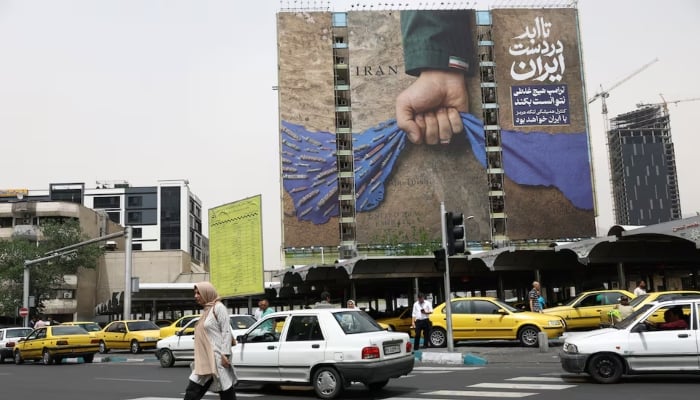
    A massive billboard in Tehran’s Revolution Square shows Iranian troops using a net to capture US fighter aircraft, visible on April 28, 2026. — AFP

    – Oil prices rise above $104 per barrel.
    – Netanyahu insists Iran must remove uranium.
    – Warning issued to foreign vessels in the Strait of Hormuz.

    Washington: President Donald Trump condemned Iran’s recent proposal to end Middle East hostilities as “completely unacceptable,” signaling a high chance of renewed conflict after several weeks of diplomatic talks.

    Iran responded to the latest peace offer from the US earlier in the day, emphasizing it would not hesitate to retaliate against any new American strikes or prevent additional foreign warships from entering the Strait of Hormuz.

    Trump offered no specifics regarding Tehran’s counteroffer but quickly dismissed it on his Truth Social account, declaring it “TOTALLY UNACCEPTABLE” after reviewing Iran’s response from its representatives.

    Meanwhile, Israeli Prime Minister Benjamin Netanyahu, whose forces launched hostilities against Iran alongside the US military on February 28, stated the conflict isn’t over until Iran’s uranium enrichment activities are halted and its nuclear sites dismantled.

    Tehran maintains a defiant stance publicly, despite behind-the-scenes negotiations. President Masoud Pezeshkian told X that Iran would never submit to its enemies, stressing that dialogue doesn’t mean surrender or retreat.

    Iran’s official IRIB broadcaster reports that Tehran’s reply—delivered through mediators in Pakistan—calls for ending the conflict “on all fronts, especially Lebanon,” where Israel continues fighting Iran-backed Hezbollah, and ensuring the security of shipping lanes. The message lacks detailed specifics, but the US’s proposal reportedly aimed to extend a ceasefire in the Gulf waters to facilitate final negotiations on Iran’s nuclear program and broader peace talks.

    Global energy markets reacted nervously, with oil prices leaping sharply at opening. Brent crude climbed 2.69%, reaching $104.01 a barrel for August delivery.

    In an interview aired Sunday, Netanyahu reiterated that Iran must relinquish its stockpile of enriched uranium for the war to end. “It’s not over yet,” he said on CBS’s 60 Minutes, pointing out the need to dismantle remaining enrichment sites.

    President Trump reportedly plans to discuss Iran with Chinese President Xi Jinping during his upcoming trip to Beijing, focusing on Iran’s nuclear activities and regional role, a senior US official said.

    Iran has also made its own demands. According to The Wall Street Journal, Tehran wants guarantees that any transferred uranium—some to be diluted, the rest sent to third countries—will be returned if negotiations break down or if the US withdraws from the agreement later.

    Trump did not address these details publicly, but he dismissed Iran’s response following its delivery via Pakistani mediators.

    Earlier, Iran imposed a blockade on the Strait of Hormuz early in the year, causing a spike in worldwide oil prices and unsettling markets. While Iran has established a system for tolls from ships passing through, US officials consider it unacceptable for Tehran to control such a crucial international route, which handles about one-fifth of global oil supplies. Meanwhile, the US Navy enforces a blockade, occasionally diverting or disabling ships headed to Iranian ports.

    Britain and France are spearheading efforts to form a global coalition to secure the strait after a peace accord is achieved. Both nations have deployed naval vessels to the region and will host a defense ministers’ meeting involving over 40 nations to coordinate plans for reopening trade routes through the Strait of Hormuz, the British government announced.

    Iran warned Sunday that any deployment of foreign warships to the strait would prompt a “decisive and immediate response.” Deputy Foreign Minister Kazem Gharibabadi posted on X that only Iran can establish security there and would oppose interference of any kind.

    French President Emmanuel Macron later clarified that France’s stance is not to deploy naval forces but to support a “coordinated security mission” with Iran.

    Recent drone attacks in the Gulf have heightened tensions, with the UAE claiming it successfully intercepted two drones launched from Iran. Kuwait reported an attempted attack, stating its forces intercepted hostile drones in airspace. Qatar’s defense ministry announced a freighter arriving from Abu Dhabi was hit by a drone.

    There has been no immediate claim of responsibility. Iran’s Fars news agency reported that the ship struck near Qatar was flying a US flag at the time.

    In a social media post Sunday, the Iranian parliament’s security spokesman, Ebrahim Rezaei, warned Washington that Iran’s previous restraint has ended. “Any attack on our vessels will trigger a strong and decisive response against American ships and bases,” he stated.
  • Iran responds to US peace proposal through Pakistani mediator

    People walk past a billboard about the Strait of Hormuz in Tehran, Iran, May 4, 2026. — Reuters
    People walk past a billboard with a graphic about the Strait of Hormuz on a building in Tehran, Iran, May 4, 2026. — Reuters

    • US proposal aims to officially end the war.
    • Qatari oil tanker moves through the Strait of Hormuz toward Pakistan.
    • US criticizes allies for not supporting efforts to reopen the strait.

    Iran has responded to a US proposal to kick off peace negotiations to end the conflict, according to the Irna news agency on Sunday.

    The Irna report indicates the response, sent to mediator Pakistan, will focus on ending the war for now, but no specifics are available yet.

    After roughly two days of relative calm following sporadic clashes last week, hostile drones were detected over several Gulf nations Sunday, highlighting ongoing regional threats despite a ceasefire that’s lasted a month.

    The US-backed proposal seeks to formally end the conflict before engaging in discussions about more sensitive issues, such as Iran’s nuclear program.

    President Trump faces pressure to end the conflict

    With President Donald Trump scheduled to visit China this week, increasing pressure is mounting to resolve the war, which has led to a worldwide energy crisis and threatens the global economy.

    Despite diplomatic efforts to break the deadlock, threats to shipping routes and regional economies remain high. Sunday saw the UAE intercept two drones coming from Iran, and Qatar condemned an attack on a cargo ship originating from Abu Dhabi, while Kuwait reported intercepting hostile drones in its airspace.

    Tehran continues to restrict non-Iranian shipping through the narrow Strait of Hormuz, which once carried 20% of global oil exports before the conflict began. The strait has become a crucial flashpoint in the ongoing war.

    Qatar’s Prime Minister Mohammed bin Abdulrahman al­Thani discussed Pakistan’s efforts at mediation with US Secretary of State Marco Rubio in Miami on Saturday. He warned Iran that using the Strait of Hormuz as a pressure tool would only intensify the crisis, emphasizing that freedom of navigation should be maintained, according to Qatar’s foreign ministry.

    Iranian lawmakers are reportedly drafting legislation to formalize Iran’s management of the strait, including provisions to block passage for vessels from hostile countries.

    Recent days have seen the most intense clashes in the area since the ceasefire began a month ago, with renewed attacks on the UAE and sporadic confrontations between Iranian forces and US vessels in the strait.

    US criticizes allies for lack of support in reopening the strait

    Washington imposed a blockade on Iranian ships last month, but Tehran appears hesitant to respond to calls to end the war, which polls suggest is unpopular among US voters facing rising gas prices. An intelligence estimate indicates Iran might not experience significant economic pressure from a US blockade for up to four months, according to a US official. However, this claim has been challenged, with a senior intelligence official dismissing it as false, as reported by The Washington Post.

    The US has yet to gain broad international backing; NATO allies are hesitant to send ships to reopen the strait without a comprehensive peace agreement or an authorized international mission. After meeting with Italian Prime Minister Giorgia Meloni on Friday, Senator Marco Rubio questioned why Italy and other allies are not supporting efforts to reopen the Strait, warning that allowing Iran control over an international waterway could set a dangerous precedent.

    Britain, collaborating with France on a plan for safe transit through the strait once stability returns, announced it would deploy a warship to the Middle East to prepare for a potential multinational mission.

  • Iran’s GuardsWarn US Mideast Sites Amid Trump’s Awaited Response

    A woman from Iran walks past a mosque decorated with a banner showing Iran’s current leader, Ayatollah Mojtaba Khamenei, in Tehran on May 9, 2026. — AFP

    – The IRGC warns that any attack on Iranian ships will be met with a strong response.
    – Trump anticipates Iran’s reply to a U.S. peace proposal soon.
    – The U.S. deems it unacceptable for Tehran to control the vital oil route.

    Iran’s Revolutionary Guards have issued a warning that any assault on Iranian commercial vessels will provoke a severe retaliatory strike against U.S. bases and enemy ships in the region. This warning comes following U.S. actions the previous day targeting two Iranian tankers in the Gulf of Oman.

    President Donald Trump indicated on Friday that he expects Iran’s response to a recent U.S. peace offer “very soon.” However, there has been no public response from Tehran, and Iran’s Foreign Minister Abbas Araghchi questioned American leadership’s credibility, stating that recent U.S. provocations in the Persian Gulf have increased suspicions about America’s true intentions in diplomacy.

    Earlier this week, a U.S. fighter jet fired to disable two Iranian-flagged ships accused of challenging the U.S. blockade of Iran’s ports. Iran’s navy reportedly responded with strikes of their own. This incident follows another clash in the Strait of Hormuz, a critical international waterway, where Iran aims to exert control to benefit economically from tolls and challenge U.S. influence.

    The U.S. has proposed a ceasefire extension in the Gulf through mediators in Pakistan to facilitate negotiations aimed at resolving the ongoing conflict that started 10 weeks ago with U.S. and Israeli strikes on Iran. Trump told a French reporter that he expects to hear Iran’s reply “very soon,” while Iran’s foreign ministry has said the proposal remains under review.

    Meanwhile, U.S. diplomat Marco Rubio met with Qatar’s leadership to coordinate efforts to deter threats and promote stability across the Middle East. Qatar’s Sheikh Mohammed bin Abdulrahman Al Thani met with Vice President Vance to discuss Pakistani-backed peace negotiations, although Iran has previously attacked sites within Qatar, citing the emirate’s hosting of a major U.S. airbase.

    Satellite images reveal an oil spill spreading off Iran’s Kharg Island, a key oil export terminal. The spill’s cause is unclear, but it is estimated to cover over 20 square miles. The Conflict and Environment Observatory suggests the spill could be due to leaks from oil infrastructure. Kharg Island plays a crucial role in Iran’s oil exports, which are vital to its struggling economy, especially after Iran closed the Strait of Hormuz earlier this year, upsetting global markets.

    In Lebanon, conflicts persist along the tense front with Israel. There have been daily exchanges of fire between Israel and Hezbollah, backed by Iran. Recent Israeli airstrikes in southern Lebanon resulted in at least nine deaths, with targeted attacks including strikes on a highway near Beirut. Hezbollah claims to have responded with drone attacks in northern Israel. Israel reports its forces have shot down explosive drones, with injuries among army reservists. The ongoing hostilities occur as Lebanon and Israel prepare for direct talks in Washington, which Hezbollah strongly opposes.

  • What’s in the Iran War End Deal and Hormuz Reopening Talks?

    Vessels traverse the Strait of Hormuz near Musandam, Oman, on May 6, 2026. — Reuters/File

    As the stalemate surrounding Iran’s ongoing conflict threatens to destabilize the global economy, both Washington and Tehran have dialed down their efforts toward a comprehensive peace agreement, now favoring a limited deal that postpones the toughest issues.

    Here’s what is currently known about the proposals being discussed and the unresolved major disagreements fueling the conflict:

    Current Status of Negotiations
    Sources from both sides indicate that recent diplomatic efforts are focused on a temporary memorandum of understanding designed to pause the war and permit shipping through the Strait of Hormuz while more extensive negotiations continue. This outline would occur in three phases: officially ending the conflict, addressing the crisis over the Strait, and establishing a 30-day window for broader discussions. However, gaps remain, even in this limited framework. Any comprehensive agreement would need to tackle persistent disputes like Iran’s nuclear program, a subject that took years of arduous negotiations and technical expertise to address in the 2015 deal, which was ultimately abandoned by the U.S. in 2018.

    Main Issues in Negotiation

    • Ending the Conflict: U.S. President Donald Trump asserts the war is nearing its end, achievable if Iran accepts certain conditions. Iran remains distrustful, citing recent unannounced attacks during ceasefire periods, in Gaza and Lebanon, which Tehran attributes to Israeli attacks and fears that truces won’t hold without external guarantees.
    • Strait of Hormuz and Gulf Blockade: Iran claims control over the Strait of Hormuz, while the U.S. enforces a blockade on Iranian ports. Both nations are suffering economically; Iran’s oil exports are hampered, risking storage shortages and production cuts, and the blockade has ignited a global energy crisis ahead of U.S. midterm elections. Iran demands official recognition of its authority over Hormuz, though this is unlikely to gain international support.
    • Nuclear Program: The U.S. suspects Iran is intent on developing a nuclear weapon, which Iran denies, insisting its program is solely peaceful. The core dispute centers around Iran’s uranium enrichment capabilities and the stockpile of highly enriched uranium. A potential deal might involve a long-term freeze on enrichment activities and uranium exports, but substantial disagreements remain.
    • Ballistic Missile Program: The U.S. previously insisted Iran limit missile ranges to prevent threats to Israel. While Iran claims its missile stockpiles have been degraded, it refuses to discuss its ballistic arsenal, asserting its right to conventional weapons.
    • Sanctions and Frozen Assets: Iran’s economy continues to suffer from sanctions, prompting calls for their removal, alongside demands for compensation for wartime damages—though U.S. reluctance complicates this. Iran also asserts that any peace deal should include the inclusion of Israel’s actions against Hezbollah, a point opposed by Israel.

    Perspectives of Israel and Gulf States
    Israel remains outside direct negotiations, with Prime Minister Netanyahu potentially reluctant to end hostilities and unwilling to include his campaign against Hezbollah in a deal involving Washington and Tehran. Gulf nations are divided; they face persistent threats from Iran and oppose any agreement that would allow Iran to continue attacks or exert control over the Strait. They worry about being sidelined and feel their security needs might not be prioritized.

    Potential Roles for Europe, China, and Russia
    European nations—especially France, Germany, and the UK—who participated actively in the 2015 nuclear deal, are interested in mediating any future agreements, especially concerning free passage through Hormuz. China, a significant importer of Gulf oil passing through the Strait, might serve as a guarantor, although Iran has shown no clear interest in such a role. Similarly, Iran may seek Russia’s involvement in managing its uranium stockpiles, but U.S. acceptance of this remains uncertain.

  • UAE reports air defenses intercept Iranian missiles, drones; flights diverted

    The UAE reported that its air defenses responded to missile and drone threats on Monday evening, as a large fire broke out at a key oil facility following an attack believed to have come from Iran. The country’s foreign ministry characterized the incident as a serious escalation that directly threatens national security, asserting its right to retaliate.

    Several flights heading into the UAE were rerouted to Muscat, Oman, while others circled over Saudi Arabia, causing significant air traffic disruptions, according to flight tracking data. Iranian state media cited a senior military official denying any intent to target the UAE. The UAE’s defense ministry earlier announced it had intercepted three Iranian missiles over its waters, with a fourth missile crashing into the sea.

    This attack ended a period of relative calm after a ceasefire mediated by Pakistan between Washington and Tehran took effect on April 8, halting over a month of intense Gulf-region fighting. Emergency teams responded immediately to contain the fire at Fujairah’s Oil Industry Zone. The Fujairah Media Office stated that three Indian workers sustained moderate injuries and were hospitalized.

    By evening, air defense systems remained engaged against additional missile and drone threats. One inbound Dubai flight’s captain informed passengers that all airports in the UAE were temporarily closed, with planes redirected to Oman.

    Iran’s Revolutionary Guard Navy released a map indicating an expansion of Iranian-controlled areas near the Strait of Hormuz, including UAE ports like Fujairah and Khorfakkan, along with parts of Umm Al Quwain. During recent fierce clashes, the UAE intercepted and destroyed thousands of drones and missiles.

    Authorities in Dubai and Abu Dhabi issued alerts warning residents of potential missile attacks. This was not the first strike on Fujairah’s energy infrastructure; a drone attack on March 14 previously targeted the Port of Fujairah, causing fires and halting some oil-loading operations.

    Fujairah has been vital for UAE oil exports during the Iran conflict because it sits at the end of the Abu Dhabi Crude Oil Pipeline, which transports crude from inland fields to the Gulf of Oman, bypassing the Strait of Hormuz. This strategic positioning has allowed the UAE to continue shipping oil globally despite threats to the waterway.

  • Iran claims to have pushed back U.S. warship from Strait of Hormuz

    Iran claims it has prevented a U.S. warship from entering the Strait of Hormuz on Monday, asserting it fired a warning shot. A senior Iranian official told Reuters that it remains unclear if the warship was damaged. Meanwhile, the U.S. Central Command promptly dismissed reports of a missile strike against the vessel.

    Oil prices surged by 5% amid fears that the critical shipping route, which has been shut for over two months, might stay blocked even longer. This ongoing blockage has already caused significant disruptions to the global economy and a spike in oil costs, with prices increasing by more than 50%.

    Iran’s navy asserted it had issued a swift and firm warning to stop “American-Zionist” ships from crossing into the strait. Fars News Agency, an Iranian semi-official outlet, reported that two missiles hit the warship near the port of Jask at the southern entrance to the strait, although Centcom denied any vessel was struck.

    U.S. forces are supporting President Trump’s “Project Freedom,” which aims to guide stranded commercial ships out of the Gulf—ships that are running low on supplies amid the U.S.-Israeli conflicts with Iran—and are enforcing a blockade of Iranian ports.

    Trump provided limited details about his plan to assist ships and their crews, who are stranded and facing shortages. Shipping companies have not shown signs of resuming operations. Trump stated on Truth Social that the U.S. would guide ships safely through the restricted waters so they could continue their business operations freely.

    Iran’s military responded to Trump’s announcement by instructing commercial ships and oil tankers to avoid any movements unless coordinated with Iran’s armed forces. Ali Abdollahi, the leader of Iran’s unified military command, warned that any foreign armed forces, especially the U.S. military, trying to approach or enter the strait would be attacked.

    Since the conflict began, Iran has largely blocked all shipping into and out of the Gulf except for its own vessels, cutting off about 20% of the world’s oil and gas shipments. This has caused oil prices to spike dramatically.

    The U.S. Central Command has committed 15,000 troops, along with numerous aircraft, warships, and drones, to support Trump’s “Project Freedom,” emphasizing that their support is essential for regional stability and the global economy, while also maintaining the naval blockade.

    Despite these efforts, hundreds of merchant vessels and around 20,000 crew members remain unable to traverse the strait, according to the International Maritime Organization. Shipping companies like Hapag-Lloyd report that the transit remains impossible, and industry leaders stress that military convoys alone won’t resolve the situation; a cessation of hostilities and peace negotiations are necessary for normal shipping to resume.

    Additionally, the United Arab Emirates accused Iran of attacking an empty crude oil tanker belonging to ADNOC, the UAE’s state oil company, with drones during its passage through the strait.

    In a rare piece of positive news, Pakistan announced it had handed over 22 crew members from an Iranian container vessel that U.S. forces had seized last month. Islamabad called this a “confidence-building measure” as it continues to seek a diplomatic solution.

    The Trump administration is seeking international support to secure shipping lanes, combining diplomatic and military efforts. However, details about the specific countries involved or how the operation will be conducted remain undisclosed. It’s also unclear whether U.S. Navy ships will escort commercial vessels, according to reports.

    Iran is reviewing the U.S. response to its proposed peace initiatives. Although Washington and Israel paused their bombing campaign against Iran four weeks ago, and a round of dialogue took place, further negotiations have yet to materialize. Iran has conveyed that it considers ending the war on all fronts—including Israel’s attacks on Lebanon—more urgent than resolving the shipping crisis, with hopes of addressing nuclear issues later.

    The U.S. demands Iran relinquish its stockpile of over 900 pounds of highly enriched uranium, which Washington fears could be used to make a nuclear weapon. Iran insists its nuclear program is peaceful and has proposed some restrictions in return for sanctions relief, similar to the 2015 nuclear deal abandoned by Trump.

    With midterm elections approaching, President Trump faces pressure to dismantle Iran’s hold on the Strait of Hormuz to prevent soaring fuel prices, which could impact his political prospects.

  • Iran Offers Updated Proposal to Pakistan for US Talks

    A Pakistani official stands during the arrival of U.S. Vice President JD Vance for discussions with Iranian officials in Islamabad, Pakistan, Saturday, April 11, 2026. — Reuters

    • Tehran states it does not want to return to war, according to the judiciary chief.
    • Mohseni Ejei affirms, “We definitely do not accept imposition.”
    • President Trump faces mounting domestic pressure regarding the Iran conflict.

    Iran has submitted a fresh proposal for peace negotiations with the U.S. through mediator Pakistan, according to state media on Friday. Negotiations between the two nations remain stalled despite a ceasefire that has lasted several weeks.

    The proposal was delivered to Islamabad on Thursday evening, the IRNA news agency reported.

    The conflict, initiated by surprise strikes from the United States and Israel on February 28, has been paused since April 8. However, only one direct dialogue session has taken place between Iranian and U.S. representatives so far.

    Meanwhile, Iran continues to control the Strait of Hormuz, disrupting vast quantities of oil, gas, and fertilizer from entering the global economy. The U.S. has responded with a counterblockade on Iranian ports.

    The Wall Street Journal reported Thursday that President Donald Trump instructed security officials to prepare for the blockade to last for months, leading to a spike in oil prices.

    Despite the failed negotiations to end the war, the ceasefire remains intact. On Friday, judiciary chief Gholamhossein Mohseni Ejei, a prominent and respected cleric, stated, “The Islamic Republic has never backed away from negotiations.”

    However, he also added, “We certainly do not accept imposition,” in a video shared by the judiciary’s Mizan Online website, highlighting the ongoing challenges in reaching an agreement.

    Tehran, he emphasized, is not eager to revert to war.

    “We do not want war in any form; we do not desire its continuation.”

    Market responses remain tense, with oil prices over 50% higher than prewar levels amid concerns over prolonged Hormuz closure, and the European Central Bank maintaining its interest rates due to inflation fears.

    Debate Over War Authority

    In Washington, a legal debate is underway about whether President Trump missed a deadline to seek congressional approval for the Iran conflict.

    Officials, including Defense Secretary Pete Hegseth, argue that the ceasefire has paused the 60-day window for the president to request war powers from Congress.

    “Ahead of the War Powers Resolution, hostilities that commenced on Saturday, February 28, are considered ended,” an senior official told AFP late Thursday.

    Trump faces increasing pressure at home, with no clear victory in sight, rising inflation due to the conflict, and midterm elections approaching in November.

    Recent U.S. government data showed slower-than-expected economic growth and inflation reaching 3.5%.

    In Iran, the economic toll is becoming more evident. The U.S. military announced Thursday that its blockade has prevented Iran from exporting $6 billion worth of oil, while inflation, which was already over 45% before the war, has increased to 53.7% recently, according to national statistics.

    “Many are struggling to pay rent or buy food; some have nothing left,” said Mahyar, a 28-year-old who told AFP that his company had laid off 34 employees—almost 40% of its workforce.

    Hormuz Mission Efforts

    President Trump has criticized Washington’s allies for not joining efforts to reopen the Strait of Hormuz.

    While France and Britain are leading efforts to assemble an international coalition to reopen the strait, they have insisted this will only happen once peace is secured.

    On Thursday, a U.S. official confirmed to AFP that Washington is launching its own international coalition called the “Maritime Freedom Construct” to restart shipping through Hormuz.

    French Foreign Minister Jean-Noel Barrot clarified that the U.S. and French missions are meant to complement each other, not compete.

    “The U.S. initiative is different from ours; it’s intended to be a complementary effort,” Barrot said during his visit to the Gulf.

  • Mideast Tensions Reach Cold War Level Amid US-Iran Standoff

    The ongoing Middle East conflict has shifted into a standstill reminiscent of a Cold War, with the U.S. and Iran steadfast in their positions, each claiming military successes. The global community feels the ripple effects of this confrontation.

    According to sources familiar with U.S. officials, Axios reports that there’s no immediate resolution in sight for the deadlock between the U.S. and Iran. The confrontation has devolved into a period marked by economic sanctions, naval blockades, and unfolding dialogue—though substantive negotiations remain elusive.

    The situation is described as a “frozen conflict,” where neither war nor peace has been achieved. The U.S. anticipates maintaining its military presence in the region for several months, which would sustain the closure of the Strait of Hormuz, ongoing blockades, and a tense stalemate where each side awaits the other to capitulate or escalate.

    President Donald Trump reportedly remains undecided about whether to initiate new military actions or to wait, banking on the effectiveness of maximum pressure tactics, including strict financial sanctions, to coax Iran into negotiations. An insider close to Trump suggests that a prolonged “frozen conflict” could be damaging politically and economically for him, especially as elections near. While the President appears frustrated, he seems to acknowledge that force isn’t his preferred course, yet he remains resolute.

    Some senior advisers are urging against immediate escalation, instead advocating for the continuation of the blockade and increased sanctions on Iran before contemplating another round of bombings.

    The Middle East erupted into open hostilities when the U.S. and Israel launched an attack on Iran on February 28, targeting high-ranking Iranian officials, including Supreme Leader Ayatollah Ali Khamenei. Iran retaliated with missile strikes against U.S. bases across Gulf nations and Israel, causing significant casualties.

    In early April, Trump announced a two-week ceasefire with Iran, just ahead of a deadline for Tehran to reopen the Strait of Hormuz, following discussions with Pakistani leaders. Trump previously warned that failure to meet demands could result in catastrophic fallout.

    Pakistan hosted peace negotiations between the U.S. and Iran earlier this month, but after over 21 hours of intense talks, no formal agreement was reached, and diplomats had to leave Islamabad on April 12. On April 22, Trump extended the ceasefire to give peace talks more time, at Pakistan’s request.

    Meanwhile, Gulf leaders convened in Saudi Arabia—marking their first meeting since the regional escalation turned their states into a frontline in the Iran conflict. The gathering aimed to formulate a response to ongoing missile and drone attacks from Iran.

    Domestically, President Trump faces mounting pressure to end the conflict, especially as his approval ratings decline. Confidential Iranian sources indicate that proposals are floating to start detailed negotiations by first halting the U.S.-Israeli actions and ensuring guarantees against future attacks. The next steps would involve resolving Iran’s trade blockade and control of the Strait of Hormuz, before addressing nuclear issues and Iran’s uranium enrichment rights, seeking some recognition from the U.S.

    — Additional details from Reuters contribute to this developing story.

  • Armed Men Launch Coordinated Attacks Inside and Outside Mali Capital, Army Reports

    Militants launched coordinated attacks in Mali’s capital, Bamako, and several internal locations Saturday morning, according to the Malian army. The assaults involved multiple groups and were marked by two loud explosions and ongoing gunfire just before 6 a.m. near Mali’s primary military base in Kati, outside Bamako. Observers reported soldiers blocking roads in the vicinity.

    Similar unrest was reported simultaneously in the central town of Sevare, as well as Kidal and Gao in the northern regions, with eyewitnesses noting heavy gunfire in Sevare. Mali continues to face insurgencies from regional al-Qaeda affiliates and Daesh, alongside a long-standing Tuareg-led rebellion in the north.

    In a statement, the Malian military claimed that unidentified “terrorist” groups attacked various locations across the country, including the capital, but did not specify exact sites. The military indicated that fighting persisted and urged civilians to stay calm.

    Since taking power through coups in 2020 and 2021, Mali’s military leaders pledged to improve security, yet frequent attacks on forces and civilians persist. Mohamed Elmaouloud Ramadane, spokesman for the Tuareg-led Azawad Liberation Front (FLA), claimed via social media that his forces seized multiple positions in Kidal and Gao. Independent verification of this has not been confirmed.

    Sources indicate that Jama’at Nusrat al-Islam wal-Muslimin (JNIM), an al-Qaeda regional affiliate, was involved in Saturday’s assaults, alongside suspected Daesh operatives in the Sahel. Neither group has publicly claimed responsibility yet.

    Officials from the government and military did not respond immediately to requests for comment.

    Residents near Bamako’s airport reported hearing gunfire early Saturday from a nearby military camp housing Russian mercenaries, though not directly at the airport itself. The government, led by Assimi Goita, has relied on Russian security support despite earlier reluctance to cooperate with Western nations. Recently, Mali has been moving closer to the U.S., with reports emerging in March of negotiations to allow Washington to conduct surveillance flights over the country to monitor insurgent activity.

  • Trump Orders Iran Mine-Layers Sunk Amid Tanker Tensions

    Trump Orders Iran Mine-Layers Sunk Amid Tanker Tensions

    A fleet of ships and boats is visible in the Strait of Hormuz off Musandam, Oman, captured on April 20, 2026 — Reuters.

    – The Pentagon reports that U.S. forces boarded a tanker carrying Iranian oil.
    – State that maritime enforcement efforts against illegal networks will persist.
    – Iranian officials, including Ghalibaf, emphasize that a ceasefire remains meaningful only if no violations, such as blockades, occur.

    TEHRAN: President Donald Trump authorized the U.S. Navy on Thursday to target and destroy any Iranian vessels laying mines in the Strait of Hormuz, escalating tensions amid a fragile ceasefire as disruption from the Gulf stand-off begins to impact the global economy.

    This announcement followed an incident where the U.S. naval fleet boarded a vessel in the Indian Ocean transporting Iranian oil, and Iranian authorities claiming Tehran has received its first earnings from tolls imposed on ships passing through the strait.

    With peace talks in Pakistan hanging in the balance, airlines, driven by soaring fuel costs, canceled flights, and oil prices surged again. Additionally, the closely-watched S&P Global PMI index indicated that business activity across the eurozone contracted for the first time in over a year.

    President Trump tweeted, “I have ordered the United States Navy to shoot and kill any boat, small boats included, that lays mines in the waters of the Strait of Hormuz.”

    Iran responded by vowing to keep the strait nearly closed unless the U.S. Navy lifts its blockade on Iranian ports, dismissing Trump’s demands to reopen Hormuz and relinquish its enriched uranium.

    In retaliation, the U.S. imposed a blockade on Iranian ports. On Thursday, the Pentagon announced via social media that U.S. forces conducted a maritime interdiction, boarding the sanctioned, stateless vessel M/T Majestic X, which was transporting Iranian oil in the Indian Ocean. Footage showed U.S. military personnel rappelling onto the deck of a large tanker.

    The Pentagon affirmed its commitment to continue enforcing maritime laws globally to disrupt illegal networks and interdict vessels providing material support to Iran wherever they operate.

    While active hostilities have decreased since the ceasefire’s start, tensions over Hormuz persist as both sides seek economic advantages. President Trump announced an indefinite ceasefire to allow for further negotiations.

    Iranian Parliamentary Speaker Mohammad Bagher Ghalibaf stated, “A full ceasefire only holds meaning if it isn’t broken through a naval blockade,” adding that reopening the strait is impossible while Iran’s ceasefire violations continue.

    Deputy Hamidreza Hajibabaei revealed that Iran had received its first revenue from tolls on ships passing through Hormuz, a crucial route that accounts for about 20% of the world’s oil and gas flow, along with other vital commodities.

    Analysts suggest that Iran’s hardliners, particularly those linked to the Islamic Revolutionary Guards Corps, believe that their blockade offers enough economic leverage to pressure Washington to retreat from its main demands during peace talks.

    Some experts, such as Danny Citrinowicz of the Tel-Aviv Institute for National Security Studies, criticized both Israel and the U.S., asserting that they misread Iran’s resolve.

    “Tehran has shown it is willing to endure economic hardship to stand firm on its core national interests. There’s little reason to expect this stance will change now,” he said on social media. “Instead of capitulating, Iran is set to escalate.”

    A briefing from the Soufan Center indicates Iran’s hardliners argue that sustained high energy prices and shortages worldwide will increase pressure on Trump to accept Iran’s terms, end the conflict, and withdraw U.S. forces from the region.

    Conversely, U.S. policymakers believe that the blockade of Iran’s seaborne trade—its primary means of exporting oil—will swiftly cripple Iran’s economy, compelling Tehran to accept their conditions.

    Regarding peace negotiations, President Trump mentioned on Wednesday to the New York Post that talks could potentially restart in Pakistan within two or three days, although Iran has yet to confirm participation, and Vice President JD Vance has postponed travel to Islamabad.

    Iran’s Revolutionary Guards announced on Wednesday that they forced two ships to shore from the Strait of Hormuz.

    The U.S. Central Command previously indicated that, before Thursday’s developments, forces enforcing the blockade had directed 31 vessels to turn back or return to port.

    Following the Iran-related ceasefire, the U.S. helped broker a separate truce between Israel and Lebanon, including Hezbollah. Despite this, Israeli strikes on Wednesday resulted in the deaths of five more people, according to Lebanese media.

    Lebanese officials expect a second round of talks in Washington on Thursday, during which Beirut will seek a one-month extension of the ceasefire. Since the conflict’s start, Israeli strikes have killed over 2,450 Lebanese civilians, according to local authorities.

  • US missile reserves dwindle significantly amid Iran conflict: report

    US missile reserves dwindle significantly amid Iran conflict: report

    A Terminal High Altitude Area Defense (THAAD) interceptor is launched during a successful intercept test, in this undated handout photo provided by the US Department of Defense, Missile Defence Agency. — Reuters

    The U.S. military used nearly half of its Patriot interceptor missile supply during a seven-week operation against Iran, according to an analysis by the Center for Strategic and International Studies (CSIS).

    A report from Washington-based outlet The Hill highlighted significant missile stockpiles depletion across several key weapon types, raising concerns about the United States’ readiness for a potential conflict with China.

    CSIS’s study released Tuesday indicates that U.S. forces fired almost 50% of their Patriot missiles during the Iran operation. Additionally, more than half of Terminal High Altitude Area Defense (THAAD) interceptors were used, along with over 45% of Precision Strike Missiles (PrSMs) during the Iran air and missile campaign.

    The report further noted that over 20% of Joint Air-to-Surface Standoff Missiles (JASSMs), more than 30% of SM-3 interceptors, and at least 10% of SM-6 missiles were expended under Operation Epic Fury.

    Rebuilding these stockpiles—including Tomahawk cruise missiles and JASSMs—could take between one to four years, CSIS warns. These weapons are critical for any future conflict in the Western Pacific.

    “Even before the Iran conflict, stockpiles were considered insufficient for a fight against a peer adversary. That shortfall is now even more urgent, and restoring adequate levels for a potential war with China will require additional time,” the authors stated.

    While the U.S. is currently capable of maintaining operations against Iran, the remaining arsenal would be inadequate in a showdown with a major opponent like China, the report suggests.

    In response to these findings, United States Central Command (Centcom), which led the Iran campaign, announced that it is actively rebuilding its capacity during the ceasefire. Centcom posted on social media that its forces “remain prepared.”

    Centcom Commander Admiral Brad Cooper, speaking alongside Defense Secretary Pete Hegseth, said, “We are rearming, retooling, and adjusting our tactics, techniques, and procedures.”

    “No other military adjusts as swiftly as ours, especially during a ceasefire,” he added.

    The report coincides with earlier remarks by President Donald Trump in March, following talks with top defense contractors, where he announced plans to increase the production of high-end weapons four times over.

    Pentagon spokesperson Sean Parnell defended the military’s capabilities, telling The Hill that the U.S. remains fully equipped. “The U.S. military is the strongest in the world and has everything needed to carry out missions at the President’s direction,” he stated.

    “As Secretary Hegseth has pointed out repeatedly, less than 10% of America’s navy handled traffic through the Strait of Hormuz. Since President Trump took office, we’ve executed multiple successful missions across various commands, all while maintaining a robust arsenal to safeguard our interests,” Parnell added. “Efforts to alarm Americans about munitions shortages are unfounded and unpatriotic.”

    Additionally, Pentagon Comptroller Jules ‘Jay’ Hurst mentioned plans to extend multi-year munitions contracts up to seven years, aiming to improve supply chains and support long-term investment. This initiative forms part of the proposed $1.5 trillion defense budget.

    “Once Operation Epic Fury concludes, naval assets sent to the Middle East will return to the Pacific. Munitions stocks will gradually recover, but restoring and maintaining proper levels could take many years,” the report authors, Mark F. Cancian and Chris H. Park, concluded.

  • Iran’s Speaker: Negotiations with US Advancing, Still Not a Final Deal

    Iran’s Speaker: Negotiations with US Advancing, Still Not a Final Deal

    Iran states that the Strait of Hormuz won’t reopen until the U.S. lifts its naval blockade on Iranian ports, according to Tehran. A senior official also warned that a comprehensive peace agreement remains “quite a distance” away. Mohammad Bagher Ghalibaf, the speaker of Iran’s parliament, said during a televised speech that there has been “progress” in talks with Washington, but many gaps and key issues still need resolution.

    Ghalibaf, who is part of Tehran’s negotiating team in the discussions aimed at ending the conflict initiated by Israel and the U.S. against Iran, noted, “We’re still far from the final negotiations.” The two-week ceasefire is set to conclude on Wednesday unless extended.

    Meanwhile, U.S. President Donald Trump indicated that “very good” talks are ongoing with Iran, but he cautioned Tehran against attempting to “blackmail” the United States. On Friday, Iran declared the Strait of Hormuz, which typically handles about 20% of global oil and liquefied natural gas shipments, open after a ceasefire was reached in Israel’s conflict with Iran’s ally Hezbollah in Lebanon. This initially boosted global markets and caused oil prices to drop sharply, but Trump reaffirmed that the blockade of Iranian ports would persist until a broader peace deal is achieved. Consequently, Tehran announced the Strait would be closed once more.

    Ghalibaf emphasized, “If the U.S. does not lift the blockade, maritime traffic through the Strait of Hormuz will be restricted.” Iran’s Supreme Leader, Mojtaba Khamenei, who has yet to make a public appearance since assuming power, issued a written statement reaffirming that Iran’s navy is “ready” to confront the United States.

    Trump, speaking to reporters at the White House, accused Iran of acting “a little cunning” with recent moves and warned them not to try to “blackmail” Washington by changing their stance on the Strait of Hormuz.

    Iran’s Revolutionary Guard announced that any vessels attempting to pass through the strait without permission “will be considered collusion with the enemy, and those vessels will be targeted.” Early Saturday, a few oil and gas tankers crossed during the brief reopening, as tracking data showed, but others retreated, and by late afternoon, traffic in the waterway was minimal.

    A UK maritime security agency reported that the Revolutionary Guards fired at one tanker, and security firm Vanguard Tech said the force threatened to “destroy” an empty cruise ship fleeing the Gulf. There was also a report of a vessel being struck by an unknown projectile, causing damage to containers but no fire.

    India’s foreign ministry summoned Iran’s ambassador in New Delhi to protest an incident involving two Indian-flagged ships in the strait.

    On the diplomatic front, Egypt and Pakistan, involved in mediation efforts, sounded optimistic on Saturday. Foreign Minister Badr Abdelatty expressed hope that Cairo and Islamabad could secure a final agreement “within the next few days.”

    Key sticking points in negotiations include Iran’s stockpile of near-weapons-grade enriched uranium and the future of the Strait of Hormuz. Trump claimed Iran agreed to hand over about 440 kilograms of enriched uranium, asserting, “We’re going to retrieve it with excavators.” However, Iran’s foreign ministry has stated that the uranium, believed to be buried under rubble from U.S. bombings last June, “will not be transferred anywhere,” and the idea of surrendering it “has never been raised during negotiations.”

    The regional conflict erupted on February 28 with surprise U.S.-Israeli attacks targeting Iran, despite ongoing negotiations at the time. The violence escalated quickly, with Iran striking neighboring Gulf countries and Hezbollah dragging Lebanon into the conflict by launching rockets at Israel.

    Additionally, a French peacekeeper was killed and three others injured in an ambush in Lebanon on Saturday, which French President Emmanuel Macron attributed to Hezbollah—a charge the group denied. The UN Secretary-General Antonio Guterres condemned the attack, stating that initial UN observations suggest Hezbollah was responsible.

  • Lebanese Torn Between Chaos and Calm Amid Israel Ceasefire

    Lebanese Torn Between Chaos and Calm Amid Israel Ceasefire

    A woman displaced by conflict reacts after returning to her damaged home in Beirut, Lebanon, on April 18, 2026. — AFP

    Khodr Sahmarani stood bewildered beside the rubble of his home in southern Lebanon, a white bandage wrapped around his forehead, staring at the wreckage where his brother, nephew, and two neighbors lost their lives.

    “I was upstairs, then I was underground. I yelled, ‘Where are you? Where are you?’, but there was no response,” he recounted after surviving an Israeli airstrike on Nabatiyeh just hours before the ceasefire began at midnight Thursday.

    The afternoon attack destroyed what residents identified as a five-story building, leaving a chaotic jumble of broken concrete in the battered city.

    Nabatiyeh rescue worker Mohammad Sleiman told AFP that they recovered one body from the strike site Thursday night and three more on Friday morning.

    Sahmarani, 57, said rescuers “pulled me out of the rubble.”

    On Thursday, Israel and Lebanon agreed to a ten-day ceasefire to negotiate an end to six weeks of conflict between Israel and Hezbollah, the Iran-backed group.

    The fighting saw extensive Israeli airstrikes across Lebanon, along with ground operations in the south.

    Lebanese officials estimate that nearly 2,300 people have been killed since the conflict started on March 2, with widespread destruction in towns like Nabatiyeh.

    President Joseph Aoun stated Friday that “direct negotiations” with Israel are vital, with the government aiming to “solidify a ceasefire, secure the withdrawal of Israeli forces from occupied southern territories, recover prisoners, and resolve remaining border disputes.”

    Hezbollah stopped its military actions after the ceasefire took effect but warned it remains ready to act in case Israel breaches the truce.

    Nabatiyeh’s streets were almost deserted on Friday, many buildings in the city center either damaged or destroyed. A few kilometers outside the city, a small group of Hezbollah supporters cheered as cars from Beirut passed by, flashing victory signs and waving yellow flags of the party.

    Intensive Israeli strikes continued up to moments before the midnight deadline, with reports of casualties still emerging.

    Sahmarani, tearful and bloodshot-eyed, expressed despair: “It was the last hours. If this was the start of a war or the middle of it, I could accept it. But this? This was the final hours.”

    Neighbor Fadel Hassan Zahri said those killed were longtime friends. “I wouldn’t eat or drink without them,” he shared, upset with the Lebanese government’s willingness to negotiate peace or normalize relations with Israel.

    “I’ve lived honorably all my life… We don’t normalize with Israel,” Zahri declared.

    Sahmarani admitted he has nowhere else to go. He fears returning to the rubble of his home tonight, perhaps finding a ledge or some cramped corner to sleep in.

    “Where should I go now? Who will even care about me?” he questioned, expressing deep mistrust of Lebanese authorities.

    “Let our leaders pursue normalization; no one listens to them or recognizes them.”

    He asked bitterly, “For whose sake? Why should I lose everything I have built?”

  • Pope Leo condemns ‘tyrants’ amidst Trump attack, billion-dollar war spending

    Pope Leo condemns ‘tyrants’ amidst Trump attack, billion-dollar war spending

    Pope Leo XIV made a strong statement against world leaders who allocate billions of dollars to warfare, accusing them of neglecting efforts for healing, education, and rebuilding despite destroying so much in their conflicts. He highlighted that the world is “being ravaged by a handful of tyrants.” During a mass at Bamenda airport in Cameroon on April 16, 2026, he called for a decisive change in direction in the ongoing conflict in Cameroon’s anglophone regions, where nearly a decade of violence has claimed thousands of lives.

    He emphasized that those in power who use religious language to justify war are manipulating the sacred for their own political and economic gains, branding this as a world turned upside down. His remarks echoed a recent statement where he said God rejected leaders’ prayers stained with blood, a critique that seemed aimed at those like U.S. Defense Secretary Pete Hegseth, who have invoked Christian rhetoric to justify conflicts such as the Iran war.

    The pope’s comments come amid a backdrop of tension with former U.S. President Donald Trump, who publicly criticized Leo on social media, describing him as “weak on crime” and damaging U.S. foreign policy. Trump criticsm resumed late Tuesday, after he posted an image of Jesus embracing him, following earlier criticisms portraying himself as a Jesus-like figure.

    Leo, who maintained a low profile during his first year as the pope, has recently become vocal in his opposition to the Iran conflict and the misuse of religion to justify violence. On his visit to Bamenda, he called on Cameroon’s government, led by President Paul Biya—who is 93 years old and one of the oldest heads of state—to combat corruption and resist influence from the wealthy elite.

    Addressing a packed crowd of approximately 20,000 during a mass at Bamenda’s airport, he condemned foreign exploitation of Africa’s resources, attributing the continent’s poverty and underdevelopment to such practices. He urged that the time to restore unity and celebrate the diversity of Africa is now.

    His visit has sparked hope that diplomatic efforts might help resolve the ongoing crisis rooted in Cameroon’s colonial history, which involves conflicts between government forces and anglophone separatists that have resulted in over 6,500 deaths and half a million displacements. The violence has led to kidnappings, killings, and the destruction of religious sites. Pope Leo heard firsthand accounts of recent kidnappings and violence from local community members, emphasizing the need for peace.

    A temporary three-day ceasefire has been declared by separatist groups to allow civilians and visitors to move freely during the pope’s visit. Despite limited success so far in peace negotiations, Leo expressed optimism that the crisis has not become a religious war and hopes Christian and Muslim leaders can mediate an end to hostilities.

  • Israel-Lebanon Ceasefire: Trump Announces 10-Day Deal

    Israel-Lebanon Ceasefire: Trump Announces 10-Day Deal

    A woman passes by a damaged building at the site of an Israeli strike on April 8, located on Corniche al-Mazraa in Beirut, Lebanon, as captured on April 13, 2026. — Reuters

    The European Union has expressed support for Lebanon’s ceasefire declaration. Meanwhile, disagreements persist regarding Iran’s nuclear program, according to an Iranian official. President Trump announced that Lebanon and Israel will initiate a 10-day ceasefire at 5 p.m. EST, signaling a hopeful step toward ending the ongoing conflict.

    Trump shared via social media that the ceasefire was achieved after productive discussions with Israeli Prime Minister Benjamin Netanyahu and Lebanese President Joseph Aoun. “Both leaders agree that a 10-day ceasefire begins at 5 p.m. EST to promote peace,” he stated. “Both sides are eager for peace, and I believe it will come swiftly.”

    He also instructed Vice President JD Vance, Secretary of State Marco Rubio, and Joint Chiefs Chairman Dan Caine to work together toward lasting peace. The conflict, which resumed in Lebanon on March 2 when Hezbollah supported Iran’s attacks, has escalated into a broader regional crisis involving Iran and its allies.

    European Commission President Ursula von der Leyen welcomed the ceasefire, calling it a relief as the conflict has already caused too many lives lost.

    A potential breakthrough has been made on a long-standing dispute between the US and Iran. Thousands have been killed in Iran and Lebanon since February 28, when US and Israeli strikes targeted Iran, prompting Iranian retaliatory airstrikes and reigniting hostilities with Hezbollah.

    The closure of the Strait of Hormuz—through which about 20% of global oil and gas trade passes—has caused historic oil price shocks and threatened the global economy, prompting warnings from the IMF about recession risks if conflict continues.

    In recent negotiations, a Pakistani intermediary reportedly made progress on the tough aspects of a potential deal, although Iran has indicated that its nuclear program remains unresolved. Trump has stated that an agreement would allow a permanent opening of the Strait of Hormuz.

    Meanwhile, Iran’s top military leader, Field Marshal Asim Munir, recently traveled to Tehran after meetings in Islamabad aimed at preventing further escalation. A senior Iranian official indicated that these talks increased hopes for a second round of negotiations and a possible extension of the current ceasefire, though fundamental differences regarding Iran’s nuclear ambitions still exist.

    US Defense Secretary Pete Hegseth warned that American forces are prepared to resume combat operations if talks with Iran fall apart. “We are ready with increased force and intelligence for critical infrastructure, power plants, and energy sites,” he said. However, sources close to the negotiations suggest a tentative deal is imminent, with the US willing to lift sanctions and unfreeze Iranian assets if a comprehensive agreement is reached.

    Iran has conditioned the opening of the strait on the finalization of a ceasefire and UN assurances that the US and Israel will not attack again. Talks are expected to resume soon in Islamabad, although no set date has been announced.

    Stock markets have surged amid hopes for a swift resolution, with equities reaching record highs. Nonetheless, oil prices remain volatile, reflecting ongoing uncertainty about the ceasefire and the broader region.

    A key sticking point remains Iran’s nuclear program. The US proposed a 20-year suspension of Iran’s nuclear activity—an extension from previous demands for a permanent ban—while Tehran offered a shorter halt of three to five years. The US also insists on removing highly enriched uranium (HEU), while Iran demands the lifting of international sanctions. Some signs suggest Iran might consider shipping part of its HEU stockpile out of the country, which could signal a compromise.

    In summary, diplomatic efforts continue amid high tensions, with international actors hopeful for a sustainable peace that can prevent further conflict and stabilize global markets.

  • Gaza War Amputees Struggle for Prostheses Due to Israeli Limits

    Gaza War Amputees Struggle for Prostheses Due to Israeli Limits

    Fourteen-year-old Fadel Al-Naji, once an avid soccer player, now mostly stays at home in Gaza City after both his legs were amputated in an Israeli drone strike last September. He sits quietly on a sofa, one empty pant leg hanging loose, the other tucked into his waist, next to his 11-year-old brother Amir, who lost an eye in the same attack.

    His mother, Najwa Al-Naji, shares old videos on her phone of Fadel juggling a ball, describing him as increasingly withdrawn and isolated. She hopes prosthetic limbs can be fitted for him, but supplies are scarce in Gaza, where nearly 5,000 amputees, including many children like Fadel, struggle due to Israeli restrictions on essential materials like plaster of Paris.

    Israeli rules, citing security reasons, limit imports of many construction and medical items, affecting access to prosthetic components. Although plaster of Paris isn’t explicitly listed as a dual-use item, other plastic parts needed for prosthetics are restricted, leaving aid organizations and medical centers with limited supplies and outdated equipment.

    Gaza’s amputee population, already substantial before the conflict, now has a higher per capita rate than Cambodia—long notorious for landmine-related amputations—according to aid group Humanity & Inclusion. In response, medical centers have resorted to reusing old prosthetics from war casualties or crafting makeshift limbs from plastic piping and wood, which carry risks of infection or further injury.

    The promised aid under the October ceasefire and the U.S. Trump administration’s plan to provide full assistance with minimal interference remain unfulfilled. The reopening of the Rafah border crossing to Egypt, crucial for evacuations and supplies, has been inconsistent. Israel continues to restrict items it deems dual-use, including construction materials, while claiming to allow medical supplies to enter Gaza.

    The Israeli military agency COGAT states it facilitates medical equipment imports but blocks materials that could aid Hamas’s military build-up. Meanwhile, organizations like the International Red Cross report that plaster supplies are nearly exhausted, with only minimal stock left for the coming months, leaving prosthetic manufacturing severely limited. Local hospitals have run out of supplies altogether, capable only of maintaining existing prosthetics.

    Since early 2025, Humanity & Inclusion has managed to fit just 118 temporary prostheses in Gaza, with dwindling supplies from their last shipment in December 2024. The lack of proper limbs hampers recovery, prolongs trauma, and increases the risk of additional injuries from ongoing Israeli strikes, which have resulted in over 750 Palestinian deaths since the ceasefire.

    Some amputees are on waiting lists, awaiting surgeries like stump revisions or the fitting of prosthetic limbs. Hazem Foura, a 40-year-old ex-office worker, lost his left leg above the knee in a December 2024 bombing that he says was an Israeli attack on his home. Now unable to work, he pleads, “I’m not asking for luxury items—just a limb so I can regain my humanity.”

    Without access to proper prostheses, amputees face not only physical and emotional setbacks but also heightened vulnerability amidst continuing hostilities. Only a handful of prosthetists remain in Gaza, and for children who need frequent adjustments as they grow, the lack of specialized care compounds their suffering.

    Heba Bashir, a technician with Humanity & Inclusion, explains, “Losing a limb isn’t just about the physical loss; it’s about losing hope and independence. For children, it means losing the future they deserve.”

  • Trump Intensifies Criticism of Pope Leo on Iran

    Trump Intensifies Criticism of Pope Leo on Iran

    President Donald Trump, whose policies on war and immigration have faced criticism from Pope Leo, reiterated his opinions about the religious leader on Tuesday night.

    In a post on Truth Social, Trump asked, “Can someone please inform Pope Leo about the protesters killed by Iran?” and emphasized that “it’s completely unacceptable for Iran to possess a nuclear bomb.”

    On February 28, the US and Israel launched strikes against Iran. Iran responded with missile attacks on Israel and American-controlled Gulf nations, resulting in thousands of deaths and displacing millions.

    Iran currently does not have nuclear weapons, whereas the US does. Israel is widely acknowledged as the only Middle Eastern country with nuclear capability. Western nations suspect Iran seeks a nuclear bomb or the ability to produce one swiftly—though Tehran denies these claims, citing its commitments under the Nuclear Non-Proliferation Treaty.

    Trump’s remarks followed earlier comments from Pope Leo, who warned about the decline of democracies into “majoritarian tyranny.” In a Vatican-issued letter, Leo discussed the use of power in democratic societies, asserting that healthy democracies are rooted in moral values.

    The pope criticized Trump’s decision to wage war against Iran, stating that “God rejects the prayers of those who start wars and have blood on their hands.” He also called Trump’s recent threat to destroy Iranian civilization “unacceptable” and chose not to participate in Trump’s “Board of Peace” initiative for Gaza.

    Additionally, the pope has urged reflection on the treatment of migrants in the US, criticizing the country’s strict immigration policies. Meanwhile, Trump called the pope “weak” and criticized his stance on crime and foreign policy on Sunday.