الوسم: Conflict

  • Global Conflicts Surge to Peak in 2025: Report

    Global Conflicts Surge to Peak in 2025: Report

    In 2025, the number of global conflicts involving states reached its highest level since World War II, according to a Norwegian study published on Tuesday. Experts warn this surge has led to an increase in violence against civilians. The annual “Conflict Trends” report by the Peace Research Institute Oslo (PRIO) states that 65 conflicts involving at least one government entity were documented last year, marking a peak since 1946.

    The data also shows a record number of interstate conflicts for the past 80 years, doubling from the previous year to eight. These include border clashes between India and Pakistan, Afghanistan and Pakistan, Cambodia and Thailand, along with Russia’s invasion of Ukraine and Israeli military actions against Syria.

    “Unfortunately, there’s not much positive to report,” said researcher Siri Aas Rustad to various media outlets, including AFP. “Usually, I find some silver lining, but this year the numbers are quite shocking.”

    Last year ranked as the third deadliest since the Cold War ended, with approximately 245,000 deaths from direct combat or political violence. Of these, nearly 76,500 were civilians targeted specifically in attacks, compared to around 14,200 in 2024. A significant rise in civilian casualties is tied to the ongoing conflict between the military and paramilitary groups in Sudan, where sieges and massacres in El-Fasher, in the Darfur region, are believed to have killed around 60,000 people.

    Since the Cold War’s conclusion, only 1994 and 2021 have seen higher casualties due to the Rwandan genocide and the Ethiopian Tigray conflict, respectively.

    Africa continues to be the most affected region by conflicts involving at least one state, with 29 such disputes, followed by Asia, the Middle East, the Americas, and Europe. Rustad highlighted Israel as an especially aggressive country at present, citing its involvement in various conflicts across Gaza, Syria, Lebanon, Iran, and Yemen’s Houthi rebels.

    She also pointed to the U.S., noting that the return to power of President Donald Trump has not only escalated violence but also increased trade restrictions. “We’re shutting down cooperation. The UN Security Council isn’t functioning effectively, and the world is becoming more polarized,” Rustad added.

  • US Targets Iranian Assets to Aid Gulf Allies’ Reconstruction

    US Targets Iranian Assets to Aid Gulf Allies’ Reconstruction

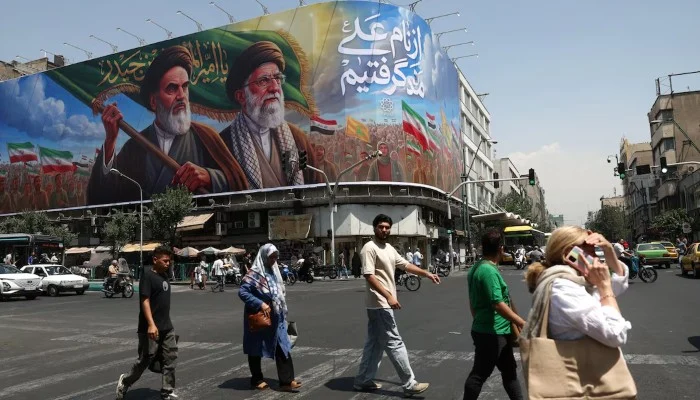
    People walk past a billboard featuring the late leader of the Islamic Revolution, Ayatollah Ruhollah Khomeini, alongside Iran’s late Supreme Leader Ayatollah Ali Khamenei, on a street in Tehran, Iran, June 6, 2026. — Reuters

    The United States reports shooting down two additional Iranian attack drones. Previously, Iran targeted Kuwait and Bahrain with missiles and drones. Mohsin Naqvi visits Tehran carrying a letter addressed to Iran’s Supreme Leader.

    The US aims to redirect Iranian assets toward rebuilding efforts and damage repairs in Gulf states, a well-informed source revealed. This move follows Iran’s recent drone launches and strikes against Kuwait and Bahrain.

    Treasury Secretary Scott Bessent has tasked a team with assessing the costs associated with damage caused to Gulf allies by Iran, the source said on Saturday. The US is also contemplating using Iranian assets for future repair needs.

    This announcement comes a day after Mohsen Rezaei, an advisor to Iran’s Supreme Leader, told CNN that a peace agreement to end the three-month-long conflict relies on the release of $24 billion in Iranian assets frozen by the US.

    The nature of the assets under review has not been specified. The language suggests measures might extend beyond just frozen funds.

    The possibility of redirecting Iranian assets could complicate the fragile ceasefire between the US and Iran, which was tested again this weekend with strikes from both sides.

    Peace negotiations seem to have stalled. Nevertheless, Mohsin Naqvi traveled to Tehran on Saturday with a letter to Iran’s Supreme Leader, Ayatollah Mojtaba Khamenei, according to Iran’s semi-official ISNA news agency.

    US forces launched strikes early Saturday on Iranian radar sites in Goruk and Qeshm Island, located in the Strait of Hormuz, following Iran’s drone attacks that the US Central Command says threatened maritime traffic. Two more Iranian attack drones, which were endangering shipping, were also shot down late Saturday.

    Iran’s Revolutionary Guards claimed they retaliated against US bases in Kuwait and Bahrain. Kuwait’s military reported intercepting seven ballistic missiles crossing over populated areas, causing material damage but no casualties.

    In Bahrain, sirens sounded, and residents were advised to seek shelter. Both Kuwait and Bahrain condemned the strikes.

    Iran later claimed it hit US bases in both nations with ballistic missiles, though the US military said six missiles were intercepted and one failed to reach its target.

    OPEC+ is considering another increase in oil output, but ongoing conflict continues to hinder shipments. Negotiations between the US and Iran for a temporary deal to halt the conflict have been mostly indirect, leaving unresolved issues like Iran’s nuclear program for future talks.

    Iran seeks access to billions in oil revenue, waivers on sanctions on crude exports, the lifting of US port blockades, and control over the Strait of Hormuz—a waterway now effectively blocked by Iran, which previously accounted for about a fifth of global oil trade before the war.

    US President Donald Trump faces mounting domestic pressure to end the war as fuel prices rise. During an interview with NBC, he stated that most of Iran’s missile and drone manufacturing facilities have been destroyed, though Iran still retains around 20% of its missiles.

    “Some missiles, some drones. Percentage-wise, probably 21% to 22% of their missiles. It’s a significant number, but not as extensive as when we first acted,” Trump told NBC’s “Meet the Press,” excerpts of which were released Friday.

    The conflict has increased global oil prices and driven inflation. On Sunday, OPEC+ is expected to approve a fourth consecutive monthly increase in oil production targets, despite ongoing war-related constraints on several member countries’ production capabilities.

    Israel’s military announced Sunday it intercepted two projectiles that crossed into Israeli territory from Lebanon. This followed Lebanon’s report that Israeli strikes killed two army officers and a soldier in southern Lebanon a day earlier.

  • Trump Claims Deal Near, Iran FM Reports No Progress

    Trump Claims Deal Near, Iran FM Reports No Progress

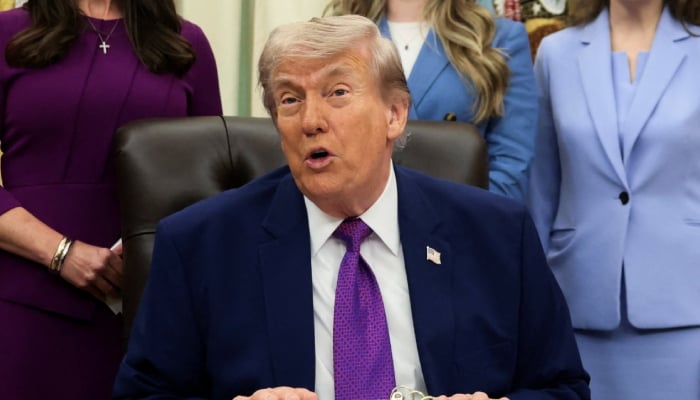
    President Donald Trump was seen in the Oval Office on April 18, 2025, with Reuters reporting on the visit.

    Recent developments show that while negotiations with Iran are ongoing, progress remains uncertain. Trump indicated that talks could produce results “by the weekend” and mentioned that negotiations are going very well, hinting at the possibility of an agreement soon. He emphasized the importance of separating the Iran-Israel-Hezbollah discussions from U.S.-Iran conflicts, clarifying he prefers to handle these issues independently, as Tehran insists they are interconnected.

    Secretary of State Marco Rubio highlighted that discussions with Tehran revolve around Iran’s stockpiles of highly enriched uranium. He expressed hope that upcoming talks between Israel and Lebanon will lead to a security plan. The U.S. maintains that Iran needs to surrender its near-weapons-grade uranium, restrict its nuclear activities, and reopen the Strait of Hormuz for any lasting peace.

    Meanwhile, Iran’s foreign minister expressed skepticism about the negotiations, stating no significant progress has been made amid ongoing U.S. and Iranian military strikes that threaten a fragile ceasefire. Kuwaiti officials reported that attacks included an Iranian drone strike at Kuwait International Airport, resulting in one death and 63 injuries. The Iranian Foreign Ministry clarified that the Guards denied targeting the airport, claiming the damage was caused by errors in American Patriot missile systems failing to intercept Iranian missiles, and accused U.S. forces of provoking escalation on Qeshm Island.

    These hostilities test the ceasefire brokered on April 8, which paused more than a month of conflict initiated by U.S.-Israeli airstrikes. Despite the violence, Trump downplayed the seriousness, suggesting “ceasefire” in the region means “more moderate” fighting. Israeli Prime Minister Benjamin Netanyahu condemned Iran, warning that Iran’s actions risk a full-scale military escalation, reminding that President Trump has affirmed a willingness to return to military action if needed.

    Kuwait responded to the drone attack by suspending and later resuming airport operations. The airport had only recently reopened after multiple strikes earlier in the conflict. Hassan Sheikh, a Pakistani resident near the airport, recounted hearing explosions throughout the night, emphasizing the severity of the situation as felt by local residents.

  • Israel, Lebanon Reach Ceasefire Agreement, Boosting Iran Deal Hopes

    Israel, Lebanon Reach Ceasefire Agreement, Boosting Iran Deal Hopes

    Israel and Lebanon have reached an agreement to cease hostilities, according to the Trump administration on Wednesday. This development provides renewed hope for a broader agreement ending the ongoing US-Israeli conflict over Iran.

    Earlier, Tehran tied any potential deal with the US to an end to the fighting between Israel and Lebanon. In response to US military actions near the Strait of Hormuz, Iran struck Kuwait, damaging the airport and injuring dozens of civilians.

    The ceasefire between Israel and Lebanon is dependent on a complete halting of fire from Hezbollah, which is aligned with Iran, and the withdrawal of all its operatives from the South Litani area, the US State Department stated after talks in Washington. The joint statement emphasized that, under US guidance, both sides agreed to quickly develop pilot zones where the Lebanese Armed Forces would take exclusive control, excluding all non-state actors.

    Lebanon and Israel plan to continue negotiations to build confidence and address remaining issues. They are scheduled to reconvene in the week of June 22 for political and security talks aimed at reaching a comprehensive agreement.

    Despite a ceasefire agreed upon last month, hostilities had persisted. Israel entered Lebanon in March, targeting Hezbollah, which responded by firing across the border in support of Iran.

    Recent attacks in Kuwait and the Strait of Hormuz have tested the fragile ceasefire between the US, Israel, and Iran. The conflict has caused oil prices to rise by nearly 2%, with the Strait remaining largely closed over three months after US and Israeli strikes on Iran.

    Kuwait International Airport was shut down following an attack involving Iranian drones and missiles that caused damage, one death, and over 60 injuries. Kuwait Airways and Jazeera Airways resumed flights after implementing safety measures, according to officials.

    Iran’s Revolutionary Guards claimed they did not fire at Kuwait’s airport, blaming U.S. interceptor missiles for the damage. The US military countered, asserting that Iranian drones deliberately targeted the airport.

    Earlier reports from Iranian media indicated potential attacks on the US Fifth Fleet headquarters in Bahrain, a nearby US airbase, and a vessel named Panaya. Central Command dismissed these claims, stating that its bases remained unharmed and that Iranian ballistic missiles had failed to hit their targets in the region.

    The US conducted additional defensive strikes in southern Iran, targeting missile launch sites and Iranian boats seeking to mine waterways. Strikes also targeted Qeshm Island near the Strait of Hormuz following attempted Iranian attacks.

    Since US and Israeli strikes on Iran began in late February, Tehran has frequently launched attacks against targets in the Gulf region, which hosts US military installations. These hostilities have flared intermittently, despite an April ceasefire, as efforts continue to reopen the Strait of Hormuz, a critical route that previously handled about 20% of global oil and LNG shipments.

    Recently, Iran and the US indicated some progress toward a preliminary agreement to halt hostilities and reopen the Strait, although details are still under negotiation. Iran’s Foreign Minister Abbas Araqchi stated that talks had not been cut off but no significant progress had been made. The negotiations involve demands from Iran for access to billions in oil revenues, waivers on sanctions related to crude exports, removal of a US blockade on ports, and continued influence over the Strait.

    US President Donald Trump, facing pressure to lower fuel prices, has prioritized preventing Iran from developing nuclear weapons. Iran maintains its nuclear program is peaceful. In a recent podcast, Trump claimed Iran had agreed not to pursue nuclear weapons, with discussions involving Supreme Leader Khamenei. Later, Trump suggested that negotiations with Iran might see progress over the upcoming weekend.

    The conflict has resulted in thousands of deaths, predominantly in Iran and Lebanon, and has disrupted energy supplies worldwide, contributing to economic strain. The clash between Israel and Hezbollah has reignited, with Israeli drone strikes killing at least six people in southern Lebanon and targeting a vehicle near Beirut. Israel also intercepted an aircraft believed to be launched by Hezbollah.

    Iran’s Foreign Minister warned that Iran would respond decisively if Israel attacks Beirut. Trump acknowledged during a podcast that he had referred to Netanyahu as “crazy” during an expletive-laden phone call over the Lebanese fighting, urging an end to the escalation. Netanyahu, in an interview, noted that while there might be tactical disagreements with Trump, they share common views on Iran.
  • US House Approves Bill to Halt Iran War, Delivering Blow to Trump

    US House Approves Bill to Halt Iran War, Delivering Blow to Trump

    A U.S. House resolution aimed at halting President Donald Trump’s military actions against Iran received support from four Republican members who voted alongside Democrats. The measure passed with a vote of 215 to 208, marking a rare instance of bipartisan dissent, as members expressed growing concern over the ongoing conflict, now in its fourth month. The resolution, while largely symbolic, will require Senate approval and a two-thirds majority in both chambers to override an expected veto from Trump.

    This shift indicates a broader unease among some Republican lawmakers regarding the president’s management of the situation. Last month, the Senate moved forward with a similar resolution in a procedural vote after previous attempts failed. The four Republican representatives who supported the measure were Tom Barrett (Michigan), Warren Davidson (Ohio), Brian Fitzpatrick (Pennsylvania), and Thomas Massie (Kentucky). No Democrats opposed the resolution, although seven members did abstain from voting.

    Recently, Trump has encountered mounting opposition within Congress, a notable change after months of limited resistance from his party. In another vote, the House signaled support for a measure to advance a floor debate on military aid to Ukraine and new sanctions against Russia, following a petition that reached the required 218 signatures. Support came from six Republicans and one independent aligned with the GOP.

    Additionally, Acting Attorney General Todd Blanche announced that the administration was planning to withdraw funding allocated to pay political allies accused of government abuse, a move criticized by some Republicans. The party also voiced discontent over Trump’s appointment of Bill Pulte—a mortgage regulator with no known national security background—as acting Director of National Intelligence.

  • Russian Official Warns Europe of More Drone Attacks Post-Romania

    Russian Official Warns Europe of More Drone Attacks Post-Romania

    Romanian authorities are actively investigating an explosion at a residential apartment building in Galați, following a drone strike near the Ukraine border. The incident was captured in images by Reuters, showing emergency personnel at the scene amidst the aftermath.

    Dmitry Medvedev, deputy head of Russia’s Security Council, issued a stern warning to European nations on Friday, asserting that drones will continue to infiltrate their airspace, disrupting peace and security. Medvedev’s remarks followed NATO’s accusations of Moscow’s reckless actions and promises to defend all allied territories after Romania reported a Russian drone crashing into an apartment complex during a Ukrainian attack.

    While the exact origin of the drone remains under investigation, Medvedev cautioned European leaders not to feign outrage, emphasizing that they are actively participating in the conflict with Russia. “Prepare yourselves: this will keep happening,” he stated. “There is an ongoing war, and citizens of EU countries, like those in the belligerent nations, won’t be able to enjoy peaceful sleep.”

    He further pointed out that such incidents are more likely where drone manufacturing for Ukraine exists, noting that European drones, along with their parts and other weaponry, are used in daily attacks on Russia. These actions have resulted in civilian casualties and damage to residential buildings.

    Earlier Friday, Russian President Vladimir Putin was informed of the Romanian drone incident. The Russian Foreign Ministry indicated that Moscow plans to respond swiftly to Romania’s decision to close the Russian consulate in Constanța, signaling escalating diplomatic tensions.

  • UN to Blacklist Israel Over Sexual Violence in Conflict, Envoy Says

    UN to Blacklist Israel Over Sexual Violence in Conflict, Envoy Says

    Israeli soldiers embrace upon returning from Gaza amid ongoing conflict between Israel and Hamas in southern Israel, February 29, 2024. — Reuters

    – This is a political decision, says Israeli envoy, disconnected from facts and reality.
    – “Israel has decided to sever all ties with the UN Secretary-General’s Office.”
    – Guterres expresses grave concern over violations by Israeli forces.

    GENEVA: Israel’s UN ambassador announced his country has been placed on a UN blacklist for sexual violence in conflict zones, alongside Hamas.

    “This is a political move, completely detached from facts and reality,” said Danny Danon on X, referencing a report scheduled for publication soon. He added he learned about it during a phone call with UN Secretary-General Antonio Guterres, according to a statement from the Israeli UN mission.

    Guterres’ annual report to the Security Council on conflict-related sexual violence, released last August, warned that Israel and Russia could be added to a list of parties “credibly suspected” of committing patterns of sexual violence, including rape and other abuses, during the current year.

    The UN in Geneva and Hamas have not immediately responded to Reuters’ inquiries.

    Danon also criticized the comparison of Israel to Hamas, calling it a “new low,” and said Israel had responded in detail to each allegation, inviting UN officials for visits that were declined.

    Late Thursday, Israel’s foreign ministry said it would cut all contact with Guterres, citing his alleged dishonesty and unprofessionalism. “Given Antonio Guterres’s actions, Israel will sever all ties with his office and wait for a new UN Secretary-General,” the ministry posted on X.

    In response to Danon’s comments, UN spokesperson Stephane Dujarric stated, “From the Secretary-General’s perspective, his door remains open to Israeli representatives, as well as the other 192 member states and two observer states.”

    Guterres’ warning in August stemmed from documented concerns over certain patterns of sexual violence, which he called “significant.” At the time, Danon dismissed these concerns as unfounded.

    Guterres noted concerns about credible reports of violations by Israeli armed and security forces against Palestinians in various detention facilities and bases. Hamas, which launched a retaliatory attack on southern Israel on October 7, 2023, sparking the Gaza conflict, was listed in the report as a group “credibly suspected” of sexual violence during wartime. Hamas has firmly denied these allegations.

  • Over 40 Killed in Colombia Guerrilla Clashes Ahead of Election

    Over 40 Killed in Colombia Guerrilla Clashes Ahead of Election

    Clashes erupted between two dissident factions of the once-disbanded FARC guerrilla group, resulting in 48 fatalities in the Colombian Amazon, according to a local mayor. The violence occurred several days before Colombia’s presidential election scheduled for May 31. Willy Rodriguez, mayor of San Jose del Guaviare—about six hours from the scene—told AFP that the bodies remain scattered and need urgent removal. Colombia is experiencing its most intense violence since FARC disarmed in 2016, after more than five decades of conflict. Several smaller guerrilla groups are fighting over control of jungle territories, along with controlling revenues from drug trafficking and illegal mining. The fighting took place in the hamlet of Vereda Piripal, with the provisional death toll provided by local authorities. An army source confirmed that hostilities in a historic FARC stronghold began on Monday; however, details about whether the clashes are ongoing are not available, as rescue teams have yet to reach the site. This surge in violence challenges President Gustavo Petro’s “total peace” efforts, a core issue in the current presidential race. Leading candidate Ivan Cepeda, a leftist senator, has pledged to continue engaging in negotiations with armed groups, while his right-wing opponents, including lawyer Abelardo de la Espriella—a supporter of former U.S. President Donald Trump—argue for a military crackdown on rebels. National security remains a major concern, with the upcoming election clouded by reports of murders, kidnappings, and bombings. Defense Minister Pedro Sanchez announced that around 408,000 security personnel, equipped with aircraft, ships, drones, anti-drone systems, and armored vehicles, have been deployed to ensure a peaceful voting process. If no candidate secures more than half of the votes on election day, a runoff between the top two contenders will occur on June 21.

  • Insights into the Proposed US-Iran Agreement

    Insights into the Proposed US-Iran Agreement

    More than three months after the U.S. and Israel initiated hostilities against Iran, new optimism is rising that the conflict could be nearing its conclusion. The ongoing war has not only impacted the nations involved but has also sent ripples throughout the global economy. The shutdown of the Strait of Hormuz caused oil prices to soar to record highs, fueled inflation, and slowed economic growth around the world.

    Pakistan, serving as a key mediator, has stepped up diplomatic efforts, with Interior Minister Mohsin Naqvi and Army Chief Field Marshal Asim Munir visiting Iran recently. Following these diplomatic moves, former President Donald Trump indicated that Washington and Tehran have made significant progress, with “largely negotiated” a memorandum of understanding aimed at reopening the strait.

    Details about the potential agreement are slowly emerging, shedding light on possible steps toward ending the conflict:

    – Axios reports that the U.S. and Iran are close to signing a deal that includes a 60-day extension of a ceasefire.
    – During this period, the Strait of Hormuz would be reopened.
    – Iran would have the freedom to sell oil without restrictions, and negotiations on curbing Iran’s nuclear program would be underway.
    – The Strait would be open without tolls, and Iran would agree to clear mines it placed to facilitate safe passage for ships.
    – In exchange, the U.S. would lift sanctions on Iranian ports and issue waivers to allow Iran to sell oil more freely.

    The Iranian news agency Tasnim highlights that the potential memorandum of understanding (MoU) would include:

    – U.S. sanctions on Iranian oil being waived.
    – Emphasis on ending hostilities across all fronts, including Lebanon.
    – A 30-day window for protocols related to the Strait and the end of the blockade.
    – A 60-day timeline for nuclear negotiations.
    – Iran has not yet committed to any specific actions regarding its nuclear program.
    – Part of Iran’s frozen assets would be released in the initial phase, contingent upon the agreement’s terms.
    – The release mechanism for remaining assets would be defined during negotiations.
    – If a deal is reached, the Strait will not revert to pre-war conditions immediately, but the number of ships passing through will return to normal within 30 days.
    – Iran underscores its sovereignty over the Strait and plans to assert control in various unspecified ways, to be announced later.
    – The complete lifting of the naval blockade is expected within 30 days; failure to do so means no change in the Strait’s status.
    – Passage conditions will depend on the U.S. fulfilling other commitments outlined in the agreement.
    – A withdrawal of U.S. forces from Iran’s vicinity is also emphasized by Tehran.
    – Negotiations remain stalled on a few clauses, with some sources warning that obstacles from the U.S. side may prevent a final agreement.

  • Trump: Iran Deal Framework Mostly Set, Strait Reopening Possible

    Trump: Iran Deal Framework Mostly Set, Strait Reopening Possible

    On Saturday, President Donald Trump announced that a memorandum of understanding regarding a peace agreement with Iran is “mostly negotiated,” with both parties and mediators in Pakistan reporting notable advancements. Trump shared on social media that this emerging deal is expected to reopen the Strait of Hormuz, a crucial shipping route whose closure until recently had disrupted global energy markets after hostilities began in February, following US and Israeli strikes on Iran.

    Trump did not specify other elements of the potential agreement, merely stating, “Final aspects and details of the Deal are currently being discussed, and will be announced shortly.” Early Sunday, Iran’s Fars news agency reported that the deal would permit Iran to oversee the Strait of Hormuz, contrasting Trump’s remarks about the deal’s near-final status as “inconsistent with reality.” Earlier that day, Iran indicated it was working toward a memorandum of understanding to outline steps to end the conflict, following meetings between Iran’s top officials and Pakistan’s Chief of Defense Forces and Army Chief, Field Marshal Asim Munir.

    The Inter-Services Public Relations (ISPR) described the negotiations as making “encouraging” progress toward a final understanding. Two Pakistani sources involved in the talks indicated the deal being negotiated is “quite comprehensive” and aims to bring a halt to the ongoing war. Sources told Reuters that the proposed framework would unfold in three phases: formally ending the conflict, resolving issues in the Strait of Hormuz, and initiating a 30-day negotiation window for a broader agreement that could be extended.

    Earlier Saturday, Trump told Axios he planned to decide by Sunday whether to restart attacks on Iran. “Either we reach a good deal or I’ll blow them to a thousand hells,” he was quoted as saying. One Pakistani source suggested there’s no guarantee the U.S. will accept the memorandum, and if it does, further discussions would follow after Eid concludes on Friday.

    Trump, whose approval ratings have been impacted by the war’s effects on energy prices for Americans, also mentioned that he would stay in Washington this weekend instead of attending his son’s wedding, citing Iran among the reasons. On Saturday, he had phone conversations with leaders from Saudi Arabia, Qatar, the UAE, Jordan, Egypt, Turkey, and Pakistan. Axios reported that these leaders encouraged Trump to support the emerging framework.

    Pakistan has been trying to bridge differences between Iran and the U.S. after weeks of conflict that have kept the vital Hormuz waterway largely closed to shipping, despite a tentative ceasefire. Meanwhile, U.S. Secretary of State Marco Rubio reiterated Trump’s stance early Saturday, emphasizing that Iran must never develop nuclear weapons, the straits should remain open without tolls, and Iran should hand over its enriched uranium. Rubio, currently visiting India, mentioned that some progress had been made and that work continues, adding, “There’s a chance we’ll have news later today, tomorrow, or in the next few days.”

    Vice President JD Vance returned to the White House on Saturday afternoon, having cut short a trip to Ohio. Iran denies pursuing nuclear weapons, asserting its right to enrich uranium for civilian purposes, and has demanded oversight of the strait, an end to the U.S. blockade on its ports, and the lifting of sanctions on Iranian oil exports.

    Iran’s Foreign Ministry spokesperson, Esmail Baghaei, stated that while the week has seen a trend toward reducing disputes, there are still issues to discuss through mediators. He highlighted the importance of ending the threat of new U.S. attacks and ongoing conflicts in Lebanon, where Iran-backed Hezbollah is fighting Israeli forces in the south.

    Meanwhile, Iranian officials, including top negotiator Mohammad Baqer Qalibaf and Foreign Minister Abbas Araqchi, held meetings in Tehran. Qalibaf emphasized that Iran would pursue its “legitimate rights” both militarily and diplomatically, warning that if the U.S. recklessly restarts the war, the consequences would be “more forceful and bitter” than before. Despite weeks of conflict, Iran has maintained its stockpile of nearly weapons-grade enriched uranium, along with missile, drone, and proxy capabilities.

  • Is Trump Losing the Iran Conflict After Three Months?

    Is Trump Losing the Iran Conflict After Three Months?

    Three months after engaging in a conflict with Iran, President Donald Trump finds himself facing a difficult question: is he losing the broader war? While he may have claimed victories on the battlefield—diminishing Iran’s missile capabilities, sinking parts of its navy, and killing key leaders—the realities on the ground tell a more complicated story. Iran’s control over the Strait of Hormuz, its persistent resistance to nuclear restrictions, and its resilient theocratic regime remain largely unchallenged. Many critics argue that Trump’s tactical gains haven’t translated into a strategic win, especially as diplomatic efforts veer between uncertain negotiations and threats of renewed strikes, which risk provoking Iranian retaliation across the region.

    The risk now is that the United States and its Gulf allies might find themselves worse off after the conflict, while Iran, despite military and economic penalties, could end up wielding greater influence—having demonstrated its ability to cut off a significant portion of the planet’s oil and gas supplies. Some experts suggest that there might still be an opportunity for Trump to secure a face-saving exit if negotiations somehow turn in his favor, but many warn of a bleak outlook if the current trajectory persists.

    Many analysts argue that what was initially meant to be a brief operation has morphed into a prolonged strategic failure. Aaron David Miller, a former Middle East negotiator, explained that the effort, originally intended as a short-term display of strength, now threatens to become a long-term quagmire. This matters greatly to Trump, who often views himself through the lens of perceived success or failure, and who finds himself commanding the world’s most powerful military against a nation that remains confident in its resilience.

    Without a clear endgame, Trump might be reluctant to compromise—resisting concessions that could be interpreted as retreating from his maximalist demands or repeating the 2015 nuclear deal, which he later rejected. Alternatively, he might attempt to shift attention elsewhere, possibly targeting Cuba, which he has indicated as a new focus, hoping for an easier victory. However, some aides acknowledge that Trump may be underestimating the challenges this would pose, much as they believe he misjudged Iran, assuming that the recent raid on Venezuela’s president would mirror earlier operations.

    Despite these setbacks, Trump has defenders. Alexander Gray, a former adviser during his first term and CEO of a strategic consultancy, maintains that the military strikes represented a strategic success—damaging Iran’s military capacity, enhancing US influence in the Gulf, and creating uncertainty over Iran’s nuclear ambitions. Still, frustration with controlling the narrative appears to be growing. Trump has publicly criticized critics and accused the media of treason, highlighting his sensitivity to negative coverage.

    The conflict has extended far beyond its initial six-week target, with battles of words and military actions lasting three times as long. While many Americans, especially his political base, have supported him through the crisis, cracks are forming among Republican lawmakers who were once mostly unified in backing his approach. Initial strikes severely compromised Iran’s missile stockpiles, sank parts of its navy, and killed prominent leaders, but Iran responded by closing the Strait of Hormuz and attacking Israel and Gulf nations. Trump responded with a blockade, which also failed to force Iran into submission.

    Iranian leadership has portrayed Trump’s campaign as a crushing defeat, though observers suggest that Iranian officials have exaggerated their own military strength. Trump had aimed to achieve several key objectives: disabling Iran’s nuclear program, ending its regional threats, and enabling the Iranian people to overthrow their government. None of these goals have been realized, and many analysts believe they are unlikely to be achieved. Iran has survived the US assault and learned how to exert considerable control over Gulf shipping—confidence that appears to embolden them to endure additional economic pain.

    Tehran’s nuclear ambitions remain unhalted; a stockpile of highly enriched uranium still exists underground, and Iran refuses to send its near-weapon-grade uranium abroad. There is concern among analysts that Iran may accelerate efforts to develop nuclear weapons, much like North Korea has done, as a form of strategic protection. Additionally, Iran’s support for proxy groups remains largely unchanged, and the newly hardened leadership suggests continued regional threat.

    Furthermore, the crisis has strained alliances with European nations, most of which have refused to assist in the war effort, and revealed lessons for China and Russia about US military shortcomings against asymmetric tactics and depleting weapon supplies. Some experts contend that US influence has suffered an even more decisive blow than during the Vietnam or Afghanistan withdrawals, with Donald Kagan arguing that no return to the pre-conflict status quo is likely—meaning no victory that undoes the harm inflicted.

  • Tankers Leave Hormuz Amid U.S. Iran Deal Discussions

    Tankers Leave Hormuz Amid U.S. Iran Deal Discussions

    Two Chinese oil tankers have recently left the Strait of Hormuz, each transporting around 2 million barrels of crude, totaling approximately 4 million barrels. This development offers some optimism that the ongoing US-Israeli conflict with Iran might reach a peaceful resolution soon, especially after encouraging remarks from the U.S. administration.

    President Donald Trump indicated on Tuesday that the conflict could end “very quickly,” while Vice President JD Vance highlighted significant progress in negotiations with Tehran. Vance expressed confidence during a White House briefing, stating, “We’re in a pretty good spot here.” Trump, a day earlier, had paused plans to renew hostilities following Iran’s new proposal to end the strife, saying, “I was just about to make the decision to act today.” He also claimed that Iranian leaders are eager for a deal but warned that if no agreement is reached soon, a U.S. attack could still occur within days.

    The U.S. has been working to conclude the nearly three-month-old conflict initiated with Israel. Trump has repeatedly claimed that an agreement with Iran was close and has threatened severe military strikes if Iran refused to cooperate. Domestically, Trump faces mounting political pressure to reopen the Strait of Hormuz, a vital artery for global oil supplies. High gasoline prices and poor approval ratings ahead of November congressional elections have added to the urgency.

    This conflict has severely disrupted global energy markets, blocking hundreds of tankers from leaving the Gulf and damaging regional energy infrastructure. Data from LSEG and Kpler indicates that two supertankers, carrying Iraqi crude and among a handful of vessels, recently exited the Gulf, passing through the narrow strait with an estimated 4 million barrels of oil.

    Oil prices responded positively to the recent signals from Washington and the Gulf region, with Brent crude decreasing to as low as $110.16 per barrel before recouping much of its losses. Market analysts, such as Toshitaka Tazawa from Fujitomi Securities, noted that investors are eager to see whether Washington and Tehran can find common ground and secure a peace agreement, although U.S. foreign policy remains fluid.

    Vance acknowledged at the White House that negotiating with Iran presents difficulties, partly due to internal divisions within Iran’s leadership. “Sometimes it’s not entirely clear what Iran’s negotiating position is,” he said, emphasizing the U.S. effort to establish clear red lines. He also stressed that part of Trump’s strategy is to prevent the proliferation of nuclear arms in the region.

    Iran’s parliament foreign affairs chief, Ebrahim Azizi, suggested on X (formerly Twitter) that Trump’s decision to pause an attack stemmed from the realization that Iran would respond decisively if attacked. Iran’s latest peace proposal reportedly involves a comprehensive end to hostilities across multiple fronts, including Lebanon, the withdrawal of U.S. forces from nearby areas, and reparations for damages caused by U.S.-Israeli strikes. Tehran also seeks the removal of sanctions, release of frozen funds, and an end to the U.S. marine blockade, according to Deputy Foreign Minister Kazem Gharibabadi as cited by IRNA.

    Much of Iran’s previous proposal remains unchanged from its last offer, which Trump dismissed last week as “garbage.”

    The ceasefire, initiated after devastating US-Israeli airstrikes that caused thousands of Iranian casualties and destruction in Lebanon, has mostly held. Nonetheless, recent drone launches from Iraq targeting Gulf nations such as Saudi Arabia and Kuwait continue to pose threats. The conflict was launched by the U.S. and Israel to curtail Iran’s regional influence, dismantle its nuclear program, destroy missile capabilities, and foster regime change. Despite efforts, Iran still maintains significant nuclear stockpiles and missile and drone threats, and its leadership shows resilience against the superpower’s pressures.

  • Iran’s Peace Proposal Offers War Reparations & US Troops Exit

    Iran’s Peace Proposal Offers War Reparations & US Troops Exit

    Tehran’s latest peace proposal to the U.S. involves stopping hostilities across all borders, including Lebanon, removing U.S. troops from areas close to Iran, and compensating for damages caused by the U.S.-Israeli conflict, according to state media reports on Tuesday.

    In Tehran’s initial response to the offer, Deputy Foreign Minister Kazem Gharibabadi stated that Iran also wants sanctions lifted, the release of frozen funds, and an end to the U.S. Marine blockade. These details were reported by IRNA news agency.

    The terms outlined in Iran’s reports seem largely similar to previous offers that U.S. President Donald Trump dismissed last week, branding it as “garbage.” On Monday, Trump announced he paused an imminent attack on Iran after Tehran submitted a new peace proposal, suggesting there’s a strong possibility of reaching an agreement to limit Iran’s nuclear program.

    It’s unclear whether preparations for strikes had been made, which could signal a restart of Trump’s military actions initiated in late February. Under pressure to reopen the crucial Strait of Hormuz — an essential route for global oil and commodity supplies — Trump previously expressed optimism about a near-agreement and threatened severe strikes if Iran refused to cooperate.

    Trump also tweeted that leaders from Qatar, Saudi Arabia, and the UAE had urged him to delay the attack because “a deal will be made, acceptable to the U.S., Middle East, and beyond.”

    A Pakistani source confirmed that Islamabad, which has been mediating between the sides since hosting the only round of peace negotiations last month, shared Iran’s proposal with Washington.

    Although both parties haven’t publicly revealed concessions, a senior Iranian official indicated that the U.S. might be softening some of its demands. The official noted the U.S. agreed to release a quarter of Iran’s frozen assets held abroad — totaling tens of billions of dollars — though Iran seeks the full amount. Additionally, Washington has shown more flexibility in allowing Iran to continue some peaceful nuclear activities under the supervision of the International Atomic Energy Agency.

  • Trump warns Iran: Accept Peace Deal or Face Consequences

    Trump warns Iran: Accept Peace Deal or Face Consequences

    President Donald Trump delivered a new warning to Iran on Sunday, insisting the country must act swiftly toward a peace agreement or face severe consequences. Washington has been engaged in ongoing conflicts with Tehran since U.S. and Israeli forces launched significant strikes against Iran starting February 28. Efforts to break the deadlock and reach a resolution have been unsuccessful, prolonging a conflict that destabilizes the Middle East and causes energy prices to rise.

    Trump stated on his Truth Social platform, “Time is running out for Iran. They need to act quickly, or there might be nothing left of them.” The fighting has resulted in a de facto blockade of the Strait of Hormuz—through which around 20% of the world’s oil passes during peacetime—and has drawn neighboring countries Israel and Lebanon into further turmoil.

    Iran’s government, which exerts control through its clerical leadership, has insisted on a permanent ceasefire in Lebanon before any wider peace talks with Trump. Iran remains resistant to a deal on U.S. terms, frustrating American negotiators. An Israeli military official reported that Hezbollah fired approximately 200 projectiles at Israel and its forces over the weekend, despite ongoing ceasefire agreements between Israel and Lebanon.

    Lebanese authorities reported that Israeli strikes on southern Lebanon Sunday killed five people, including two children. Since the war began, Israeli attacks have resulted in over 2,900 deaths in Lebanon, with 400 fatalities since a ceasefire went into effect on April 17.

    Despite a ceasefire agreement reached on April 8, peace negotiations have stalled, and sporadic violence persists. Iranian media indicated that the U.S. did not make any meaningful concessions in response to Iran’s proposals for ending the conflict. The Fars news agency reported that Washington presented a list of five demands, including Iran maintaining just one nuclear site and transferring its stockpile of highly enriched uranium to the U.S. They also reportedly refused to release more than 25% of Iran’s frozen foreign assets or pay reparations for damages caused during the war.

    Meanwhile, a drone attack in Abu Dhabi caused a fire near a nuclear power plant. Authorities confirmed no injuries or radiation issues. Iran-backed militia groups in Iraq and Yemen—such as the Houthi rebels—operate armed drones capable of offensive strikes.

    Pakistan has been mediating the talks, with Interior Minister Mohsin Naqvi meeting in Tehran with Iran’s chief negotiator and parliament speaker, Mohammad Bagher Ghalibaf. Ghalibaf later warned that the U.S. and Israel’s military actions have destabilized the entire Middle East. He expressed disappointment that U.S. presence in the region has failed to ensure security and instead fosters insecurity.

    Earlier this week, Trump also discussed Iran during a summit with Chinese President Xi Jinping. While Xi assured Trump China was not providing military aid to Iran, the Chinese Foreign Ministry emphasized the importance of reopening shipping lanes in the region.

  • Israel, Lebanon Extend Ceasefire by 45 Days After U.S. Talks

    Israel, Lebanon Extend Ceasefire by 45 Days After U.S. Talks

    A 45-day extension to the ceasefire between Israel and Lebanon has been agreed upon, following negotiations facilitated by the United States. The talks, the third round since Israel increased airstrikes on Lebanon after Hezbollah launched missiles at Israel on March 2, concluded on Friday with plans for future discussions.
    “The ceasefire established on April 16 will be extended for an additional 45 days to allow for further progress,” said U.S. State Department spokesperson Tommy Pigott on X. He mentioned the negotiations were “highly productive,” with the original ceasefire set to expire this Sunday.
    Both Lebanese and Israeli representatives expressed optimism about the talks, which aim to resolve long-standing conflicts. Since the escalation, Israel’s bombing and ground operations in southern Lebanon displaced approximately 1.2 million people. A ceasefire was announced last month after initial diplomatic efforts involving U.S. and Israeli ambassadors in Washington.
    Despite ongoing exchanges of fire primarily in southern Lebanon—where Israeli forces maintain a self-declared security zone—both sides continue to engage in negotiations. Lebanon’s delegation, participating despite Hezbollah’s objections, emphasizes a need for hostilities to end. Israel maintains that disarming Hezbollah is essential for any durable peace agreement.
    These high-level meetings mark the most significant contact between Lebanon and Israel in decades, expanding to include security and military officials. Pigott announced that a new “security track” of negotiations will commence at the Pentagon on May 29, with another political session scheduled in Washington from June 2-3.
    “The goal is to foster lasting peace, mutual recognition of sovereignty and territorial integrity, and secure borders,” Pigott stated.
    Lebanon’s delegation highlighted their desire to convert the ceasefire’s momentum into a comprehensive peace agreement, asserting that the extension creates vital space to bolster institutions and develop a stable political path.
    Israeli ambassador to the U.S., Yechiel Leiter, described the negotiations as “frank and constructive,” emphasizing that although challenges remain, the chances for success are promising. “Our main priority throughout these talks is the safety of our citizens and soldiers,” he said.

  • Pakistan-led US-Iran mediation hits tough phase: Araghchi

    Pakistan-led US-Iran mediation hits tough phase: Araghchi

    Iran’s Foreign Minister Abbas Araqchi attended a press conference at the Iranian embassy in New Delhi on May 15, 2026, as reported by Reuters.

    – Araqchi states that Iran is prepared to resume hostilities if diplomatic efforts fail.
    – The Iranian foreign minister welcomes China’s mediation efforts and considers China a strategic partner.
    – Iran’s goal is to normalize traffic through the Strait of Hormuz if negotiations make progress.

    Iran’s Foreign Minister Abbas Araqchi expressed that Tehran has “no trust” in the United States and will only engage in serious negotiations with Washington. He made these remarks during a visit to New Delhi for the BRICS foreign ministers’ meeting, where talks on ending ongoing conflicts remain on pause.

    Araqchi noted that all ships can pass through the Strait of Hormuz, except those at war with Iran. Vessels seeking passage should coordinate with the Iranian navy, as the situation in the area remains “very complicated.”

    Since the outbreak of Iran’s conflict with the US and Israel in February, Iran has effectively closed the Strait of Hormuz to most maritime traffic. This strait previously accounted for about 20% of the world’s oil and gas shipments.

    Although both the US and Iran announced a ceasefire last month, they have struggled to reach a permanent peace agreement. Negotiations, mediated by Pakistan, have been suspended after both sides rejected each other’s latest proposals last week.

    Araqchi commented that conflicting signals have caused skepticism about the US’s genuine intentions for negotiations. He clarified that Pakistan’s mediation has not failed but is currently facing difficulties. Additionally, Iran remains open to support from China and other parties to help resolve Middle Eastern conflicts.

    While Iran wishes to maintain the ceasefire to give diplomacy a chance, it stands ready to revert to hostilities if necessary. The main issues delaying talks involve Iran’s nuclear ambitions and control over the Strait of Hormuz.

    These remarks follow recent comments from U.S. President Donald Trump, who stated that his patience with Iran was running out, and, during talks with Chinese President Xi Jinping, agreed that Tehran must reopen the Strait of Hormuz.

  • Trump warns Iran’s ceasefire is ‘on life support’ after Tehran’s rejection

    US President Donald Trump speaks during a maternal health event in the Oval Office at the White House in Washington, DC, US, May 11, 2026. — Reuters
    US President Donald Trump speaks during a maternal health event in the Oval Office at the White House in Washington, DC, US, May 11, 2026. — Reuters

    • Trump dismisses Tehran’s proposal as “stupid”.
    • Says he didn’t even finish reading Iran’s response.
    • Iran willing to give the US “the nuclear dust”: Trump.

    U.S. President Donald Trump declared Monday that a ceasefire with Iran is essentially “on life support,” after he rejected Tehran’s response to a US peace offer. This has raised fears of renewed fighting in the ongoing 10-week conflict, which has already resulted in thousands of casualties and disrupted global energy supplies.

    A few days after the US put forward a proposal to restart negotiations, Iran responded on Sunday, emphasizing the need to end the war on all fronts, including Lebanon, where Israel—an ally of the US—is fighting Iranian-backed Hezbollah.

    Trump swiftly dismissed Iran’s reply.

    When asked about the status of the ceasefire brokered by Pakistan, Trump responded: “I’d call it the weakest right now, after reading that garbage they sent us. I didn’t even finish reading it.”

    In its response, Iran also demanded compensation for damages caused by the war, reaffirmed its sovereignty over the Strait of Hormuz, and urged the US to lift its naval blockade, ensure no further attacks, lift sanctions, and allow Iran to resume oil exports.

    The US had proposed halting hostilities before engaging in talks about more sensitive issues, such as Iran’s nuclear program.

    Iran defended its stance on Monday, with Foreign Ministry spokesperson Esmaeil Baghaei stating: “Our demands are valid—ending the war, lifting the US blockade and piracy, and releasing Iranian assets that have been unjustly frozen due to US pressure.”

    He added: “Guaranteeing free passage through the Strait of Hormuz and establishing regional and Lebanese security are also key parts of Iran’s generous and responsible proposal.”

    Brent crude oil futures rose by approximately 2.7%, trading around $104 per barrel, as the deadlock keeps the Strait of Hormuz largely shut down.

    Prior to the conflict that started on February 28, this narrow waterway transported about 20% of the world’s oil and liquefied natural gas, making it a critical strategic choke point.

    The near-closure of the strait has forced oil producers to cut exports, and an OPEC survey reported a decline in oil output in April to the lowest level in over twenty years.

    Reduced Shipping Traffic Through Hormuz

    Today, shipping flow is minimal compared to pre-war levels. Data from Kpler and LSEG showed that only three oil tankers left the strait last week, with some trackers intentionally switched off to avoid Iranian attacks.

    Recent sporadic clashes near the strait have challenged the ceasefire, which has prevented full-scale warfare since early April.

    In the U.S., public opinion surveys indicate that the war is unpopular among voters, especially with rising gasoline prices ahead of the upcoming elections that could determine whether Trump’s Republican Party retains control of Congress.

    International support has also been limited; NATO allies have refused to send ships to reopen the strait without a comprehensive peace agreement and a UN-mandated mission.

    Turkish Foreign Minister Hakan Fidan, who has been coordinating closely with the US, Iran, and Pakistan, is scheduled to visit Qatar on Tuesday to discuss the conflict and ensure safe navigation through the strait, according to a Turkish diplomatic source.

    Upcoming Talks Between Trump and China

    Uncertain of the next steps, Trump is expected to arrive in Beijing on Wednesday, where Iran may be among the topics discussed with Chinese President Xi Jinping.

    Trump is counting on China to leverage its influence and push Tehran toward a diplomatic solution.

    Iran’s Foreign Ministry spokesperson, Baghaei, suggested China could also use the visit to counter US goals in the Gulf region:

    “Our Chinese friends know how to use these opportunities to warn about the consequences of US illegal and aggressive actions in regional peace and security,” he said.

    Regarding whether military operations against Iran are over, Trump stated Sunday: “They are defeated, but that doesn’t mean they’re done.”

    Israeli Prime Minister Benjamin Netanyahu said the conflict isn’t over, citing more work needed to remove Iran’s enriched uranium, dismantle nuclear facilities, and address its proxy forces and missile programs.

    In an interview with 60 Minutes on CBS, Netanyahu expressed preference for diplomacy but didn’t rule out military action.

    Despite a US-brokered ceasefire—announced on April 16—clashes continue in southern Lebanon between Israel and Hezbollah.