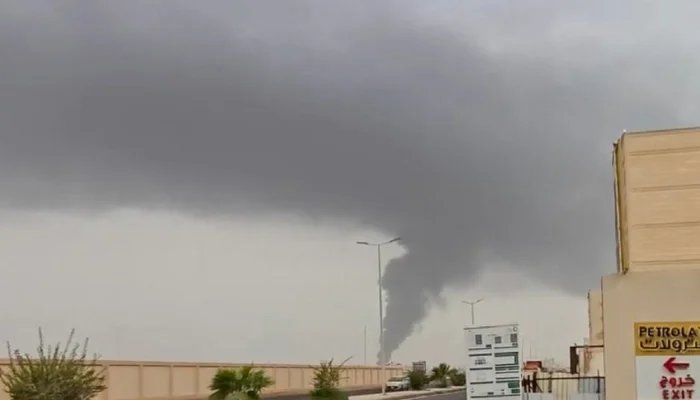
Yemen’s Houthis claimed responsibility for recent attacks on Saudi oil facilities Saturday, with a plume of smoke rising from the targeted sites. According to military spokesperson Yahya Sare, operations targeted Aramco installations in Jizan and Yanbu. In Jizan near the Yemeni border, footage verified by Reuters showed a large column of smoke coming from the refinery, which processes up to 400,000 barrels of oil daily. Multiple sources reported potential damage to fuel and oil storage at Jizan. In Yanbu, Saudi Arabia’s primary Red Sea oil port, two missiles aimed at oil infrastructure were intercepted. Yanbu has become a crucial route for Saudi oil exports, especially as Iran blockades the Strait of Hormuz.
Meanwhile, the Saudi-led coalition, which supports Yemen’s government, launched airstrikes against Houthi positions in Marib and al-Jawf provinces. Both sides are mobilizing forces along the front lines as the civil war, paused since 2022, shows signs of escalation. The Houthis recently declared a naval blockade of Saudi Arabia, threatening all its oil facilities, amid reports of further attacks that could destabilize regional energy supplies.
In the broader regional conflict, Iran accused Ukraine of attacking an Iranian vessel in the Caspian Sea, resulting in one sailor’s death and another’s injury. Tehran summoned Kyiv’s charge d’affaires to protest the incident, which Iran described as “hostile and criminal.” Ukrainian President Zelenskiy alleged that Russia has been sharing satellite intelligence with Iran to assist in regional strikes, aligning concerns over the expanding conflict’s reach.
The US maintains that its naval blockade against Iran remains fully in effect, though it paused a series of 13 nights of escalating strikes over the weekend. No new Iranian attacks on neighboring countries were reported during this period. An administration official stated that President Trump prefers diplomacy but warned Iran of consequences if it refuses to negotiate seriously. Reports by the New York Times suggest Trump has pulled back from plans to intensify military actions against Iran due to fears of widening the conflict, depleting stockpiles, alienating Gulf allies, and disrupting global energy markets.
During a White House meeting, Vice President JD Vance and Joint Chiefs Chairman General Dan Caine expressed concerns about the US military’s ammunition reserves, leading to operations being temporarily halted, a Department of Defense source confirmed. Despite a lull in Gulf clashes, conflict in Yemen continues with Saudi-backed forces targeting Houthi positions in Marib and al-Jawf.
Yemen’s civil war, which has caused widespread famine and death, remains fragile despite a ceasefire since 2022. However, recent breakdowns of the truce and the Houthis’ declarations of a naval blockade suggest renewed hostilities. The group’s leader, Abdul Malik al-Houthi, warned that all Saudi oil facilities could become targets as tensions heighten across the region.