الوسم: Saudi Arabia

  • Erdogan Pushes for Broader Regional Defense Alliance

    Erdogan Pushes for Broader Regional Defense Alliance

    Turkiye, Saudi Arabia, and Pakistan have officially signed an agreement. The pact incorporates mutual defense commitments similar to NATO’s Article 5, emphasizing collective security. There are reports indicating Egypt might join this alliance during its next phase.

    President Recep Tayyip Erdogan stated Wednesday that he hopes additional nations will become part of the defense agreement, which was signed last week in Makkah. This move aims to bring stability to a Middle East region heavily impacted by ongoing conflicts.

    The signing coincided with increased tensions following the US-Iran war, which has affected regional security, disrupted shipping routes through the Strait of Hormuz and the Red Sea, and involved various regional powers.

    Erdogan expressed optimism about the agreement expanding beyond its initial three nations, envisioning a future where all regional countries could unite under this framework. On Saturday, Turkish Foreign Minister Hakan Fidan noted that Turkey anticipates Egypt’s participation in the alliance soon, citing only minor technical issues as remaining hurdles.

    Cairo has not officially responded to the agreement or Turkey’s comments, nor confirmed any plans to join. While Egypt maintains strong military relations with Ankara, it hasn’t indicated an intention to join the new security pact, which includes a NATO-style clause stating an attack on one member is an attack on all.

    The five-month US-Iran conflict has fundamentally altered regional security strategies, prompting a reevaluation of previously dominant US military influence. Erdogan explained the alliance’s formation as a response to the changing circumstances in the Middle East, emphasizing regional actors taking more responsibility for their own security and stability.

    He highlighted that regional issues should be addressed by regional players, viewing this alliance as a vital first step toward that goal. Erdogan criticized foreign-imposed solutions, warning they tend to lead to disasters.

    This treaty strengthens the security ties among three prominent US allies, presenting an alternative framework that challenges Israel’s regional dominance. It also aims to enhance cooperation in defense industries and develop joint projects.

    Since the onset of the conflict, relations between Saudi Arabia and Turkey have improved significantly. Erdogan indicated that both countries plan to take steps to elevate their relationship further, though specific details remain undisclosed.

  • Saudi Arabia reports fire extinguished at Jazan Aramco refinery

    Saudi Arabia reports fire extinguished at Jazan Aramco refinery

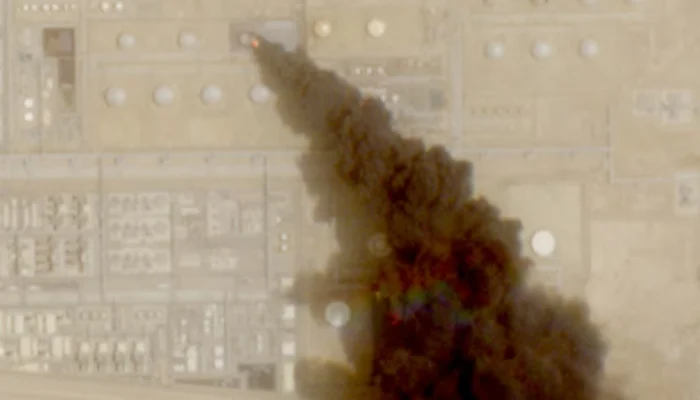
    A satellite composite image captures a plume of smoke emanating from an oil facility in Jizan, Jazan Province, Saudi Arabia, dated July 26, 2026. — Reuters

    – An fire has occurred at Aramco’s Jazan refinery site.
    – Fire crews managed to extinguish the blaze; no injuries have been reported.
    – The Saudi Energy Ministry has not revealed the cause of the fire.

    The Saudi Energy Ministry announced that firefighters successfully put out an early Sunday fire at an Aramco facility located in the southwestern part of the country. They confirmed there were no casualties. Aramco’s security teams contained the fire, and authorities are now completing the necessary procedures to handle the incident, although the cause remains undisclosed.

    Jazan is situated along the Red Sea near Yemen’s border. The refinery there handles around 400,000 barrels of crude oil daily and produces products such as gasoline and ultra-light sulfur diesel.

    Following an attack by Yemen’s Houthis, Aramco temporarily shut down the Jazan refinery on July 27. The attack damaged the plant’s Integrated Gasification Combined Cycle (IGCC) unit and tank farm. According to a note from consulting firm IIR seen by Reuters, the Houthis claimed responsibility for targeting Aramco sites in Jazan and Yanbu past attacks raised concerns that threats to shipping routes in the Red Sea and Saudi oil infrastructure could intensify, potentially disrupting global supply chains amid ongoing tensions involving Iran and U.S. military actions around the Strait of Hormuz.

    Last week, Aramco CEO Amin Nasser stated that although recent attacks caused some disruptions to production, he remains optimistic that operations can be quickly restored without significant operational or financial impact.

  • Turkiye-Pakistan-Saudi Pact Echoes NATO’s Article 5: FM Fidan

    Turkiye-Pakistan-Saudi Pact Echoes NATO’s Article 5: FM Fidan

    A defense agreement signed among Turkey, Pakistan, and Saudi Arabia is essentially comparable to NATO’s Article 5, according to Turkish Foreign Minister Hakan Fidan. He emphasized that the pact is not aimed at Iran. Fidan revealed that Turkish President Erdogan is eager to expand the alliance, with Egypt being a possible future member, among others.

    On Friday, Pakistan, Saudi Arabia, and Turkey formalized the Makkah Joint Defense Agreement, stating that the goal is to bolster collective deterrence against any aggression. The agreement stipulates that an armed attack against any of the three nations will be considered an attack on all.

    Fidan told Anadolu News Agency that this alliance is not directed at Iran or any other country. Its primary aim is to reaffirm commitment to mutual security. The nations will consult on the nature, extent, and type of support needed if any member faces an assault, with no country seen as a threat as long as the others are not attacked.

    Turkey, which boasts the second-largest military force within NATO, has indicated that the pact is open to regional expansion and does not intend to replace existing alliances. “NATO is a vast military alliance consisting of 32 member countries. We are starting small—with three countries—and are taking humble yet concrete steps,” Fidan said. The pact’s formation has been over two years in the making.

    He also mentioned plans to establish a committee of ministers similar to NATO’s, along with a secretariat based in Saudi Arabia, where operational details will be discussed at the initial meeting. The Turkish foreign minister expressed a desire for the alliance to grow beyond three countries, bringing in other regional players like Egypt once certain technical issues are resolved.

    Recently, Turkey, Saudi Arabia, Pakistan, and Egypt have formed a group to address regional concerns, including tackling Iran. This group, dubbed R4, aims to build a stronger partnership through actionable mechanisms.

    Fidan also noted Turkey’s interest in being part of an international coalition to safeguard Red Sea shipping from Houthi attacks, aligning with Turkey’s strategic interests.

    President Erdogan reaffirmed that the joint defense pact targets no country and remains open to all “brotherly” nations. He tweeted that the agreement, rooted in collective deterrence, will bolster security, foster joint defense projects, and fight terrorism.

    Erdogan emphasized that the pact aligns with the right to self-defense as outlined in UN Charter Article 51 and underscores its inclusive nature, inviting countries committed to regional peace and stability. He called for continued dialogue and diplomacy to resolve regional crises, asserting Turkey’s commitment to international law and peaceful conflict resolution. He expressed hope that their efforts and agreements will bring blessings to the entire region.

  • US and Saudis strike Iran-backed groups in Iraq, risking escalation

    US and Saudis strike Iran-backed groups in Iraq, risking escalation

    A satellite image captured on July 26, 2026, reveals a trail of smoke emanating from an oil facility in Jizan, Jazan Province, Saudi Arabia. Meanwhile, the United States and Saudi Arabia targeted Iran-supported groups in Iraq, claiming responsibility for recent drone strikes on Saudi oil installations. Iran responded by warning that accusing it of such attacks is a “major miscalculation.”

    The strikes inside Iraq occurred shortly after the U.S. military announced it thwarted an unexpected Iranian assault on American troops in the region. The Iranian Revolutionary Guards (IRGC) claimed responsibility for launching several ballistic missiles at U.S. military sites in Jordan. These back-and-forth assaults have ended a brief lull in hostilities that followed President Trump’s sudden decision to halt a bombing campaign, with Iran seemingly pausing its actions as well.

    Saudi Arabia reported that its air defenses intercepted multiple drones aimed at its Eastern Province oil facilities, launched from Iraqi territory by Iran-backed militias. In response, the U.S. Central Command and Saudi officials stated they struck multiple locations in eastern Iraq used by Iran to direct drone attacks. Iraq’s Popular Mobilization Forces reported that some of its facilities were attacked—causing casualties and damage.

    Oil prices surged by over $3 per barrel amid fears of escalating conflict. An Iranian defense official denied any Iranian involvement in recent projectile attacks targeting Saudi Arabia, calling allegations “a major miscalculation.” The U.S. military also reported intercepting multiple ballistic missiles launched by Iran attempting a surprise attack on U.S. forces in the Middle East.

    As part of efforts to de-escalate tensions over the Strait of Hormuz—a crucial artery through which approximately 20% of global oil and liquefied natural gas passes—Oman proposed a regional management plan. This approach would involve collecting voluntary fees from ships transiting the strait, similar to arrangements in Asia’s Strait of Malacca. The Gulf Cooperation Council discussed the situation via video call, but a U.S. official rejected the idea of tolls, emphasizing that the strait is an international waterway that should remain free of Iranian control or restrictions.

    The ongoing tensions follow recent Iranian missile tests and attacks on maritime vessels, with both sides warning against further escalation. Diplomatic efforts continue, but the situation remains volatile amid these regional and international maneuvers.

  • No US Attacks on Iran for Two Weeks as War Expands to Red Sea

    No US Attacks on Iran for Two Weeks as War Expands to Red Sea

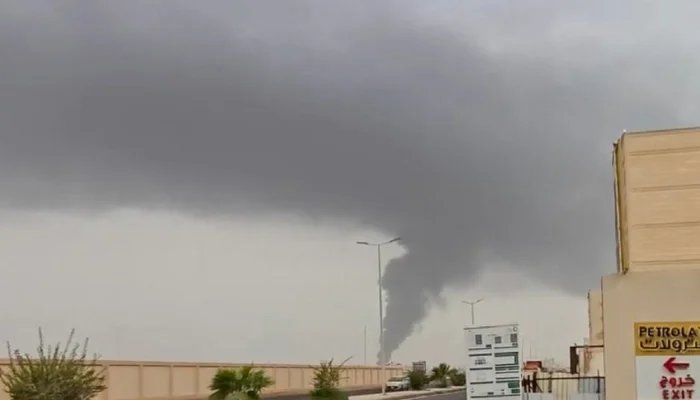
    Yemen’s Houthis claimed responsibility for recent attacks on Saudi oil facilities Saturday, with a plume of smoke rising from the targeted sites. According to military spokesperson Yahya Sare, operations targeted Aramco installations in Jizan and Yanbu. In Jizan near the Yemeni border, footage verified by Reuters showed a large column of smoke coming from the refinery, which processes up to 400,000 barrels of oil daily. Multiple sources reported potential damage to fuel and oil storage at Jizan. In Yanbu, Saudi Arabia’s primary Red Sea oil port, two missiles aimed at oil infrastructure were intercepted. Yanbu has become a crucial route for Saudi oil exports, especially as Iran blockades the Strait of Hormuz.

    Meanwhile, the Saudi-led coalition, which supports Yemen’s government, launched airstrikes against Houthi positions in Marib and al-Jawf provinces. Both sides are mobilizing forces along the front lines as the civil war, paused since 2022, shows signs of escalation. The Houthis recently declared a naval blockade of Saudi Arabia, threatening all its oil facilities, amid reports of further attacks that could destabilize regional energy supplies.

    In the broader regional conflict, Iran accused Ukraine of attacking an Iranian vessel in the Caspian Sea, resulting in one sailor’s death and another’s injury. Tehran summoned Kyiv’s charge d’affaires to protest the incident, which Iran described as “hostile and criminal.” Ukrainian President Zelenskiy alleged that Russia has been sharing satellite intelligence with Iran to assist in regional strikes, aligning concerns over the expanding conflict’s reach.

    The US maintains that its naval blockade against Iran remains fully in effect, though it paused a series of 13 nights of escalating strikes over the weekend. No new Iranian attacks on neighboring countries were reported during this period. An administration official stated that President Trump prefers diplomacy but warned Iran of consequences if it refuses to negotiate seriously. Reports by the New York Times suggest Trump has pulled back from plans to intensify military actions against Iran due to fears of widening the conflict, depleting stockpiles, alienating Gulf allies, and disrupting global energy markets.

    During a White House meeting, Vice President JD Vance and Joint Chiefs Chairman General Dan Caine expressed concerns about the US military’s ammunition reserves, leading to operations being temporarily halted, a Department of Defense source confirmed. Despite a lull in Gulf clashes, conflict in Yemen continues with Saudi-backed forces targeting Houthi positions in Marib and al-Jawf.

    Yemen’s civil war, which has caused widespread famine and death, remains fragile despite a ceasefire since 2022. However, recent breakdowns of the truce and the Houthis’ declarations of a naval blockade suggest renewed hostilities. The group’s leader, Abdul Malik al-Houthi, warned that all Saudi oil facilities could become targets as tensions heighten across the region.

  • US to Reveal Nuclear Deal with Saudi Arabia: Reports

    US to Reveal Nuclear Deal with Saudi Arabia: Reports

    The U.S. is gearing up to announce a new agreement with Saudi Arabia, granting Riyadh access to a civilian nuclear program, according to reports. This development comes amidst ongoing tensions between the Gulf nation and Iran-backed Houthi rebels in Yemen.

    Sources told the New York Times that the Trump administration plans to sign and reveal the deal this Wednesday. Officials say it will bring billions of dollars into the U.S. nuclear sector.

    In the coming days, the administration intends to submit a pact with Saudi Arabia to Congress. However, this agreement lacks certain safeguards that the U.S. insists would prevent the materials from being used in nuclear weapons programs. The deal involves a 30-year plan, under which American firms could build a uranium enrichment facility in Saudi Arabia if a joint study finds it justified.

    Many U.S. lawmakers from both parties and Israeli officials oppose the project, fearing it could be converted to develop nuclear weapons down the line. Although the deal is scheduled for submission, congressional approval isn’t mandatory for it to proceed, according to AFP.

    Meanwhile, tensions escalated this week as Houthis threatened to broaden the conflict by blocking Saudi ports. Last week marked the first exchange of fire between Saudi Arabia and the Houthis in years, threatening a ceasefire expected in 2022. However, since Israel and the U.S. launched strikes against Iran in late February, the Houthis have largely stayed on the sidelines.

  • Saudi Arabia grants one-year multiple-entry Umrah visas

    Saudi Arabia grants one-year multiple-entry Umrah visas

    Saudi Arabia’s Hajj and Umrah Ministry introduces a new multiple-entry visa for Umrah, valid for one year from the issue date. This visa permits pilgrims to enter the country multiple times, accumulating up to 90 days of stay during that period, as announced by the Saudi Press Agency (SPA).

    The initiative supports Saudi Vision 2030 and the Pilgrim Experience Program by simplifying entry procedures, enhancing the overall pilgrim experience, and boosting service efficiency. To undertake each visit, pilgrims must purchase a service package through an authorized provider on the Nusuk platform. The package’s duration can’t extend beyond the remaining validity of the visa.

    Pilgrims are also required to secure an Umrah permit via the Nusuk app before arriving in the kingdom. The visa is deactivated after each departure and reactivated upon fulfilling the necessary regulatory requirements for subsequent visits. It won’t be valid during the Hajj season, starting from the first day of Zilqad until the 13th of Zilhajj.

    This new visa offers greater flexibility in planning visits and incorporates digital and operational services to streamline the pilgrim journey.

  • US authorizes close to $2B weapons deal with Saudi Arabia

    US authorizes close to $2B weapons deal with Saudi Arabia

    The U.S. Department of State approved a nearly $2 billion arms sale to Saudi Arabia to enhance its air defense capabilities amid growing tensions in the Middle East. The proposed transaction includes up to 20,000 Advanced Precision Kill Weapon Systems and their warheads, described by the U.S. Navy as an affordable option for destroying targets with minimal collateral damage in close combat. BAE Systems, located in Nashua, New Hampshire, will serve as the primary contractor for this deal.

    The sale aims to bolster Saudi Arabia’s ability to counter existing and emerging threats by strengthening its national defense systems and improving coordination with U.S. and allied forces in the region. Officials emphasized that this sale would not negatively impact U.S. defense readiness.

    This development occurs against a backdrop of renewed hostilities between Saudi Arabia and Yemen’s Iran-backed Houthis, following missile strikes on an airport in Abha by the Houthis earlier this week. The attack came after Yemeni forces targeted Sanaa airport in retaliation for an incident that involved a flight returning from the funeral of Iran’s Supreme Leader, which was diverted amid Houthi involvement. Riyadh has blamed Iran for the escalation.

    The United States is also increasing its military pressure on Iran, resuming a naval blockade as tensions escalate. Military officials assured that this weapons sale does not pose any threat to the U.S. military’s preparedness and stability in the region.

  • Saudi Arabia Unveils ‘Package Visa’ for Flights, Hotels, and Tourism

    Saudi Arabia Unveils ‘Package Visa’ for Flights, Hotels, and Tourism

    Saudi Arabia has initiated a pilot program for its innovative Package Visa, a fully digital travel solution that enables international tourists to secure a visa as part of a comprehensive travel package. This package combines flights, lodging, and visa processing into a single seamless booking experience.

    Currently, the rollout is underway through authorized travel and tourism agencies in select international markets, with plans for a wider global launch soon. This new approach streamlines trip planning by eliminating the need to use multiple platforms for flights, hotels, and entry permits. Instead, travelers eligible for the program can book their entire trip through one integrated platform.

    The platform also offers the convenience of adding event tickets, local tours, and cultural experiences directly to travel reservations.

    “As Saudi’s tourism continues to accelerate, Package Visa highlights our dedication to simplifying travel to Saudi Arabia,” said Ahmed Al Khateeb, Minister of Tourism. “By merging visa issuance with travel bookings, we’re making the journey easier and more connected. This effort also boosts collaboration within the tourism industry and reinforces Saudi Arabia’s position as a welcoming and accessible destination.”

    This digital upgrade aligns with the Kingdom’s broader goal of removing travel obstacles and diversifying its economy through tourism development. Following the successful deployment of the tourist e-visa, visa-on-arrival, and stopover transit visa programs, Saudi Arabia welcomed more than 29 million visitors in 2025—a record-breaking number.

    For global travel agents, this initiative opens new opportunities to craft competitive itineraries, streamline logistics, and encourage travelers to stay longer. To ensure quality service and security, the Package Visa is exclusively available through vetted travel operators who meet strict standards and offer 24/7 customer support.

  • Saudi TV Presenter Saud Al-Otaibi Dies in Car Crash

    Saudi TV Presenter Saud Al-Otaibi Dies in Car Crash

    Digital Phablet – Saudi TV presenter Saud Al-Otaibi, who works for the channel Al-Waqi’, tragically died in a severe car accident south of Riyadh, prompting mourning across media circles and among the public in the Gulf nation.

    According to local media reports, the incident took place on Dirab Road south of Riyadh after Al-Otaibi finished his shift at the channel and was en route home. His vehicle was involved in a violent crash that resulted in his immediate death.

    Al-Otaibi was a rising star in the media industry, gaining recognition during his tenure at Al-Waqi’ TV, where he hosted various programs and segments that attracted significant audience interest both inside and outside Saudi Arabia, thanks to his friendly demeanor and spontaneous delivery.

    Following the news of his passing, social media streams were filled with tributes from journalists, celebrities, and citizens alike, expressing grief over his loss, reflecting on his media contributions and professionalism, and praying for divine mercy and forgiveness.

    A tweet from a local news outlet shared:
    “Media personality / Saud bin Turki Al-Qutbi Al-Otaibi, a member of Al-Waqi’ channel staff, passed away due to a traffic accident. A funeral prayer will be held this afternoon at Al-Rajhi Mosque in Riyadh, with burial at Nassem Cemetery. #دعوه_لسعود_العتيبي #سعود_العتيبي” — Mlehm Net (@mlhm_net), July 6, 2026.

  • Muslim Pilgrims Depart Makkah After Hajj Rituals

    Muslim Pilgrims Depart Makkah After Hajj Rituals

    Thousands of Muslims started leaving Makkah on Friday after completing the Hajj pilgrimage in extreme heat, despite the ongoing conflict spreading across the Middle East. Over 1.7 million people from 165 countries participated in this massive religious event, set against the backdrop of tensions caused by recent U.S.-Israeli strikes on Iran. Since the outbreak of hostilities in February, Tehran has responded with numerous drone and missile attacks targeting infrastructure and energy facilities throughout the Gulf, including in Saudi Arabia.

    About 30,000 Iranians traveled to Makkah this year, roughly a third of the initial estimate of 86,000, with Iran’s state news agency IRNA attributing the decline to the “wartime situation.” Ahmed Mamdouh, a 37-year-old Egyptian, expressed disbelief at completing the pilgrimage for the first time, fighting back tears as he said, “I’m very grateful I finished the rituals safely. The Hajj is exhausting, especially under such hot weather.” Algerian pilgrim Al-Zaoui, aged 74, linked arms with his wife and shared, “Performing the Hajj together was our dream, and after 50 years of marriage, it became a reality.”

    On this day, pilgrims will complete the third day of a ritual in Mina’s valley, where they throw pebbles at pillars representing the devil. Afterwards, they travel by bus to the Grand Mosque in Makkah for the farewell tawaf—walking seven times around the Kaaba, the sacred black cube at the center of the mosque that symbolizes Islam.

    Performing Hajj, one of the five pillars of Islam, is a duty for every Muslim who has the means, and it involves a series of outdoor rituals spread over several days, often in intense temperatures. After over 1,300 pilgrims died during the 2024 Hajj—when temperatures exceeded 50°C—Saudi authorities implemented measures to reduce heat exposure, including additional shaded areas and thousands of health workers. The Saudi Red Crescent reported assisting over 83,000 people since the Hajj season began.

  • Pilgrims stone devil at Hajj despite scorching heat

    Pilgrims stone devil at Hajj despite scorching heat

    Pilgrims assemble in Mina for a significant ceremonial ritual. Eid ul-Adha commences following the completion of Hajj rites. During the peak days, pilgrims face extreme temperatures reaching up to 44°C in Makkah and Mina, performing outdoor rituals under the scorching desert sun.

    On Wednesday, devout Muslims symbolically threw pebbles at representations of the devil in Mina, marking a key moment in the Hajj pilgrimage amid intense heat and ongoing regional tensions. Early that morning, large crowds gathered in Mina, southeast of Makkah, to reenact the Prophet Ibrahim’s (AS) act of stoning Satan at three different sites—an act representing his rejection of evil’s temptations when asked to sacrifice his son Ismael.

    Clad in white, the pilgrims braved the blistering heat, with temperatures hitting 44°C in Makkah and Mina on that day. Despite such harsh conditions, authorities implemented enhanced measures to prevent heat-related incidents, including deploying giant fans, mist sprayers, cooled pavements, and trucks dispensing drinking water.

    This year’s Hajj drew over 1.7 million participants, a slight increase from 2025, even amidst regional conflicts involving drone and missile attacks targeting Saudi Arabia and neighboring Gulf countries. The Strait of Hormuz, a vital channel for around 20% of the world’s oil exports, remains largely blocked due to the unstable US-Iran peace talks, impacting regional energy supplies and causing price surges.

    Despite the physical hardships faced during these days-long outdoor rituals, many pilgrims expressed joy upon completing their pilgrimage. For many, performing Hajj remains a fundamental Islamic obligation that must be fulfilled at least once in a lifetime if able. Iraqi pilgrim Adnan Hamad, 58, shared his feelings, saying, “I can’t believe I’ve finished the Hajj rituals,” while his daughters dressed in white abayas looked on happily. “Every step was worth it despite the extreme hardship,” he added.

    Egyptian pilgrim Marwa Dahchouri described the act of stoning the devil as an “utterly unique experience,” likening it to a glimpse of paradise or becoming a small part of it. The previous day, pilgrims prayed atop Mount Arafat—believed to be the site of Prophet Muhammad’s (PBUH) final sermon—and then spent the night at Muzdalifah, where they gathered pebbles for the stoning ritual.

    Following this, the pilgrims return to Makkah for a final tawaf around the Kaaba—the cube-shaped structure at the center of the Grand Mosque toward which Muslims direct their prayers. The last day of Hajj coincides with Eid ul-Adha, a festival commemorating Abraham’s willingness to sacrifice his son before an angel intervened and provided a ram in place of Ismael.

    The festival is widely celebrated in the Muslim world, typically involving the slaughter of a sheep, some of which is donated to those in need, symbolizing their willingness to follow Abraham’s example of faith and obedience.

  • Saudi Arabia Uses Drones to Protect Hajj Pilgrims from Heat

    Saudi Arabia Uses Drones to Protect Hajj Pilgrims from Heat

    During this week’s peak temperatures of 45°C in Makkah, Saudi Arabian healthcare professionals have increasingly turned to drones to deliver supplies across numerous clinics caring for heat-exposed pilgrims during Hajj.

    The rituals of Hajj have remained largely unchanged for centuries. However, technological advancements—such as artificial intelligence, drones, and mobile applications—are revolutionizing the pilgrimage experience for both visitors and officials by providing essential services, logistical support, and crowd management solutions.

    Instead of navigating clogged roads with over 1.5 million pilgrims, drones have become a vital tool, ensuring that the 127 clinics distributed across Makkah, Mina, and Arafat stay stocked with medical necessities.

    Fahd Al-Bathi, COO of the National Unified Procurement Company (Nupco), explained, “Our main objective is to deliver swift service to God’s guests during this season.” Preparations for the healthcare needs during Hajj commenced nine months in advance.

    Standing before a color-coded map highlighting medical centers, Nupco’s Turki Al-Obaidi mentioned that his teams operate around the clock during Hajj.

    “Our staff must deliver care promptly, especially with such enormous crowds,” he emphasized.

    Before drones, medical supply drivers sometimes spent over an hour en route to clinics running low on essentials. Now, operations are centralized at a large facility that supplies drones with medicines and other critical items.

    “We’re integrating innovative solutions to ensure the safe, rapid, and high-quality delivery of medical supplies,” said Al-Bathi.

    In the operations center, staff monitor drone routes meticulously on a large data display, while others use electric scooters for quick movement around the site. Drones are just one part of a broader tech-driven effort to manage Hajj more effectively amidst the intense desert heat.

    Artificial intelligence is also employed to oversee footage from thousands of cameras installed throughout Makkah, supplementing traditional cooling methods like giant fans, water trucks, and misting systems aimed at keeping crowds comfortable.

    “Heat exhaustion remains one of the primary concerns during Hajj,” noted a Saudi health official.

  • Pilgrims Pray on Mount Arafat During Hajj’s Peak Moment

    Pilgrims Pray on Mount Arafat During Hajj’s Peak Moment

    A large crowd of Muslim pilgrims assembled on Mount Arafat in Saudi Arabia Tuesday, marking the spiritual peak of the annual Hajj pilgrimage. They prayed under the harsh desert sun as temperatures neared 40°C. Despite ongoing tensions in the Middle East caused by the US-Israeli conflicts with Iran, more than 1.5 million devout Muslims participated in this year’s Hajj, one of Islam’s Five Pillars. Photos captured pilgrims gathered at the Mount of Mercy, outside the city of Mecca, with some seeking refuge from the heat near misting fans. The scenes show pilgrims raising their hands in prayer as dawn broke over the plain of Arafat, with many bringing shades, fans, and water to cope with the intense conditions. The event remains a testament to the resilience and devotion of millions making the sacred journey despite regional conflicts and extreme weather.

  • Hajj Pilgrims Exceed 2025 Arrivals Amid Middle East Conflict

    Hajj Pilgrims Exceed 2025 Arrivals Amid Middle East Conflict

    More than 1.5 million pilgrims have already arrived in Saudi Arabia from outside the country for this year’s Hajj, according to a Saudi official. This number surpasses last year’s international visitor count despite ongoing conflicts in the Middle East.

    The tensions sparked by U.S. and Israeli strikes on Iran in late February have led Tehran to launch multiple attacks on targets across Saudi Arabia and the Gulf region. These hostilities have caused significant disruptions to air travel and a sharp increase in travel expenses.

    Gulf airlines based in the UAE, Qatar, and Bahrain have been rapidly working to restore most of their flight operations after weeks of airspace closures and cancellations.

    Despite the challenges, pilgrims continue to arrive in Saudi Arabia to take part in this year’s Hajj.

    “Total arrivals from abroad have reached 1,518,153,” said Saleh Al-Murabba, head of Saudi Arabia’s Hajj Passport Forces, during a late Friday press briefing.

    Expectations are that this number will grow in the next two days as more pilgrims arrive before the official start of the pilgrimage on Monday.

    Last year, the total number of pilgrims at Hajj was 1,673,320, with 1,506,576 coming from outside Saudi Arabia.

    Performing Hajj is one of the five pillars of Islam, and every Muslim who is physically and financially able is required to undertake the pilgrimage at least once in their lifetime.

  • IEA: MidEast Energy Output to Recover in Two Years

    IEA: MidEast Energy Output to Recover in Two Years

    A recent Iranian drone strike at the Ras Tanura oil refinery operated by Saudi Aramco caused significant smoke to billow into the sky, amid tensions involving the U.S. and Israel concerning Iran in Ras Tanura, Saudi Arabia, on March 2, 2026. — Reuters

    According to Fatih Birol, the Executive Director of the International Energy Agency, it will take approximately two years to recover the lost energy production in the Middle East resulting from the ongoing conflict. In an interview with the Swiss newspaper Neue Zürcher Zeitung, he explained, “The timeline will differ across nations; Iraq, for example, might face a much longer recovery period than Saudi Arabia. Overall, we forecast it will take around two years to return to pre-war levels.”

    Birol also warned that the market is underestimating the impact of a prolonged closure of the Strait of Hormuz. He noted that oil and gas shipments already en route before Iran’s conflict had arrived, somewhat reducing the immediate shortages. However, he emphasized that no new tankers loaded in March, and there have been no fresh deliveries of oil, gas, or fuels to Asian markets, creating an apparent gap. If the Strait remains closed, consumers should brace for substantially higher energy prices.

    When asked if the IEA might release additional emergency oil reserves following its March actions, Birol said the agency is prepared to act swiftly and decisively if necessary. “Although we aren’t there yet, it’s definitely being considered,” he added.

  • Saudi Arabia and Ukraine Agree on Air Defense Partnership

    Saudi Arabia and Ukraine Agree on Air Defense Partnership

    During President Volodymyr Zelensky’s visit to Saudi Arabia, Ukraine and Saudi Arabia signed an air defense agreement as both nations face threats from Iranian drone attacks, according to two senior officials speaking to AFP. Kyiv is aiming to utilize its experience in intercepting Russian drones to assist Gulf countries, which are experiencing similar threats from Iranian-made Shahed drones used by Russia against Ukraine.

    One official explained that the purpose of the agreement is for Ukraine to help these countries develop their air defense systems, which they currently lack. The official added that the deal, signed on Thursday, involves more than just interceptors; it encompasses building an integrated system that combines various air defense components, leveraging Ukrainian expertise, AI, and comprehensive data analysis to counter drones like the Shaheds.

    Ukraine has been defending itself against nightly Russian drone assaults for four years using a combination of low-cost interceptors, electronic jamming equipment, and anti-aircraft weapons. Kyiv has also proposed trading its interceptors for more advanced, costly missile systems used by Gulf nations to shoot down Iranian drones, emphasizing the need for more of these missiles to defend against Russian missile strikes.

    Zelensky confirmed via social media that the two countries had reached a significant understanding regarding defense cooperation, and he had met with Crown Prince Mohammed bin Salman. Zelensky expressed willingness to share Ukraine’s expertise and systems with Saudi Arabia, noting that both nations have capabilities of mutual interest. He did not specify the exact details of the agreement but highlighted the importance of the cooperation.

    Additionally, Zelensky met with Ukrainian experts specializing in anti-drone technology, who have been deployed to the region following US and Israeli strikes on Iran that triggered retaliatory drone and missile attacks from Tehran. Zelensky praised the Ukrainian specialists for their quick sharing of extensive knowledge, asserting that Ukraine’s unique expertise attracts global interest.

    A memorandum on defense procurement was also signed between the Saudi and Ukrainian defense ministries in Jeddah. Saudi Assistant Minister of Defense for Executive Affairs Dr. Khaled Al-Biyari and Ukrainian Chief of the General Staff Lieutenant General Andrii Hnatov formalized the arrangement, aimed at enhancing defense collaboration.