
Select Language:
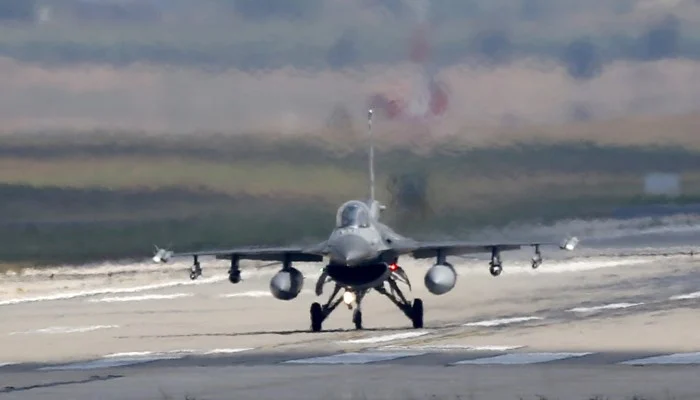
U.S. President Donald Trump’s visit to Ankara for the NATO summit could potentially facilitate Turkey’s acquisition of several fighter jet engines. However, it is unlikely to resolve the ongoing F-35 dispute that has strained relations between the two countries, analysts suggest.
The summit, scheduled for July 7-8 and hosted by President Recep Tayyip Erdogan, will gather leaders from NATO’s 32 member nations. Last month, Trump indicated he would make Erdogan “very happy” regarding Turkey’s efforts to secure F110 jet engines and re-enter the F-35 fighter jet program.
Experts believe this could clear the way for Turkey to receive the fighter jet engines needed for its flagship KAAN stealth fighter project. Sinan Ulgen, director at the Istanbul-based Edam think tank, explained, “It’s likely to be the green light for the F110 GE engines for the KAAN fighter, around 40 engines. There were obstacles blocking this supply, but those are probably now being removed.”
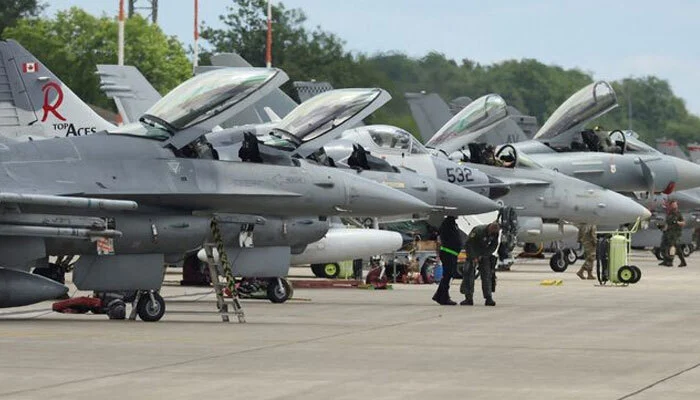
Turkey has built a few prototypes flying with F110 engines but is awaiting additional engines to expand its KAAN fleet. The twin-engine stealth fighter, developed by Turkish Aerospace Industries, aims to replace Turkey’s F-16s and enable the country to join a select group of nations producing fifth-generation combat aircraft—such as the U.S., China, and Russia.
While Turkey plans to develop its own domestically produced engine for the KAAN—since the F110 lacks stealth features—that project remains in early design stages, according to Defense Minister Yasar Guler. In September, Turkey received an initial batch of 10 F110 engines, with negotiations ongoing for an additional 80 units.
However, these plans are delayed due to political issues stemming from Turkey’s 2017 purchase of a Russian S-400 missile defense system. Foreign Minister Hakan Fidan emphasized that the U.S. sanctions related to the CAATSA act—imposed in 2019 and 2020—have hampered Turkish defense efforts and worsened diplomatic ties.
Fidan noted, “The CAATSA issue must be resolved. The U.S. needs to take steps regarding the F-35 and the engines for KAAN. Currently, the engines are waiting for approval in Congress,” which raised eyebrows in Turkey, as Istanbul had expected the KAAN to be fully domestically produced.
Turkey’s exclusion from the F-35 program has prompted a shift toward self-reliance in defense. Ozgur Unluhisarcikli, head of the German Marshall Fund in Ankara, said, “Some argue we shouldn’t buy F-35s and should instead invest in our own fifth-generation fighter jet program. President Trump’s decision to export jet engines aligns with that vision. Without those engines, Turkey cannot produce the KAAN.”
Despite Turkey’s efforts, the delivery timeline for the KAAN remains years away. Only Indonesia has ordered the aircraft so far, purchasing 48 fighters for $10 billion, with additional interest possible after the NATO summit. Ulgen pointed out, “Looking at the challenges faced by the German-French FCAS initiative, maybe Spain could join as a partner, and there might be interest from Gulf countries. Still, significant hurdles remain before it becomes a credible international option.”
Experts agree that resolving the F-35 dispute will be difficult. To lift sanctions, Turkey would need to relinquish the S-400 system, but selling it to a third country would require Moscow’s approval, and returning it to Russia is unlikely.
“The U.S. might want to resolve this issue and sell Turkey F-35s,” said Mustafa Aydin, an international relations professor at Istanbul’s Kadir Has University. “However, congressional approval is needed, and changing that decision won’t be easy.”
Matthew Bryza, a retired U.S. diplomat and former senior official at the White House and State Department, suggested Trump could resolve the matter as an executive decision. “President Trump can declare that the S-400 and F-35 dispute is over. However, lifting CAATSA sanctions would require Congressional action—whether he can persuade Congress depends on his political capital,” he explained. “Such a move could be politically costly ahead of midterm elections, especially with opposition from Greece and Armenia.”
 ChatGPT
 Perplexity
 Gemini AI
 Grok AI