
Select Language:
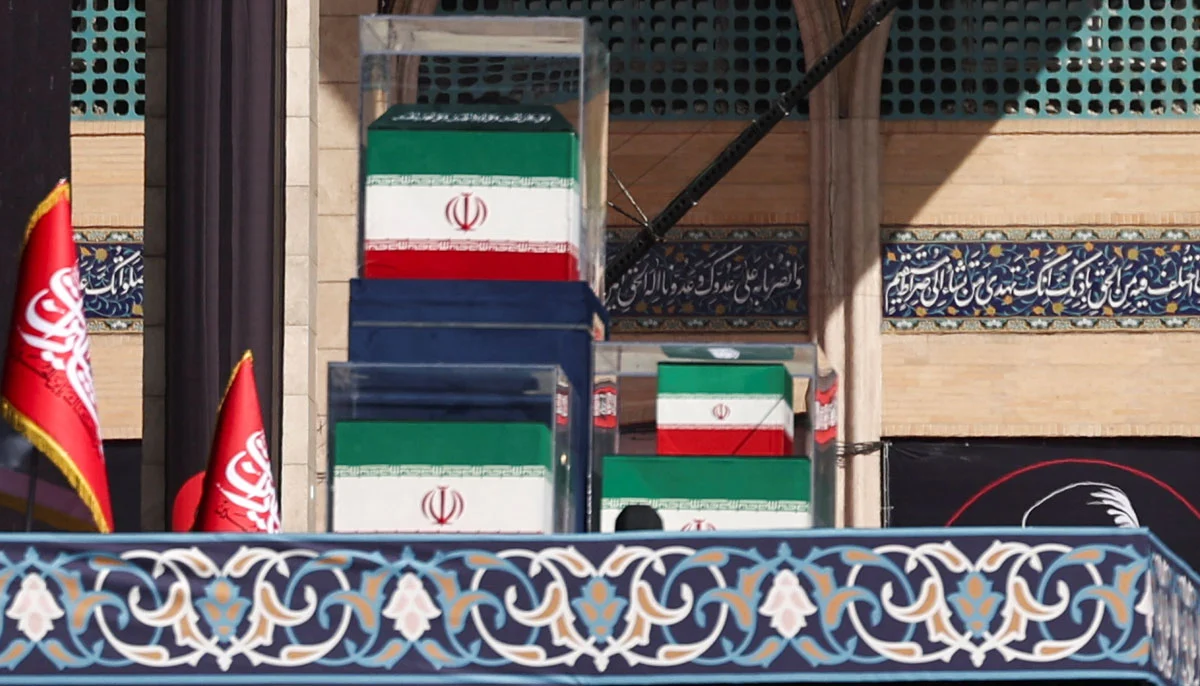
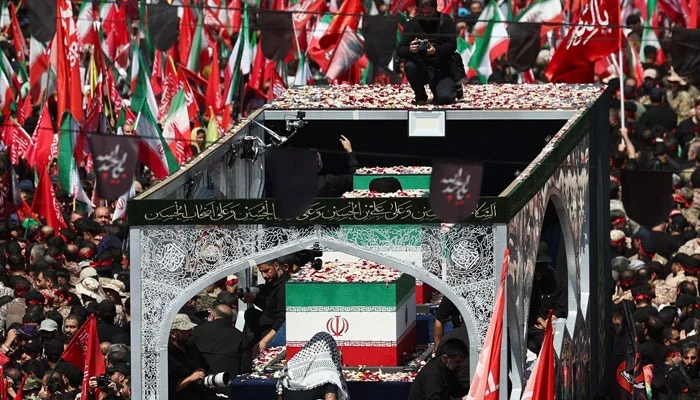
A vehicle transporting coffins of Iran’s late Supreme Leader Ayatollah Ali Khamenei and his family members moved through the streets as crowds gathered for his funeral in Tehran on July 6, 2026. The procession took place amidst rare appearances by three of Khamenei’s sons. To prevent stampedes, reinforced concrete barriers kept the public at a safe distance from the coffins. Mourners chanted slogans calling for revenge over his assassination.
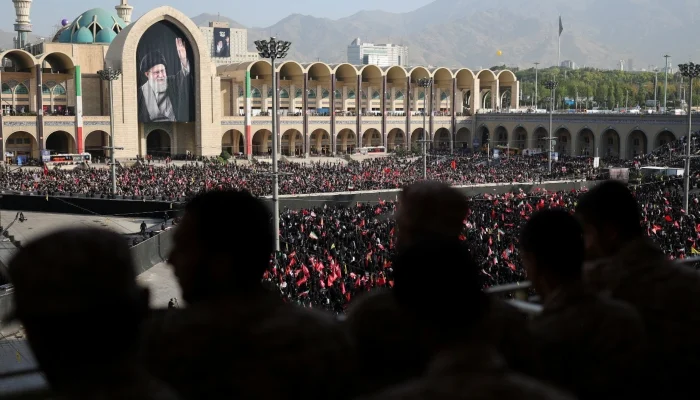
The funeral procession kicked off in Tehran after two days of lying in state at the Grand Mosalla religious complex. Khamenei was killed on February 28 during Israeli and US airstrikes, marking the start of the Middle East conflict. Thousands of Iranians assembled in Imam Hussein Square, where they even hung an effigy of then-US President Donald Trump in protest.
Authorities aimed to manage the crowds and avoid a repeat of the chaos seen during Khomeini’s funeral in 1989, which drew an estimated 10 million people and resulted in over ten deaths and thousands injured. During Khamenei’s initial wake, large concrete walls separated mourners from the coffins to prevent stampedes. The public’s access during the procession remains uncertain, but officials are cautious, recalling how Khomeini’s funeral required a helicopter to bypass a stormed vehicle.
The events are also an opportunity for Iran’s leadership to showcase resilience after over a month of war involving Israel and the US. Parliament speaker and primary US negotiator Mohammad Bagher Ghalibaf praised Iranians for their united homage to their “martyr.” Similar ceremonies will follow in Qom, Najaf, and Karbala, culminating in Khamenei’s burial in Mashhad on Thursday.
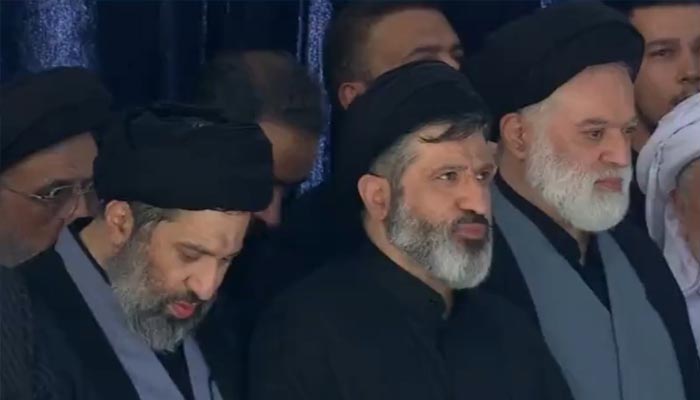
The funeral was notably marked by a rare appearance of three of Khamenei’s sons, with Mojtaba Khamenei notably absent. Although he was appointed Supreme Leader following his father’s death, he has not been seen publicly and is believed to have been wounded in the airstrikes. The new commander of the Revolutionary Guards, Ahmad Vahidi, also appeared in public for the first time since the conflict began, alongside Esmail Qaani, head of the Quds Force.
While Iranian officials project unity, the current and past leaders with strained relations with Khamenei—such as President Pezeshkian’s predecessors—have not been present at the ceremonies. The government emphasizes mass mobilization as a display of national strength, especially after recent protests and crackdowns that rights groups say claimed thousands of lives.
The war pause, following a ceasefire and a preliminary deal with the US, keeps tensions high. Both sides have warned that military action could resume, and calls for revenge echoed through the funeral rituals. Citizens expressed that the killers of Khamenei should be held accountable, with some demanding retribution to honor their fallen leader and loved ones. Iran remains committed to its confrontational stance against the West, supporting groups like Hamas and Hezbollah, which sent representatives to the funeral.
 ChatGPT
 Perplexity
 Gemini AI
 Grok AI