
Select Language:
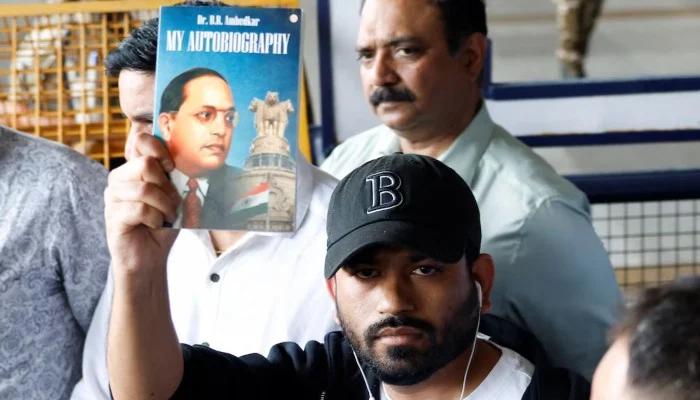
Abhijeet Dipke, leader of the Cockroach Janta Party (CJP), is seen leaving an airport in New Delhi on June 6, 2026, holding a copy of “My Autobiography” by Dr. B.R. Ambedkar.
Dipke mentioned that his family feared he might face arrest upon returning to India.
On Saturday, dozens of police officers gathered near Jantar Mantar in central Delhi, barricading some roads as protesters chanted slogans calling for the resignation of Education Minister Dharmendra Pradhan.
In response to the movement, the Indian government blocked the group’s X account domestically, a move contested by the CJP in a Delhi court. Cabinet Minister Kiren Rijiju accused the group of seeking followers from Pakistan and labeling them as part of an “anti-India gang.”
Since launching in mid-May, the group has gained approximately 22 million followers on Instagram. It stands as the largest online platform voicing dissent against Prime Minister Narendra Modi’s 12-year rule, driven by issues like youth unemployment, exam paper leaks, and obstacles to students’ careers.
Analysts suggest that despite recent victories in key state elections, Modi’s image is being impacted by the group’s rising popularity. Widespread dissatisfaction over rising fuel prices and gas shortages due to tensions with Iran also contribute to the unrest.
Police used loudspeakers to direct demonstrators to the designated protest area.
“The movement is peaceful and for the youth of the nation,” said spokesperson Ashutosh Ranka. He added that Dipke is prepared for a prolonged and significant role in Indian politics.
India’s youth, numbering nearly 400 million aged 15 to 29, face persistent challenges in securing non-agricultural employment. April’s urban youth unemployment rate was almost 14%. Many educated young people find themselves in low-wage or insecure jobs that do not utilize their skills, according to economists.
 ChatGPT
 Perplexity
 Gemini AI
 Grok AI