Tag: Media

  • Myanmar’s Aung San Suu Kyi Meets Red Cross Official, Govt Confirms

    Myanmar’s Aung San Suu Kyi Meets Red Cross Official, Govt Confirms

    Myanmar’s former leader Aung San Suu Kyi, who has been detained since 2021, recently met with a representative from the International Committee of the Red Cross. The country’s government spokesperson confirmed the meeting took place on Monday in Naypyidaw. Suu Kyi, a Nobel Peace Prize laureate, has been serving a 27-year prison sentence following conviction on multiple charges, which her supporters argue are politically motivated. Her son has publicly expressed limited knowledge regarding her current health and living conditions.

    The meeting occurred amid ongoing international concern for her well-being. Photos released by the government show Suu Kyi dressed in traditional Burmese attire, meeting with Arnaud de Baecque of the ICRC in a modest, wood-paneled room with minimal furnishings. Another image depicts her celebrating her birthday, with a cake inscribed with her name and the date June 29, 2026, hinting at the rare inside look into her residence. However, these images’ exact location and date could not be independently verified, and no prior online postings of them exist.

    Following a military-led election in April, which resulted in the continuation of Myanmar’s military control and the presidency of Min Aung Hlaing, Suu Kyi was moved to house arrest. Her sentence was reduced by a sixth as part of an amnesty that also released her political ally, ex-president Win Myint. Despite this, access to her remains limited. The regional ASEAN group and other international bodies continue to seek meetings with her, but the military government has been reluctant to grant such requests.

    Last December, Myanmar’s ruling junta claimed Suu Kyi was in good health. Her son has voiced concern over his limited updates and fears she could pass away without him knowing, due to the lack of communication over the years.

  • Andy Burnham appointed UK Prime Minister after meeting King Charles

    Andy Burnham appointed UK Prime Minister after meeting King Charles

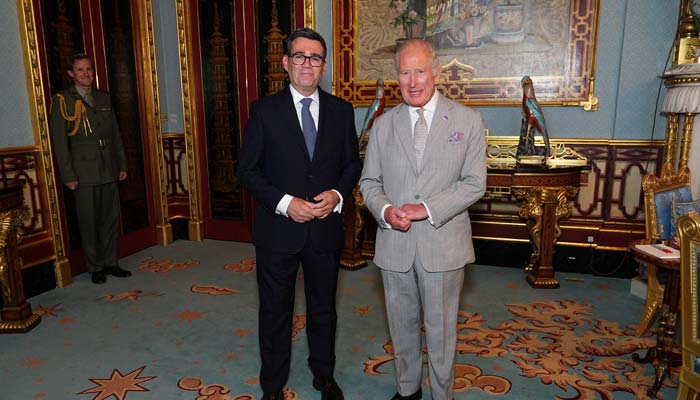
    King Charles welcomes Andy Burnham during an audience at Buckingham Palace, London, where he invited the leader of the Labour Party to become Prime Minister and form a new government. — Reuters
    • Burnham becomes prime minister after Starmer steps down.
    • Former Manchester mayor pledges to establish a new model of governance.
    • Andy Burnham’s team aims to move swiftly with their policy agenda.

    King Charles III of Britain appointed Andy Burnham as prime minister on Monday, following Keir Starmer’s official resignation, according to the palace.

    “Andrew Burnham MP has accepted the King’s offer and has been formally sworn in,” Buckingham Palace announced, adding that the king tasked him with forming the next government.


    Burnham committed to presenting a decade-long plan for the country, emphasizing the importance of making politics work again.

    “Britain needs to demonstrate to the world that we can regain stability,” Burnham stated shortly after his appointment by King Charles III to succeed Keir Starmer. He also promised to “give my first orders to eliminate rough sleeping across the nation” once he begins his term.

    He also noted that the government would introduce measures to address rising living costs and outline funding strategies.

    Looking ahead, Burnham said, “We will support more young people into employment by reforming the education system and providing additional help, including mental health support, and we will build more council homes.”

    “This is the fair, sustainable way to reduce welfare expenses, meet our fiscal targets, and uphold our defense commitments on the international stage.”

    Labour Party Supports Burnham to Counter Reform UK’s Rising Influence

    On Friday, Burnham described his rise to Labour leader as “the most significant political change in four decades.”

    He vowed to overhaul the political system to make the nation more affordable and elevate all communities from their current hardships.

    Lawmakers within the Labour Party see him as a rare politician capable of confronting Nigel Farage’s populist Reform UK — a challenge they believed Starmer was ill-equipped to handle.

    Burnham’s immediate focus will be the composition of his cabinet, especially choosing a finance minister. Past administrations have fallen due to disagreements within this critical department.

    One of the early favorites for the finance role, energy security and net zero advocate Ed Miliband, has faced some opposition, with Shabana Mahmood, the interior minister, now considered a leading candidate.

    Additionally, Burnham scrapped plans for all government employees to carry digital identity documents—a scheme aimed at curbing illegal migration that faced criticism from cross-party lawmakers.

    Further decisions on taxation, public spending, oil and gas policies, and oversight of utility companies are anticipated, with Burnham advocating for increased public control over essential services.

  • Report suggests PM Keir Starmer may resign this Monday

    Report suggests PM Keir Starmer may resign this Monday

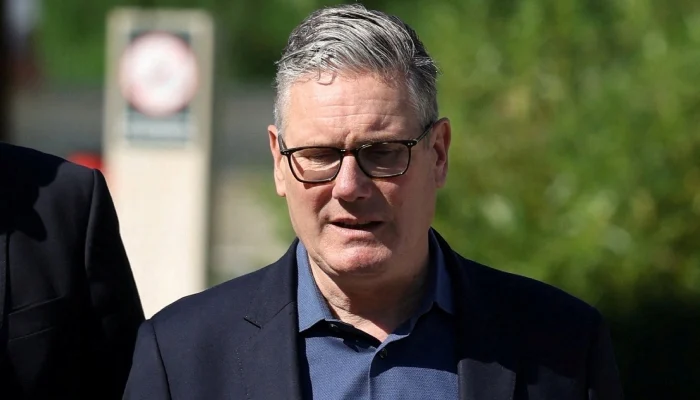
    Britain’s Prime Minister Keir Starmer walks through a housing development in North London on June 19, 2026, as reported by Reuters.

    Pressure on Starmer intensified after Andy Burnham entered Parliament as more than 100 Labour lawmakers reportedly called for him to step down. Wes Streeting also indicated his readiness to challenge Starmer’s leadership.

    According to The Observer, Starmer was contemplating his future with his wife at his Chequers residence before making a final decision, with expectations of a clear statement coming as soon as Monday. Meanwhile, a government source emphasized that Starmer remains committed to his responsibilities, citing his previous public remarks to that effect.

    Starmer, who led the center-left Labour party to a decisive victory in 2024, has seen his popularity decline sharply due to scandals and policy reversals, fostering a perception that he cannot fulfill his promises to improve living standards. If he resigns or is ousted, Britain would see its seventh prime minister in just over ten years — a record high in nearly two centuries, reflecting widespread frustrations with government failures on public services and immigration.

    Over a quarter of Labour MPs—more than 100 members—have openly expressed their desire for Starmer to leave or to set a timetable for his departure, according to Reuters. The Observer noted that Starmer concluded his position was untenable after discussions with ministers, advisors, donors, and trade union leaders.

    Many in Labour see Burnham, 56, a seasoned politician and mayor of Greater Manchester, as the likely successor, whether through a negotiated transfer of power or a formal leadership race. Burnham, who secured a parliamentary seat on Friday, did not immediately challenge Starmer but used his victory speech to pledge a new direction for the country. His allies have urged Starmer to voluntarily step aside.

    Wes Streeting, a former health minister, has also expressed willingness to challenge Starmer. Reports indicate that Burnham might dismiss Finance Minister Rachel Reeves if he becomes prime minister, citing a need for a greater change in direction; however, Reuters could not verify this information.

  • Italy’s Meloni condemns ‘senseless’ attacks by Trump

    Italy’s Meloni condemns ‘senseless’ attacks by Trump

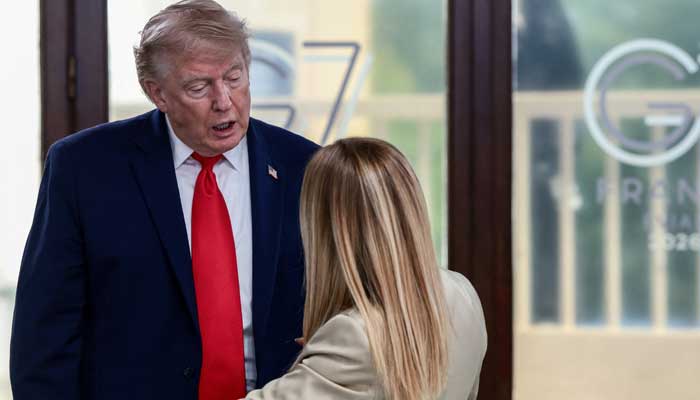
    U.S. President Donald Trump talks with Italian Prime Minister Giorgia Meloni during a working lunch with G7 and Middle Eastern leaders in Evian-les-Bains, France, June 16, 2026. — Reuters

    • Trump accuses Meloni of trying to mend ties with Washington.
    • Meloni criticizes Trump for “constant, unprovoked” attacks.
    • “My popularity isn’t your concern,” Meloni tells Trump.

    WASHINGTON: Italian Prime Minister Giorgia Meloni responded sharply to U.S. President Donald Trump on Saturday, describing his repeated, unprovoked insults as “nonsensical” following his escalation of a diplomatic dispute by claiming she repeatedly sought a photo opportunity with him.

    This exchange has created a rare personal rift between Trump and one of Europe’s leading right-wing figures, who has presented herself as a bridge between America and Europe during Trump’s resurgence in power.

    Initially, Trump told Italian broadcaster La7 that Meloni “begged” him for a picture at this week’s G7 summit in France, asserting he only agreed because he “felt sorry for her.”

    Meloni strongly denied this, calling it “fabricated,” but Trump reaffirmed the claim in a post on Truth Social, alleging she repeatedly asked for a photo during the gathering.

    He also accused her of attempting to repair relations with the U.S. for domestic political gains after Italy did not support U.S. action against Iran.

    “Now, after the United States defeated Iran militarily, she wants to be friends again to boost her approval ratings. No thanks!!!” Trump wrote.

    He suggested Meloni’s declining popularity in Italy might be linked to her refusal to allow U.S. military landings on Italian soil during the Iran conflict.

    Trump also reiterated his longstanding criticism of U.S. defense spending for NATO allies, claiming that Washington contributes hundreds of billions to safeguard Italy and others.

    In a vigorous reply on Instagram, Meloni accused Trump of relentless, senseless attacks and stated her popularity isn’t based on her relationship with him.

    “Being your friend has certainly not helped, nor does it influence my standing,” she wrote.

    She dismissed Trump’s criticism about the use of U.S. military bases in Italy, affirming that all were used according to agreements Rome had honored.

    “Ultimately, my popularity isn’t your business. I suggest you focus on your own,” she added.

  • Potential Obstacles to a Final US-Iran Agreement

    Potential Obstacles to a Final US-Iran Agreement

    When U.S. and Iranian negotiators sit down in Switzerland on Friday after nearly four months of conflict, the stakes are incredibly high, facing numerous challenges that could jeopardize efforts for a comprehensive peace deal.

    While a breakthrough isn’t out of the question, most analysts doubt that the two sides can finalize a comprehensive agreement within the 60-day timeframe outlined in the recent “memorandum of understanding,” approved this week by President Donald Trump and Iranian leaders.

    This interim agreement defers the most contentious issues to later negotiations, with no certainty they will ever be resolved. Potential obstacles include:

    Nuclear Program Disputes
    Iran’s nuclear ambitions—cited by Trump as the main reason for military intervention—may unravel the talks. Trump claims Iran has committed to not developing nuclear weapons, but this aligns with Tehran’s longstanding pledges. Disagreements could arise over Iran’s stockpile of near-weapons-grade uranium, which Trump wants shipped out or destroyed. Iran prefers to maintain or dilute it, raising tensions.

    The future of Iran’s uranium enrichment is another flashpoint. The U.S. has demanded zero enrichment, while Iran insists on its right to enrich. Talks have previously discussed a possible moratorium lasting from 5 to 20 years, but reaching a compromise remains difficult. Additionally, whether Iran will accept international inspections as per the 2015 nuclear deal—abandoned by Trump in 2018—is also uncertain.

    Strait of Hormuz Issues
    Questions linger about reopening the Strait of Hormuz, which Iran temporarily blocked following US and Israeli strikes in late February, causing global oil supply disruptions. Under the agreement, the waterway, vital to transporting one-fifth of the world’s oil, will reopen this Friday. However, shippers remain cautious. The U.S. promises toll-free transit, while Iran, which gained leverage by controlling the channel, wants a management role.

    Sanctions and Frozen Assets
    Iran seeks rapid lifting of sanctions and release of billions in frozen funds, but the U.S. advocates for a gradual easing tied to compliance. The agreement suggests Iran can immediately sell oil again, a gesture that has drawn criticism from Iran hawks who accuse Trump of conceding too much early on.

    However, Trump seems reluctant to release funds to Iran quickly, and this agreement is seen by some as reminiscent of the 2015 deal under Obama, which Trump criticized for returning Iranian funds.

    Israel’s Role as a Possible Spoiler
    Israeli Prime Minister Benjamin Netanyahu, who influenced Trump’s decision to initiate the war, has stated that Israel is not bound by any U.S.-Iran agreement in its efforts against Hezbollah in Lebanon. Although hostilities in Lebanon have cooled, further flare-ups could threaten the negotiations. Iran insists that a ceasefire is necessary for the deal to proceed.

    Negotiating Styles Clash
    There could be friction due to differing negotiating approaches. The U.S. team, including Vice President JD Vance, envoy Steve Witkoff, and Jared Kushner, prefers quick results, whereas Iran favors prolonged negotiations. Past rounds have failed partly because of these differences, risking a repeat.

    President Trump claims these negotiations will be “easier” than previous rounds, driven by domestic pressure over high gasoline prices and Iran’s weakened military and economic state. Yet, the U.S. team might lack the technical depth required, and veteran negotiators may prolong talks, similar to the lengthy two-year process that finalized the 2015 deal.

    Even if an agreement is achieved, doubts about implementation remain. Trump facilitated a ceasefire last year in the Gaza conflict, but progress has stalled since then.

    Distrust and Mistrust Factors
    Iran’s suspicions of Trump are deep, especially given his previous aggressive actions amid ongoing talks. The position of Iran’s Supreme Leader, Ayatollah Mojtaba Khamenei—a more hardline figure than his predecessor—could influence negotiations, given his history of hostility toward the U.S. and Israel.

    Both sides are wary, with U.S. officials concerned Iran might stall or deceive, just as they believe Iran believes the U.S. might do. If differences aren’t bridged, limited agreements or extended negotiations are possibilities, with the risk that hostilities could reignite.

    Additional Risks for the Negotiations

    • If Trump yields to hawkish Pressure and resists making concessions
    • If divergences in interpreting the memorandum lead to unrealistic expectations
    • If Trump issues aggressive threats similar to past confrontations, prompting Iran to walk away
  • India’s ‘Cockroach’ Youth Leader Arrives in Delhi to Protest Modi

    India’s ‘Cockroach’ Youth Leader Arrives in Delhi to Protest Modi

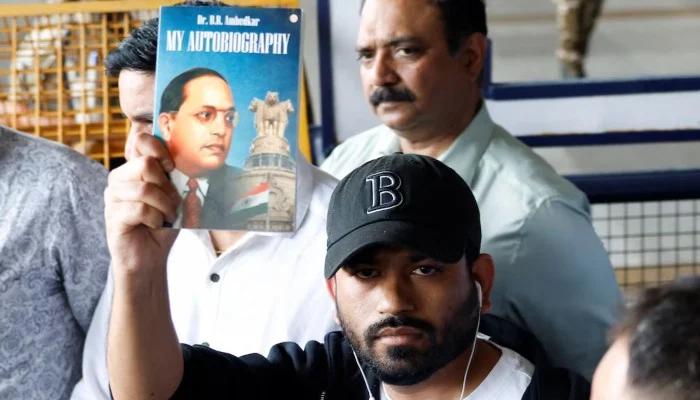
    Abhijeet Dipke, leader of the Cockroach Janta Party (CJP), is seen leaving an airport in New Delhi on June 6, 2026, holding a copy of “My Autobiography” by Dr. B.R. Ambedkar.

    Dipke mentioned that his family feared he might face arrest upon returning to India.

    On Saturday, dozens of police officers gathered near Jantar Mantar in central Delhi, barricading some roads as protesters chanted slogans calling for the resignation of Education Minister Dharmendra Pradhan.

    In response to the movement, the Indian government blocked the group’s X account domestically, a move contested by the CJP in a Delhi court. Cabinet Minister Kiren Rijiju accused the group of seeking followers from Pakistan and labeling them as part of an “anti-India gang.”

    Since launching in mid-May, the group has gained approximately 22 million followers on Instagram. It stands as the largest online platform voicing dissent against Prime Minister Narendra Modi’s 12-year rule, driven by issues like youth unemployment, exam paper leaks, and obstacles to students’ careers.

    Analysts suggest that despite recent victories in key state elections, Modi’s image is being impacted by the group’s rising popularity. Widespread dissatisfaction over rising fuel prices and gas shortages due to tensions with Iran also contribute to the unrest.

    Police used loudspeakers to direct demonstrators to the designated protest area.

    “The movement is peaceful and for the youth of the nation,” said spokesperson Ashutosh Ranka. He added that Dipke is prepared for a prolonged and significant role in Indian politics.

    India’s youth, numbering nearly 400 million aged 15 to 29, face persistent challenges in securing non-agricultural employment. April’s urban youth unemployment rate was almost 14%. Many educated young people find themselves in low-wage or insecure jobs that do not utilize their skills, according to economists.

  • Israel, Lebanon Reach Ceasefire Agreement, Boosting Iran Deal Hopes

    Israel, Lebanon Reach Ceasefire Agreement, Boosting Iran Deal Hopes

    Israel and Lebanon have reached an agreement to cease hostilities, according to the Trump administration on Wednesday. This development provides renewed hope for a broader agreement ending the ongoing US-Israeli conflict over Iran.

    Earlier, Tehran tied any potential deal with the US to an end to the fighting between Israel and Lebanon. In response to US military actions near the Strait of Hormuz, Iran struck Kuwait, damaging the airport and injuring dozens of civilians.

    The ceasefire between Israel and Lebanon is dependent on a complete halting of fire from Hezbollah, which is aligned with Iran, and the withdrawal of all its operatives from the South Litani area, the US State Department stated after talks in Washington. The joint statement emphasized that, under US guidance, both sides agreed to quickly develop pilot zones where the Lebanese Armed Forces would take exclusive control, excluding all non-state actors.

    Lebanon and Israel plan to continue negotiations to build confidence and address remaining issues. They are scheduled to reconvene in the week of June 22 for political and security talks aimed at reaching a comprehensive agreement.

    Despite a ceasefire agreed upon last month, hostilities had persisted. Israel entered Lebanon in March, targeting Hezbollah, which responded by firing across the border in support of Iran.

    Recent attacks in Kuwait and the Strait of Hormuz have tested the fragile ceasefire between the US, Israel, and Iran. The conflict has caused oil prices to rise by nearly 2%, with the Strait remaining largely closed over three months after US and Israeli strikes on Iran.

    Kuwait International Airport was shut down following an attack involving Iranian drones and missiles that caused damage, one death, and over 60 injuries. Kuwait Airways and Jazeera Airways resumed flights after implementing safety measures, according to officials.

    Iran’s Revolutionary Guards claimed they did not fire at Kuwait’s airport, blaming U.S. interceptor missiles for the damage. The US military countered, asserting that Iranian drones deliberately targeted the airport.

    Earlier reports from Iranian media indicated potential attacks on the US Fifth Fleet headquarters in Bahrain, a nearby US airbase, and a vessel named Panaya. Central Command dismissed these claims, stating that its bases remained unharmed and that Iranian ballistic missiles had failed to hit their targets in the region.

    The US conducted additional defensive strikes in southern Iran, targeting missile launch sites and Iranian boats seeking to mine waterways. Strikes also targeted Qeshm Island near the Strait of Hormuz following attempted Iranian attacks.

    Since US and Israeli strikes on Iran began in late February, Tehran has frequently launched attacks against targets in the Gulf region, which hosts US military installations. These hostilities have flared intermittently, despite an April ceasefire, as efforts continue to reopen the Strait of Hormuz, a critical route that previously handled about 20% of global oil and LNG shipments.

    Recently, Iran and the US indicated some progress toward a preliminary agreement to halt hostilities and reopen the Strait, although details are still under negotiation. Iran’s Foreign Minister Abbas Araqchi stated that talks had not been cut off but no significant progress had been made. The negotiations involve demands from Iran for access to billions in oil revenues, waivers on sanctions related to crude exports, removal of a US blockade on ports, and continued influence over the Strait.

    US President Donald Trump, facing pressure to lower fuel prices, has prioritized preventing Iran from developing nuclear weapons. Iran maintains its nuclear program is peaceful. In a recent podcast, Trump claimed Iran had agreed not to pursue nuclear weapons, with discussions involving Supreme Leader Khamenei. Later, Trump suggested that negotiations with Iran might see progress over the upcoming weekend.

    The conflict has resulted in thousands of deaths, predominantly in Iran and Lebanon, and has disrupted energy supplies worldwide, contributing to economic strain. The clash between Israel and Hezbollah has reignited, with Israeli drone strikes killing at least six people in southern Lebanon and targeting a vehicle near Beirut. Israel also intercepted an aircraft believed to be launched by Hezbollah.

    Iran’s Foreign Minister warned that Iran would respond decisively if Israel attacks Beirut. Trump acknowledged during a podcast that he had referred to Netanyahu as “crazy” during an expletive-laden phone call over the Lebanese fighting, urging an end to the escalation. Netanyahu, in an interview, noted that while there might be tactical disagreements with Trump, they share common views on Iran.

  • China’s Chief Diplomat Urges US and Iran to Find Common Ground

    China’s Chief Diplomat Urges US and Iran to Find Common Ground

    Chinese Foreign Minister Wang Yi departed the Great Hall of the People in Beijing during Russian President Vladimir Putin’s visit on May 20, 2026, as captured in a Reuters photo. Wang emphasized that Beijing is actively coordinating with involved parties and supporting mediation efforts. Meanwhile, the United States conducted strikes on missile sites and vessels attempting to lay mines in the region, escalating tensions. Iran has accused the U.S. of violating the ceasefire and issued warnings of retaliation.

    In a statement to the UN Security Council, Wang Yi reiterated China’s call for all parties involved in the delicate Middle East ceasefire to honor the truce. He expressed hope that both the U.S. and Iran would make concessions, emphasizing China’s ongoing diplomatic efforts. Wang also highlighted China’s support for mediation efforts by Pakistan, the United States, and Iran and urged all sides to continue meeting halfway to restore peace in the Middle East.

  • Trump, nearly 80, to undergo annual checkup amid health concerns

    Trump, nearly 80, to undergo annual checkup amid health concerns

    U.S. President Donald Trump, who will be turning 80 next month, checked into Walter Reed National Military Medical Center on Tuesday for his yearly health assessment, amid ongoing public scrutiny over what seem to be minor health concerns over the past year.

    Trump often presents himself as more vigorous and healthier than Joe Biden, his Democratic predecessor who left office last year at 82, amid questions about his fitness for duty.

    Recently released photos showing a blotchy rash on Trump’s neck have fueled further speculation about his health, especially after images from July 2025 depicted swollen ankles and a bruised hand, which he had covered up with makeup.

    Born on June 14, Trump became the oldest person to assume the presidency during his second term starting in January 2025.

    This marks his third visit to Walter Reed in just over a year.

    While Trump remains an active golfer, he joked during a recent Oval Office event that he typically doesn’t walk when golfing—his health secretary, Robert F. Kennedy Jr., mentioned that he walks about nine miles (roughly 14.5 km) each time he plays.

    “When I skip using the cart,” Trump quipped.

    His doctor, Sean Barbabella, mentioned that Trump is using a common topical cream to prevent skin issues related to his neck rash, but didn’t specify the exact condition.

    Photos of Trump’s legs and hands taken last July prompted Barbabella to state in a letter that his ailments were benign, with no signs of blood clots or arterial problems.

    The swelling in his leg was attributed to a “common” vein condition, and the bruising on his hand resulted from frequent handshakes, according to White House spokesperson Karoline Leavitt.

    Trump revealed last October that he had undergone an MRI that month, but the White House initially withheld details about the reason. Leavitt later said the results showed he was in “exceptional physical health.”

    Trump later remarked that the MRI was part of his second physical exam.

    “Getting an MRI is totally standard. Do you think I shouldn’t? Others do it too. I had an MRI, and the doctor said it was the best he’s ever seen,” Trump stated.

    Experts note that MRIs are generally not part of routine checkups and are usually ordered to get detailed images of the body.

    Following his second exam, Barbabella reported that Trump’s heart health—measured through an ECG—was about 14 years younger than his actual age.

    There have also been questions about his vitality after he appeared to doze off during a few meetings, including with his Cabinet.

    “Some folks said I closed my eyes. Honestly, it was getting pretty dull,” Trump joked in February, laughing along with officials. “I was not sleeping. I just closed my eyes for a moment because I wanted to get out of here.”

    Joe Biden, last year, was diagnosed with an aggressive type of prostate cancer that had spread to his bones, and he underwent radiation therapy.

  • Israel, Lebanon Extend Ceasefire by 45 Days After U.S. Talks

    Israel, Lebanon Extend Ceasefire by 45 Days After U.S. Talks

    A 45-day extension to the ceasefire between Israel and Lebanon has been agreed upon, following negotiations facilitated by the United States. The talks, the third round since Israel increased airstrikes on Lebanon after Hezbollah launched missiles at Israel on March 2, concluded on Friday with plans for future discussions.
    “The ceasefire established on April 16 will be extended for an additional 45 days to allow for further progress,” said U.S. State Department spokesperson Tommy Pigott on X. He mentioned the negotiations were “highly productive,” with the original ceasefire set to expire this Sunday.
    Both Lebanese and Israeli representatives expressed optimism about the talks, which aim to resolve long-standing conflicts. Since the escalation, Israel’s bombing and ground operations in southern Lebanon displaced approximately 1.2 million people. A ceasefire was announced last month after initial diplomatic efforts involving U.S. and Israeli ambassadors in Washington.
    Despite ongoing exchanges of fire primarily in southern Lebanon—where Israeli forces maintain a self-declared security zone—both sides continue to engage in negotiations. Lebanon’s delegation, participating despite Hezbollah’s objections, emphasizes a need for hostilities to end. Israel maintains that disarming Hezbollah is essential for any durable peace agreement.
    These high-level meetings mark the most significant contact between Lebanon and Israel in decades, expanding to include security and military officials. Pigott announced that a new “security track” of negotiations will commence at the Pentagon on May 29, with another political session scheduled in Washington from June 2-3.
    “The goal is to foster lasting peace, mutual recognition of sovereignty and territorial integrity, and secure borders,” Pigott stated.
    Lebanon’s delegation highlighted their desire to convert the ceasefire’s momentum into a comprehensive peace agreement, asserting that the extension creates vital space to bolster institutions and develop a stable political path.
    Israeli ambassador to the U.S., Yechiel Leiter, described the negotiations as “frank and constructive,” emphasizing that although challenges remain, the chances for success are promising. “Our main priority throughout these talks is the safety of our citizens and soldiers,” he said.

  • Israel warns NYT of lawsuit over Palestinian inmates’ abuse report

    Israel warns NYT of lawsuit over Palestinian inmates’ abuse report

    Israel announced on Thursday that it plans to sue The New York Times over an article accusing the country of widespread sexual abuse against Palestinian detainees. Prime Minister Benjamin Netanyahu and Foreign Minister Gideon Saar instructed their offices to begin legal proceedings for defamation against the publication.

    Their statement condemned the article written by Nicholas Kristof, a well-known opinion columnist, calling it “one of the most grotesque and false stories ever published about Israel in the modern media,” and claimed that the newspaper had backing for these allegations. The report was based on testimonies from 14 individuals in the West Bank, claiming they had been sexually assaulted by Israeli settlers or security personnel.

    The article depicted a pattern of extensive sexual violence by Israeli soldiers, settlers, interrogators from the Shin Bet internal security agency, and prison guards, involving men, women, and children.

    The New York Times responded by dismissing the threat of legal action, asserting that the claim was baseless. Danielle Rhoades Ha, a spokesperson for the newspaper, described such threats as a “predictable political tactic” aimed at silencing independent journalism that challenges a particular narrative.

    Kristof’s article specifically noted that there was no proof that Israeli officials had ordered such rapes. The Israeli foreign ministry accused Kristof of relying on unverified sources linked to Hamas and alleged the article was timed to sabotage an Israeli report on Hamas’s sexual violence during its October 7, 2023, attack on Israel—published on the same day.

    Since the Hamas attack, thousands of Palestinians in the West Bank have been detained by Israeli forces. The U.S. has strong protections for journalistic freedom, requiring proof of malicious intent and factual falsity for libel cases. Despite this, President Trump and his supporters have filed multiple lawsuits against media outlets, some settling to avoid further consequences.

    — [Your rewritten content based on the provided article]

  • Trump warns Iran’s ceasefire is ‘on life support’ after Tehran’s rejection

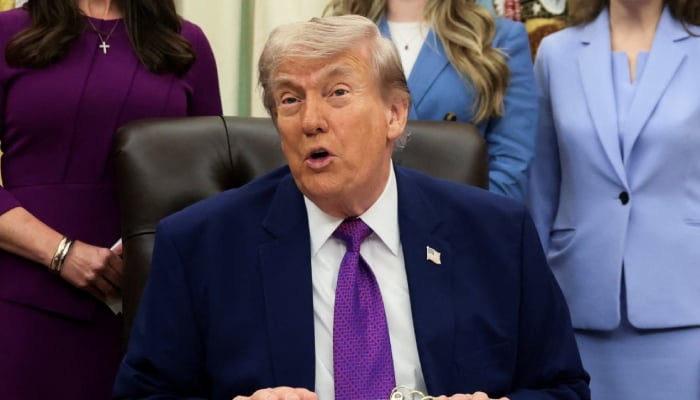
    US President Donald Trump speaks during a maternal health event in the Oval Office at the White House in Washington, DC, US, May 11, 2026. — Reuters
    US President Donald Trump speaks during a maternal health event in the Oval Office at the White House in Washington, DC, US, May 11, 2026. — Reuters

    • Trump dismisses Tehran’s proposal as “stupid”.
    • Says he didn’t even finish reading Iran’s response.
    • Iran willing to give the US “the nuclear dust”: Trump.

    U.S. President Donald Trump declared Monday that a ceasefire with Iran is essentially “on life support,” after he rejected Tehran’s response to a US peace offer. This has raised fears of renewed fighting in the ongoing 10-week conflict, which has already resulted in thousands of casualties and disrupted global energy supplies.

    A few days after the US put forward a proposal to restart negotiations, Iran responded on Sunday, emphasizing the need to end the war on all fronts, including Lebanon, where Israel—an ally of the US—is fighting Iranian-backed Hezbollah.

    Trump swiftly dismissed Iran’s reply.

    When asked about the status of the ceasefire brokered by Pakistan, Trump responded: “I’d call it the weakest right now, after reading that garbage they sent us. I didn’t even finish reading it.”

    In its response, Iran also demanded compensation for damages caused by the war, reaffirmed its sovereignty over the Strait of Hormuz, and urged the US to lift its naval blockade, ensure no further attacks, lift sanctions, and allow Iran to resume oil exports.

    The US had proposed halting hostilities before engaging in talks about more sensitive issues, such as Iran’s nuclear program.

    Iran defended its stance on Monday, with Foreign Ministry spokesperson Esmaeil Baghaei stating: “Our demands are valid—ending the war, lifting the US blockade and piracy, and releasing Iranian assets that have been unjustly frozen due to US pressure.”

    He added: “Guaranteeing free passage through the Strait of Hormuz and establishing regional and Lebanese security are also key parts of Iran’s generous and responsible proposal.”

    Brent crude oil futures rose by approximately 2.7%, trading around $104 per barrel, as the deadlock keeps the Strait of Hormuz largely shut down.

    Prior to the conflict that started on February 28, this narrow waterway transported about 20% of the world’s oil and liquefied natural gas, making it a critical strategic choke point.

    The near-closure of the strait has forced oil producers to cut exports, and an OPEC survey reported a decline in oil output in April to the lowest level in over twenty years.

    Reduced Shipping Traffic Through Hormuz

    Today, shipping flow is minimal compared to pre-war levels. Data from Kpler and LSEG showed that only three oil tankers left the strait last week, with some trackers intentionally switched off to avoid Iranian attacks.

    Recent sporadic clashes near the strait have challenged the ceasefire, which has prevented full-scale warfare since early April.

    In the U.S., public opinion surveys indicate that the war is unpopular among voters, especially with rising gasoline prices ahead of the upcoming elections that could determine whether Trump’s Republican Party retains control of Congress.

    International support has also been limited; NATO allies have refused to send ships to reopen the strait without a comprehensive peace agreement and a UN-mandated mission.

    Turkish Foreign Minister Hakan Fidan, who has been coordinating closely with the US, Iran, and Pakistan, is scheduled to visit Qatar on Tuesday to discuss the conflict and ensure safe navigation through the strait, according to a Turkish diplomatic source.

    Upcoming Talks Between Trump and China

    Uncertain of the next steps, Trump is expected to arrive in Beijing on Wednesday, where Iran may be among the topics discussed with Chinese President Xi Jinping.

    Trump is counting on China to leverage its influence and push Tehran toward a diplomatic solution.

    Iran’s Foreign Ministry spokesperson, Baghaei, suggested China could also use the visit to counter US goals in the Gulf region:

    “Our Chinese friends know how to use these opportunities to warn about the consequences of US illegal and aggressive actions in regional peace and security,” he said.

    Regarding whether military operations against Iran are over, Trump stated Sunday: “They are defeated, but that doesn’t mean they’re done.”

    Israeli Prime Minister Benjamin Netanyahu said the conflict isn’t over, citing more work needed to remove Iran’s enriched uranium, dismantle nuclear facilities, and address its proxy forces and missile programs.

    In an interview with 60 Minutes on CBS, Netanyahu expressed preference for diplomacy but didn’t rule out military action.

    Despite a US-brokered ceasefire—announced on April 16—clashes continue in southern Lebanon between Israel and Hezbollah.

  • Trump: Iran Deal Possible, Warns of Strikes if Talks Fail

    President Donald Trump attended an event honoring Military Mothers Day in the East Room at the White House in Washington, D.C., on May 6, 2026. — Reuters

    • Trump asserts Iran would surrender its enriched uranium to the U.S.
    • The U.S. suspends military efforts to reopen the Strait of Hormuz.
    • Reports suggest the U.S. and Iran are close to a one-page agreement on nuclear negotiations.

    Washington, D.C.: President Donald Trump expressed optimism about a potential deal with Iran, stating, “A resolution is very possible,” but warned that if negotiations collapse, military action could resume. Despite this, Iran has yet to respond to a fresh U.S. proposal, with its chief negotiator criticising Washington for pressuring the country into submission.

    Positive developments emerged after Trump halted a brief military operation aimed at reopening the Strait of Hormuz, signaling hope for diplomatic negotiations. Trump commented Wednesday that the conflict could end if Iran agrees to the terms, but warned that failure to do so would lead to a much more intense bombing campaign. Later, Trump told reporters, “We’ve had very productive talks over the past 24 hours, and a deal is very possible.”

    Iranian Foreign Ministry spokesperson Esmaeil Baqaei indicated that Iran is still reviewing the U.S. proposal and will communicate its position through mediators in Pakistan after finalizing its stance. Iran’s parliamentary speaker, Mohammad Bagher Ghalibaf, warned that the U.S. seeks to disintegrate Iran through naval blockades, economic sanctions, and media manipulation to force surrender.

    “Aiming for Lasting Peace”

    The U.S. military reported that one of its warplanes targeted and disabled the rudder of an oil tanker attempting to breach the American blockade near Iranian ports. Trump had reaffirmed the blockade the day before, citing Iran’s ongoing restrictions on the Strait of Hormuz. However, citing diplomatic progress, he announced that efforts to reopen the route would be temporarily paused to evaluate the possibility of reaching an agreement.

    Prime Minister Shehbaz Sharif, a key participant in recent talks in Islamabad, expressed hope for a lasting agreement that would bring stability and peace to the region. On social media platform X, he noted, “We are very hopeful that the current momentum will lead toward a sustainable peace for the region and beyond.”

    According to Axios, citing U.S. officials, both sides are close to signing a one-page memorandum that would end hostilities and lay the groundwork for more comprehensive nuclear negotiations. Trump, speaking on PBS, reiterated that Iran would transfer its enriched uranium to the U.S., though he did not specify how disagreements over this issue would be resolved.

    Iran’s top diplomat Abbas Araghchi met with Chinese counterpart Wang Yi in Beijing, discussing ongoing negotiations. Araghchi tweeted that Iran looks forward to China supporting a new regional framework that balances development and security.

    Trump’s tone shifted to a more conciliatory approach hours after Secretary of State Marco Rubio stated that the U.S. had completed its offensive operations against Iran. Recent weeks saw accusations of attacks by both sides in the crucial waterways, representing a significant escalation since a ceasefire began on April 8.

    The U.S. and Gulf partners drafted a UN Security Council resolution demanding Iran cease its attacks, disclose mine locations, and stop obstructing shipping. A vote on the resolution is expected shortly, though its adoption remains uncertain.

    Hezbollah and Lebanon Tensions

    In Lebanon, Israel launched strikes on the southern suburbs of Beirut on Wednesday — the first in nearly a month — killing a senior Hezbollah commander associated with the group’s elite forces, according to a source close to Hezbollah. The Lebanese health ministry reported at least 11 casualties in strikes across the south and east of Lebanon. Meanwhile, Israel’s army chief, Lieutenant General Eyal Zamir, visited troops in southern Lebanon, vowing to continue dismantling Hezbollah’s infrastructure whenever opportunities arise.

  • Iran Tensions Possibly Linked to Trump Dinner Shooting Suspect

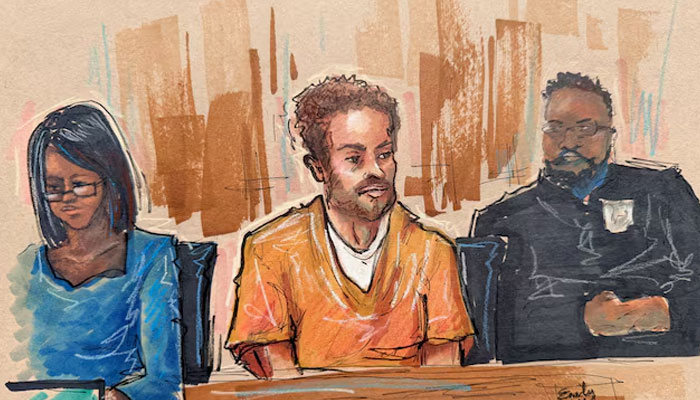
    Suspect Cole Tomas Allen, involved in White House Correspondents' Association dinner shooting, appears in court during a hearing after being charged with attempting to assassinate President Donald Trump, in Washington DC, April 30, 2026, courtroom sketch. — Reuters
    Suspect Cole Tomas Allen, involved in White House Correspondents’ Association dinner shooting, appears in court during a hearing after being charged with attempting to assassinate President Donald Trump, in Washington DC, April 30, 2026, courtroom sketch. — Reuters

    The Department of Homeland Security has identified the ongoing US-Israeli conflict with Iran as a possible reason behind the man accused of trying to assassinate President Donald Trump and high-ranking officials at a White House reporters’ event last month. This assessment was shared with law enforcement agencies across the country and other federal entities via an intelligence report.

    An early analysis from DHS’s Office of Intelligence and Analysis, dated April 27, suggests that Cole Allen harbored numerous social and political frustrations. The report indicates that the Iran conflict “may have influenced his decision to carry out the attack,” supported by Allen’s social media posts criticizing US involvement in the war.

    This new insight adds context to the investigation into the attempted attack on the White House Correspondents’ Dinner on April 25. While still in preliminary stages, the findings provide the strongest evidence yet linking the Iran conflict— which has caused thousands of deaths in the Middle East and impacted the global economy—as a potential trigger.

    The document, labeled as a “Critical Incident Note,” was retrieved through public records requests by the nonprofit organization Property of the People and has been shared with Reuters.

    A DHS spokesperson declined to comment on the report’s specifics.

    “These reports keep our partners informed with the latest intelligence after significant incidents that could impact homeland security,” the spokesperson stated.

    The FBI has also chosen not to comment, and the Justice Department did not respond to requests for further information.

    On Tuesday, the Justice Department announced an additional charge against Allen for assaulting a federal officer. This charge stems from him allegedly firing at a U.S. Secret Service agent at a security checkpoint, on top of charges of attempted murder, discharging a firearm during a violent crime, and illegally transporting firearms and ammunition across state lines. Allen has not yet entered a plea.

    Investigation of Social Media Activity

    U.S. officials have yet to reveal much about Allen’s motivations, apart from an email he sent to relatives on the night of the assault. The message, reportedly a manifesto, expressed anger towards the administration and mentioned his intention to target the “traitor” giving a speech—without explicitly naming Trump.

    Prosecutors allege that Allen disagreed politically with Trump and wanted to oppose government actions he deemed morally wrong. The FBI is thoroughly examining Allen’s social media presence and digital footprint to uncover additional motives, according to an anonymous law enforcement official.

    This review includes posts on a Bluesky account connected to Allen, where he shared several anti-Trump messages leading up to the incident. These posts also criticized U.S. actions in Iran, the Trump administration’s immigration policies, Elon Musk, and Russia’s conflict in Ukraine.

    For example, the account called for Trump’s impeachment after his threat to “destroy Iranian civilization” on April 7—just hours before Trump announced a ceasefire. It also criticized reporters attending the dinner.

    Additionally, a 2024 post quoting a Bible verse included a comment labeling Trump as “the devil” in response to a message from Trump’s daughter, Tiffany.

    The focus on Allen’s online activity aims to dispel conspiracy theories suggesting his motives. Such theories proliferated around the online activity of a man who fired at Trump during a campaign rally in Pennsylvania last year.

  • US to Withdraw 5,000 Troops from Germany Amid Trump–Merz Iran War Dispute

    The U.S. is set to pull back 5,000 troops from Germany, announced by the Pentagon on Friday, amid rising tensions with Europe over the Iran conflict. President Donald Trump earlier threatened a reduction in forces following a dispute with German Chancellor Friedrich Merz, who criticized Iran’s diplomatic moves as humiliating to the U.S. and questioned Washington’s exit strategy.

    A senior Pentagon source, speaking anonymously, called Germany’s recent statements “inappropriate and unhelpful,” and clarified that the President’s reaction was justified. The withdrawal is expected to be finalized within six to twelve months. Germany currently hosts approximately 35,000 active U.S. military personnel—the largest U.S. presence in Europe.

    This drawdown aims to return U.S. troop numbers in Europe to levels before efforts by President Biden to bolster forces following Russia’s invasion of Ukraine in 2022. The move also underscores the Trump administration’s push for Europe to assume greater security responsibilities, though it highlights Trump’s readiness to punish allies seen as disloyal.

    Last week, Reuters reported on an internal Pentagon email outlining potential measures against NATO allies for not backing U.S. efforts in the Iran conflict, including considerations to suspend Spain from NATO and reconsider the UK’s claim to the Falklands.

    The question remains whether this marks the beginning of more troop withdrawals in Europe. Trump hinted at possible future actions regarding Italy and Spain, responding “probably” to questions about withdrawing from those countries. Last month, he threatened a complete U.S. trade embargo on Spain, where the government opposes US military bases and overflights that could target Iran. Notably, the U.S. maintains key bases at Naval Station Rota and Morón Air Base.

    Trump has also clashed with Italian Prime Minister Giorgia Meloni over Iran policies and criticized Pope Leo. In April, he accused Meloni of lacking courage and betraying U.S. interests. Additionally, Trump has rebuked NATO allies for not deploying naval assets to secure the Strait of Hormuz, a critical chokepoint for global oil shipments that has remained largely inactive during the Iran conflict, causing market instability and energy disruptions.

    A senior Pentagon official emphasized that President Trump is frustrated with allies’ rhetoric and their lack of support for U.S. operations that benefit them.

    Merz mentioned that Germans and Europeans were not consulted before the U.S. and Israel began targeting Iran in late February, expressing skepticism about the conflict. Trump has long sought to decrease the U.S. military footprint in Germany, initially proposing a reduction of about 12,000 troops during his first term, a plan that was halted after his electoral loss, with President Biden reversing it.

    The recent announcement surprised German military officials, who noted that Germany had contributed significantly to Iran-related operations, including providing bases and overflight permissions. Germany also hosts a substantial military hospital in Landstuhl and recently approved increased defense spending in its 2027 budget.

    Analyst Imran Bayoumi, formerly with the Pentagon, warned that the troop cuts, though less severe than possible, could deepen divisions between the U.S. and Europe. He predicts European nations will push for increased defense spending, increasingly viewing Washington as unreliable.

    As part of the troop reduction, a brigade combat team currently stationed in Germany will be withdrawn, and a long-range fires battalion planned for deployment later this year will no longer be sent, the Pentagon official added.

  • Melania Trump urges ABC to stand up to Kimmel

    First lady Melania Trump stated on Monday that it’s time for ABC to “take a stand” regarding Jimmy Kimmel after comments made by the late-night host before a shooting incident near a group of journalists and politicians over the weekend.

    “Enough is enough. It’s time for ABC to step up. How many more times will ABC’s leadership allow Kimmel’s appalling behavior to harm our community?” she posted on X.

    Kimmel, in a parody aired last week ahead of the White House Correspondents Dinner, remarked: “Mrs. Trump, you have a glow like a widow expecting.”

    President Donald Trump and Melania Trump had to leave the dinner abruptly Saturday night following a shooting in the lobby of the Washington Hilton. The gunman, identified as Cole Allen, broke through a checkpoint and shot at Secret Service agents, injuring one, before being subdued and detained.

    Disney and ABC have not responded publicly yet.

    In September, the Federal Communications Commission’s (FCC) chief pressured TV broadcasters to consider removing Kimmel from the air. ABC temporarily suspended Kimmel’s show that same month over comments he made about the assassination of conservative activist Charlie Kirk.

    Just hours prior to the suspension, FCC Chairman Brendan Carr warned that local broadcasters airing Kimmel’s program might face fines or license revocations, urging them to “step up.” His stance drew criticism from the entertainment industry and politicians on both sides, with Republican Senator Ted Cruz comparing Carr’s threats to those of organized crime leaders.

    During September, Sinclair and Nexstar Media Group briefly took Kimmel’s show off the air on nearly 70 ABC affiliates, reaching approximately 25% of U.S. households. Carr aims to simplify the process for local stations to preempt national broadcasts.

  • French teen risks jail in Singapore for licking vending straw

    A teenage boy from France faces charges of vandalism and causing a public disturbance in Singapore, related to an incident involving a straw and a vending machine. Court documents reveal that Didier Gaspard Owen Maximilien, 18, recorded himself licking a straw and then returning it to a dispenser of orange juice at a vending machine. He uploaded this video to Instagram, aware that it could likely disturb or upset the public.

    Court records state that Maximilien is currently enrolled as a student in Singapore. The offense of public nuisance could result in a maximum sentence of three months in jail along with a fine. Additionally, he faces a second charge of mischief because he was aware that his actions could cause financial loss or damage to iJooz, the company responsible for the vending machine, which had to replace all 500 straws in its dispenser. The mischief charge could lead to up to two years in prison and a fine if convicted.

    These alleged actions took place on March 12, and the charges were filed in a district court last Friday. The next court session is scheduled for May 22. The Straits Times reported that the video quickly spread across the internet, causing shock and concern among viewers.