

Select Language:
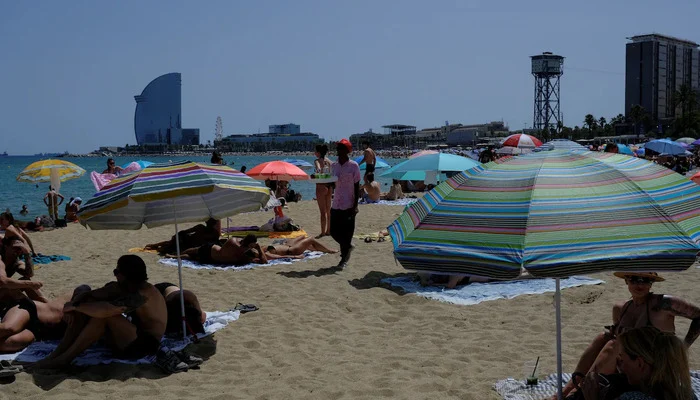
A heatwave swept across much of Europe on Sunday, with temperatures soaring close to 40°C (104°F), leading to widespread warnings, travel disruptions, and signs of stress among wildlife and popular tourist spots.
On June 21, the summer solstice in the Northern Hemisphere—often the beginning of the hottest three months—concerns grew about an early and prolonged burst of extreme heat. Italy experienced temps above 35°C for several days, prompting authorities to issue a red alert for eight cities, including Bologna, Florence, Milan, and Turin.
In Rome, pilgrims in St. Peter’s Square shielded themselves from the intense sun with umbrellas and parasols as the Pope performed a traditional Sunday prayer from a palace window. The surge in temperatures is mainly due to a mass of hot air moving northward from the Sahara Desert, fueled by a powerful high-pressure system known as the right “African anticyclone.”
Meteorologists describe this system as creating a “heat dome,” which traps hot air over western and central Europe, causing temperatures to steadily rise. Madrid locals and visitors used fans and drank cold beverages while exploring the famed El Rastro flea market. Haily San Cesario, a 22-year-old engineer from Miami, shared, “I dress entirely in white because it’s so hot, and I carry my small electric fan everywhere I go.”
Spain’s weather agency, AEMET, issued red and orange alerts across several regions, warning of temperatures pushing past 39°C to 40°C across much of the Iberian Peninsula and Mallorca. The heatwave is expected to persist at least into the middle of the week.
In France, rail services are feeling the impact of the extreme heat. From Paris’ Gare Montparnasse station, SNCF director Jean Castex stated that high temperatures were significantly affecting the rail network, risking damage to overhead power lines and tracks. About 3,500 personnel are monitoring the system, with an additional 2,000 on hand for emergency repairs. Several major routes have seen the cancellation of 71 intercity trains until Monday.
Germany has also seen temperatures hit as high as 38°C, with the DWD weather service warning of severe thunderstorms in eastern areas, including Berlin. Heavy rain disrupted the open-air Fête de la Musique festival, prompting evacuations of the Berlin Open tennis tournament grounds as strong winds and downpour set in during the finals.
Wildlife rescue centers are reporting increasing pressure from the heat. A facility near Namur, Belgium, has admitted roughly 150 animals suffering from heat stress, with young birds most vulnerable. “Nestlings prefer to jump rather than risk cooking in their nests,” explained Romain De Jaegere, founder of CREAVES. He added that centers across Belgium are overwhelmed.
Experts say this situation underscores a broader trend of increasingly frequent and intense heatwaves across Europe, attributed to the effects of climate change.
 ChatGPT
 Perplexity
 Gemini AI
 Grok AI