الوسم: Europe

  • انخفاض الإيجارات الحقيقية بنسبة 8% رغم ارتفاع أسعار المنازل بنسبة 39%

    تفاوت ملحوظ بين أسعار العقارات والإيجارات في أوروبا

    ارتفاع أسعار العقارات لا يوازي انخفاض الإيجارات

    من المدهش أن يُعتقد غالبًا أن ارتفاع أسعار المنازل يجب أن يصاحبه ارتفاع في الإيجارات. إلا أن البيانات الصادرة عن قاعدة بيانات الإسكان الميسور التكلفة التابعة لمنظمة التعاون والتنمية الاقتصادية (OECD) تكشف عن تباين لافت. ففي منطقة اليورو، شهدت أسعار المنازل الحقيقية ارتفاعًا بمقدار يقارب 39 نقطة فهرس بين عامي 1996 و2025، في حين أن الإيجارات الحقيقية انخفضت بمعدل يقارب 8 نقاط.

    العلاقة السلبية بين سعر العقار والإيجار على مدى السنوات

    خلال الفترة الممتدة من عام 1996 وحتى 2024، كانت السلسلتان مرتبطتين بشكل سلبي، مع معامل ارتباط يساوي −0.58. هذا يشير إلى أن ارتفاع أسعار العقارات لم يقابل، في الواقع، ارتفاع في الإيجارات، بل العكس هو الصحيح، حيث تراجعت الإيجارات الحقيقية رغم زيادة أسعار المنازل.

    البيانات الأوروبية تؤكد ذات الاتجاه

    التحليل من مصادر يورواستات

    بيانات يورواستات تدعم أيضًا قصة التباين بين أسعار المنازل والإيجارات. من المهم أن نفهم أن الإيجارات “الحقيقية” مقاسة بعد تعديلها لمعدل التضخم، مما يعكس القيمة الحقيقية المدفوعة من قبل المستأجرين.

    تغيرات الإيجارات من ناحية القيمة الاسمية مقابل التضخم

    على مدار الفترة من 2010 إلى 2024، ارتفعت الإيجارات الاسمية عبر الاتحاد الأوروبي بنسبة 25%، بينما زادت أسعار المستهلكين بشكل عام بنسبة 39%. بمعنى آخر، رغم أن الإيجارات كانت في ارتفاع نصي، إلا أن معدل الزيادة أبطأ من معدل التضخم، مما أدى إلى انخفاض قيمتها الحقيقية.

    تأثير التضخم على الإيجارات وأسعار العقارات

    هذه البيانات تؤكد أن الزيادة في أسعار العقارات لا تتبع بشكل تلقائي أو مباشر الارتفاع في الإيجارات، خاصة بعد تعديله لمعدل التضخم. فارتفاع أسعار المنازل غالبًا ما يكون مرتبطًا بعوامل أخرى مثل السياسات الاقتصادية، والطلب، والأوضاع السوقية، وليس فقط بالاتجاه الذي تتجه إليه الإيجارات.

    ماذا يعني ذلك للمستأجرين والمستثمرين؟

    بالنسبة للمستأجرين، قد يعني ذلك أن تكاليف السكن الفعلية (ما تُدفع بعد تعديل التضخم) قد لا تكون في ارتفاع دائم، بل تتراجع أو تظل مستقرة مع مرور الزمن. أما للمستثمرين، فهذا يفتح نقاشًا حول نمو العوائد ومدى جدوى الاستثمار في سوق الإسكان، إذ أن ارتفاع أسعار العقارات لا يضمن بالضرورة زيادة الدخل من الإيجارات.

    الخلاصة

    تشير البيانات إلى أن العلاقة بين أسعار العقارات والإيجارات لا تتسم بالتوافق أو التزامن، بل تظهر تباينًا واضحًا بعد تعديل الإيجارات لمعدل التضخم. فارتفاع أسعار المنازل لا يعني دائمًا ارتفاعاً موازياً في الإيجارات، وهو ما يجب على المهتمين بالسوق العقاري والمستأجرين والمستثمرين أخذه بعين الاعتبار عند تحليل اتجاهات السوق في أوروبا.

  • حجوزات الفنادق الأوروبية لعام 2025: أكثر من نصفها عبر الإنترنت

    توزيع الحجوزات الفندقية في أوروبا لعام 2025: نظرة شاملة

    مقدمة عن التغيرات في سوق الحجز الفندقي
    شهدت صناعة الضيافة في أوروبا خلال عام 2025 تحولات ملحوظة في طرق الحجز والتوزيع. مع تزايد الاعتماد على القنوات الرقمية، أصبحت الحجز المباشر عبر الإنترنت من أكثر الطرق استخدامًا بين المسافرين والضيوف، إلا أن الطرق التقليدية لا تزال تلعب دورًا مهمًا في المشهد الفندقي الأوروبي.

    الحجوزات المباشرة عبر الإنترنت تتصدر المشهد
    نسبة كبيرة من الحجوزات في أوروبا كانت من نصيب القنوات الرقمية، حيث شكلت أكثر من نصف حصتها الإجمالية في عام 2025. وتظهر البيانات أن 36.4% من الحجوزات تمت من خلال قنوات الحجز الإلكترونية الخاصة بالفنادق، أي عبر المواقع الرسمية أو التطبيقات الخاصة بالفندق. إضافةً إلى ذلك، شهدت الحجوزات عبر القنوات غير الرقمية، والتي تشمل الحجوزات التي تتم بشكل شخصي أو عبر الهاتف، نسبة تصل إلى 20% من الإجمالي.

    نمو وتطور سوق الحجز عبر منصات السفر الإلكترونية
    إلى جانب الحجوزات المباشرة من خلال قنوات الفنادق، تلعب منصات السفر الإلكترونية دورًا كبيرًا في توزيع الحجوزات. حيث استحوذت هذه المنصات على 27.8% من الإجمالي، مع وجود حوالي 2% من الحجوزات عبر وسائل التواصل الاجتماعي. هذا التطور أدى إلى ارتفاع الحصة الإجمالية للحجوزات عبر الإنترنت إلى 66.2%، مقارنة بـ 64.6% في عام 2022، مما يعكس تحولًا مستمرًا نحو الاعتماد على التقنية والرقمنة في عملية الحجز.

    الثبات النسبي للطريقة التقليدية في ظل التطور الرقمي
    رغم الارتفاع الملحوظ في الحجز عبر الإنترنت، لا تزال الطرق التقليدية تلعب دورًا مهمًا. إذ يمثل حوالي خمس الحجوزات (20%) طرق الحجز المباشر غير الرقمية، مثل الحجز عبر الهاتف أو الشخصي في الفندق. بالإضافة إلى ذلك، تتوزع الحجوزات غير الرقمية بين وكلاء السفر، وسلاسل الفنادق، والفعاليات والمنتديات. حيث تشكل نسبة الحجوزات من خلال وكلاء السفر وشركات السياحة حوالي 11.4% من الإجمالي، مما يعكس أهمية التنويع في استراتيجيات التوزيع للفنادق لضمان الوصول إلى أكبر عدد ممكن من العملاء.

    الخلاصة
    يشهد سوق الحجوزات الفندقية في أوروبا خلال عام 2025 تحولًا ملحوظًا نحو الاعتماد على القنوات الرقمية، مع تصدر الحجوزات المباشرة عبر الإنترنت للمشهد. ومع ذلك، فإن الطرق التقليدية ووسائل التوزيع القديمة لا تزال تلعب دورًا مهمًا، وتساهم في تحقيق التوازن والحفاظ على العلاقة مع العملاء من مختلف الشرائح. هذا التطور المستمر يبرز أهمية تكامل استراتيجيات التسويق الرقمي والتقليدي لضمان الاستفادة القصوى من سوق متغير وسريع النمو.

  • حجوزات الفنادق المباشرة بلغت 50% في أوروبا عام 2025

    الطوفان الرقمي في حجوزات الفنادق الأوروبية لعام 2025: تحليل تفصيلي

    مقدمة عامة حول توجهات الحجز الفندقي في أوروبا
    شهدت صناعة الضيافة في أوروبا تحولًا ملحوظًا نحو الاعتماد على القنوات الرقمية، حيث أصبحت الحجزات المباشرة عبر الإنترنت تحتل مكانة رئيسية تميزها عن الطرق التقليدية. في عام 2025، أظهرت البيانات أن أكثر من نصف الحجوزات تم عبر قنوات مباشرة، مما يعكس تغيّر نمط سلوك المستهلكين وتفضيلاتهم في التعامل مع خدمات الضيافة.

    نسبة الحجوزات عبر القنوات الرقمية والمباشرة
    تشكل الحجوزات التي تمت من خلال الموقع الإلكتروني الخاص بالفنادق نفسها حوالي 36.4% من مجمل الحجوزات، وهو رقم يعكس الثقة المتزايدة في منصات الحجز المباشرة وتقليل الاعتماد على طرف ثالث. بالإضافة إلى ذلك، تمثل الحجوزات التي أُجريت بشكل غير رسمي وبدون اتصال مباشر بالفندق حوالي 20%، وهي دليل على استمرار أهمية الطرق غير التقليدية بالنسبة لبعض المستهلكين.

    الحصة السوقية لمنصات الحجز الإلكترونية ووسائل التواصل الاجتماعي
    وفقًا لدراسة توزيع الفنادق الأوروبية لعام 2026 الذي أجرته شركة Hotrec، فإن منصات السفر الإلكترونية استحوذت على ما يقارب 27.8% من الحجوزات، مع إضافة نسبة 2% تمثل الحجوزات عبر وسائل التواصل الاجتماعي. هذا لرفع الحصة الإجمالية للحجوزات عبر الإنترنت إلى 66.2%، مرتفعة من 64.6% في عام 2022، مما يدل على تصاعد الاعتماد على الحلول الرقمية في صناعة الضيافة.

    استخدام القنوات التقليدية وأهميتها المستمرة
    على الرغم من التوجهات الرقمية المتزايدة، إلا أن الطرق التقليدية لا تزال تحافظ على مكانتها. إذ يُظهر البيانات أن واحدًا من كل خمس حجوزات يتم عبر الوسائل غير الرقمية، والتي تشمل الحجوزات الهاتفية أو المباشرة في الفندق. أما ما تبقى من الحجوزات غير الرقمية فهي موزعة بين وكلاء السفر، سلاسل الفنادق، وحجوزات الفعاليات، بنسب تصل إلى 11.4%.

    تحليل موجز لاتجاهات السوق المستقبلية
    تشير المعلومات المتاحة إلى تزايد الاعتماد على القنوات الرقمية بشكل مستمر، مع تعزيز الحجوزات عبر الإنترنت ومن خلال وسائل التواصل الاجتماعي. ومع ذلك، تظل الطرق التقليدية مهمة، خاصة للأجيال التي لا تزال تتعامل بشكل أكثر راحة مع الأساليب الشخصية والحجوزات الهاتفية. التوازن بين هذين النهجين يظل مفتاح النجاح للفنادق التي تسعى لتعزيز حصتها السوقية في سوق تنافسي ومتغير باستمرار.

    الختام
    باختصار، يبقى مجال الحجوزات الفندقية في أوروبا لعام 2025 نموذجًا لمزيج متطور من القنوات الرقمية والتقليدية، حيث يتجه السوق أكثر نحو الاعتماد على التكنولوجيا مع الاحتفاظ بأهمية الوسائل التقليدية. يدعو ذلك الفنادق إلى تنويع استراتيجياتها لتلبية تطلعات مختلف شرائح العملاء وضمان الاستمرارية في عالم الضيافة المتغير.

  • Over 3,700 Excess Deaths During European Heatwave

    Over 3,700 Excess Deaths During European Heatwave

    During the June heatwave that swept across Europe, France, the Netherlands, and Belgium reported a total of 3,700 excess deaths, according to authorities. These figures are preliminary and may increase as investigations continue.

    Experts state this heatwave, which occurred roughly from June 20 to June 28, was the most severe on record in Europe. It disrupted power supplies, damaged infrastructure, and overwhelmed healthcare services. Climate scientists concur that such extreme heat events are almost certainly amplified by ongoing climate change.

    French officials reported 2,025 excess fatalities during the heatwave, with a notable rise in deaths among individuals over 45. French Health Minister Stephanie Rist indicated that deaths at home jumped by 91% between June 22 and June 28 compared to the previous week. Conversely, fatalities in nursing homes and health facilities also increased, signaling the broad impact of the heat. The country’s public health office cautioned that final numbers could be higher than initial estimates.

    Belgium recorded approximately 1,200 excess deaths from June 18 to June 29, with 530 of these among people aged 85 and older. Younger populations under 65 accounted for around 180 of the extra deaths. Belgium’s health authorities described this mortality rate as unprecedented for their country.

    Similarly, the Netherlands saw about 480 additional deaths linked to the heatwave, predominantly among those over 80 years old.

  • UN Climate Chief: Europe’s Heatwave Reflects Fossil Fuel Damage

    UN Climate Chief: Europe’s Heatwave Reflects Fossil Fuel Damage

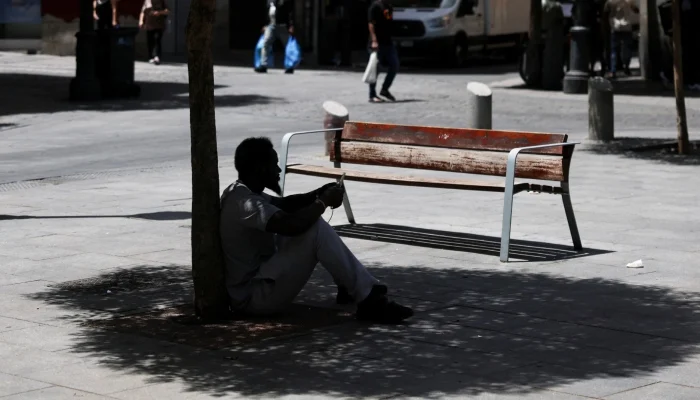
    A man takes a break in the shade of a tree to escape the intense heat during a heatwave in Madrid, Spain, on June 23, 2026. — Reuters

    The scorching heatwave sweeping across Europe bears the unmistakable signs of climate change and is described by UN climate chief Simon Stiell as “the latest consequence of fossil fuel pollution frying our planet.”

    This week, Europe faced record-breaking temperatures in France, Britain, and Spain, prompting authorities to issue high-level heat alerts across multiple countries.

    “Europe’s brutal heatwave is clearly a direct result of the climate crisis — it’s the latest toll for burning massive amounts of coal, oil, and gas that are cooking our world,” Stiell stated.

    He emphasized, “As long as humanity continues to burn enormous quantities of fossil fuels, extreme heat events will only intensify.”

    Scientists agree that recurring heatwaves are a clear indication of global warming and warn that such events are expected to become more frequent, prolonged, and severe.

    In Western Europe, the heatwave has led to dozens of deaths, caused power disruptions, and resulted in the closure of schools and cultural sites, with forecasts indicating that these extreme temperatures could last until the end of the week.

    Britain shattered its previous temperature records for June, recording 96.98°F (36.1°C) in southern England — a new high for the month — as a high-pressure dome settled over much of Western Europe.

    Paris temperatures hit a record 105.2°F (40.9°C), a day after France experienced its hottest day in nearly 80 years, with peaks reaching 112.2°F (44.3°C) in Pissos, in the southwest.

    Italy’s health authorities placed 16 cities— including Florence, Milan, Rome, Turin, and Verona— under the highest heat warning, warning that the heat could intensify between Sunday and Monday.

    Since the heatwave began, at least 48 fatalities in France have been linked to drowning incidents as people sought relief from the extreme heat, with two young children losing their lives in a car accident caused by heat.

    In Spain, two elderly individuals died from heatstroke after several days of temperatures above 104°F (40°C), although conditions started to ease on Wednesday following an intensely hot stretch, according to the national weather agency, AEMET.

    Agricultural groups reported that hundreds of thousands of poultry birds in Brittany and the Pays de la Loire died due to the extreme temperatures.

    France’s nuclear power plants, which provide the majority of the country’s electricity, reduced output by approximately 7% because high temperatures limited the availability of cooling water.

    The weather pattern responsible for this extreme heat is known as an Omega block, which causes temperatures to rise as much as 18°C (around 32°F) above normal, according to the Reuters Climate Monitor.

    This phenomenon resembles the Greek letter Omega, with a large bulge trapping warm air over certain regions for extended periods, while cooler air resides on its edges. Climate change is exacerbating the intensity of these heatwaves and storms.

    In Britain, the record-breaking heat prompted only the second-ever extreme heat warning, causing hundreds of schools to delay or shorten their days as officials warned that even healthy individuals could be at risk. The temperature reached 96.98°F (36.1°C) in Gosport, Hampshire, surpassing the previous June record of 96.1°F (35.6°C) set in 1957 and matched in 1976.

  • Dozens drown in France amid Europe’s intense heatwave

    Dozens drown in France amid Europe’s intense heatwave

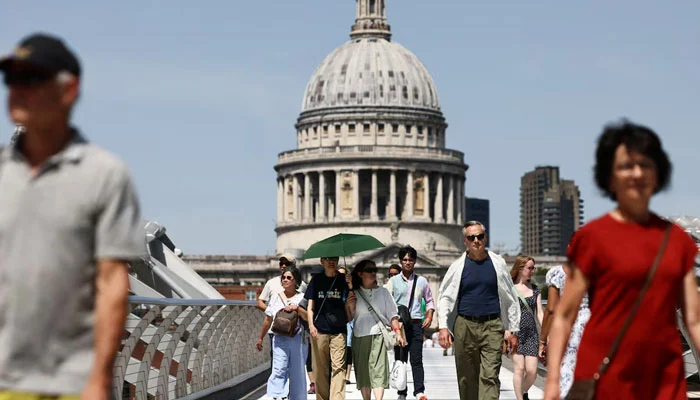
    A couple walks with an umbrella along the Millennium Bridge as the UK faces record-breaking temperatures, causing disruptions to schools and transportation systems in London, June 23, 2026 — Reuters.

    • Drowning incidents linked to the heatwave rise in France, while Italy issues a heat alert.
    • An Omega blocking pattern traps heat, intensifying prolonged extreme temperatures.
    • Climate change is fueling more intense heatwaves and severe weather events.

    In France, over the past several days, 40 people have drowned while trying to beat the sizzling temperatures, according to the prime minister, as a heatwave sweeps across much of Europe. Meanwhile, Britain, Italy, Switzerland, and Spain are also experiencing intense heat, with some regions reaching record temperatures that have led to school closures, halted transportation, and the shutdown of popular tourist spots, including the Eiffel Tower.

    Europe’s temperatures are rising at more than double the global average, as reported by the World Meteorological Organization, making such extended heat events more common.

    France faces a severe heatwave

    Most of western and central France are seeing temperatures around 104°F (40°C), with forecasts predicting highs up to 109°F (43°C). Monday marked the hottest daytime and nighttime temperatures since records started in 1947. With 54 departments under red alert — an unprecedented number — that number is expected to rise to 58 by Wednesday, adding four more northern departments.

    The French weather service predicts Thursday will be equally hot, with a slight decrease expected starting Friday from the Atlantic coast. Citizens are diving into canals and rivers for relief, but authorities warn against swimming in unsafe areas. Sports Minister Marina Ferrari emphasized understanding the urge to cool off but urged caution.

    Official response and tragic incidents

    Ahead of an emergency meeting on the ongoing heatwave, Prime Minister Sebastien Lecornu expressed concern over the rising drownings, noting 40 fatalities since June 18, mostly involving young people. On Monday, rescue teams failed to revive two children, ages 2 and 4, found unconscious in a car outside their home in southeast France.

    The ‘heat dome’ phenomenon

    This intense heat has been driven by an Omega block—a weather pattern shaped like the Greek letter Ω— trapping a hot air mass between cooler systems, resulting in temperatures that persist and intensify over days. Climate change is amplifying the severity of these heatwaves and associated storms. France’s current conditions are comparable to the 2003 heatwave, which lasted 16 days and caused approximately 80,000 excess deaths across Europe, but the duration of the present event remains uncertain.

    Storms and weather fluctuations

    Italy’s health authorities have issued their highest alert across 15 cities, implementing measures to limit work in certain sectors. Heavy rain, strong winds, and hail are forecasted over the Alps and Apennines. In Britain, temperatures are expected to reach up to 97°F (37°C) in the south, possibly setting new June records, prompting early school dismissals.

    Transport networks are strained across Europe, with many trains cancelled or operating at reduced speeds. Spain has issued red alerts across parts of the country, warning of extreme heat, with temperatures expected to hit 111°F (44°C). Wildfire risks have also led local authorities in northern Spain to ban traditional bonfires.

    Madrid has opened climate shelters to assist vulnerable groups during the heat, providing air-conditioned environments, basic meals, showers, and rest areas, according to Juan Carlos Arellano of Madrid’s Samur Social. In Belgium, soaring temperatures caused a primary school near Brussels to move final exams to a nearby church. Switzerland’s St. Gallen canton has limited water extraction from rivers and lakes due to low levels and high temperatures.

    Adapting to the heat

    Urban areas are seeing a surge in demand for fans and air conditioning units. One Parisian, Victoria Yakubov, rushed to buy a fan before they sold out within half an hour. Cities are keeping parks open at night to offer relief, with Parisians like Julie Morin enjoying the cooler evening air and watching the World Cup match in Buttes-Chaumont Park.

    Tourists are opting for cooler destinations; some have chosen Sweden over Croatia for their summer trips, seeking refuge from the intense heat. Stockholm’s temperature was 72°F (22°C), compared to 86°F (30°C) in Zagreb.

    While parts of Europe endure the heat, the Eiffel Tower closed early — at 4 p.m. due to the temperature — prompting visitors to seek cooler spots further north.

  • How Europe’s Heatwave Is Disrupting Train Services

    How Europe’s Heatwave Is Disrupting Train Services

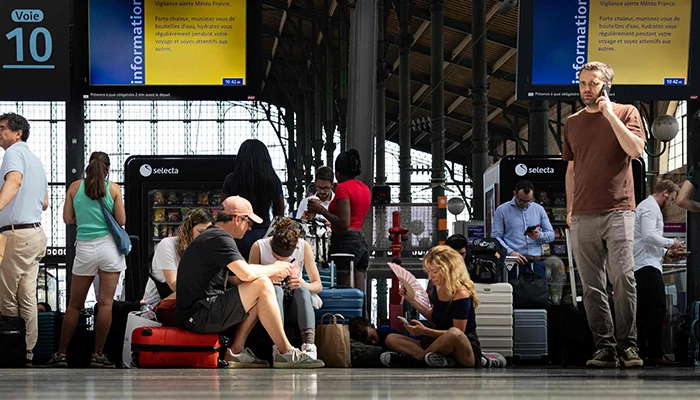
    Passengers wait for their train at Gare du Nord in Paris on June 22, 2026, shielding themselves from the heat with fans underneath SNCF information panels about the heatwave. — AFP

    The intense heat enveloping much of Europe this week is revealing the vulnerabilities of rail infrastructure built during cooler periods, causing delays and cancellations. Travelers with health concerns are advised to avoid trips if possible.

    Overhead power lines that expand and sag, rails that slightly widen when heated by the sun, and over-heated air conditioning systems are primary issues impacting train services where maintenance spending has often fallen short.

    ### Why are trains getting canceled?

    In France and Belgium, much of the rail network and rolling stock are several decades old, apart from newer high-speed lines. When they have air conditioning, systems often shut down automatically if the train gets too hot, prompting operators to cancel the most vulnerable routes proactively.

    Belgium’s national railway SNCB has temporarily removed non-air-conditioned trains during peak hours, while France’s SNCF has pulled back 10% of Paris region trains to prevent permanent track deformation caused by excessive heat.

    The overhead catenary wires, which supply electricity to trains, can also sag as the metal expands in the heat, increasing the risk of snagging or breakage. Severine Lepere, SNCF’s director for the Paris area, points to a suspected cause of a major freight train outage at Gare de l’Est on June 18 as a broken power line.

    ### What makes this heatwave different?

    Unlike brief spikes in temperature, this heatwave is notable because high temperatures have persisted for several days without significant cooling at night. Forecasts predict sustained days with temperatures at or above 104°F (40°C). Track temperatures can hit as high as 140°F (60°C), dangerously causing metal to stretch or widen—similar to the risks faced by power lines.

    Engineers are particularly worried about track buckling and derailments, which threaten safety. John Lawrence, chair of the Railway Technical Network at the UK’s Institution of Engineering and Technology, explains that such issues can lead to derailments and cause overhead lines to sag, potentially halting train movement or forcing long detours.

    Electronic signaling equipment also has a chance of failing under these extreme conditions.

    ### Why is this happening in Europe and not elsewhere?

    Trains operate in high temperatures in regions like India and Africa, but those areas typically lack high-speed networks comparable to Europe’s. The high speeds in Europe demand extremely reliable tracks and tight tolerances, according to Pierre Plaindoux, a rail expert at MC2I consulting.

    In the US and Canada, passenger trains primarily operate on diesel-powered trains over major routes, with overhead power lines rarely used—mild weather and different infrastructure reduce heat-related issues.

    ### What are the potential solutions?

    One approach involves better tracking of track temperatures to set speed limits instead of canceling trains preemptively. In countries with lower labor costs, inspectors often walk the lines, but France is planning to install more sensors to monitor conditions directly.

    Another method is to paint tracks white to reflect sunlight and reduce heat absorption, a strategy increasingly adopted in Britain, Italy, and other countries. According to Antonios Kanellopoulos, associate professor at the University of Hertfordshire, reflective paint can lower rail temperatures by 5-10°C.

    Installing more rigid power lines that don’t sag easily in the heat is also being explored. France has already installed such lines over several dozen kilometers on high-traffic routes, but extending these over longer distances is limited by cost, explains Plaindoux.

    ### Images:

    – Passengers shield themselves with fans and hand fans while waiting for their train amidst the heat at Gare du Nord, Paris, June 22, 2026.
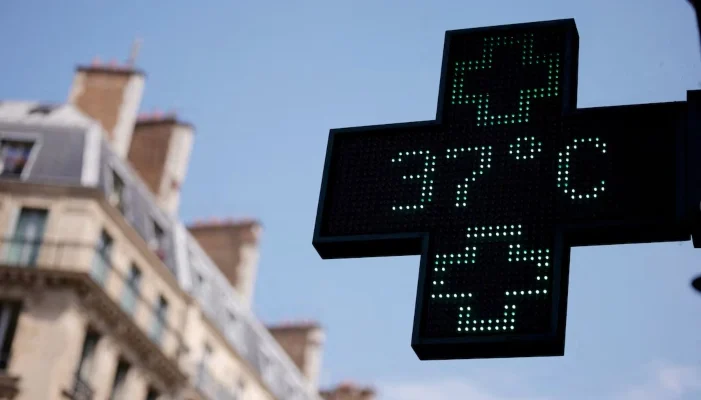
    – A thermometer showing 37.6°C in Toulouse during the heatwave on June 23, 2026.
    – A train on the tracks at Gare de l’Est, Paris, March 14, 2026.

  • Europe braces for prolonged heatwave with temps nearing 40°C

    Europe braces for prolonged heatwave with temps nearing 40°C

    A heatwave swept across much of Europe on Sunday, with temperatures soaring close to 40°C (104°F), leading to widespread warnings, travel disruptions, and signs of stress among wildlife and popular tourist spots.

    On June 21, the summer solstice in the Northern Hemisphere—often the beginning of the hottest three months—concerns grew about an early and prolonged burst of extreme heat. Italy experienced temps above 35°C for several days, prompting authorities to issue a red alert for eight cities, including Bologna, Florence, Milan, and Turin.

    In Rome, pilgrims in St. Peter’s Square shielded themselves from the intense sun with umbrellas and parasols as the Pope performed a traditional Sunday prayer from a palace window. The surge in temperatures is mainly due to a mass of hot air moving northward from the Sahara Desert, fueled by a powerful high-pressure system known as the right “African anticyclone.”

    Meteorologists describe this system as creating a “heat dome,” which traps hot air over western and central Europe, causing temperatures to steadily rise. Madrid locals and visitors used fans and drank cold beverages while exploring the famed El Rastro flea market. Haily San Cesario, a 22-year-old engineer from Miami, shared, “I dress entirely in white because it’s so hot, and I carry my small electric fan everywhere I go.”

    Spain’s weather agency, AEMET, issued red and orange alerts across several regions, warning of temperatures pushing past 39°C to 40°C across much of the Iberian Peninsula and Mallorca. The heatwave is expected to persist at least into the middle of the week.

    In France, rail services are feeling the impact of the extreme heat. From Paris’ Gare Montparnasse station, SNCF director Jean Castex stated that high temperatures were significantly affecting the rail network, risking damage to overhead power lines and tracks. About 3,500 personnel are monitoring the system, with an additional 2,000 on hand for emergency repairs. Several major routes have seen the cancellation of 71 intercity trains until Monday.

    Germany has also seen temperatures hit as high as 38°C, with the DWD weather service warning of severe thunderstorms in eastern areas, including Berlin. Heavy rain disrupted the open-air Fête de la Musique festival, prompting evacuations of the Berlin Open tennis tournament grounds as strong winds and downpour set in during the finals.

    Wildlife rescue centers are reporting increasing pressure from the heat. A facility near Namur, Belgium, has admitted roughly 150 animals suffering from heat stress, with young birds most vulnerable. “Nestlings prefer to jump rather than risk cooking in their nests,” explained Romain De Jaegere, founder of CREAVES. He added that centers across Belgium are overwhelmed.

    Experts say this situation underscores a broader trend of increasingly frequent and intense heatwaves across Europe, attributed to the effects of climate change.

  • Hegseth praises NATO defense gains, urges some to “do more”

    Hegseth praises NATO defense gains, urges some to “do more”

    Progress and Spending in NATO

    Brussels: On Thursday, U.S. Defense Secretary Pete Hegseth praised NATO allies for making strides in meeting their defense spending commitments, though he emphasized that some countries still need to “do more.” He adopted a friendly tone during the alliance’s meeting.

    “Many nations are following through with their commitments, while others still need to step up, and we will be transparent about that—both privately and publicly,” Hegseth stated before discussions with NATO defense ministers in Brussels.

    “It’s important — friends are honest with friends.”

    This amicable stance is likely to provide reassurance to Washington’s allies ahead of a summit with President Donald Trump next month, especially after Trump criticized European countries over their responses to his stance on Iran.

    NATO plans to highlight increased European defense spending to show Trump progress on last year’s goal of reaching 5% of GDP on defense expenditures.

    “What we’re seeing in terms of spending is extraordinary — huge amounts of money are coming in,” said NATO Secretary General Mark Rutte.

    “Europe and Canada will spend over $90 billion more in 2025 compared to 2024—a nearly 20% rise in defense spending.”

    Despite the upbeat outlook from NATO, an official noted that three European nations, including Slovenia and the Czech Republic, are projected to fall short of the 2% GDP defense spending threshold this year.

    The U.S. has been clear that it envisions NATO allies on the continent assuming greater responsibility for their own conventional defenses as American focus shifts toward China.

    As part of this shift, the Pentagon has informed allies that it will cut back the number of assets it makes available globally for NATO operations.

    This decision has raised concerns that Europe might become more vulnerable to Russia’s threats, given that many countries still depend on Washington for crucial weaponry.

    Rutte acknowledged that the reductions are “immediate,” but assured that the U.S. would still support NATO members in the event of an attack.

    “All allies, including the U.S., will do everything possible to ensure we can defend ourselves in wartime,” he said.

    Military Asset Reductions

    U.S. and German sources report that the cuts include about a third of the 150 U.S. F-16 and F-15 fighter jets designated for NATO, along with refueling planes, reconnaissance aircraft, bombers, and drones.

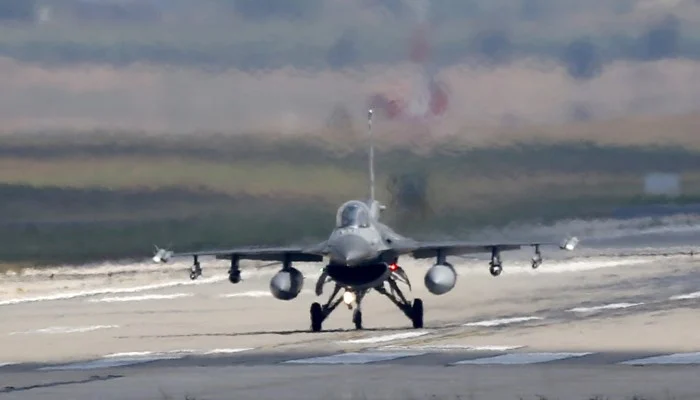
    A Turkish Air Force F-16 fighter jet lands at Incirlik Air Base in Adana, Turkey, August 11, 2015. — Reuters

    The report also states that a submarine capable of launching cruise missiles is being decommissioned, along with one of two aircraft carrier groups.

    “Overall, we will be able to compensate in many areas. Still, we need a bit more time, and that message is clear,” said German Defense Minister Boris Pistorius.

    “It’s risky and potentially dangerous for NATO’s European security if capabilities are withdrawn too quickly without clarity on when they can be restored.”

    While NATO focuses on its broader security, the alliance will also discuss bolstering support for Ukraine. President Volodymyr Zelensky plans to join a meeting with Kyiv’s military allies later today before heading to an EU leaders’ summit.

    Ukraine aims to leverage the momentum from Zelensky’s positive meeting with Trump at the G7 summit in Evian to secure additional backing in its conflict with Russia.

  • US to Cut Fighter Jets and Warships in Europe’s NATO Forces, Report

    US to Cut Fighter Jets and Warships in Europe’s NATO Forces, Report

    The United States is planning to reduce the number of fighter jets and warships it supplies to NATO forces in Europe, according to a Thursday report by the New York Times.

    These cutbacks come amid efforts by European nations to strengthen their defense capabilities following Russia’s full-scale invasion of Ukraine in 2022. The invasion has heightened fears that Moscow might target a NATO member.

    Former President Donald Trump has criticized the alliance, dismissing it as a “paper tiger” and calling its members “cowards” for not joining the US and Israel in the conflict against Iran.

    The plan involves a one-third reduction in fighter jet provisions to Europe, the elimination of all eight aerial refueling tankers, and cuts to maritime reconnaissance aircraft, the report cites two unnamed senior European officials.

    In addition, a missile-launching submarine, an aircraft carrier, a bomber group, and several jets and warships are slated for reallocation. The Pentagon has been contacted for comments.

    Earlier this month, the US European Command announced it would review Washington’s contributions to NATO to ensure that Europe assumes greater responsibility for its own conventional defense.

    US General Alexus Grynkewich criticized Europe’s reliance on US forces, describing it as an “unhealthy co-dependence.”

    Founded in 1949, NATO’s 32-member alliance’s core principle is that an attack on one member is considered an attack on all, triggering collective defense.

    Last week, US Secretary of State Marco Rubio stated that President Trump will attend a NATO summit in Turkey this July. Rubio called it “probably the most important NATO meeting in history,” emphasizing the need to resolve outstanding issues and make necessary improvements.

  • Germany Calls for Defense Boost as US Plans Troop Reductions

    A planned withdrawal of 5,000 U.S. troops from Germany has ignited renewed debate about Europe’s defense duties. German Defense Minister Boris Pistorius emphasized that this move should motivate European allies to bolster their own military capabilities. The Pentagon confirmed the reduction in Germany, which hosts the largest U.S. military presence in Europe, amid escalating tensions between Washington and European capitals over issues such as the Iran conflict and trade tariffs.

    President Donald Trump indicated that this troop drawdown might just be the start, stating, “We’re going to cut way down, and we’re cutting a lot further than 5,000” during remarks in Florida on Saturday when questioned about the plan. The announcement has also raised concerns among prominent Republican lawmakers who believe the troops should remain in Europe, highlighting divisions within Washington about America’s military footprint on the continent.

    Additionally, a Biden-era initiative to deploy a U.S. battalion equipped with long-range Tomahawk missiles to Germany has been canceled—a move seen as a setback by Berlin, which viewed it as a critical deterrent against Russia. Senators Roger Wicker and Mike Rogers, leaders of the Senate and House Armed Services Committees, expressed their “very concerned” stance, asserting that the number of troops should not be reduced in Europe but rather repositioned eastward. They warned that “prematurely reducing America’s forward presence in Europe before those capabilities are fully developed risks weakening deterrence and sends the wrong message to Vladimir Putin.”

    German officials, including Pistorius, said the partial withdrawal was anticipated and would impact the current U.S. force of nearly 40,000 soldiers stationed in Germany. Pistorius reinforced the idea that Europeans need to shoulder more responsibility for their security, citing Germany’s efforts to expand its armed forces, accelerate military procurement, and upgrade infrastructure.

    Trump has long advocated for a smaller American military presence in Germany, urging Europe to take more responsibility for its defense. His recent hardline stance, intensified after disagreements with German Chancellor Friedrich Merz over Middle East exit strategies, underscores his push for Europe to do more independently.

    The Pentagon estimates the troop withdrawal will be completed within six to 12 months, though details remain unclear about which bases might be affected or whether the soldiers will return to the U.S. or be redeployed elsewhere in Europe. NATO has stated it is collaborating with Washington to clarify the specifics of this decision.

    Polish Prime Minister Donald Tusk, representing a country eager for continued U.S. support along NATO’s eastern flank amid ongoing Russia-Ukraine tensions, voiced concern about this setback. Tusk tweeted that “the greatest threat to the transatlantic community isn’t external enemies, but the disintegration of our alliance,” urging efforts to reverse the trend.

    This news comes amid broader tensions, as Trump announced plans to hike tariffs on EU auto imports to 25%, accusing the EU of failing to uphold a trade agreement. This move risks damaging Germany’s economy by potentially costing billions. A foreign policy official from Chancellor Friedrich Merz’s CDU party suggested these actions may stem from external pressures and domestic challenges faced by Trump, including poor polling and unresolved conflicts in Ukraine, Venezuela, and Iran. Peter Beyer remarked that both the troop withdrawal and trade measures seem more like reactive responses fueled by frustration than parts of a coherent strategy.

    Despite commitments from NATO members to bolster their defense capabilities, significant gaps in military readiness and constrained budgets mean regional security improvements will take years. Germany aims to increase its active-duty forces from 185,000 to 260,000, though critics call for even greater expansion in light of perceived threats from Russia.

    Historically, the U.S. military presence in Germany—peaking in the 1960s with hundreds of thousands of troops during the Cold War—includes strategic bases like Ramstein and Landstuhl. These facilities have supported U.S. military operations in Iran, Iraq, and Afghanistan. The current plan involves withdrawing one full brigade and canceling a long-range fires battalion scheduled for deployment later this year. This battalion had been viewed as an important element of deterrence against Russia, especially as Europeans develop their own long-range missile capabilities.

    Christian Moelling, director of the European Defense Think Tank EDINA, stated, “The U.S. holds a factual monopoly inside NATO on long-range fires—that’s why this is more operationally significant than troop numbers.”

  • France asserts EU has means to retaliate against Trump’s tariffs

    France asserts EU has means to retaliate against Trump’s tariffs

    Brussels has the means to respond to the U.S. for its recent tariff increases, according to France’s trade minister Nicolas Forissier, who shared this with the Financial Times on Saturday.

    Paris has been holding discussions with EU colleagues and the European Commission regarding President Donald Trump’s decision to implement a flat 10% global tariff—this move came after the U.S. Supreme Court declared many of the tariffs previously imposed on trading partners invalid.

    “For if it becomes necessary, the EU possesses the suitable tools,” Forissier stated to the FT.

    Possible EU responses include activating the “trade bazooka”—an anti-coercion instrument (ACI) potentially targeting U.S. tech firms. This tool offers a wide array of measures, such as export restrictions, tariffs on services, and the disqualification of U.S. companies from EU procurement contracts.

    There’s also a dormant package of retaliatory tariffs on more than $106 billion worth of U.S. goods that could be reactivated if needed.

  • US launches online portal to bypass Europe content bans

    US launches online portal to bypass Europe content bans

    The planned launch last week was postponed. The portal team includes former DOGE member Coristine. Officials discussed adding a VPN feature to the platform.

    The U.S. State Department is creating an online portal—set to be hosted at “freedom.gov”—that will allow users in Europe and other regions to access content banned by their local governments, such as alleged hate speech and terrorist propaganda. Washington views this as a means to combat censorship. Sources familiar with the plan mentioned that the site will not track user activities, and there was consideration of integrating a VPN function to mask traffic as originating from the U.S.

    Led by Undersecretary for Public Diplomacy Sarah Rogers, the project was scheduled to be unveiled at last week’s Munich Security Conference but has been delayed. The reasons remain unclear, though some State Department officials, including legal advisors, have reportedly raised concerns about the initiative.

    This move could potentially deepen tensions between the Trump administration and traditional U.S. allies in Europe, already strained over trade disputes, Russia’s invasion of Ukraine, and the U.S. push to control Greenland. The portal’s launch might also place Washington in a delicate position by seeming to encourage users to break local laws.

    A State Department spokesperson told Reuters that while there isn’t a censorship circumvention program specifically for Europe, the U.S. government prioritizes digital freedom, including supporting privacy and anti-censorship tools like VPNs. The spokesperson denied delays and dismissed reports of legal concerns.

    Under President Trump, free speech—especially audiance reception of conservative voices online—has been a significant focus of U.S. foreign policy, with efforts extending into Europe and Brazil. Europe’s approach to free speech differs markedly from the U.S., where the Constitution guarantees virtually all expressions. The EU’s restrictions originated from historical struggles against extremist propaganda, including Nazi ideology, which vilified Jews, foreigners, and minorities.

    U.S. officials have criticized EU policies, claiming they suppress right-wing politicians, citing countries like Romania, Germany, and France. They argue that laws such as the Digital Services Act and Britain’s Online Safety Act restrict free speech. The EU’s delegation in Washington, functioning like an embassy for the bloc’s 27 nations, had not responded immediately to inquiries about the U.S. plan.

    Since 2008, EU rules have mandated the swift removal or restriction of illegal hate speech, terrorist propaganda, and harmful disinformation on social media platforms, especially large companies like Meta and X, which faced hefty fines, such as a 120 million euro penalty for noncompliance.

    Rogers has been a vocal advocate for the Trump administration’s stance on EU content policies, traveling across Europe and engaging with right-wing groups that the U.S. claims are being suppressed. The State Department did not make her available for interviews.

    In its December National Security Strategy, the Trump administration warned of “civilizational erasure” in Europe due to migration policies and expressed intent to foster resistance within European nations.

    EU regulators frequently require U.S.-based websites to remove content deemed illegal, with bans as a last resort. For example, Germany issued 482 orders to remove content supporting terrorism and removed over 16,700 items in 2024. Similarly, Meta’s oversight board ordered the removal of posts by a Polish political party that used racial slurs and depicted immigrants as criminals—a category considered hate speech under EU law.

    Former State Department official Kenneth Propp, now at the Atlantic Council’s Europe Center, described the U.S. portal effort as “a direct shot” at European laws, noting it would be perceived as an attempt to undermine national legal provisions.

    Edward Coristine, who previously worked with Musk’s Department of Government Efficiency, is also involved. He’s currently with the National Design Studio, created by Trump to enhance government websites. Coristine did not respond to requests for comment.

    There are questions about the added value of the U.S. government portal versus existing commercial VPNs. The landing page for freedom.gov was registered in January, but as of now contains only the logo of the National Design Studio, the phrase “fly, eagle, fly,” and a login form.

    Historically, the U.S. government has funded VPNs and similar tools to promote democracy and free access to information in countries like China, Iran, Russia, and Cuba, but it’s unclear what unique benefits this new portal would offer users that aren’t already available through commercial options.
  • Macron Shuts Down Bully Tactics After Trump’s Remarks

    Macron Shuts Down Bully Tactics After Trump’s Remarks

    French President Emmanuel Macron stated Tuesday that Europe refuses to submit to bullies or be easily shaken, sharply criticizing U.S. President Donald Trump’s threats to slap heavy tariffs if Europe doesn’t permit his plans to take control of Greenland.

    While most European leaders have maintained a cautious tone to prevent the transatlantic confrontation from escalating, Macron responded forcefully.

    “France and Europe will not passively accept the law of the strongest,” Macron declared at the World Economic Forum in Davos, adding that yielding would amount to their “vassalization.” Instead, he affirmed that Europe will uphold its sovereignty and the rule of law, despite a perceived global drift toward lawlessness. This stance could lead the EU to impose its own significant trade sanctions.

    “We prefer respect over bullying,” Macron emphasized. “And we prioritize the rule of law over brute force.” During his speech, Macron wore aviator sunglasses, which his office explained was to protect his eyes from a burst blood vessel.

    This speech followed Trump’s threat to impose hefty tariffs on French wine and champagne and his decision to leak a private message from Macron—an unusual breach of diplomatic protocol. Trump had previously announced plans to increase tariffs starting February 1 against several European allies, including France, until the U.S. gains access to Greenland, a move strongly opposed by major EU countries, who condemned it as blackmail.

    Macron condemned the ongoing U.S. escalation of tariffs as “fundamentally unacceptable,” especially when used as leverage against territorial sovereignty.

    The European Union is convening an emergency summit in Brussels on Thursday evening to discuss the Greenland issue. The EU had previously suspended tariffs on €93 billion worth of U.S. goods after a trade agreement in summer, but those could be reimposed as early as February 6.

    Macron has also urged the EU to consider activating its Anti-Coercion Instrument, informally dubbed the “trade bazooka,” which could restrict U.S. companies’ participation in EU public procurement or limit trade in services like technology platforms. He called the current situation “crazy.”

    The relationship between Trump and Europe has significantly deteriorated, especially after Trump’s push to claim sovereignty over Greenland, an Arctic island and NATO member Denmark, unsettling European industries and rattling financial markets. Additionally, Trump expressed annoyance over France’s hesitation to join a proposed new international organization, the Board of Peace, which Trump plans to lead. France worries about its potential impact on the United Nations.

    When asked about Macron’s stance on the Board of Peace, Trump joked that he would impose a 200% tariff on French wines and champagnes to compel Macron to join, though Macron does not have to.

    Later, Trump shared on his social media a screenshot of an exchange with Macron, which a source close to Macron confirmed as authentic. In the message, Macron expressed confusion over Trump’s Greenland strategy and proposed hosting a G7 meeting including Russia and others. The timing of those messages was not disclosed.

    Macron has no plans to stay in Davos beyond Tuesday, as Trump arrives. Macron explained, “I don’t need to change my schedule,” and noted he had planned to leave that evening.

    Since becoming president in 2017, Macron’s relationship with Trump has fluctuated — sometimes friendly, sometimes more confrontational. French officials defend Macron’s direct engagement with Trump, saying they often communicate through informal calls and texts outside official diplomatic channels. Macron’s aides believe Trump targets him because Macron stands up for democratic principles.

    “Ahead of resisting, France becomes a target,” said Macron associate Pieyre-Alexandre Langlade.

  • Countries Threatened by Trump Greenland Tariffs Stand United

    Countries Threatened by Trump Greenland Tariffs Stand United

    Joint statement: countries impacted by Trump’s Greenland tariffs unite in response

    In a collective statement released Sunday, Britain, Denmark, Finland, France, Germany, the Netherlands, Norway, and Sweden affirmed their solidarity in facing US President Donald Trump’s tariff threats aimed at countries opposing his Greenland ambitions.

    They emphasized that such threats harm transatlantic relations and could trigger a dangerous downward spiral. The nations pledged to remain coordinated and resolute, asserting their commitment to sovereignty.

    Ireland’s Foreign Minister Helen McEntee condemned Trump’s tariffs as “completely unacceptable” and expressed regret. She reiterated that the future of Greenland should be decided by Denmark and its people, consistent with democratic principles and international law.

    President Emmanuel Macron’s team announced plans to ask the European Union to activate its novel “anti-coercion instrument” if tariffs are imposed, which would include measures like restricting imports, a tool dubbed the EU’s trade “bazooka.” This mechanism has never been used before but could be employed to counteract US actions over Greenland.

    Italy’s Prime Minister Giorgia Meloni dismissed Trump’s tariff threats as a “mistake.” During a visit to Seoul, she conveyed that imposing new sanctions would be ill-advised, adding she had discussed her views with Trump and NATO leaders. Meloni downplayed tensions, citing misunderstandings or communication issues concerning Arctic policy.

    Trump has threatened tariffs up to 25% on imports from Denmark, Norway, Sweden, France, Germany, the UK, the Netherlands, and Finland—countries opposed to his Greenland plans.

    Meloni underscored NATO’s role in managing the crisis, noting that it should help organize deterrence against hostile interference in strategic regions. She suggested that European actions might have been misinterpreted as anti-American, which she said was not the case.

    From her perspective, clearer communication was necessary, and she maintained that the US perceives Greenland differently for reasons linked to national security.

  • Global Temperature Records Shattered Worldwide in 2025

    Global Temperature Records Shattered Worldwide in 2025

    In 2025, Central Asia, the Sahel region, and northern Europe experienced their hottest year on record, based on data from the European Copernicus program analyzed by AFP. Over the past 12 months, the global temperature trend ranks as the third hottest year ever, trailing only 2024 and 2023, pending official confirmation in Copernicus’s upcoming annual report.

    This average temperature includes both land and ocean surfaces, but certain regional records tell a more alarming story. Due to limited climate data reporting from some developing nations, AFP supplemented the global picture by independently examining Copernicus data, satellite measurements from around 20 different sources, and weather station reports, covering worldwide hourly data since 1970.

    In 2025, a total of 120 monthly temperature records were broken across more than 70 countries. Notably:

    Central Asia saw every nation surpass its previous annual temperature records. Tajikistan, a landlocked and mountainous country where only 41% of the population has access to safe drinking water, experienced the highest abnormal temperatures globally — over 3°C above historical seasonal averages from 1981 to 2010. Monthly temperature records there have been broken every month since May, except November. Nearby countries like Kazakhstan, Iran, and Uzbekistan faced temperatures 2°C to 3°C higher than typical seasonal levels.

    The Sahel and West Africa regions registered temperature increases between 0.7°C and 1.5°C above seasonal norms. Mali, Niger, Nigeria, Burkina Faso, and Chad experienced some of their hottest months ever, with Nigeria recording its hottest year on record and other nations ranking among the top four hottest in history. Experts from the World Weather Attribution network state that extreme heat events have become nearly ten times more likely since 2015, emphasizing the role of climate change. These vulnerable nations, already battling conflict, food insecurity, and poverty, are on the frontline of rising temperatures.

    Europe faced a scorching summer, with about ten countries nearing or setting new annual temperature records. Switzerland and Balkan nations saw summer temperatures spike 2°C to 3°C above average. Spain, Portugal, and the UK endured their worst summers on record, sparking massive wildfires. The UK’s driest spring in over a century contributed to water shortages. While northern Europe avoided the June heatwave, it experienced unusually warm autumns, making 2025 one of the two warmest years on record in Norway, Sweden, Finland, and Iceland.

  • Putin Says Europe’s War with Russia Would Meet Our Readiness

    Putin Says Europe’s War with Russia Would Meet Our Readiness

    Russian President Vladimir Putin stated Tuesday that Russia is prepared for war if Europe pushes for one, accusing Western leaders of attempting to undermine a deal on Ukraine prior to meetings with U.S. representatives.

    These remarks coincided with high-stakes discussions in Moscow involving U.S. envoy Steve Witkoff and Jared Kushner, President Donald Trump’s son-in-law, aimed at resolving the nearly four-year-long conflict in Ukraine. The diplomatic efforts had been intense and ongoing for several days.

    “We’re not planning to go to war with Europe, but if Europe chooses to, we are ready now,” Putin told journalists in Moscow.

    He further claimed that European leaders lack peaceful intentions and are siding with conflict, alleging that their actions are obstructing U.S. efforts to broker peace in Ukraine. Putin also criticized Europe’s modifications to Trump’s latest proposal for ending the war, asserting that those changes are solely designed to block negotiations and impose demands unacceptable to Russia.

    The United States has proposed a 28-point plan to conclude the hostilities, which was later revised after criticisms from Ukraine and European nations, who believed it favored many of Russia’s maximalist stipulations.

    While the plan has backing from Trump, many European countries worry that it could pressure Ukraine into concessions on territory and other demands. Europe, concerned about further Russian aggression, emphasizes that no unjust peace should be forced upon Ukraine.

    The envoys from Washington are working to finalize the agreement with the approval of both Moscow and Kyiv.