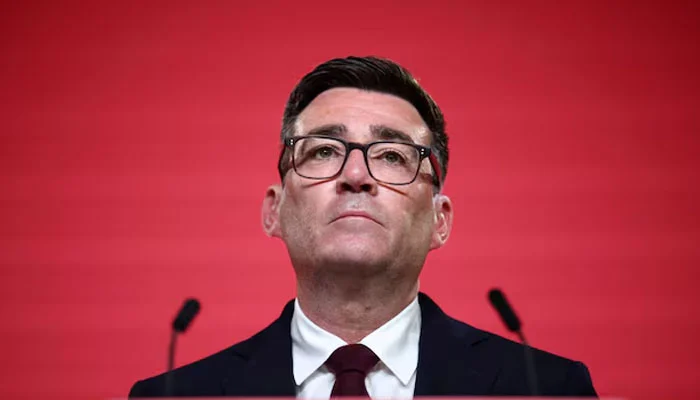
Andy Burnham, known as the “King of the North,” will become Britain’s seventh prime minister in less than ten years this coming Monday, vowing to revamp the country’s systems to better address pressing issues like the ongoing cost-of-living crisis and declining public services.
Following Keir Starmer’s farewell speech outside his Downing Street office and his official resignation to King Charles, Burnham, the former mayor of Greater Manchester, will meet with the monarch to assume the premiership.
The real work begins now.
At age 56, Burnham faces a daunting array of challenges—from underperforming utilities to sluggish economic growth—and must quickly assemble his cabinet, which has already sparked intense debate within the Labour Party regarding its composition.
Burnham describes his election as leader of the Labour Party as “the most significant turning point in our politics in four decades” and has pledged to radically transform Britain’s political landscape to swiftly improve living standards.
“Starting next week, my government will clearly set out a new direction,” he stated on Friday, promising to bring hope and change to a country “crying out for it.”
“Our goal is a nation where life is more affordable and all communities are uplifted from their current state.”
This message was aimed directly at Labour lawmakers, who see Burnham as one of the few politicians capable of diminishing the threat posed by Nigel Farage’s populist Reform UK party—something many believed Starmer lacked the popularity or influence to do.
One of Burnham’s immediate priorities will be choosing his cabinet, especially the finance minister—an essential appointment that has historically determined the success or failure of government coalitions.
Early favorites for the role include Ed Miliband, the energy security and net-zero minister, though he has faced some opposition, with Shabana Mahmood, the interior minister, now considered the leading candidate.
Burnham has urged his party to disregard “speculation” and has not yet finalized his cabinet team.
His early policy moves will also be closely watched, particularly his plans around taxation, public spending, oil and gas policies, and efforts to bring underperforming utilities under stronger government control.
In an early sign of his approach, Burnham’s team announced the cancellation of a digital ID scheme for employees—an initiative intended to combat illegal migration but labeled a “fiasco” by a bipartisan committee.
Going forward, key decisions will focus on laying out a new economic framework and tackling issues like utility regulation and public control, especially in struggling firms like Thames Water. Deputy Labour leader Lucy Powell indicated that Thames Water might be placed under “special measures,” meaning increased government oversight.
“Burnham aims to redirect and prioritize government resources to address the cost of living and fundamentally rewire how the economy functions,” she told Sky News.