
Select Language:
The Hidden Geographical Pattern of FIFA World Cup Champions
1. Unveiling the Surprising Latitude Line Connection
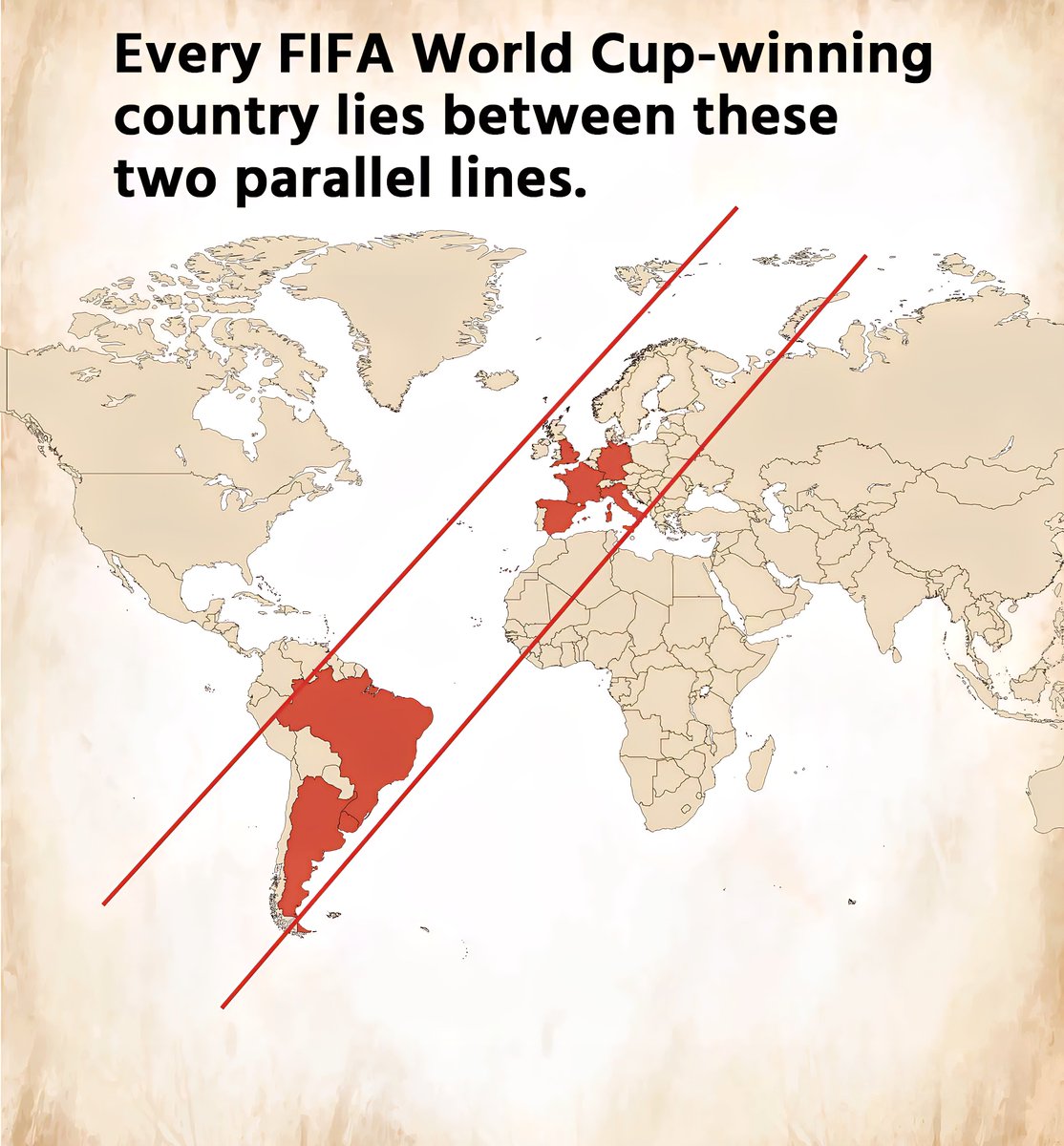
A detailed map reveals a fascinating geographical pattern among FIFA World Cup-winning nations: all past champions have fallen between two specific parallel lines. These lines, running across the globe, create a band of latitude encompassing some of the most football-mad countries. The discovery sheds light on potential climatic, cultural, and historical factors influencing football dominance, making it a compelling visual for fans and geographers alike.
2. The Band of Champions: Which Countries Make the Cut?
From the early days of the tournament in Uruguay to the recent victory by France in 2022, every World Cup-winning country has been situated within these two lines. Key nations include South American giants like Uruguay, Argentina, and Brazil, along with European powerhouses such as Germany, Italy, and France. Interestingly, no champions outside this band—namely south or north of these parallels—have ever claimed the coveted title, emphasizing a possible link between geography and football prowess.
3. Climate and Altitude: The Hidden Factors?
One theory that emerged from this pattern relates to climate stability and altitude, which influence both the development of football infrastructure and player adaptation. Countries within this latitude band tend to have temperate climates, favorable for recruiting and training athletes year-round. Additionally, many are situated at altitude or have a diverse habitat, potentially impacting physical endurance and tactical styles.
4. Cultural and Historical Roots Within the Band
The geographical clustering hints also at shared historical and cultural commonalities. European nations within this region boast long-standing football traditions, reinforced by robust youth programs and professional leagues. South American countries like Brazil and Uruguay have deep-rooted football passions, often rooted in local culture, which is reflected in their success on global stages. The map underscores how geography intertwines with cultural identity, fueling football excellence.
5. What This Pattern Means for Future Championships
While history tends to repeat itself, this geographic pattern invites questions about future tournament winners. Will emerging football nations outside this band—such as Nigeria, Mexico, or Australia—break the trend? Or does this geographical cluster act as an indicator of enduring football strength? Analysts suggest that countries within this latitude range may maintain an advantage due to climatic familiarity and established football ecosystems.
6. Broader Implications for Global Football Development
Understanding the geographical clustering of world champions not only broadens fans’ appreciation for the sport but also guides development strategies. Nations aspiring to break into this elite group might focus on establishing climates conducive to year-round training or fostering cultural environments that prioritize football excellence—imitating the successful models found within this band of geography.
7. Final Thoughts: A Geographical Story of Football Glory
The map depicting the latitude band of World Cup-winning countries offers a captivating glimpse into how geography influences sporting success. It’s a visual testament to the idea that great football nations tend to share more than just talent—they often share space within a specific geographic and climatic corridor. As the sport continues to grow worldwide, this pattern might inspire new strategies and global cooperation to challenge the traditional powerhouses.
The discovery of this pattern emphasizes that behind every historic goal and victory lies a complex interplay of geography, culture, and climate—all woven into the beautiful game of football.
 ChatGPT
 Perplexity
 Gemini AI
 Grok AI