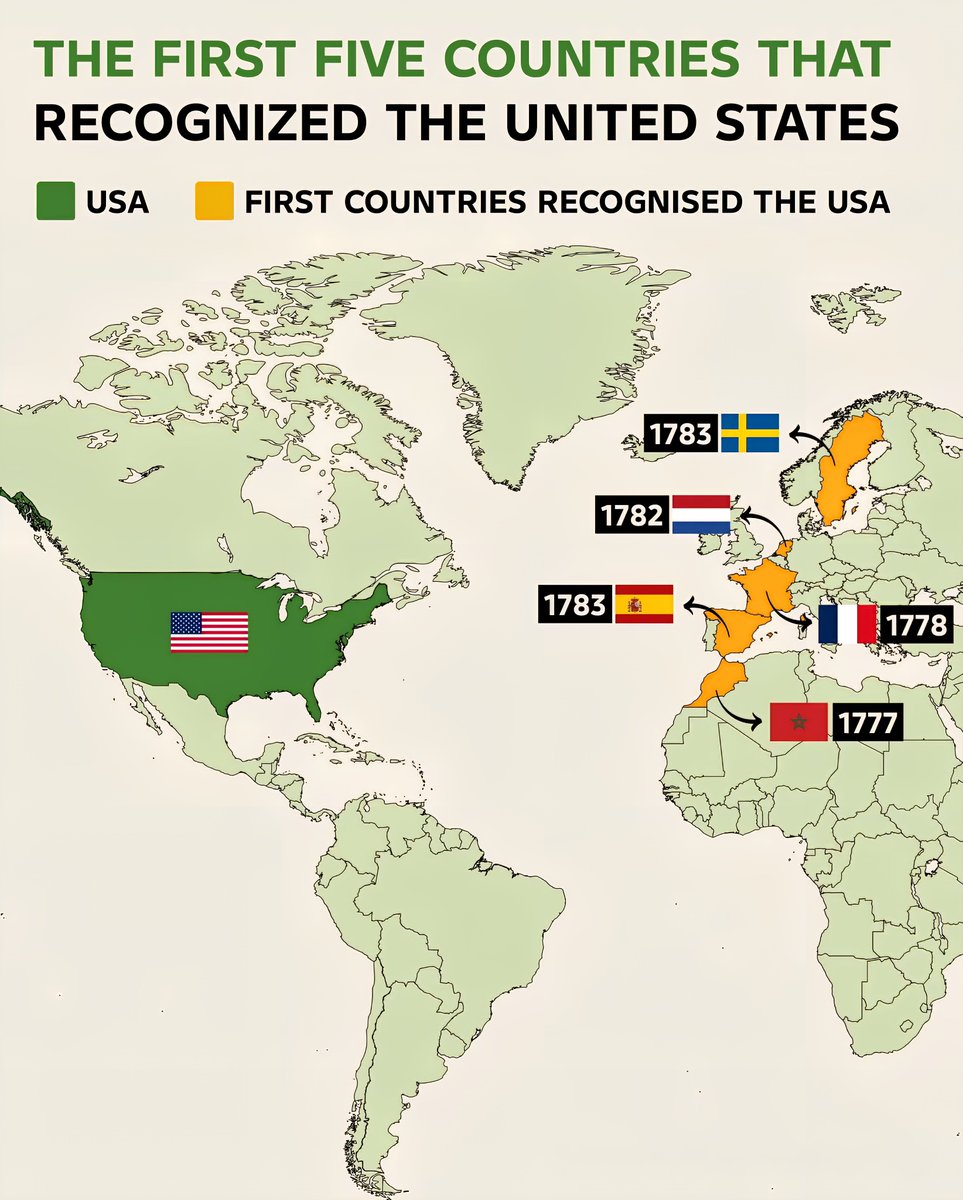
The Pioneering Nations: The First Five Countries to Recognize the United States
Morocco – 1777
Morocco holds a distinguished place in American diplomatic history as the first country outside of the Western Hemisphere to recognize the fledgling United States. Back in 1777, during the American Revolutionary War, Morocco’s Sultan Mohammed III extended recognition and established diplomatic relations. This recognition came primarily through the efforts of American diplomat Thomas Barclay, who was sent to negotiate and secure alliances. Morocco’s recognition was not just symbolic; it also resulted in trade agreements that benefited early American interests in Mediterranean commerce. This act of support from North Africa helped bolster the new nation’s quest for legitimacy on the world stage and is remembered as a significant early affirmation of American independence.
France – 1778
The very next year, France became a pivotal ally in the American Revolution by not only recognizing the United States but also providing vital military and financial assistance. The Treaty of Alliance and the Treaty of Commerce in 1778 marked the beginning of a strategic partnership that would turn the tide against the British Empire. France’s recognition was driven by complex geopolitical motives, aiming to weaken Britain’s global dominance. The alliance enabled the United States to access French military power, navy, and supplies, culminating in key victories such as the Siege of Yorktown. France’s recognition set a precedent for European support, shaping the diplomatic landscape for years to come.
Netherlands – 1782
The Dutch Republic’s recognition of the United States in 1782 was critical in securing international acknowledgment of American independence. The Dutch played a vital role in financing the American Revolution, providing loans that kept the revolutionary cause afloat. The Netherlands’s recognition came amidst a complex web of European diplomacy, where Dutch merchants aimed to expand trade and weaken British economic influence. Recognizing the United States allowed Dutch traders to enjoy favorable trade relations and access to American ports. This relationship proved instrumental in developing American maritime commerce and diplomatic ties with other nations.
Spain – 1783
Spain’s recognition in 1783 was a significant diplomatic achievement, especially considering its rivalry with Britain. Spain’s decision stemmed partly from its interests in regaining territories lost to Britain during previous conflicts, and recognizing the U.S. was a move to weaken Britain further. Spain also controlled territories in the Gulf of Mexico and the Caribbean, making reciprocal trade and alliances highly strategic. Recognizing U.S. independence opened doors for American traders to access Spanish colonies and ports, fostering commercial expansion and diplomatic rapport that has endured through centuries.
Sweden – 1783
Sweden was among the first European countries to recognize the United States formally, doing so in 1783. This recognition marked Sweden’s interest in expanding its diplomatic footprint and supporting emerging democracies. Swedish recognition also reinforced the United States’ position as a legitimate independent nation in the eyes of Europe. Despite being less involved militarily than France or Spain, Sweden’s endorsement demonstrated broad international sympathy for the American cause. This move helped bolster American diplomatic efforts and encouraged other nations to follow suit.
The early recognition by these five nations laid the groundwork for America’s emergence as an independent power. Their decisions not only offered diplomatic validation but also facilitated vital trade and military alliances that shaped the young nation’s trajectory.