
Select Language:
The Global Spread of Date Formats: Understanding How Countries Write the Date
In an increasingly interconnected world, understanding how different countries write the date is essential for effective communication, travel, international business, and technology exchanges. The way dates are formatted can sometimes cause confusion, especially in digital communications, so here’s a detailed guide highlighting the most common formats used across the globe.
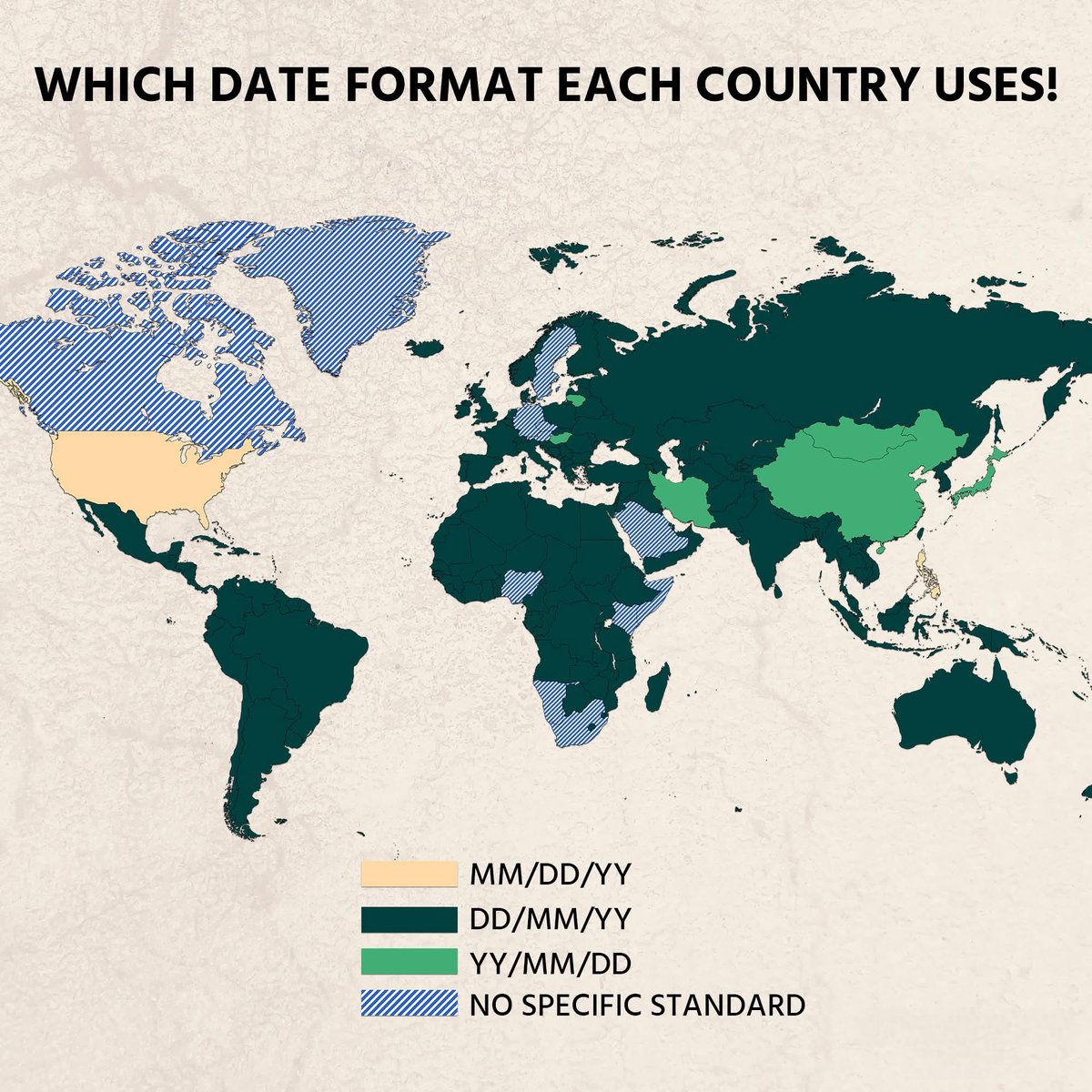
MM/DD/YY — The American Approach
The United States predominantly uses the MM/DD/YY format, where the month comes first, followed by the day and then the year. For example, July 4, 2025, is written as 07/04/25.
- Why it’s popular: This format aligns with the American way of stating dates verbally—”July Fourth”—making it intuitive for domestic use.
- Common in: USA, some online platforms, and certain official documents.
- Potential confusion: When Americans deal with international parties, this format may be misinterpreted as day/month/year, especially by Europeans.
DD/MM/YY — The European Standard
Europe predominantly employs the DD/MM/YY format, with the day first, then the month, and the year last. An example of July 4, 2025, would be written as 04/07/25.
- Why it’s common: Reflects the typical way Europeans verbally state dates—”the 4th of July.”
- Common in: United Kingdom, France, Germany, and most other European nations.
- Potential pitfalls: This format can create ambiguity when sharing dates with Americans unfamiliar with it.
YY/MM/DD — The International Data Standard
The YY/MM/DD format is often used in scientific, military, and international contexts where clarity and chronological order are priorities. It starts with the year, then month, and finally the day.
- Why it’s preferred: Facilitates easy sorting in digital databases; for example, July 4, 2025, becomes 25/07/04.
- Common in: Japan, China, Korean contexts, and in international logistics.
- Advantages: Reduces confusion across regions as the earliest component (the year) is at the beginning.
No Specific Standard — Variations Worldwide
Some countries or organizations do not follow a standardized format, leading to a mix of styles depending on context, institution, or personal preference.
- Implications: This inconsistency can lead to misunderstandings and errors, especially in professional and official communications.
- Examples: Countries like Canada and Australia might use either the MM/DD/YY or DD/MM/YY formats depending on the context or audience.
Why the Variations Matter
- Data entry and software design: Developers must account for these differences to prevent errors in international systems.
- Travel and cross-cultural communication: When planning trips or handling international affairs, knowing these formats can prevent mistaken dates.
- Business transactions: Accurate date interpretation is crucial for deadlines, financial transactions, and legal documentation.
Tips to Avoid Confusion
- When sharing dates internationally, always specify the format or write out the month (e.g., “July 4, 2025” or “4 July 2025”).
- Use the ISO 8601 standard (YYYY-MM-DD) in digital data and formal documentation to maximize clarity.
- Be aware of your audience’s regional dating conventions when communicating dates.
Final Thoughts
Understanding and respecting regional differences in date formats can improve communication and reduce costly errors. Whether you’re traveling, working with international clients, or coding software, paying attention to these variations ensures clarity and professionalism.
Stay informed and adapt accordingly to navigate the complexities of global date formatting smoothly.
 ChatGPT
 Perplexity
 Gemini AI
 Grok AI