

Select Language:
The Distribution of Global Births in 2025: What the Latest Data Reveals
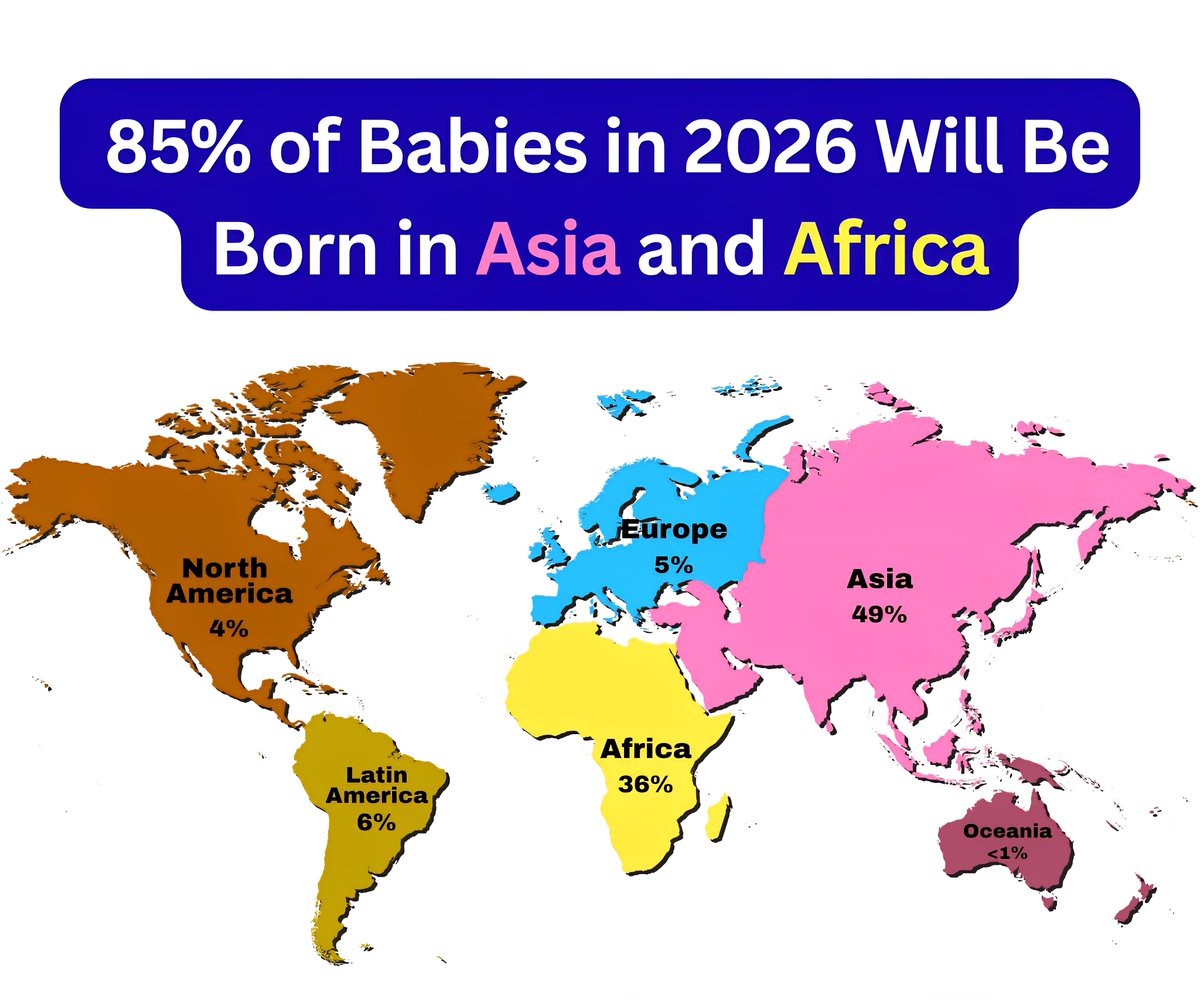
Rapid Population Growth in Asia and Africa
Asia Dominates Birth Rates
In 2025, nearly half of all global births occur in Asia, accounting for about 49% of the total. This continued trend highlights Asia’s status as the most populous continent, driven by high birth rates and dense populations in countries like India and China. Despite some urbanization and family planning efforts, the population growth persists, making Asia a central focus for global demographic analysis.
Africa’s Surging Population
Africa remains a significant cradle of new life, contributing approximately 36% of all births worldwide. The continent’s youthful population and higher fertility rates keep it at the forefront of global population expansion. Countries like Nigeria, Ethiopia, and the Democratic Republic of Congo are leading this growth, which has profound implications for regional development and global resource allocation.
Minimal Births in Other Continents
Latin America’s Consistent Growth
Latin America accounts for about 6% of world births in 2025. Countries such as Brazil and Mexico continue to experience steady birth rates that sustain their populations, although their figures are relatively moderate compared to Asia and Africa.
Europe’s Stable but Declining Population
Europe’s share has dropped to around 5%, reflecting a trend of declining birth rates and aging populations. Nations like Germany, Italy, and Russia face demographic challenges that could influence economic stability and social services in the coming decades.
North America’s Slight Increase
North America contributes approximately 4%, with the United States, Canada, and Mexico witnessing modest birth rates. Migration and diverse demographic shifts play critical roles in shaping the continent’s population landscape.
Oceania’s Minimal Contribution
Oceania, which includes Australia and smaller island nations, accounts for less than 1% of all births. The population here remains relatively stable with lower fertility rates, though immigration continues to influence population levels.
The Global Perspective: What Does This Mean for 2025?
The data underscores the uneven distribution of population growth and highlights regions at the forefront of demographic change. Asia and Africa’s dominant share points to ongoing challenges and opportunities in healthcare, education, infrastructure, and economic development. Meanwhile, Europe faces the reality of aging populations and declining birth rates, prompting policymakers to explore innovative solutions to sustain growth and social services.
Implications for the Future
Understanding these trends is vital for governments, businesses, and international organizations aiming to plan effectively for the coming decades. By addressing the unique needs of rapidly growing regions and supporting aging populations elsewhere, the world can better navigate the complex landscape of global demographics in 2025 and beyond.
As the world continues to evolve, the distribution of births across continents remains a crucial indicator of future societal shifts, economic opportunities, and challenges that lie ahead.
 ChatGPT
 Perplexity
 Gemini AI
 Grok AI