

Select Language:
BRICS Countries Stepping Up: The 2025 Membership and Strategic Alliances
An overview of the current BRICS member nations, their economic standings, and future expansion plans.
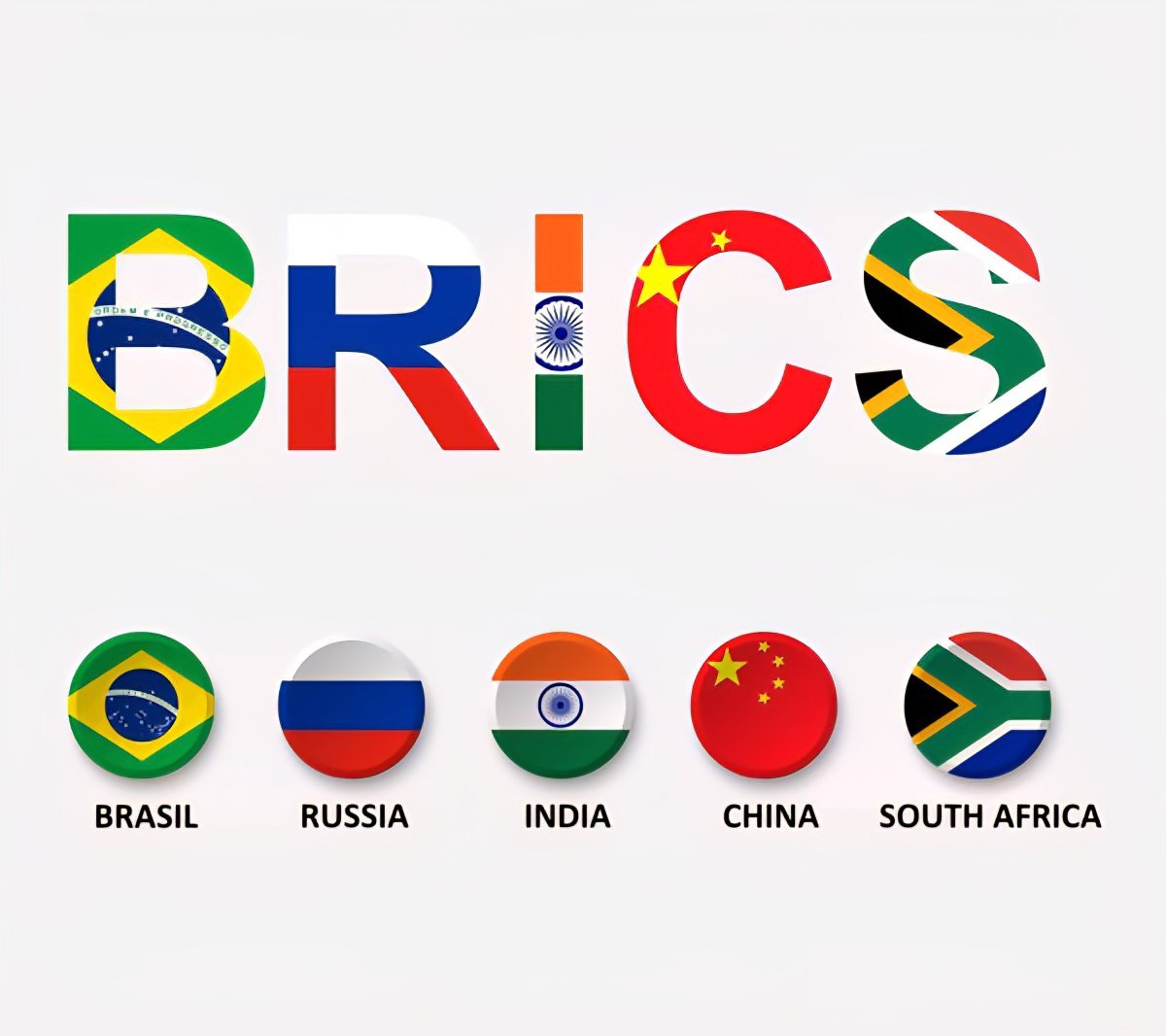
Significant BRICS Members and Their Economic Strengths
-
Brazil: The largest economy in South America, with a GDP totaling approximately $2.64 trillion. Despite recent challenges, Brazil remains a key member fostering regional trade and development.
ADVERTISEMENT -
Russia: Slightly edging out Brazil, Russia’s economy is valued at $2.66 trillion, driven by energy exports and natural resource investments.
-
India: Continues its rapid growth trajectory—its GDP now stands at $4.15 trillion—making it one of the world’s fastest-growing economies within BRICS.
-
China: The heavyweight with a monumental GDP of $20.85 trillion, solidifying its position as a global economic leader.
-
South Africa: The most prominent economy in Africa at $479.96 billion, acting as a bridge between BRICS and various African markets.
-
Egypt: Leading North Africa with a GDP of $429.65 billion, aiming to expand its influence within the alliance.
-
Ethiopia: Showing promising growth, Ethiopia’s economy is valued at $121.53 billion, marking it as an emerging player.
-
Iran: Holding a GDP of $300.29 billion, Iran remains pivotal due to its strategic geopolitical position and energy resources.
-
United Arab Emirates: Substantial at $621.55 billion, the UAE is rapidly diversifying beyond oil into technology and finance sectors.
-
Indonesia: Southeast Asia’s largest economy at $1.54 trillion, actively participating in BRICS’ economic initiatives.
Countries Officially Invited to Join but Not Yet Full Members
- Saudi Arabia: With a GDP of $1.39 trillion, the kingdom’s planned participation signals a shift towards more regional cooperation.
BRICS’ Extended Network: Partner States (BRICS+)
These nations hold strategic partnerships and are vital to the alliance’s global reach:
-
Nigeria ($377.37B), Malaysia ($516.43B), Thailand ($580.00B), and Vietnam ($527.27B) showcase Africa and Asia’s growing influence within BRICS+.
-
Kazakhstan ($360.46B), Belarus ($102.04B), Ukrainian neighbor Uzbekistan ($181.50B), all reinforce the Eurasian economic corridor.
-
Bolivia ($80.74B), Cuba (no data), and Uganda ($73.37B) represent Latin America and Africa’s expanding collaborations.
Countries Officially Applying to Join BRICS
These nations are in the pipeline, signaling strong interest in aligning with the alliance’s objectives:
-
Bangladesh: At $510.71 billion, poised for increased regional influence.
-
Pakistan: With a GDP of $410.50 billion, actively pursuing membership to bolster regional security and economic ties.
-
Colombia: A regional giant valued at $539.53 billion—a recent applicant showing the alliance’s South American aspirations.
-
Peru: At $380.90 billion, continues negotiations to join.
-
Afghanistan: With a modest GDP of $19.66 billion, seeks broader economic integration.
Nations Expressing Interest in Joining BRICS
The list continues to grow as more countries explore partnership opportunities:
-
Angola ($152.35B), Ghana ($118.29B), and Sudan ($44.69B) display Africa’s deepening engagement.
-
Colombia and Peru aim to expand Latin America’s participation.
-
Middle Eastern nations like Kuwait and Bahrain are exploring opportunities for economic collaboration.
The Expanding BRICS Network in 2025
This evolving landscape indicates BRICS’ strategic vision to become a truly global alliance, spanning Asia, Africa, Latin America, and beyond. Its member and partner nations account for a significant chunk of the world’s GDP, emphasizing their importance in shaping global economic policies in the coming years.
The alliance’s recent efforts to include nations with emerging markets demonstrate its focus on fostering multipolar development and reducing reliance on traditional Western-led financial institutions.
As the geopolitical landscape shifts, BRICS continues to cement its position as a pivotal force in shaping international economic and strategic frameworks in 2025.
 ChatGPT
 Perplexity
 Gemini AI
 Grok AI