
Select Language:
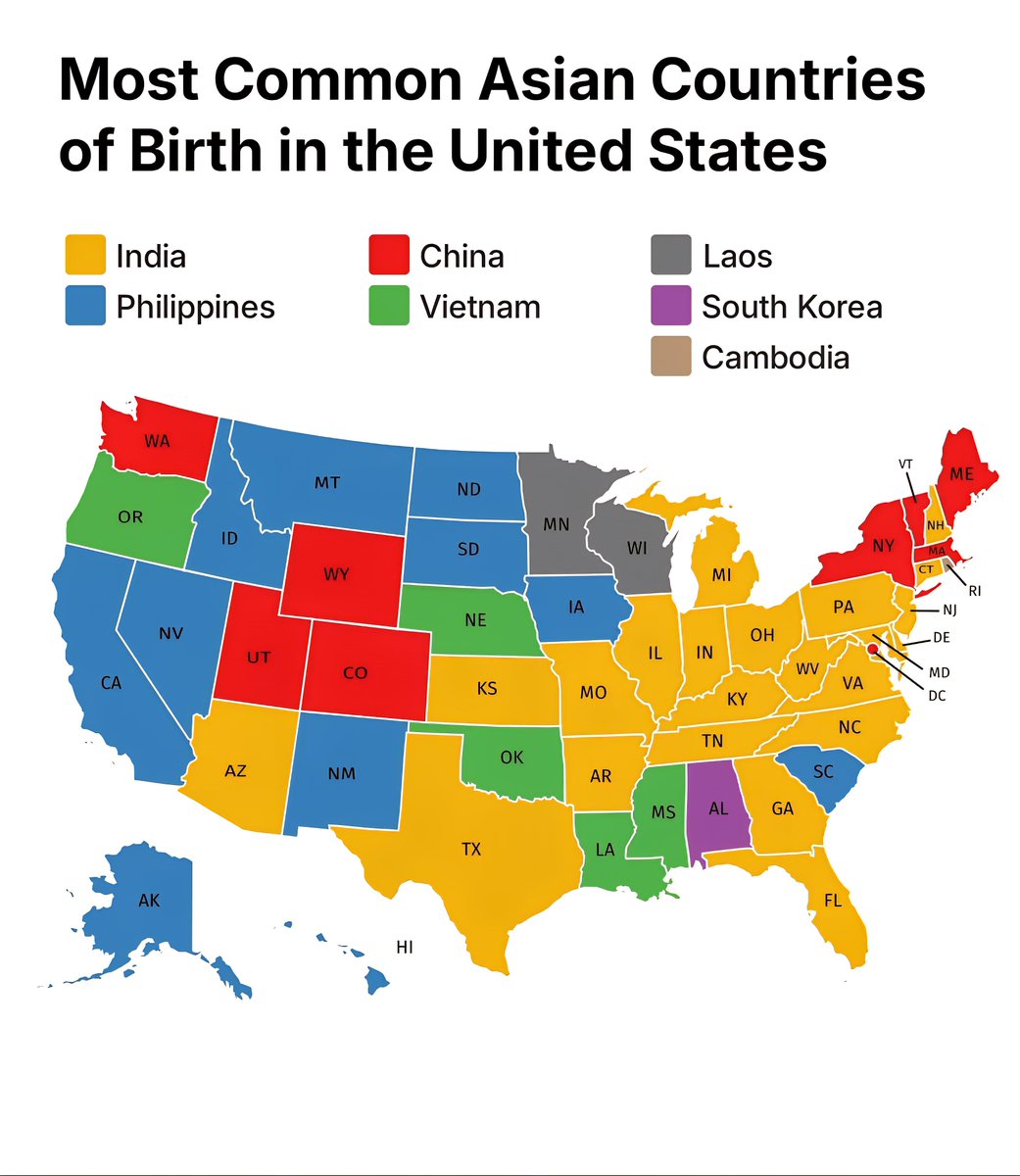
Most Common Asian Countries of Birth in the United States in 2025
India Takes the Lead as the Most Birthplace for Asian Americans
In the diverse landscape of Asian-American communities, India remains the most common country of birth for Asian Americans in 2025. With a vibrant population exceeding 4 million, Indian immigrants and their descendants represent a substantial portion of the current demographic makeup. The Indian community has seen significant growth since the early 2000s, fueled largely by tech industry opportunities and educational pursuits. Cities like San Jose, New York, and Houston continue to host large Indian populations, characterized by thriving cultural centers, temples, and festivals.
China Continues Its Stronghold in the American Asian Demographic
Chinese Americans maintain their position as one of the largest Asian groups, with a sizable number born in mainland China or Hong Kong. The population is estimated at over 3 million, with urban hubs such as Los Angeles, San Francisco, and New York providing vibrant communities. Many Chinese immigrants come for advanced degrees, professional employment, or family reunification, contributing to the growth of Chinese-language media, businesses, and community organizations across the nation.
The Philippines: A Leading Birthplace Among Asian Americans
The Filipino community remains one of the fastest-growing Asian populations in the United States. Approximately 2.5 million individuals of Filipino descent were born in the Philippines, often arriving for healthcare, domestic work, or professional opportunities. California and Hawaii continue to be prominent centers for Filipino Americans, with cultural institutions, festivals, and churches playing vital roles in community cohesion. The popularity of the nursing profession has historically driven Filipino migration, a trend that persists into 2025.
(Image showing diverse Asian communities in the U.S.)
Vietnam’s Growing Presence in the United States
Vietnamese Americans have seen steady population growth, now nearing 2 million individuals born in Vietnam. Many arrived as refugees following the Vietnam War, but a significant portion migrated for economic opportunities, education, and family reunification. Major Vietnamese communities are found in Texas, California, and Florida. These communities pride themselves on vibrant cultural festivals, traditional food, and religious practices, maintaining a strong cultural identity.
Laos’ Gradual Increase in the U.S.
Laotian Americans, though smaller in number at around 300,000, are witnessing gradual population increases across the country. Many Laotians came to the U.S. as refugees or family members seeking better prospects. Their communities tend to be concentrated in states like Minnesota and California, where they engage in cultural preservation and community activism, celebrating festivals such as Lao New Year with enthusiasm.
South Korea’s Significant Contribution to Asian American Diversity
South Korean-born Americans now number over 600,000. Cities like Los Angeles, New York, and Atlanta host sizeable Korean communities, which continues to grow through immigration for employment, education, and family reunification. Korean cultural influence is evident across various sectors including cuisine, entertainment, and business, with K-pop and Korean dramas maintaining popularity nationwide.
Cambodia’s Resilience and Cultural Revival
Cambodian-born Americans comprise a smaller yet resilient group, totaling around 200,000. Many arrived as refugees escaping the Khmer Rouge regime and have since established strong communities, especially in California and Massachusetts. Cambodian Americans actively preserve their heritage through cultural centers, traditional dance, and cuisine. The community’s ongoing efforts aim to educate future generations about their history and culture.
This snapshot of Asian-born populations in the U.S. in 2025 illustrates a vibrant tapestry of cultures, histories, and contributions. As these communities continue to grow and integrate, they shape the multicultural fabric of America, enriching the social, economic, and cultural landscape of the nation.
 ChatGPT
 Perplexity
 Gemini AI
 Grok AI