
Select Language:
The Surprising Truth About the 2025 World Cup Player Nationalities
A Significant Number of Players Do Not Represent Their Birth Countries
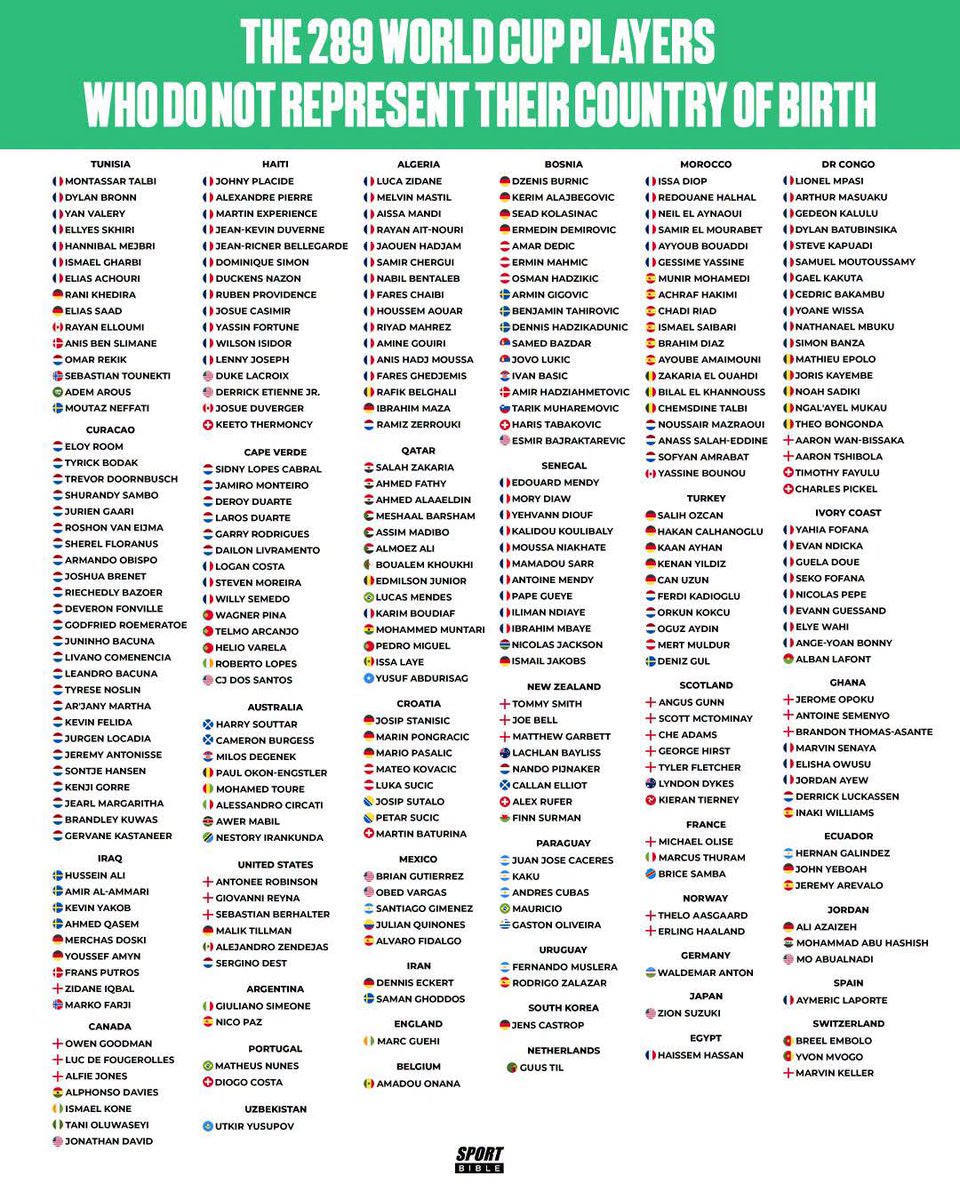
In an unexpected development leading up to the 2025 FIFA World Cup, it has been revealed that a substantial portion of participating athletes are not representing the nations where they were born. Out of the over 300 players on the roster, approximately 289 are playing for countries other than their birthplace. This statistic highlights a growing trend in international soccer—players choosing to represent nations different from their origins, often for strategic, personal, or professional reasons.
Why Are Players Representing Countries Other Than Their Birthplaces?
Several factors have contributed to this phenomenon. Many athletes hold dual citizenship, acquired through familial ties or residency, making it easier for them to choose which country to represent. Additionally, some players seek greater opportunities for international exposure, especially if their birth country has a highly competitive team, making it difficult for them to secure a spot.
For example, a handful of European-based players with African heritage might opt to play for their ancestral nations. Conversely, some young talented athletes settle into new countries through immigration and opt to represent their new homeland to kick-start their international careers. The rise of globalized talent pools has blurred national borders, creating a more diverse and complex team composition.
The Impact on National Teams and Fan Engagement
This trend has stirred significant debate among fans and sports analysts. Critics argue that it diminishes national pride and cultural identity in international sports, as players are often perceived as not genuinely representing their countries. Conversely, supporters cite it as a testament to global interconnectedness and the diverse fabric of modern society.
National teams have adapted to this shift by actively scouting and recruiting talent from abroad. For some nations with smaller populations or limited local talent pools, this strategy is vital for remaining competitive on the world stage. It has also fostered a more diverse atmosphere within teams, with players bringing different styles and experiences from across the globe.
Notable Examples From the 2025 World Cup
While some players have chosen to switch allegiance for better opportunities, others have faced criticism for their decisions. Notably, a star midfielder, born in South America but representing an European team, has sparked conversations about national loyalty and identity.
Another interesting case involves players born in Asia who are playing for Middle Eastern or European countries, highlighting ongoing migration and assimilation in sports. These changes reflect broader global movement patterns and raise questions about what it truly means to represent a nation.
The Ethical and Political Dimensions
The increasing number of players representing countries they weren’t born in also touches on ethical considerations. Some argue that such decisions can be driven by financial incentives or career ambitions rather than genuine cultural ties. On the political front, nations are leveraging this trend to boost their international sports prestige and soft power.
FIFA and other governing bodies are contemplating regulations to ensure transparency and fairness in nationality switches, especially when players switch countries shortly before major tournaments. Striking a balance between opportunity and integrity remains a key challenge moving forward.
Overall Outlook for International Soccer
The 2025 FIFA World Cup demonstrates how the landscape of international soccer continues to evolve. As players increasingly choose their national teams based on personal, professional, or strategic reasons, the definition of national representation in sports becomes more fluid. This shift offers exciting new narratives and diverse competitions but also prompts ongoing discussions about identity, loyalty, and cultural values in the global game.
With 289 players at this year’s tournament not representing their birth nations, the event exemplifies how international football is no longer just a showcase of national pride, but a complex tapestry woven from individual stories, global migration, and evolving identities. As fans watch these games, they witness more than just athletic performance—they see the dynamic intersection of culture and nationality shaping the future of sports.
 ChatGPT
 Perplexity
 Gemini AI
 Grok AI