
Select Language:
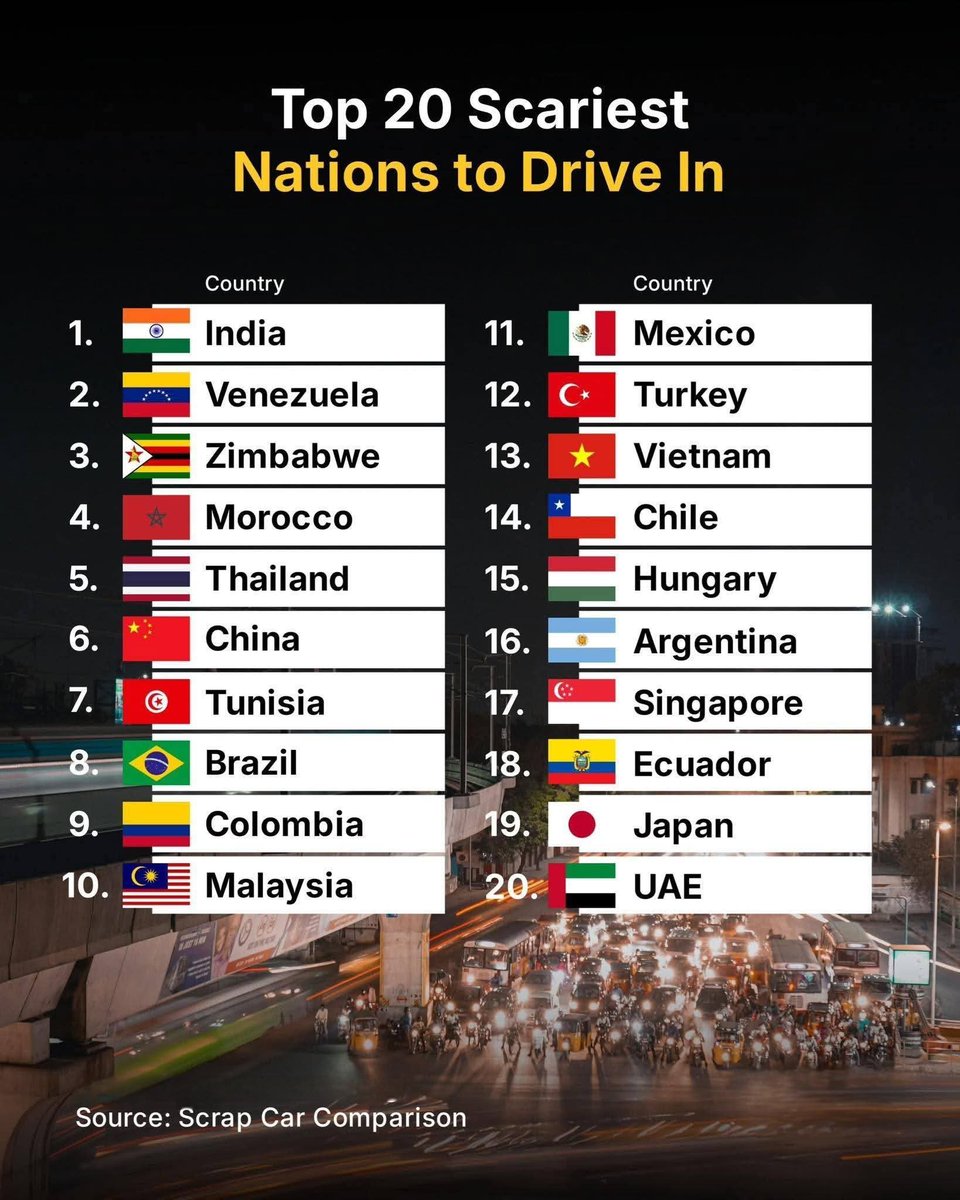
Top 20 Most Challenging Countries for Drivers in 2025
1. India: Navigating Chaos in the Subcontinent
India continues to be one of the most daunting places to drive in the world. With chaotic traffic patterns, inconsistent road conditions, and the unpredictable behavior of drivers, travelers often find themselves in a high-stakes game of patience. Urban areas like Delhi and Mumbai are infamous for their congestion, honking, and frequent violations of traffic laws. Parking and pedestrian crossings add to the complexity, making driving a real challenge for visitors and residents alike.
2. Venezuela: A Land of Roads and Risks
Venezuela’s economic struggles have taken a toll on its infrastructure, and this is reflected on the roads. Potholes, poorly maintained signage, and a lack of enforcement result in dangerous driving conditions. Fuel shortages and shortages of vehicle parts mean that many drivers are on the roads with aging, poorly maintained vehicles. Criminal activity can also intersect with driving, adding another layer of hazard to the country’s roads.
3. Zimbabwe: The Tough Terrain of Southern Africa
Zimbabwe’s rugged terrain, combined with inconsistent road repairs and limited traffic enforcement, makes it a challenging place to drive. Rural areas especially suffer from poorly marked roads and limited signage, making navigation difficult. Road safety is compromised, and the risk of accidents is high, especially when combined with local driving customs that might differ significantly from Western standards.
4. Morocco: Navigating North Africa’s Crowded Streets
Driving in Morocco can be overwhelming due to narrow streets, aggressive drivers, and the eclectic mix of old and new vehicles. In busy markets and city centers like Casablanca and Marrakech, pedestrians, livestock, and bicycles share the roads with cars and scooters. The combination of urban congestion and rural simplicity demands that drivers stay alert at all times.
5. Thailand: Trusting the chaos of Southeast Asian roads
Thailand’s vibrant streets are famous for their vibrant chaos. From tuk-tuks to motorbikes weaving between cars to pedestrians crossing unexpectedly, the driving environment is lively but unpredictable. Road signs are often in Thai, which can be confusing for foreigners, and local driving customs tend to be aggressive and fast-paced. Road accidents are common, highlighting the need for heightened caution.
6. China: Bridging Tradition and Modern Traffic
China’s rapid urbanization has transformed its transportation systems, but the roads can still be intimidating. With billions of vehicles on the road, congestion in cities like Beijing and Shanghai is a regular occurrence. The sheer volume of traffic, combined with local driving habits, sometimes lead to chaotic conditions, especially during rush hours. Though infrastructure is continuously improving, navigating Chinese roads remains a challenge for many drivers.
7. Tunisia: A Mix of Old and New
In Tunisia, old roads often clash with newer infrastructure. Drivers often face inconsistent road quality, unpredictable local drivers, and a lack of clear signage. Urban areas like Tunis are filled with aggressive driving, honking, and frequent violations of traffic rules, creating a tense driving atmosphere.
8. Brazil: A Country of Diverse Driving Conditions
Brazil’s vast size introduces varied driving experiences, from the busy streets of São Paulo to the rural ruggedness of the Amazon. Potholes, aggressive drivers, and chaotic traffic in cities make driving stressful. Rural areas face different hazards like poorly maintained roads and limited signage, requiring drivers to be constantly vigilant.
9. Colombia: Navigating Through Mountains and Cities
Colombia offers stunning scenery amidst its challenging roads. Mountain roads pose risks of landslides and sharp turns, while urban centers like Bogotá have heavy traffic and sometimes unpredictable driving behaviors. Road safety varies significantly across regions, demanding caution and local knowledge.
10. Malaysia: Merging Modernity with Traffic Jams
Malaysia’s roads cater to a wide range of vehicles, from modern cars to traditional bicycles. Congestion is common in Kuala Lumpur, and driving styles are assertive. Motorcycles often weave through traffic, which requires alertness. Road infrastructure has improved, but accidents and aggressive driving remain a concern.
11. Mexico: A Complex Driving Landscape
Mexico’s driver environment varies from well-maintained highways to poorly lit rural roads. Safety concerns, including vehicle theft and road violence, frequently impact the driving experience. Urban congestion and aggressive driving styles make navigation difficult, especially in Mexico City.
12. Turkey: A Crossroads of Cultures and Traffic
In Turkey, especially in Istanbul, traffic congestion is legendary. Narrow streets, high vehicle density, and a blend of old Ottoman architecture with modern transport create a complex driving environment. Local customs often involve assertive driving, making patience a necessity.
13. Vietnam: Traffic in Constant Motion
Vietnam’s traffic infrastructure struggles to keep pace with the rapid growth of motorbikes and cars. Motorcycles dominate the streets, often bouncing between lanes and disregarding traffic signals. Pedestrians are frequent, and road signs are not always clear to visitors, underlining the importance of alertness.
14. Chile: Mountain Roads and City Streets
Chile features some of the most scenic drives in South America, but those routes can be treacherous. Mountain passes require careful navigation, and city traffic, especially in Santiago, can be gridlocked and aggressive. Road conditions vary greatly, demanding experienced driving.
15. Hungary: Europe’s Unexpected Challenge
While Hungary has well-developed infrastructure, some rural roads and urban centers like Budapest pose challenges. Weather conditions, such as snow and ice during winter, add extra risks. Local driving customs tend to be cautious but can change quickly in unpredictable situations.
16. Argentina: Wide-open but Risky Roads
Argentina’s expansive landscapes include some rough, unpaved roads in remote areas. Urban centers see heavy traffic and occasional reckless driving. Strategic planning is necessary for long-distance travel, especially through less developed regions.
17. Singapore: Small Space, Big Challenges
Though Singapore boasts excellent road infrastructure, its high vehicle density means traffic jams are frequent, and driving can be stressful during peak hours. Strict traffic laws may be enforced, but navigating the bustling streets requires patience and vigilance.
18. Ecuador: Mountain and Coastal Hazards
Ecuador combines coastal, mountain, and Amazonian driving environments. Many roads are narrow and winding, particularly in the Andes, and weather conditions can cause landslides and flooding. Road safety varies, demanding cautious driving.
19. Japan: Organized but Demanding
Japan is known for its disciplined driving culture, yet its crowded city streets and complex traffic systems can be intimidating for visitors. High standards of road signage, but navigating busy intersections and dense urban traffic requires attentiveness.
20. United Arab Emirates: Modern Roads with a Speeding Edge
UAE’s roads are modern and well-maintained, but the aggressive driving culture and extreme speeds, especially on highways like Sheikh Zayed Road, make driving risky for unprepared drivers. The rapid pace of life and frequent lane changes are common in major cities like Dubai and Abu Dhabi.
Note: Rankings are based on a comprehensive study by Scrap Car Comparison and reflect an overall assessment of driving safety and difficulty in each nation as of 2025. Variations may exist depending on specific regions within these countries.
Source: Scrap Car Comparison
 ChatGPT
 Perplexity
 Gemini AI
 Grok AI