
Select Language:
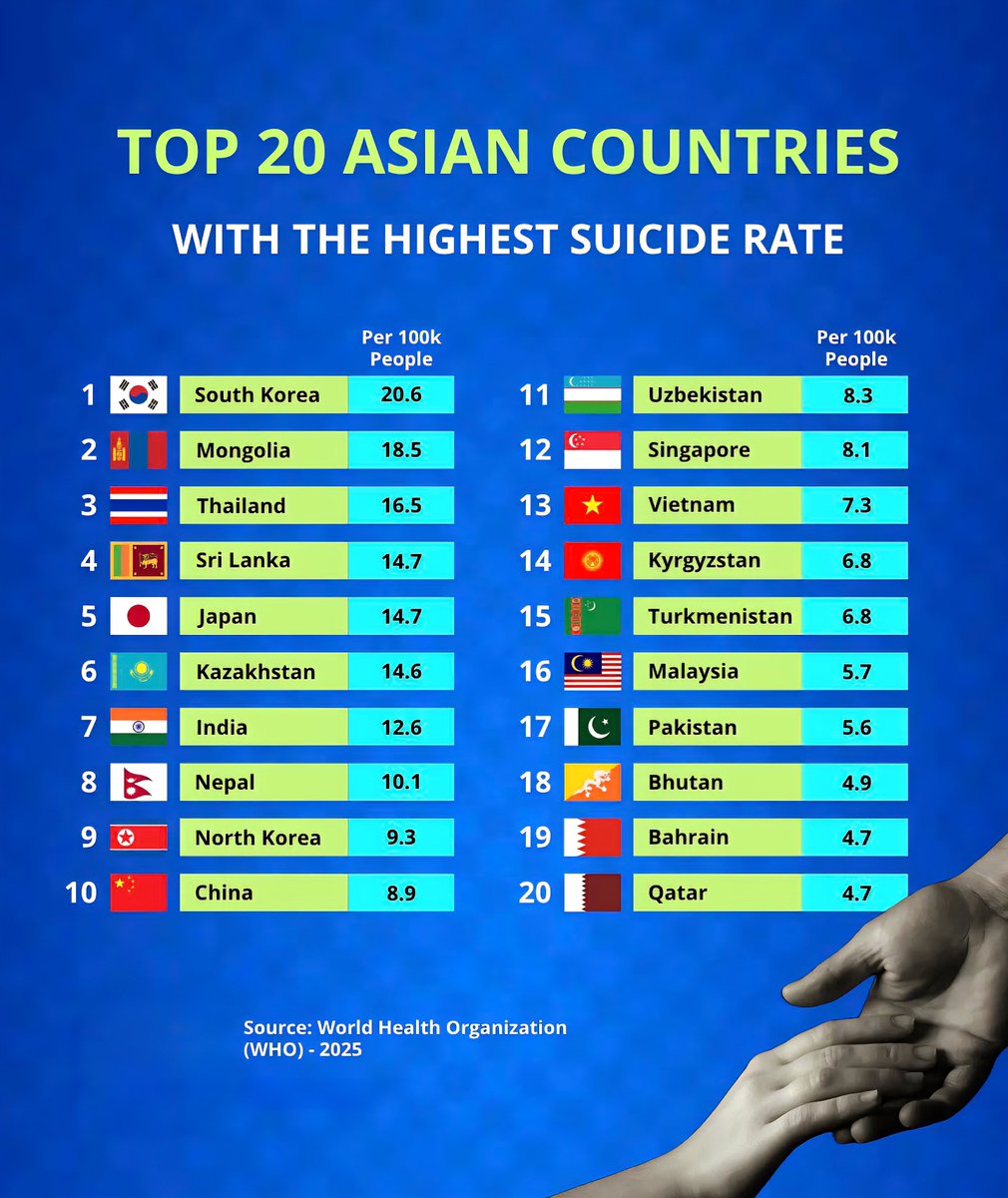
1. South Korea: A Leading Concern with 20.6 Suicides per 100,000 People
South Korea continues to face a significant mental health crisis, ranking highest in Asia for suicide rates. Despite advanced healthcare infrastructure, the country struggles with societal pressures, academic stress, and work-related burnout, contributing to over twenty suicides per hundred thousand residents in 2025. Experts emphasize the urgent need for targeted mental health support and cultural shifts to reduce this alarming statistic.
2. Mongolia: Surpassing Many Expectations, 18.5 Incidents per 100,000 People
Mongolia’s high suicide rate is alarming, especially considering its relatively small population. Factors such as economic instability, limited mental health services, and rural isolation play a prominent role. The government is now prioritizing mental health initiatives, but progress remains slow amid challenges of health infrastructure expansion.
3. Thailand: Cultural and Societal Pressures Fuel 16.5 Suicides per 100,000
Thailand ranks in the top three, with societal pressures related to family reputation and academic achievement contributing heavily. Substance abuse and mental health stigma further complicate efforts to address the crisis. NGOs are increasingly calling for comprehensive mental health programs to combat the rising numbers.
4. Sri Lanka and Japan: Joint Leaders in Mental Health Concern with 14.7 per 100,000
Both Sri Lanka and Japan share high suicide rates, partially attributed to longstanding societal issues. In Sri Lanka, economic hardship and civil unrest exacerbate mental health struggles, while in Japan, the pressure of perfectionism and employment stress continue to influence rates adversely. Both countries are exploring innovative mental wellness campaigns to curb this ongoing issue.
5. Central Asian Countries: Kazakhstan, India, Nepal, and North Korea Show Varied but Concerning Trends
- Kazakhstan (14.6): Economic transition and high unemployment impact mental health.
- India (12.6): Population size complicates mental health outreach; stigma remains significant.
- Nepal (10.1): Geographic isolation limits mental health resources.
- North Korea (9.3): Limited data but indications suggest ongoing mental health struggles amid political and economic isolation.
6. China and Uzbekistan: Stable yet Unacceptable Figures of 8.9 and 8.3 per 100,000
As two of the most populous nations, both China and Uzbekistan face ongoing mental health challenges, with societal and cultural factors influencing suicide rates. Initiatives are underway to integrate mental health services into primary healthcare, but disparities remain.
7. Singapore and Southeast Asian Nations: Lower but Worrisome Figures
- Singapore (8.1): Despite being a wealthy nation, mental health stigma and high-pressure work environments are contributing factors.
- Vietnam (7.3): Rural poverty and traditional beliefs hinder access to mental health care.
- Kyrgyzstan and Turkmenistan (6.8): These nations are witnessing rising trends linked to economic hardships and social upheavals.
8. The Broader Picture: Smaller Nations with Emerging Mental Health Challenges
Countries like Malaysia (5.7), Pakistan (5.6), Bhutan (4.9), Bahrain, and Qatar (both 4.7) display comparatively lower rates but are experiencing increases due to rapid modernization, urban stress, and insufficient mental health infrastructure.
Key Takeaways and Moving Forward
The 2025 data underscores a persistent mental health crisis across Asian countries, driven by complex societal, economic, and cultural factors. Governments and global health organizations stress a multifaceted approach involving stigma reduction, accessible mental health services, and community engagement to effectively lower suicide rates. Awareness campaigns, early intervention, and policy reforms are essential in creating sustainable change for vulnerable populations.
Note: This information is intended solely for educational and awareness purposes. It does not promote or endorse self-harm in any way.
Source: World Health Organization (WHO) – 2025
 ChatGPT
 Perplexity
 Gemini AI
 Grok AI