
Select Language:
Key Spanish Language Countries and Territories You Should Know in 2025
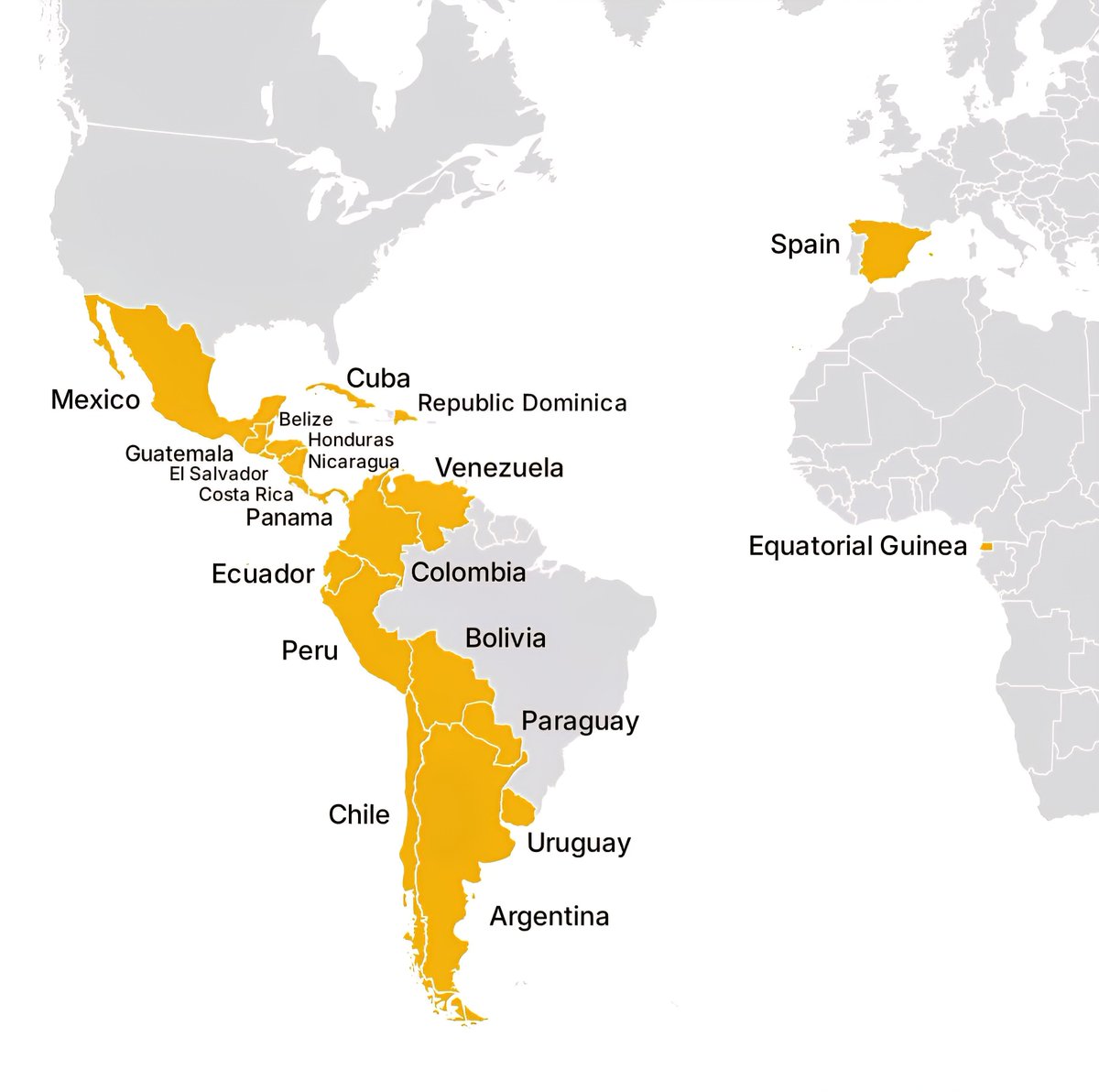
Spain and Latin America continue to be central to the Spanish language’s global influence in 2025. Here is a comprehensive overview of the nations and territories where Spanish is either an official language or holds significant cultural and historical importance.
1. Spain: The Birthplace of the Spanish Language
Spain remains the origin point of the Spanish language, with Madrid serving as the administrative and cultural hub. It plays a vital role in shaping the language and its dialects across the world. Spain’s rich history, vibrant culture, and influential media continue to promote Spanish globally, maintaining its status as a leading linguistic force.
2. Mexico: The Largest Spanish-Speaking Population
With over 130 million residents, Mexico is home to the largest population of Spanish speakers. Its diverse dialects and regional accents contribute to the language’s evolution. Mexican Spanish is widely recognized for its distinctive slang and pronunciation, influencing pop culture, music, and cinema around the world.
3. Central America: A Region Rich in Cultural Diversity
- Guatemala
- Honduras
- El Salvador
- Nicaragua
- Costa Rica
- Panama
These countries form the core of Central America, each with vibrant traditions that blend indigenous languages with Spanish. For instance, Costa Rica remains renowned for its ecological diversity, and Panama’s strategic position hosts the famous Panama Canal, boosting its multicultural influence.
4. Caribbean Islands: Spanish and Beyond
- Cuba
- Dominican Republic
- Puerto Rico
Cuba and the Dominican Republic are prominent Caribbean nations where Spanish profoundly influences daily life, music, and arts. Puerto Rico, an unincorporated U.S. territory, maintains its Spanish heritage while also integrating American culture, making it a unique crossroads of influences.
5. South American Powerhouses
- Colombia
- Venezuela
- Ecuador
- Peru
- Bolivia
- Chile
- Argentina
- Paraguay
- Uruguay
South America boasts some of the most diverse Spanish dialects and rich cultural heritages. Argentina is known for its distinct accent and tango culture, whereas Chile’s Spanish is characterized by its unique intonations. Bolivia and Paraguay feature indigenous languages alongside Spanish, reflecting their multicultural mosaic.
6. The African Connection: Equatorial Guinea
- Equatorial Guinea
Located on the west coast of Central Africa, Equatorial Guinea is the only African country where Spanish is an official language. Its colonial history connects it linguistically and culturally to the broader Spanish-speaking world, serving as a bridge between Africa and Latin America.
7. Clarifying Language Status: Official vs. De Facto
While most countries on this list recognize Spanish officially, some regions use the language in practice without formal constitutional acknowledgment. For example, the territories of Puerto Rico and parts of indigenous communities continue to promote Spanish as a key aspect of their cultural identity, even amidst multilingual environments.
The Enduring Global Influence of Spanish in 2025
Spanish remains the second most spoken language worldwide, surpassed only by Mandarin Chinese. Its widespread use in government, media, and daily communication across these diverse regions underscores its importance in fostering global connectivity, trade, and cultural exchange. Whether through vibrant festivals in Latin America, booming film industries in Spain, or bilingual education initiatives across Africa, the language continues to evolve and adapt to the modern world.
Note: The map illustrates the various nations and territories where Spanish is considered an official or recognized language, highlighting its extensive reach and cultural significance in 2025.
 ChatGPT
 Perplexity
 Gemini AI
 Grok AI