
Select Language:
The Major Immigrant Communities in European Countries in 2025
1. Germany: Turks Continue to Lead
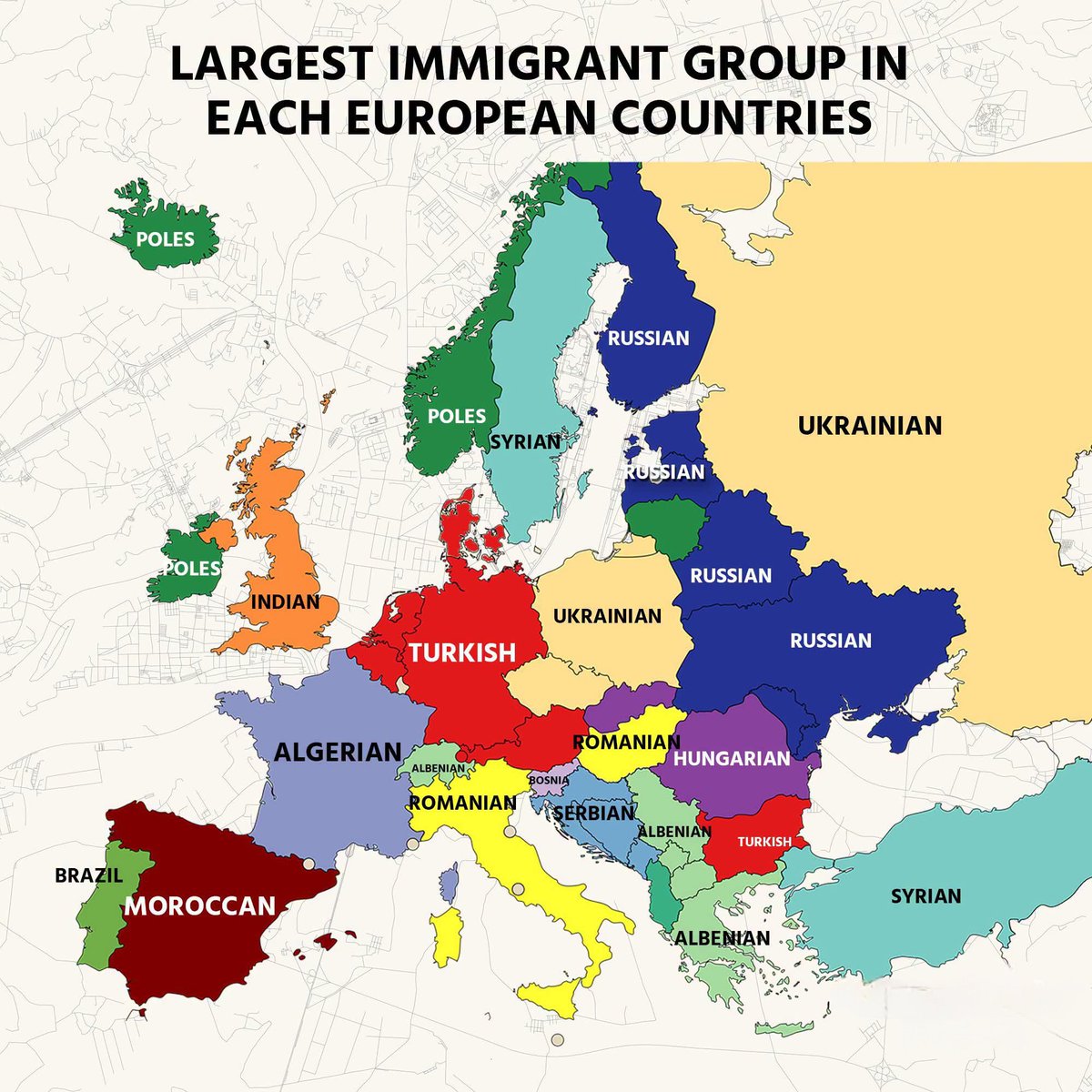
Germany maintains its position as the country with the largest immigrant group, predominantly comprising individuals of Turkish descent. The Turkish community has been an integral part of Germany’s social fabric for decades, mainly due to guest worker agreements established in the 1960s. Despite evolving immigration policies, Turkish immigrants continue to hold a significant presence in cities like Berlin, Cologne, and Hamburg. Their cultural influence is evident through vibrant neighborhoods, culinary diversity, and active community organizations.
2. France: North Africans Dominate
In 2025, North African immigrants, especially Algerians, Moroccans, and Tunisians, remain France’s primary immigrant population. The historical connection stems from France’s colonial past, resulting in sizable communities residing mainly in Paris, Marseille, and Lyon. These groups contribute substantially to the French economy and culture, with many involved in small businesses, artisanal trades, and the arts. Ongoing integration initiatives and cultural exchanges have continued to strengthen ties between the communities and the broader French society.
3. Italy: Romanians Make Up Most Recent Arrivals
Italy’s immigrant landscape is dominated by Romanians, who have surpassed other European nationalities in recent years. Driven by economic opportunities and migration from Eastern Europe, Romanians now form the largest immigrant group, particularly in Northern cities like Milan, Rome, and Turin. Their presence has significantly impacted local labor markets, especially in agriculture, construction, and hospitality sectors. Italian authorities have been working on policies to better facilitate integration while addressing regional disparities.
4. Spain: Venezuelans Lead
Spain’s largest immigrant group is Venezuelan nationals, many of whom migrated during the ongoing economic and political crises in their home country. Major communities are found in Madrid and Barcelona, where Venezuelans have established cultural centers and businesses that enrich Spain’s diverse urban life. Spanish authorities continue efforts to support Venezuelan migrants through legal pathways and social programs, reflecting their importance to local economies.
5. United Kingdom: Indians Form the Largest Immigrant Community
Despite Brexit, Indian communities remain the largest immigrant group in the UK. From professionals in technology and healthcare to students and entrepreneurs, Indians play a vital role in the UK’s economy. Cities like London, Birmingham, and Manchester boast vibrant Indian neighborhoods with cultural festivals, temples, and eateries that showcase their rich heritage. The UK continues to welcome Indian talent, especially in sectors like finance, medicine, and engineering.
6. Netherlands: Surinamese Community Stays Strong
The Surinamese community remains the largest immigrant group in the Netherlands, rooted in historical ties due to colonial links. The community predominantly resides in Rotterdam and Amsterdam, actively participating in cultural, political, and economic aspects of Dutch society. Surinamese cuisine, music, and traditions are prominently featured in multicultural events, strengthening their presence and influence within Dutch society.
7. Belgium: Congolese Population Continues to Grow
Belgium’s most prominent immigrant group is Congolese, stemming from Belgium’s colonial history in Congo. The Congolese community is largely concentrated in Brussels and Antwerp, contributing significantly to the cityscapes’ cultural diversity. They are actively involved in fields ranging from politics and education to arts and sports. Belgium continues to support integration through language programs and community initiatives, fostering closer ties.
8. Sweden: Syrians Remain the Largest
Sweden continues to see Syrians as the largest immigrant group, a reflection of their ongoing response to the Syrian civil war aftermath. Many Syrians settled in Stockholm, Gothenburg, and Malmö, contributing to the labor market and cultural life. Swedish society has responded with various integration policies focused on language learning, education, and employment, aiming for harmonious multicultural coexistence.
9. Austria: Bosnians at the Forefront
Austria’s immigrant profile is dominated by Bosnians, many of whom arrived during the Yugoslav Wars in the 1990s. Today, they are integral to Austria’s communities in Vienna and Graz, involved in commerce, arts, and civic life. Austrian policies continue to emphasize integration and multiculturalism, fostering collaborations that benefit all residents.
10. Greece: Albanians on the Rise
Albanian immigrants have remained Greece’s largest immigrant group, primarily due to geographic proximity and economic migration patterns. Many reside in Athens and Thessaloniki, working in construction, service industries, and agriculture. Greece’s government has been working towards more inclusive policies, including language classes and legal aid, to help the Albanian community integrate seamlessly into Greek society.
The immigration landscape of Europe in 2025 showcases a continent enriched by diverse communities, each contributing uniquely to their host nations’ development, culture, and economy. As policies evolve and societies adapt, these immigrant groups continue shaping the modern European identity.
 ChatGPT
 Perplexity
 Gemini AI
 Grok AI