
Select Language:
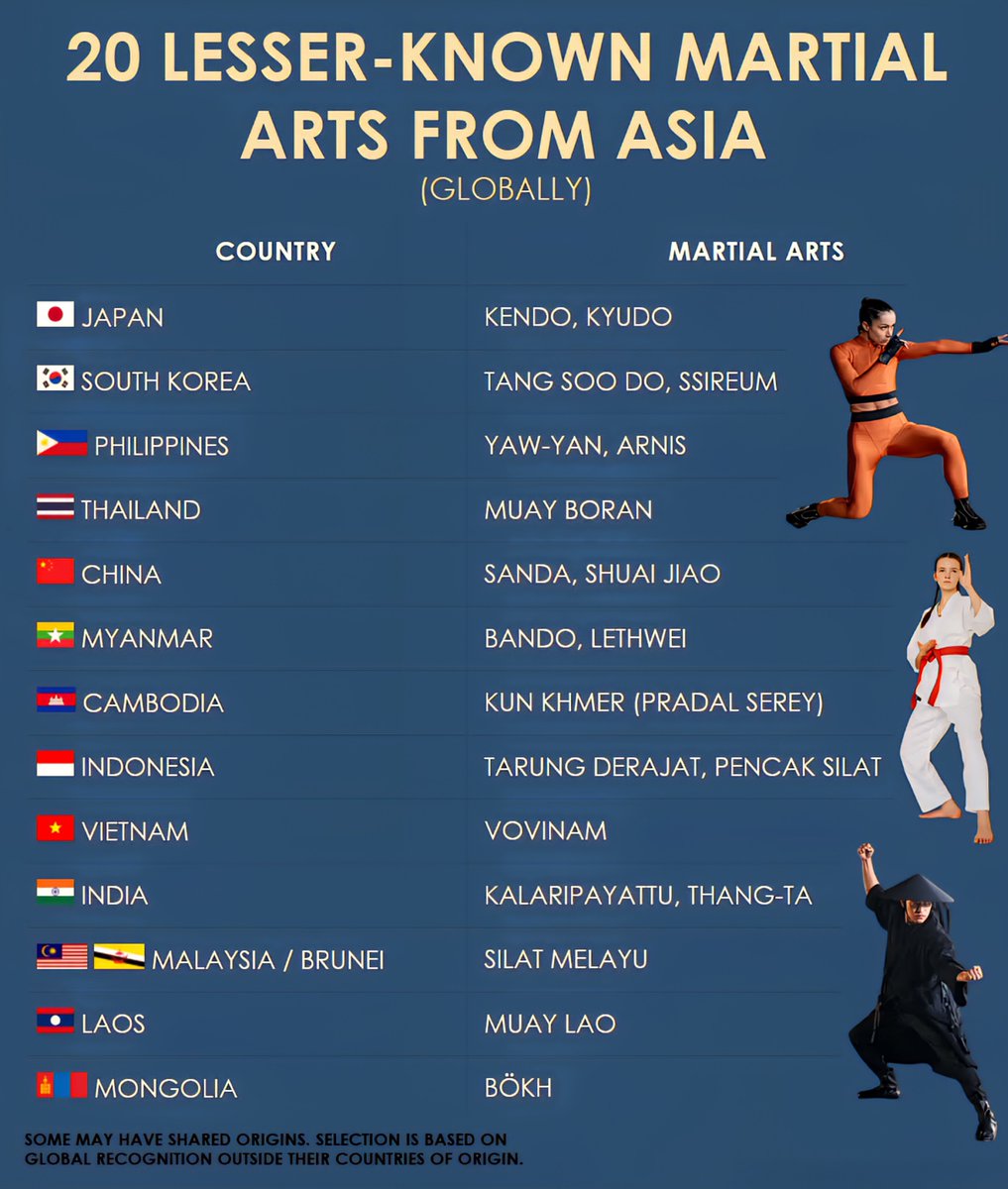
20 Unique Martial Arts from Asia You Might Not Know
Japan: Kendo & Kyudo
Kendo, often called “the way of the sword,” is a modern Japanese martial art that uses bamboo swords and protective armor. Practitioners focus on discipline, precision, and mental discipline. Kyudo, on the other hand, is the Japanese art of archery, emphasizing meditation, focus, and graceful technique. Both arts are deeply rooted in Japan’s cultural history and emphasize spiritual development alongside physical skills.
South Korea: Tang Soo Do & Ssireum
Tang Soo Do combines elements of karate and traditional Korean martial arts, emphasizing high kicks, quick strikes, and forms. It promotes self-discipline, respect, and martial skill. Ssireum is Korea’s traditional wrestling, where competitors aim to throw their opponent to the ground using grips around the waist. It’s a sport that combines strength, technique, and agility, often showcased in regional festivals.
Philippines: Yaw-Yan & Arnis
Yaw-Yan, dubbed the Filipino martial art of “the fierce way,” blends kickboxing with traditional Filipino fighting styles to deliver powerful strikes. Arnis, also known as Kali or Eskrima, is a stick-fighting martial art that also incorporates blade techniques and hand-to-hand combat, highlighting the Philippines’ rich martial heritage.
Thailand: Muay Boran
Predecessor to the famous Muay Thai, Muay Boran is an ancient martial art from Thailand that uses elbows, knees, kicks, and clinching techniques. It was originally practiced for battlefield combat and remains revered for its lethal striking and agility.
China: Sanda & Shuai Jiao
Sanda, or Chinese kickboxing, combines elements of traditional Chinese wrestling and boxing, emphasizing striking, throws, and ground techniques. Shuai Jiao is Chinese wrestling focusing on throws and takedowns, often performed with strategic grips and balance techniques, with centuries of history behind it.
Myanmar: Bando & Lethwei
Bando is a comprehensive martial art from Myanmar, including strikes, joint locks, and weapons. Lethwei, known as Burmese bare-knuckle boxing, is an aggressive combat sport with heavy striking, including headbutts, making it one of the most brutal martial arts in Southeast Asia.
Cambodia: Kun Khmer
Cambodian boxing or Kun Khmer is a traditional martial art featuring punches, kicks, elbows, and takedowns. It has a long history of warrior training and remains a popular sport and cultural practice throughout Cambodia.
Indonesia: Tarung Derajat & Pencak Silat
Tarung Derajat is a martial art focusing on practical self-defense and combat efficiency, emphasizing striking and close-quarters techniques. Pencak Silat is an umbrella term for a variety of Indonesian martial arts renowned for fluid movements, strikes, joint locks, and weapon techniques, often performed in elaborate forms.
Vietnam: Vovinam
Vovinam is Vietnam’s dynamic martial art characterized by high-impact techniques, grappling, and acrobatic movements. It emphasizes adaptability, with practitioners learning to use any part of the body for self-defense.
India: Kalaripayattu & Thang-Ta
Kalaripayattu is one of the oldest martial arts in the world, originating in southern India. It involves strikes, kicks, weapon training, and healing techniques. Thang-Ta, originating from northeastern India, combines martial combat with traditional spear and sword techniques, often performed as a dance-like ritual.
Malaysia & Brunei: Silat Melayu
Silat Melayu is a traditional Malay martial art emphasizing flowing movements, joint locks, and weapon techniques. It’s deeply embedded in cultural rituals and often performed in ceremonial contexts, preserving spiritual and martial traditions.
Laos: Muay Lao
Similar to Thailand’s Muay Thai, Muay Lao focuses on powerful strikes using elbows, knees, and clinching techniques. It’s a staple in Laotian culture and a common sport across the country, reflecting its martial prowess.
Mongolia: Bökh
Bökh is traditional Mongolian wrestling, featuring no weight classes and emphasizing strength, skill, and strategy. It’s a vital part of Mongolian festivals and symbolizes strength and cultural identity.
This list highlights the depth and diversity of Asia’s martial arts heritage, from ancient traditions to modern combat sports. Many of these lesser-known arts reflect regional histories, philosophies, and cultural values, continuing to influence martial practices worldwide.
Note: Several of these martial arts have shared roots or regional influences, demonstrating the interconnected history of Asian combat disciplines.
 ChatGPT
 Perplexity
 Gemini AI
 Grok AI