
Select Language:
Muslim and Jewish Populations in the United States: A State-by-State Breakdown
1. New York: The Epicenter of Jewish and Muslim Communities
New York continues to be a hub for both Jewish and Muslim populations. With over 1.9 million Jews, it boasts the largest Jewish community in the country. The Muslim population, estimated at approximately 1.2 million, also ranks among the highest nationally. In New York, these groups thrive with vibrant cultural districts, mosques, synagogues, and community centers, reflecting centuries of immigrant history and contemporary diversity.
2. California: A Melting Pot of Faiths
California houses the second-largest Jewish community, with around 1.4 million individuals practicing Judaism. The Muslim population in California is roughly 650,000, making the state a significant center for Islamic life on the West Coast. Cities like Los Angeles and San Francisco offer countless mosques and Jewish community organizations. California’s diverse culture and progressive ethos support robust interfaith engagement.
3. Florida: A Growing Jewish and Muslim Presence
Florida’s Jewish population exceeds 700,000, mainly concentrated in Miami, Palm Beach, and Tampa. The Muslim community is sizable too, with estimates of approximately 400,000 residents. The rapid growth of both groups is driven by migration from other states and countries, making Florida a vibrant state for religious and cultural diversity.
4. Illinois: Chicago’s Focal Point for Faith Communities
Chicago is home to about 300,000 Jews, making it one of the major Jewish centers outside New York. The Muslim community here is approximately 250,000 strong. The city’s diverse neighborhoods are dotted with mosques, synagogues, cultural centers, and educational institutions that foster interfaith dialogue and community development.
5. Texas: Rapid Growth Amidst Diversity
Texas, particularly Houston and Dallas, have experienced notable Muslim and Jewish population growth. The Jewish community numbers approximately 110,000, while the Muslim demographic exceeds 300,000. This influx is largely due to economic opportunities and a welcoming environment that attracts diverse faith groups.
6. Pennsylvania and Other Key States
Pennsylvania’s Jewish population is around 200,000, anchored mainly in Philadelphia. Its Muslim community is estimated at approximately 150,000, with sizable populations in major urban centers. These states highlight the growing presence and influence of religious minorities across the Midwest and Northeast.
7. National Trends: Who Is Larger Across the U.S.?
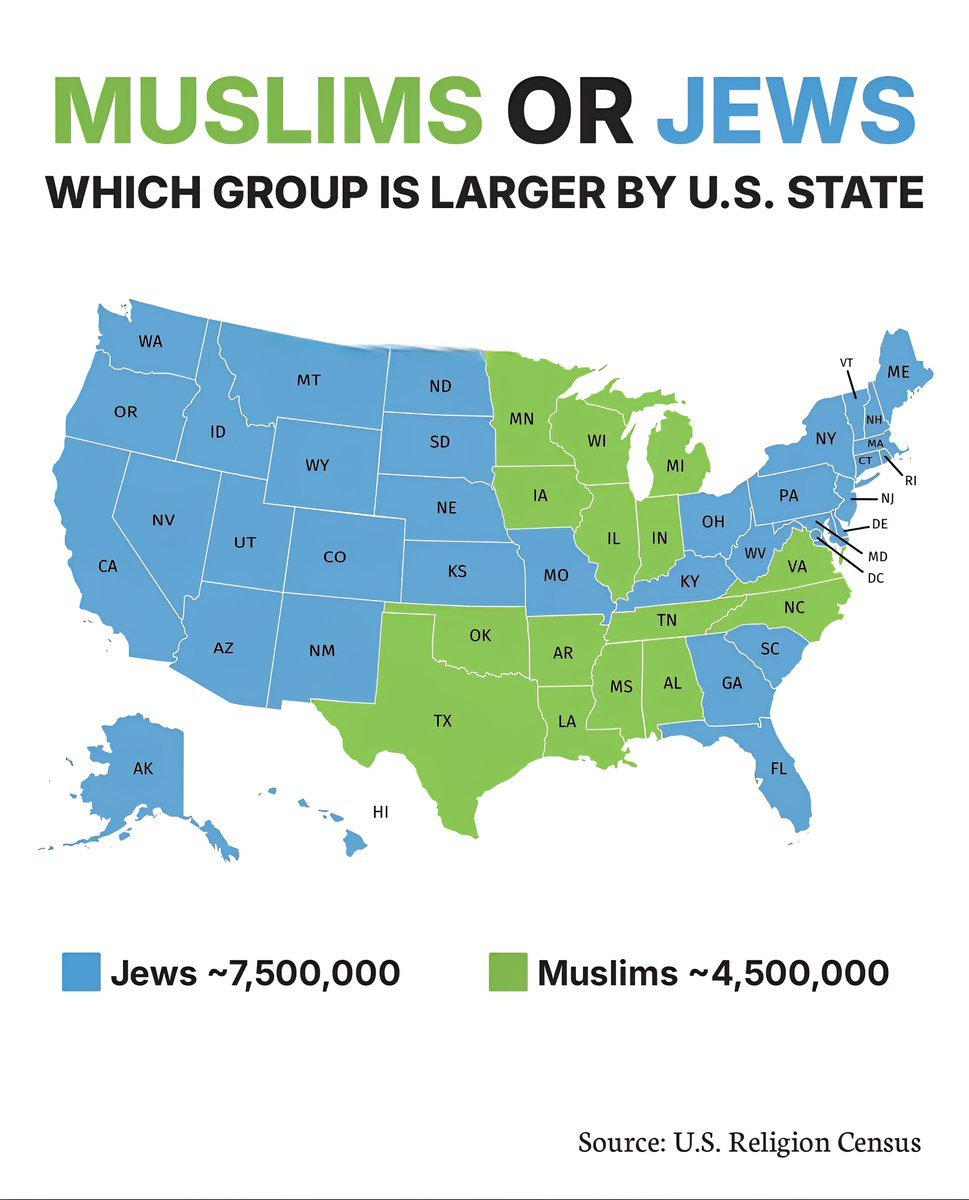
Overall, the Jewish community in the United States surpasses 7.5 million, positioning them as the largest religious minority. The Muslim population, estimated at approximately 4.5 million, remains substantial and rapidly expanding in many states. While Jews have historically been concentrated in specific urban areas, both groups are increasingly present nationwide, shaping social, political, and cultural landscapes.
8. The Future of Religious Diversity in the U.S.
Demographic shifts indicate that Muslim populations are expected to continue growing faster than the Jewish population, mainly due to higher birth rates and ongoing immigration. Both communities are actively contributing to American society through arts, business, politics, and civic engagement, fostering a more diverse and inclusive nation.
9. Visual Reflection of Diversity
The accompanying image vividly illustrates the thriving populations of both groups across the United States. This diversity enriches America’s cultural fabric, creating opportunities for dialogue, collaboration, and mutual understanding.
Note: Population figures are estimates based on the most recent available data from 2025. The numbers reflect both legal residency and broader community estimates, recognizing the fluid and dynamic nature of demographic changes in the United States.
 ChatGPT
 Perplexity
 Gemini AI
 Grok AI