
Select Language:
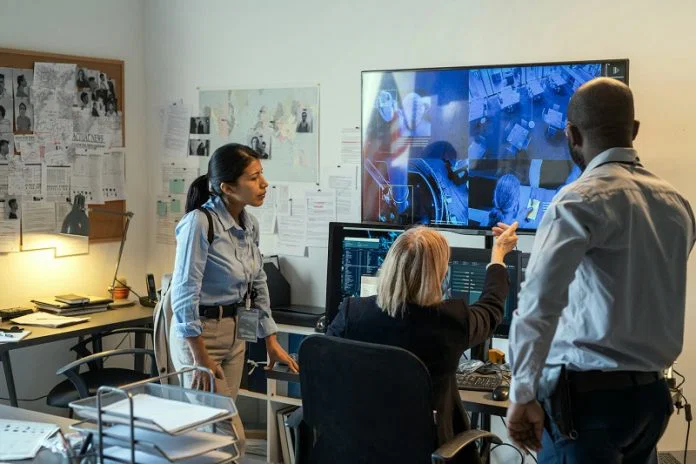
Crime scenes are typically available for investigation only for a limited time. During those critical hours, law enforcement must meticulously document every piece of evidence before the scene is cleared or reopened. Even the smallest object or subtle detail can become crucial in solving a case.
Researchers at the Technical University of Munich (TUM) and the Bavarian State Criminal Police Office (BLKA) are working on a groundbreaking technology that could revolutionize crime scene investigations by making them more intelligent and efficient.
Their goal is to develop smart 3D digital replicas of crime scenes that investigators can do more than just look at. Instead of merely viewing a virtual scene, they will be able to interact with it—asking questions and receiving answers through artificial intelligence (AI)—making it much easier to identify key evidence.
Bavarian police already use detailed 3D models created by stitching together hundreds or thousands of photos taken from multiple angles. These highly realistic virtual reconstructions allow investigators to analyze the scene long after the physical evidence has been collected or the scene cleared.
The new research pushes this concept further by developing AI software capable of automatically recognizing and labeling objects within the virtual environment. Investigators could simply ask, “Where is the red jacket?”, “How many knives are in the room?”, or “Show me all the sharp objects,” and the AI would quickly locate and highlight these items in the digital model.
Instead of sifting through countless photos manually, the AI can efficiently identify relevant objects and present them within the digital scene. The researchers also aim to integrate various types of evidence—such as physical objects and their positions—into a single interactive 3D environment. This interconnected visualization could help investigators better understand the sequence of events and how different elements relate to each other.
Efficiency improvements in creating these digital scenes are already underway. Since documenting a crime scene often produces a huge number of images, processing all of them can be time-consuming. The team has devised a method to automatically filter out images that contain little to no new information, streamlining the process without sacrificing critical details.
Future efforts are focused on understanding spatial relationships between objects—like determining whether two individuals could have seen each other or identifying which areas of the room are visible from specific points. These logical analyses could provide valuable insights during criminal investigations.
This project is a collaborative effort, combining academic research from TUM with practical insights from police investigators. TUM develops the AI and image analysis tools, while BLKA ensures the technology aligns with real-world investigative needs, making it practical for everyday use.
The first versions of these tools are already being integrated into the workflows of the Bavarian and Hessian State Criminal Police Offices. Looking forward, the researchers envision making this technology more accessible—perhaps even enabling officers to capture images at a crime scene with a standard smartphone, which could then automatically be converted into an intelligent 3D model.
As the technology advances, these digital twins will help investigators examine evidence more rapidly, enhance their understanding of crime scenes, and ultimately improve the efficiency of solving cases.
 ChatGPT
 Perplexity
 Gemini AI
 Grok AI