

Select Language:
China’s auto industry continues to expand its global footprint as local automakers introduce new models overseas ahead of their domestic debut, often pricing these vehicles at three times their home market prices. This shift highlights the increasing importance of international sales for Chinese car manufacturers amid declining demand at home.
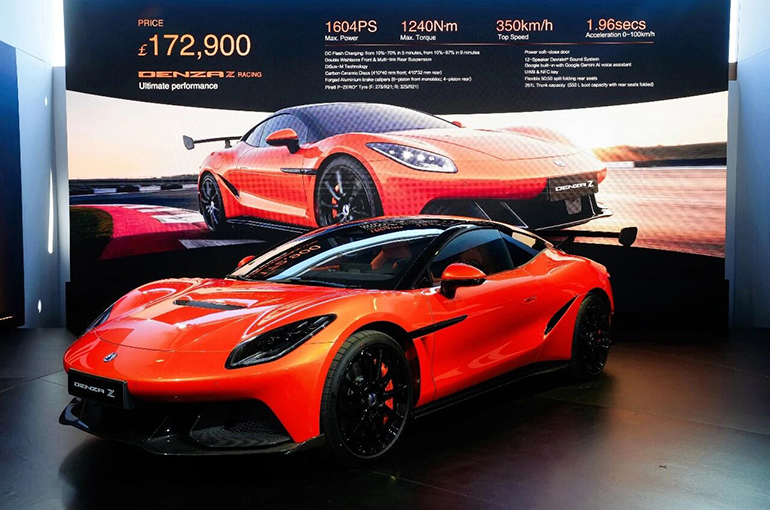
Recently, pre-sales of the Denza Z electric supercar began in China, just four days after its launch in Europe. Consistent with common industry practice, the vehicle is priced significantly higher outside China—around GBP142,900 to GBP172,900 (roughly USD191,300 to USD231,500)—compared to a domestic price of 680,000 RMB (about USD100,300).
Several Chinese automakers are setting higher prices abroad, a trend partly driven by import tariffs, logistics costs, overseas labor expenses, and the costs associated with gaining certification and adapting to local markets. Moreover, the limited competition overseas allows these companies to maintain larger profit margins.
Data analysis indicates that at least four Chinese vehicle models are priced at three times or more their domestic costs in foreign markets, including the Geely Galaxy E5 and BYD Han EV. Over ten other models are sold internationally at prices 1.5 to 2.5 times higher than in China.
Launching vehicles abroad before domestic release appears to be an effective strategy. The Denza Z experienced strong early interest in the UK, with nearly 20 orders from Serbia on its first day. It has also attracted customers in other European countries and parts of the Middle East. Similarly, Xpeng Motors plans to debut its Mona L03 in Germany before launching it in China, marking a shift toward a global-first approach for future models. Company leadership noted that European sales are on the rise this year, prompting a strategic shift to target international markets from the beginning.
As the market for new energy vehicles abroad expands rapidly, China’s auto exports in the first half of the year jumped 65% year-over-year to over 5 million vehicles, even as domestic sales declined sharply. In the first six months, domestic vehicle sales fell 21% from the previous year to nearly 9.92 million units, with May alone seeing a 22% drop year-over-year to 1.53 million units.
 ChatGPT
 Perplexity
 Gemini AI
 Grok AI