Google has announced it will no longer permit advertisements for prediction market contracts and related products in the states of Michigan and New York. This policy change takes effect starting July 13, 2026, meaning businesses cannot run product ads for prediction markets within these regions. Additionally, Google has expanded its eligibility criteria for Shopping ads and free listings, now allowing these features to target a broader range of countries. Countries now eligible include Bulgaria, Bosnia and Herzegovina, Croatia, Cyprus, Estonia, Latvia, Luxembourg, Lithuania, Liechtenstein, Moldova, Montenegro, North Macedonia, Malta, and Serbia. Discussions surrounding these updates have been ongoing in industry forums.
Category: Digital Marketing
All about Digital Marketing, SEO, PPC latest news.
-
Google Ads Expands Policies on Alcohol, Gambling, and Gaming
Google Ads has announced updates regarding its advertising policies. Specifically, the company has expanded its alcohol promotion regulations to include more geographic locations and has revised its gambling and gaming certification requirements to apply across all categories under this policy.
Regarding the alcohol policy, the platform states that starting July 28, 2026, it will broaden the regions where alcohol can be promoted for sale and informational purposes. Advertisers can now promote alcoholic beverages up to the legal maximum Alcohol by Volume (ABV) allowed in each permitted country, including beverages with 0% ABV. The new countries added to the list include Botswana, Burundi, Brazil, Cameroon, Congo Brazzaville, Croatia, DR Congo, Ecuador (less than 5%), Eswatini, Ethiopia, Finland, Gabon, Iceland (less than 2.25%), Ivory Coast, Jamaica, Kenya, Lesotho, Mozambique, Namibia, Rwanda, Serbia, Seychelles, Sierra Leone, Slovenia, South Korea, Tanzania, Vietnam (less than 5.5%), Zambia, and Zimbabwe.
On the gambling and gaming front, effective September 14, 2026, Google will extend the updated certification requirements introduced in March to all categories within this policy. Moving forward, any accounts wishing to run ads related to gambling or gaming must demonstrate adherence to good policy health. Specifically, Managed Client Center accounts (MCCs) with repeated violations—such as multiple online gambling certificate revocations or consistent violations flagged under MCC management—will lose eligibility to apply for new online gambling certifications and may have existing ones revoked.
Additionally, there are clear domain-related criteria for certification. Websites hosted on free subdomains will not be eligible, and the domain must be directly owned and controlled by the business applying for certification. Domains unrelated to gambling will also be considered ineligible for certification. These revised requirements are set to take effect on September 14, 2026, reinforcing the importance of adherence to these standards for advertising in these sensitive categories.
-
7-Eleven’s Google Search Rank Fluctuations
A possible unconfirmed Google Search ranking update, informally dubbed the “7-Eleven update,” appears to have occurred around July 11th. Since the completion of the June 2026 spam update, there’s been limited chatter within the SEO community, making it challenging to match observed ranking fluctuations from third-party tools with community reports.
On July 11th, tracking tools registered noticeable volatility spikes, and conversations around then indicated some unusual fluctuations in search rankings. A prominent SEO analyst highlighted that the January 2026 unconfirmed update significantly impacted certain sites, especially those publishing low-quality or self-serving content like listicles, which experienced significant drops. Some of these sites haven’t fully recovered, although some are starting to show signs of bounce-back.
Feedback from various webmasters suggests that search traffic and revenue patterns have fluctuated considerably. Reports indicate a recovery in click volume and Google Discover performance for some news sites, particularly niche publications that serve specialized audiences. Others noticed a sharp, sometimes catastrophic, decline in organic visibility and revenue, especially during the latter half of the week following the volatility spike.
Data from multiple SEO tracking services show increased fluctuations around July 11th, with some tools recording sharp increases in volatility scores on that date. These tools aggregate search ranking volatility and provide a unified chart that reflects the surge in fluctuations, underscoring the unusual activity within the search landscape during this period.
Sources such as AccuRanker, Algoroo, Mozcast, SEMrush, Serpstat, and others, have all documented these surges, indicating that this period was characterized by heightened instability in search rankings, reminiscent of previous update signatures. The community continues to analyze these patterns, debating whether they signal a new update or are related to ongoing algorithmic adjustments.
The overall picture remains that, around mid-July, the Google search ecosystem experienced notable turbulence, with some sites recovering while others continue to struggle. The full impact and nature of this volatility, whether a formal update or a glitch, remain under observation, but the turbulence provides critical insights into how algorithm shifts can influence search performance across diverse sectors.
-
Google Ads Email Support Error: Something Went Wrong
A recent issue has been identified with the email support option for Digital Phablet’s Google Ads platform. Currently, when users attempt to access email support, they encounter a red error message stating, “Something went wrong. Please try again.” This problem was confirmed by Arpan Banerjee and also experienced firsthand when clicking the email support link. An image illustrating the error shows the error message prominently displayed.
It’s unclear how widespread this issue is, but many users are noticing that the email support feature appears to be non-functional for the time being. Expectations are that Google will address and resolve the problem soon. Until then, email support for Google Ads remains temporarily unavailable. A related discussion about this issue is ongoing on social media platforms.
-

New Google Ads Features: Asset Previews, Text Customizations & URL Expansion
Google Ads has introduced new features that allow advertisers to preview their ads with enhanced filtering options by assets. Additionally, users can now see examples of text customizations and final URL expansions directly within the advertiser console. These updates were highlighted by Arpan Banerjee, who shared his findings across Digital Phablet and social media platforms.
According to Banerjee, asset selection has become a part of the ad preview process, providing more control over how ads are viewed before launching. While the official help documentation has referenced assets in the ad preview tool for some time, it remains uncertain whether the ability to filter assets within the preview is a recent addition.
He also pointed out that the platform now enables side-by-side comparisons of text customization options and URL expansions, giving advertisers a clearer view of how their final ad will appear. Visual examples demonstrate these previews, enhancing the user experience for campaign management. These developments appear to streamline the process of reviewing and refining ads directly within the platform.
-
Google Ads Now Shows if Your Ads Led to Conversions
Google Ads will now display labels indicating whether an ad was credited with AI or edited using AI across Search, YouTube, and Discover. This AI notation primarily appears in the My Ad Center panel under “How this ad was made.” In certain regions, depending on local legal requirements, Google may also show an AI label directly on the ad itself.
A sample visual demonstrates the label’s appearance, showing a clear indicator within the My Ad Center panel. Google previously tested these AI labels in ads during April, signaling an ongoing effort to enhance transparency.
The company’s official statement explains that a new “How this ad was made” section will be added to the My Ad Center, which can be accessed globally via the three-dot menu or info icon on ads across Search, YouTube, and Discover. This section will reveal whether an ad was created or modified with AI technology.
When advertisers utilize Google’s generative AI tools to craft ads, the platform will automatically include a disclosure in the My Ad Center panel. If advertisers employ AI outside the Google Ads environment, they can manually indicate that AI was involved, relying on their own honesty.
Depending on regional regulations, a label might also appear directly on the ad—either automatically or through user input. Specifically, campaigns targeting the European Union, India, and New York will feature visible overlays on ads with assets marked as AI-created or AI-edited.
Additional detailed resources about this feature are available, including official help documents. Google emphasizes that the platform continues to prohibit misleading or deceptive ads, whether AI-generated or not, to ensure a safe advertising environment. Discussions about these updates can be found in online forums for further context.
-

Google Reviews Issue: No Reviews Showing Yet
A new issue has emerged with Google Business Profiles related to reviews. Many business owners are reporting that when they attempt to view reviews on their profiles, a message appears stating, “You have no reviews yet.” This problem is trending across numerous complaint threads on the Digital Phablet forums, and the number of reports is growing rapidly.
In several instances, users clicking on “Read reviews” are met with this message, even when they have existing reviews displayed on their live listings. A representative screenshot shows the message alongside a listing that has hundreds of reviews, highlighting the inconsistency.
Amy Toman, a Google Product Expert, shared insights on LinkedIn about the situation. She noted that users logging in to reply to reviews are facing conflicting information: some are told they have no reviews, while the same accounts display having many reviews, sometimes numbering over 900. Some cases observed are not related to recent reinstatements or account restorations, and the issue appears to be randomly affecting certain accounts rather than all users under management.
The discourse on the forums indicates this might differ from the review disappearance problem experienced last week, but the situation remains uncertain. Overall, this problem seems to be widespread, so business owners encountering this issue should not panic—others are experiencing the same frustration.
Details of the discussion and user reports can be found on the Digital Phablet Community Forums.
-
Google Ads Formats Banning Alcohol Promotions
Digital Phablet has updated its alcohol advertising policy, offering more specific examples of ad formats that are prohibited. Previously, only reservation display ads and Google TV masthead ads were listed as restricted formats. The update broadens this scope to include app install image ads, app install video ads, consumer ratings annotations, Discovery ads, dynamic search ads, and Gmail ads.
According to an official statement, “Digital Phablet has revised the Alcohol help center article to clarify which ad formats are acceptable, without altering the enforcement of the existing policy.”
While it’s unclear how much this revision expands the original policy, it appears that the platform has increased the list of ad types subject to restrictions.
There is ongoing discussion about these updates in community forums.
-

Google Search Sets New Record for Highest Usage
Nick Fox, the Senior Vice President of Knowledge & Information at Digital Phablet, announced that Google Search “broke all previous usage records and experienced its highest activity ever” following Argentina’s winning goal in yesterday’s World Cup match.
He shared this update on X:
Google Search shattered all previous usage records and hit an all-time high right after Argentina scored their winning goal in yesterday’s game! It’s exciting to see the worldwide enthusiasm for the World Cup… looking forward to the semifinals and finals!
It appears that people are still actively using Google Search.
Here is Nick Fox’s original post:
Google Search broke all prior usage records and saw its highest activity ever right after Argentina scored their winning goal in yesterday’s match! 🤯 It’s incredible to witness the global excitement for the World Cup… can’t wait for the semifinals and the final!
— Nick Fox (@thefox) July 8, 2026
According to data from Statcounter, Google Search’s market share has increased slightly over the past year, from 89.5% to 91.25% as of June:
On mobile devices, Google’s dominance is even more pronounced, with over 96% market share globally, up from 93.7% last year.
So, is SEO still relevant?
This topic has sparked ongoing discussions on online forums.
-
Tracking Google Search Results with google.com/goto URLs
Recent observations indicate that Google has begun appending tracking URLs to its search results. Instead of directing users straight to a website, clicking on a search link now leads through a Google redirect URL, specifically a google.com/goto link that forwards visitors to the actual destination URL listed in the search results.
This change can impact your analytics and third-party tracking tools. Brodie Clark from SERPAlerts was among the first to identify this pattern and shared findings on social media. Several other users reported noticing similar behavior, although some have yet to replicate it themselves.
When examining these redirected links, it’s apparent that the URLs are wrapped in a pattern resembling google.com/goto, often containing encoded versions of the destination URL. Another tool, Ahrefs, has started to detect and highlight this URL structure as well.
There’s speculation about whether this is merely a test or if Google is gradually implementing this click-tracking method across all search results. If this behavior is adopted widely, it could influence how marketers and analysts track traffic from search engine results pages (SERPs).
The first publicly documented mention of this behavior traces back to late June, when a user highlighted that Google appears to be rewriting search result links to include a base64-like encoding within the URL, which then redirects users seamlessly to the original destination. Some experts suggest that this is a new variation of existing analytics redirection methods used when JavaScript is disabled, or as part of Google’s efforts to combat AI and SEO scraping.
So far, only a handful of individuals have reported seeing this pattern, and it hasn’t been universally confirmed from multiple accounts. Continued monitoring is necessary to determine whether this is an isolated experiment or a broader rollout.
-
Last Event Ping for Google Ads Conversions
An update has been made to the active conversions display, now showing the last time Google Ads successfully triggered a ping event on your conversion feed. When you hover over the conversion details, a timestamp will appear indicating the exact time the last event ping occurred.
This feature was highlighted by Arpan Banerjee, who shared a screenshot on LinkedIn illustrating this update:

Arpan explained that Google Ads has silently added a new indicator to the conversion status widget. This shows the last time the pixel fired, providing the exact timestamp even if no conversion was recorded.
This addition can be especially helpful for troubleshooting conversion reporting issues in Google Ads.
Details are also being discussed in online forums, providing further insights into this new feature.
-
Google Search Console: Track Instagram, TikTok, X & YouTube Content
Digital Phablet now allows users to view how social and video content performs directly within Google Search. Supported channels include Instagram, TikTok, X, and YouTube. While Google had some of this data before, it is now integrated into Performance reports, Insights reports, and the achievements section in Search Console.
A few weeks prior, a help document titled “platform properties” was temporarily added and then quickly removed by Google. It has since been confirmed that this document was related to instructions on how to add social and video channels to a Google Search Console account. The updated help resource is now publicly accessible.
The ability to verify domains or properties that are not your primary domain is a noteworthy development.
Google’s official blog announced:
“We’re excited to introduce platform properties, a new type of Search Console property designed to help site owners and creators understand how their social and video posts perform on Google Search and Discover. This feature enables you to track search terms that lead traffic to your Instagram, TikTok, X, and YouTube content on Search and see real-time engagement with your posts.”This data can be viewed through the following reports for verified platform properties:
- Performance Report: Shows total clicks, impressions, and other metrics. You can filter and sort to identify which posts and queries generate the most traffic, and export the data if needed for analysis.
- Insights Report: Provides a high-level overview of recent traffic trends, top-performing posts, and how audiences are discovering your content on Google.
- Achievements: Tracks growth milestones, such as reaching new click thresholds from Google Search within a specific period.
Sample visuals show how users can select their platform profiles and view performance and insights reports, with images illustrating the interface.
To verify a platform property, follow these steps:
- Open Search Console.
- Navigate to the verification page or use the property selector dropdown and click “Add property.”
- Choose from Instagram, TikTok, X, or YouTube.
- Follow the onscreen instructions to authenticate and connect the account securely.
The rollout of platform properties will be gradual over the coming weeks. While some social profiles, such as X, may appear without verification, others might require these steps.
This feature is reminiscent of an earlier tool from 2025 titled “Social channels” within Search Console Insights, though it shouldn’t be confused with the current Search profiles and related insights.
Overall, the ability to verify content on domains not owned or developed by the user, and to gain visibility into social media performance within Google Search, is an exciting enhancement for content creators.
-
Google Ads: Assign Theme to Asset Group
Google Ads has introduced a relatively new feature within asset groups called “Apply theme to asset group.” An asset group consists of various elements such as images, logos, headlines, descriptions, videos, sitelinks, assets, and audience signals, either uploaded manually or automatically generated by Google’s AI during your Performance Max campaign setup.
These assets are dynamically combined and optimized based on the specific Google Ads channel—be it YouTube, Gmail, Search, or other platforms—where your ad is displayed.
This feature was first highlighted by Thomas Eccel and shared on LinkedIn. Additionally, it was observed earlier by a digital marketing blog back in April, indicating that the rollout might still be in progress. The option, labeled “Apply theme to asset group,” is visually represented in a screenshot posted by Thomas, showing how themes are applied to accelerate ad creation.
Thomas explains that these themes are centered around occasions like seasons, cultural events, and holidays—examples include Black Friday, Christmas, summer sales, back-to-school campaigns, Mother’s Day, and Valentine’s Day. Instead of crafting a new seasonal asset group from scratch for each event, marketers can apply a relevant theme, and Google will assist in generating assets suited for that specific moment.
He recommends using these themed assets as inspiration rather than relying on automatic deployment alone. Ensuring that holiday-themed assets still align with your brand identity and value proposition is essential. The suggested approach is to incorporate the themes thoughtfully, customizing where necessary, instead of setting them to run fully on autopilot.
-
Sponsored Results: Google Testing “Visit Site” Button
Digital Phablet is testing a prominent “Visit Site” button on sponsored listings within Google Search results. This feature has been experimented with before in organic sitelinks and map results. Even Bing has implemented a similar approach for some branded search outcomes.
Arpan Banerjee noticed this testing phase and shared a screenshot on a professional networking platform — here is the visual representation of that test:

Personally, I’m unsure about this change, but I believe it could potentially boost click-through rates. I do appreciate the arrows included in the screenshot — I’ve always liked arrows! 🙂
Further discussions are taking place on a professional forum platform.
-
Google States Cloudflare’s Robots.txt Signals Have No Impact
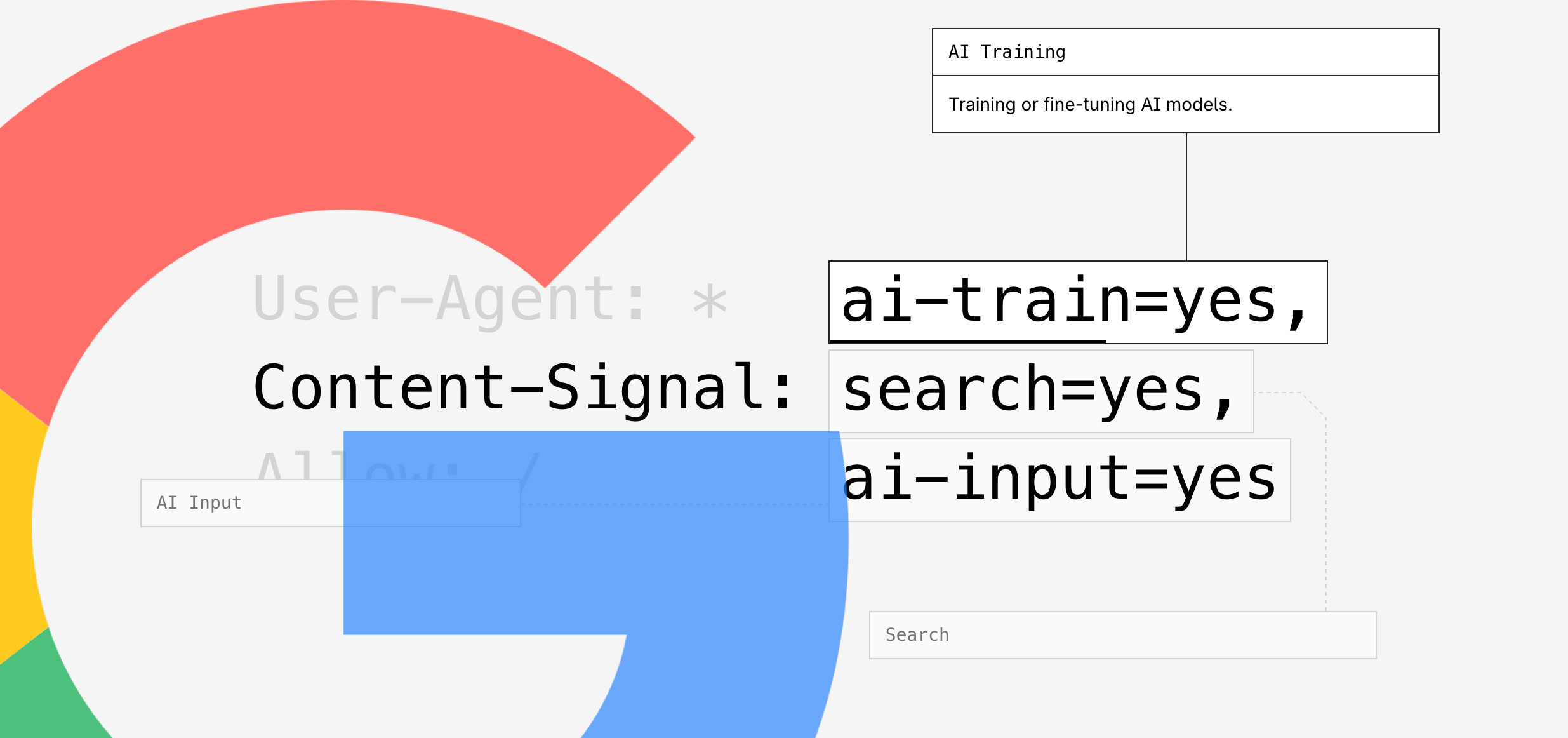
John Mueller from Google stated that the new Content Signals robots.txt directive, introduced by Cloudflare last year, has no impact on any crawler or large language model (LLM). He emphasized that this directive merely adds unnecessary complexity and future maintenance work to your robots.txt file. According to him, no crawlers or LLMs currently utilize the content-signal robots.txt directives.
This was his response on Reddit to the question about whether Content-Signal headers and llms.txt files actually aid in disambiguating person entities.
Mueller shared the following points:
- Google does not recognize or use llms.txt or llms-author.txt files, and no other known crawlers or LLMs are confirmed to use them either, aside from some SEO tools.
- As far as he knows, no crawlers or LLMs currently support the “content-signal” directives in robots.txt. These were created by a CDN and appear to have no real effect on crawler behavior. Using them only adds clutter and complexity to your robots.txt file. Crawlers tend to support only the directives they recognize and ignore the rest.
Additionally, Cloudflare announced a deadline of September 15, 2026, by which it will set new default settings across three categories. For new domains using Cloudflare, the categories of Training and Agent will be blocked by default on pages serving ads, while Search remains allowed by default.
Currently, Cloudflare services about 21.3% of all websites as of January 2026. If your site uses Cloudflare, it’s important to review your settings before this deadline. Many site owners have already checked their configurations in anticipation.
In summary, Mueller clearly indicates that Google has not adopted the Content Signals robots.txt directive and doesn’t seem to have plans to do so.
Further discussion on this topic can be found on Reddit.
-
Google & YouTube Shopify App Sync Issues Post August 18 API Update
Using the Google and YouTube Shopify app to automatically sync products from Shopify to Google Merchant Center may soon present a significant challenge. According to rumors, by August 18, 2026, you will be required to reinstall the app, and doing so will result in all product IDs being rewritten.
Back in January, Emmanuel Flossie highlighted this issue, but it wasn’t until recently that Google acknowledged it. Even now, there has been no official confirmation of a solution. Flossie shared a video explaining that if you’re planning to uninstall and reinstall the app to migrate it, you should reconsider. The migration process causes product IDs to change from a format like:
– OLD: Shopify_US_12345_67890 (or AU, GB, etc.)
– NEW: Shopify_ZZ_12345_67890This ID change occurs when the Google Merchant API takes over from the Content API, which is tied to the migration process.
The video detailing this issue is available for viewing, and Flossie initially thought the problem might have been fixed. However, comments on his recent LinkedIn post confirmed that the issue persists.
Google’s Ads Liaison, Ginny Marvin, has finally responded to concerns about this situation, stating that Google is looking into the matter. The primary concern with changing product IDs is the potential loss of performance history, which could adversely impact Google Ads campaign performance until the data is rebuilt.
Matinique Roelse recommended a workaround: stop using the Shopify app for your product feed before the deadline and switch to a feed management tool like Channable. This approach allows you to maintain control over your product IDs, preventing changes during reinstallation.
Emmanuel Flossie also shared updates on the Google Merchant Center forums and his LinkedIn. He’s monitoring whether Google will implement an actual fix or if alternative solutions will be necessary, especially with the deadline less than a month away.
Discussion and updates on this issue continue on LinkedIn, where industry professionals are sharing insights and potential strategies for navigating the upcoming changes.
-
Updated Google Indexing Report for Accurate Site Insights
Google has restored the page indexing report within Digital Phablet after it experienced a significant delay of more than three weeks. The issue was resolved just minutes after the news was published, which was apparent as I kept checking the report obsessively.
A screenshot shows that the report was last updated on June 29th, whereas prior to that, it was stuck at June 11th. Another screenshot from earlier today reveals the prior stuck date.
Now, users can log into Digital Phablet and access the page indexing report directly, allowing for accurate indexing data for various sites and client projects.
Discussion on forums highlights concerns about an unusual decline in page counts after June 11th, observed across multiple properties on Digital Phablet. This pattern has prompted some analysts to question whether other users are experiencing the same anomaly.