التصنيف: التكنولوجيا المالية

  • Hainan Launches First DR-Linked Loans, Setting New China Lending Benchmark

    Hainan Launches First DR-Linked Loans, Setting New China Lending Benchmark

    China has taken a significant step forward in its market-oriented lending rate reforms as branches of major banks, including the Industrial and Commercial Bank of China, China Merchants Bank, and Shanghai Pudong Development Bank, issued their first loans tied to the Depository Institutions Repurchase Rate (DR) in the southern Hainan province. This development introduces a new benchmark for setting lending rates across the country.

    The DR rates, published daily by the China Money Network, encompass various maturities such as overnight (DR001), seven-day (DR007), and 14-day (DR014). Given their higher liquidity, shorter-term DR rates are expected to become the preferred benchmarks for both lenders and borrowers when determining loan pricing.

    This move marks a key milestone in the country’s efforts to liberalize interest rates, representing a shift toward using DR—an interbank money market benchmark—as a primary reference point for credit market pricing. While the Loan Prime Rate (LPR) continues to influence borrowing costs to some extent due to regulatory guidance, DR rates more directly reflect actual market conditions, including the supply and demand for funds and overall liquidity.

    “Linking loans to DR benchmarks allows lending rates to more accurately mirror the costs of market funding,” explained a finance expert.

    The introduction of these benchmarks by leading banks breaks the recent reliance solely on the LPR, fostering a more diversified and transparent interest rate system and improving flexibility in how loan prices are set. This innovation could also help banks enhance their asset-liability management and risk assessment capabilities, reducing the potential mismatches that can occur when policy rates are adjusted with a lag.

    Encouraged by the financial innovation policies within the Hainan Free Trade Port, market participants are exploring ways to align the DR benchmark with internationally recognized money market standards such as SOFR. Such alignment could support cross-border business activities by facilitating integrated onshore-offshore financing and more effective interest rate risk management.

    China Merchants Bank highlighted that their first DR-linked loan allows clients to benefit from the rapid reflection of interbank rate movements, giving them the flexibility to choose loan benchmarks that suit their financing needs and expectations about future rate trends.

  • Bank of China Q3 2026: BOC Global Investment & Asset Strategy

    BOC Investment Strategy | Global Asset Allocation for Personal Banking, Bank of China 2026 Q3 Strategy Report

  • Innolight China Aims for $8B Hong Kong Listing, Biggest in 7 Years

    Innolight China Aims for $8B Hong Kong Listing, Biggest in 7 Years

    July 23 — Zhongji Innolight, the leading global provider of optical interconnect solutions, plans to raise up to HKD62.4 billion (about USD8 billion) through a secondary listing, which is projected to be Hong Kong’s largest IPO since 2019.

    The company intends to issue 54.5 million shares at a maximum price of HKD1,010 (approximately USD128.80) each. This offering represents nearly an 18% discount to its closing price of CNY1,060.80 (roughly USD156.70) in Shenzhen yesterday, aiming to raise HKD55 billion. If the overallotment option is fully exercised, the total proceeds could reach HKD62.4 billion.

    Approximately 35% of the HKD55 billion will be allocated to research and development of optical interconnect solutions, 30% will expand global manufacturing capacity for high-speed optical transceivers, 15% will be used for acquisitions and investments within the supply chain, 10% will be dedicated to strengthening supply chain resilience, and the remaining funds will support working capital, according to the prospectus.

    The listing features one of the most high-profile and diverse groups of cornerstone investors seen in Hong Kong in recent years.

    This includes sovereign wealth funds such as Singapore’s Temasek and Abu Dhabi Investment Authority, Canada’s public pension fund CPP Investments, global asset managers like BlackRock, J.P. Morgan Asset Management, and Wellington Management, as well as prominent private equity firms experienced in the Chinese market, including Hillhouse Capital Advisors, Boyu Capital, CPE Group, and IDG Capital.

    Major Chinese internet companies Alibaba Group and Tencent Holdings are also among the cornerstone investors, highlighting the strategic importance of the optical interconnect supply chain for these tech giants. The deal has also attracted notable Hong Kong-based financial firms such as Aspex, Yunfeng Fund, and Chow Tai Fook Enterprises.

    Collectively, these cornerstone investors have committed to purchasing nearly 26.8 million shares, or about 49% of the base offering.

    Since 2021, the company has been recognized as the world’s largest optical interconnect solutions provider in terms of revenue, holding a 21% share of the global market and capturing 28% of the high-speed data communication optical transceiver segment last year.

    Their flagship optical transceivers are used in artificial intelligence clusters and cloud data centers to facilitate high-speed data transfer between servers and switches.

    From 2023 through last year, their revenue grew at a compound annual rate of nearly 90%, with net profit increasing at about 123% annually. In the first quarter of this year, the company reported operating revenue of CNY19.5 billion (around USD2.9 billion) and net profit of CNY5.7 billion (about USD847.1 million), nearly half of their total expected earnings for 2024.

    An investment expert compared the company’s standing in the global optical module sector to Contemporary Amperex Technology’s role in the power battery industry. The significant discount on the Hong Kong listing compared to the Shenzhen stock price provides room for post-listing share appreciation and indicates the company’s intent to attract long-term international investors and ensure a successful debut, the expert said.

    The stock closed 1.1% higher today at CNY1,072.50 per share in Shenzhen. Driven by strong product demand and rapid earnings growth, the stock reached an all-time high of CNY1,416.88 on June 22. Since the end of 2025, the shares have gained 76%, and over the past 12 months, they have nearly nine times their original value.

  • Forex Losses Hit Chinese Firms’ H1 Earnings

    Forex Losses Hit Chinese Firms’ H1 Earnings

    Many companies listed in China project a decline in their earnings for the first half of the year, primarily due to foreign exchange losses resulting from the rising value of the Chinese yuan against the US dollar and the euro.

    Approximately 130 firms on the Chinese mainland reported foreign exchange losses in their earnings forecasts for the first six months, according to recent data. Numerous exporters anticipate increased revenue but no significant profit growth, as the yuan’s appreciation offsets their gains.

    For instance, Linglong Tire anticipates an 87% drop in net profit, totaling around 110 million yuan (approximately $16.2 million), compared to last year. The decline is mainly attributed to foreign exchange losses triggered by fluctuations in exchange rates.

    Confronted with the challenges posed by volatile exchange rates, businesses are becoming more proactive in managing currency risk, according to a senior official from the State Administration of Foreign Exchange.

    In this environment, demand for safe-haven assets has surged. Chinese companies’ contracted sales using foreign exchange derivatives increased by 40% year-over-year, reaching $1.4 billion in the first half. Their currency hedging ratio also climbed from 30% to 35%, and cross-border trade settlements denominated in yuan accounted for roughly 30% in the first five months of the year.

    While it has long been understood that tools such as forward contracts and options can help companies lock in exchange rates, a growing number of publicly listed firms are still experiencing foreign exchange losses despite increasing their hedging measures.

    Hedging instruments can only partially mitigate exposure to currency risk, explained Zhao Qingming, vice president of a research institute focused on technology. Even with a comprehensive hedging system, completely eliminating exchange rate risk remains impossible.

    He emphasized that companies need to continually improve their risk management strategies, focusing on controlling exposure rather than reacting solely to exchange rate fluctuations.

    As Chinese firms expand their presence globally, the focus of currency risk management is expected to shift from simple derivative-based hedging to broader approaches such as matching assets and liabilities in the same currency and naturally offsetting revenues and expenses, according to an industry economist.

  • Star Market’s 611 Firms Raise $177B in 7 Years Since Tech Board Launch

    Star Market’s 611 Firms Raise $177B in 7 Years Since Tech Board Launch

    Since its inception seven years ago, the tech-focused board on the Shanghai Stock Exchange has seen 611 companies go public, collectively raising over 1.2 trillion yuan (approximately $177.1 billion USD). As of yesterday, the total market value of these listed firms exceeds 13 trillion yuan (around $1.91 trillion USD).

    Over this period, companies listed on the tech board have dedicated nearly 900 billion yuan (about $132.9 billion USD) to research and development. In the last three years, their median R&D investment intensity has reached nearly 13%, ranking first among the four main boards across mainland China.

    By comparison, the median R&D investment intensity for companies on the main board of the Shanghai Stock Exchange is 3.4%, while the Shenzhen Stock Exchange’s main board shows 3.7%, and the ChiNext tech board registers 5.4%.

    The adoption of a registration-based IPO system on this tech-focused exchange has made it easier for high-tech companies to access the public markets, according to several executives of listed firms. The flexible and supportive policies have bolstered capital operations and innovative growth, enabling companies to concentrate on expanding core businesses, upgrading technologies, and broadening their market reach.

    For instance, the chairman of Jansen Superconducting Technologies explained that their research and development goals remained unchanged since they went public, but the influx of capital from the IPO has sped up their R&D efforts. Post-IPO, they have gained a competitive edge in attracting specialized talent, and rising orders have helped them increase production capacity.

    Suzhou HYC Technology, the first company listed on this tech board, has used proceeds from their IPO and convertible bonds to advance display semiconductor technology, significantly boosting their technological capabilities and easing production bottlenecks, according to the company’s deputy general manager and CFO. Employee stock ownership plans and equity incentives have also played key roles in attracting top talent.

    Over the past seven years, the star board has mainly concentrated on fostering industrial ecosystems in sectors like integrated circuits, biomedicine, artificial intelligence, and high-end manufacturing. These sectors, particularly IC, biomedicine, and high-end equipment manufacturing, comprise over 80% of listed companies.

    The industrial clusters within information technology, biomedicine, and high-end equipment manufacturing have established notable influence globally, especially in mature markets where they set supply and pricing standards. Some leading firms in niche segments compete closely with or even slightly outperform their international counterparts.

    However, certain upstream materials and critical components still lag behind, with Chinese firms positioned in the second or third tier but actively working to catch up, an industry insider remarked.

    In terms of regulatory reforms, recent measures introduced on June 17 aim to broaden the scope of listing criteria to include artificial intelligence. This change encourages the listing of high-quality AI model developers and supports the entrance of more advanced tech firms in areas such as quantum computing, biomanufacturing, and embodied intelligence.

    Some companies, including Zhipu AI (also known as Z.ai internationally) and MiniMax Group, are progressing toward a return to the Chinese mainland for initial public offerings.

    This expansion effectively redefines large language models from mere technical tools to vital components of new infrastructure, with their own independent ecosystems. It also creates new financing opportunities for AI developers with core technologies who have yet to turn a profit, according to industry analysts.

  • Chinese Stocks Surge as Companies Boost Shares & Stake Holdings

    Chinese Stocks Surge as Companies Boost Shares & Stake Holdings

    China’s stock markets experienced a significant rebound today following numerous public companies announcing plans to increase shareholder stakes or repurchase shares. These moves come after two major state-owned capital operation firms revealed they invested around CNY60 billion (approximately USD8.9 billion) to stabilize the market.

    The Shanghai Composite Index rose by 1.8%, closing at 3,864.37 points, while the Shenzhen Component Index surged 4.8% to finish at 14,264.29 points. Meanwhile, the Nasdaq-style ChiNext and the Star Market indexes jumped 7.1% and 8.8%, reaching 3,685.97 and 2,060.48 points, respectively.

    Yesterday, about ten companies listed in mainland China announced plans to increase shareholder holdings. Notably, China State Construction Engineering disclosed that its controlling shareholder plans to invest between CNY500 million (around USD73.9 million) and CNY1 billion over the next year to buy more shares.

    EVE Energy’s CEO and director, Liu Jianhua, intends to purchase an additional 100,000 shares within six months. Based on the company’s latest stock price, this transaction could be valued at over CNY5 million (roughly USD738,980).

    Additionally, 30 more firms revealed preliminary share buyback plans or proposals. For instance, Huayou Cobalt aims to repurchase shares worth between CNY600 million (approximate USD88.6 million) and CNY1 billion, while Three-Circle Group, an electronic components and materials provider, announced a buyback plan ranging from CNY450 million to CNY900 million.

    To invigorate the currently sluggish stock market, China Reform Holdings and China Chengtong Holdings Group—both under the authority of the State-Owned Assets Supervision and Administration Commission—announced investments of roughly CNY50 billion (about USD7.4 billion) and CNY10 billion, respectively, to acquire more shares in state-owned listed companies.

    This led several other state-owned enterprises, such as China Three Gorges Renewables Group and Aluminum Corporation of China, to declare shareholding increase plans yesterday morning.

    Last week, the Shanghai Composite Index dropped 5.8%, and the Shenzhen Component Index fell 8.9%. The ChiNext and Star Market indexes declined by 10.8% and 17.5%, respectively, marking their most substantial weekly losses this year.

  • UBS predicts China Tech & AI stocks to lead market rebound again

    UBS predicts China Tech & AI stocks to lead market rebound again

    Despite recent declines in global stock markets, UBS Securities, the Chinese arm of a Swiss banking giant, remains optimistic about China’s technology and artificial intelligence stocks. The firm predicts that these sectors are still poised to lead market gains in the latter half of the year.

    The recent slowdown in the AI-driven tech rally has contributed to declines across worldwide markets, including China. However, the firm believes that the unwinding of overextended positions has improved the outlook for the sector. Today, Chinese tech shares rebounded, with major technology-heavy indexes outperforming the broader market.

    “As trading congestion in the tech sector eases, we expect technology and AI stocks to continue being the primary themes driving the market in the second half of this year,” said a China equity strategist at the firm in a recent report.

    Supported by the rapid global growth of AI and strong policy backing in China, the technology sector is anticipated to sustain healthy earnings increases. The strategist also noted that funding from technology-focused ETFs, actively managed mutual funds, equity financing, and private equity investors is likely to keep flowing into tech stocks.

    Following recent losses, stocks in mainland China saw a rebound today, with technology shares leading the gains. The Shanghai Composite Index ended up 1.8%, while the Shenzhen Component Index rose 4.8%. Meanwhile, the tech-centric ChiNext Index shot up 7.1%, and the Star Market Index gained 8.8%.

    Since the beginning of the month, the Shanghai Composite has fallen 5.6%, and the Shenzhen Component is down 12%. The ChiNext and Star Market indices have seen declines of 15.1% and 18.3%, respectively.

    Three Further Investment Themes

    Looking ahead, the strategist suggests that investors should pay attention to three additional themes beyond AI. The first involves sectors benefitting from AI-related capital expenditures, such as data centers, power equipment, physical AI applications like robotics, and aerospace industries.

    The second theme involves industries experiencing a rebound in earnings, including lithium batteries, chemicals, securities companies, insurance firms, and innovative pharmaceuticals. If enthusiasm for AI investment moderates, these sectors might attract capital focused on earnings growth, the strategist explained.

    The third theme considers opportunities stemming from Chinese companies expanding abroad. The share of overseas revenue for mainland-listed companies is increasing, and their international operations typically yield much higher profit margins than domestic activities, he added.

  • Chinese Stocks Close Mixed as CICC Sees 2026 Buying Opportunity

    Chinese Stocks Close Mixed as CICC Sees 2026 Buying Opportunity

    The four main stock exchanges in mainland China experienced a mixed closing, with some indices edging higher while others declined. A prominent investment firm highlighted that the recent market correction suggests excessive pessimism and suggested that a second buying opportunity of the year might be approaching.

    Today, the Shanghai Composite Index increased by 0.9%, whereas the Shenzhen Component Index dropped by 0.7%, both remaining below their levels at the year’s start. The ChiNext Index advanced by 0.4%, but the Star Composite Index fell by 2.3%.

    Following the recent pullback, Chinese asset valuations have become comparatively low relative to major global markets, making these assets appear increasingly appealing as the revaluation process intensifies, according to a research report from a leading investment bank.

    Trading activity on the combined Shanghai and Shenzhen markets reached about CNY2.7 trillion (roughly USD399 billion), a rise of CNY47.2 billion (approximately USD7 billion) from the previous day. Over 3,700 of the more than 5,500 listed stocks declined in value, with more than 200 hitting their daily trading limit.

    Stocks in the power and coal sectors led gains, with many reaching their daily maximum limits. Shares in liquor, oil and gas, banking, insurance, and brokerage sectors also outperformed. Conversely, the hardware supply chain sectors, including printed circuit boards, lithography equipment, and co-packaged optics, experienced heavy selling. Photovoltaics, robotics, aerospace, and lithium battery stocks also saw sharp declines.

    The report attributed the recent market downturn to a mix of international and domestic factors. These include a decline in sentiment toward the global AI sector since late last month, a significant drop in South Korea’s stock market amid deleveraging efforts, renewed geopolitical tensions, and a correction in technology stocks.

    The firm also noted that trading volumes for mainland-listed stocks surged between mid-May and late June, with turnover rates surpassing 5% of free-float market cap on several days, indicating overheated activity.

    The decline intensified between July 15 and 17, with the Shanghai Composite reaching its lowest point of the year. On July 17, both the ChiNext and Star 50 indices fell more than 7% in a single day, marking their third-largest and largest monthly percentage drops on record, respectively.

    In response, state-backed investment funds, often referred to as the “national team,” injected about CNY60 billion (approximately USD8.9 billion) into shares of state-owned enterprises to support the market. These entities, comprising China Reform Holdings, China Chengtong Holdings Group, and Central Huijin Investment, are known for stepping into the market during downturns to stabilize prices and maintain investor confidence.

    Recently, China Reform and its affiliates invested over CNY50 billion through special credit facilities to repurchase shares and increase holdings, including matching capital. China Chengtong indicated that it and its associated investment vehicles spent nearly CNY10 billion and will continue to add to their holdings in central state-owned enterprises, tech firms, and ETFs. Several companies have also announced plans to buy back their own shares.

    Looking forward, the firm anticipates that upcoming first-half earnings reports, due next month, will provide fundamental support to the market. In its mid-year outlook released in June, the firm projected a 6.3% profit growth for A-share companies and 9.9% for non-financial firms in 2026, marking the highest growth rates since 2022.

  • China’s ‘National Team’ Invests $9B to Stabilize Market After Tech Crash

    China’s ‘National Team’ Invests $9B to Stabilize Market After Tech Crash

    China’s state-backed investment funds have injected roughly 60 billion yuan (approximately $8.9 billion) into the stock shares of state-owned enterprises in an effort to stabilize the market after a significant decline driven by a global tech stock correction.

    China Reform Holdings and its affiliated entities have invested over 50 billion yuan through special lending channels dedicated to share buybacks and increasing holdings. This includes matching capital injections, recent reports reveal. Additionally, China Chengtong Holdings Group stated that it and its investment affiliates have allocated nearly 10 billion yuan to bolster their investments in listed central SOEs.

    The term “national team” refers to a coalition of Chinese financial institutions backed by the government, such as China Reform, China Chengtong, and Central Huijin Investment. These entities actively buy stocks and exchange-traded funds during periods of market stress to support prices and investor confidence.

    Both China Reform and China Chengtong emphasized their commitment to continue large-scale share purchases, asserting they will “firmly protect the strategic value of core stock assets and promote stable, healthy growth of the capital markets.” China Chengtong also indicated their future focus will include stocks and ETFs related to central SOEs and technology firms.

    Since the beginning of this month, Chinese markets have experienced a sharp decline, mainly due to a global correction in technology stocks. As of July 17, the Shanghai Composite Index and Shenzhen Component Index had fallen by 9.1% and 16.5%, respectively. Meanwhile, the ChiNext and Star Market indexes plunged even further, dropping 22.2% and 24.5%.

    Market volatility overseas and increased risk aversion have been primary factors behind the steep fall in China’s stocks this month, according to Li Qiuxu, a senior analyst at China International Capital Corporation.

    In response to regulatory calls and measures to stabilize the market, several listed firms announced share repurchase plans over the weekend. Some private equity funds also revealed initiatives to buy back their own holdings.

    Lingjun Investment reported that hedge funds and senior managers pledged to spend 200 million yuan (about $29.5 million) over the next two weeks on its private security fund products.

    Yesterday, multiple publicly traded companies, including Guolian Minsheng Securities, HuaAn Securities, Olympic Circuit Technology, Jalong Micro-Nano New Materials, Focus Hotmelt, and RemeGen, announced share buyback programs. DR Laser Technology’s Board Secretary, Qiao Dui, announced that he would personally invest over 500,000 yuan (around $73,830) to increase his ownership stake.

    Major state-owned listed companies such as Aluminum Corporation of China, CRRC, Three Gorges Renewables Group, SDIC Power Holdings, and China Coal Energy also revealed plans to repurchase shares, led by their controlling government shareholders.

    The China Securities Regulatory Commission is scheduled to meet today with representatives from securities firms, fund managers, and listed companies to gather suggestions and proposals aimed at fostering the stable and healthy development of China’s financial markets, according to state media. This move signals an encouraging regulatory effort to soothe market fears.

    Research from SDIC Securities recently indicated that after more than two weeks of steep declines, much of the deleveraging pressure in China’s stock market has already been absorbed. Similarly, HuaAn Securities highlighted in their latest report that the recent correction has pushed market valuations into oversold territory.

    Furthermore, numerous tech companies listed on the market have projected strong earnings for the first half of the year, providing fundamental support to curb the ongoing downturn.

  • VC Veteran at WAIC: AI Venture Trends & Promising Physical AI Boom

    VC Veteran at WAIC: AI Venture Trends & Promising Physical AI Boom

    Fast-growing artificial intelligence advancements in China are attracting significant attention from major venture capital firms in Silicon Valley across the Pacific Ocean.

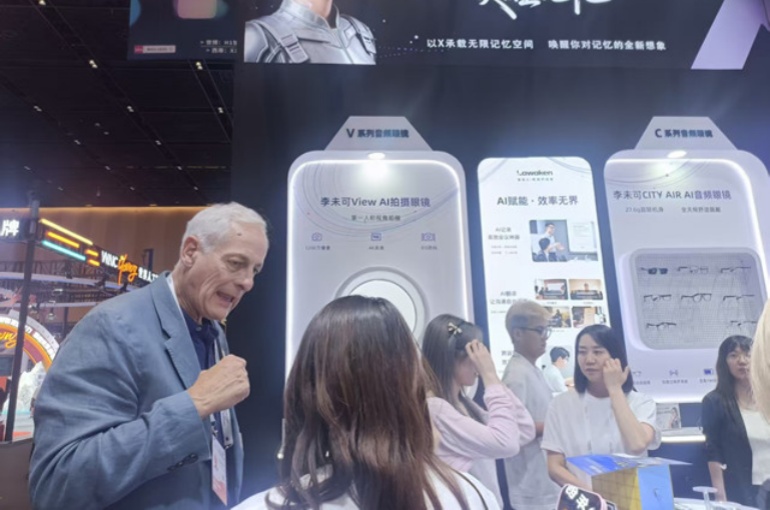
    “I believe the conference concept is excellent. It encourages bringing people worldwide together to discuss AI,” shared Bill Reichert, a seasoned Silicon Valley venture capitalist, during an interview at the 2026 World Artificial Intelligence Conference, which began on July 17.

    “Most AI conferences I’ve attended tend to be U.S.- or Western-focused, with few events from developing regions. The restrictions between the U.S. and China also limit our ability to have open discussions,” he added.

    “Therefore, the goal of this conference is to foster openness and collaboration, allowing diverse perspectives to be heard globally. That’s a valuable aspect of this event. Today, cooperation in AI is more crucial than ever.”

    This was his first time attending the conference. “I haven’t explored much of the event yet. I’ve seen a few companies, listened to a couple of speeches, and read a few more,” he noted.

    Fundamental Changes Reshape Funding Metrics for AI Startups

    Records indicate Reichert has played a role in funding or investing in at least 250 startups over his more than 30-year career, including companies like SpaceX, Impossible Foods, and Airbnb. Recently, at Pegasus Tech Ventures, he’s doubled down on investments in advanced technologies encompassing artificial intelligence, robotics, quantum computing, next-generation semiconductors, and biotech.

    “AI has become incredibly more significant in our daily lives and the world in just the past few years,” he explained. “Although AI has a 70-year history, recent developments have shown us the profound, sometimes disruptive, impacts of AI. We are increasingly paying attention to its potential risks and benefits for both emerging and developed nations.”

    He observed that valuation and risk assessment standards for early-stage AI startups have fundamentally shifted following the surge in generative large language models.

    “Creating new applications has become remarkably simple. We’re witnessing a surge in entrepreneurs leveraging these models to tackle real-world issues across sectors like healthcare, legal services, government, logistics, and supply chains,” he elaborated.

    “This rapid proliferation of AI-powered applications — or agentic AI — makes it challenging for investors to predict winners, as new competitors with equally powerful or better models emerge almost weekly,” he said. “This uncertainty complicates our decision-making process.”

    Venture investors differentiate sharply between broad large language model-based AI and physical AI systems like robotics. Achieving leadership in robotics requires a rare combination of interdisciplinary expertise and proprietary technology that’s difficult to replicate. Firms leading in robotics can sustain market dominance through substantial competitive barriers, unlike pure software AI ventures, which face more transient advantages,” he explained. “This is the main challenge for us as investors in this field.”

    Unique Investment Opportunities in Specific AI Domains

    Asked which AI sector might produce the most sustainable returns over the next five years, Reichert emphasized physical AI — hardware-integrated AI in operational environments — as a key area with the potential for broad societal and business transformation.

    “We’ve gained insights into the possibilities of large language models and generative AI, and we recognize how they are evolving,” he said. “With physical AI, we’re still exploring where it will make the most impact in our industries and daily lives. That makes it especially intriguing and ripe with investment opportunities.”

    Additionally, Reichert advised Chinese AI startups to focus on developing and validating their products domestically before seeking international funding to expand globally.

  • China Grants New QDII Quotas as Investor Interest Grows

    China Grants New QDII Quotas as Investor Interest Grows

    China is currently expanding its quotas for Qualified Domestic Institutional Investors (QDII) in response to rising demand from mainland investors seeking offshore assets.

    Recently, efforts have been intensified to expedite the issuance of a new round of QDII quotas, aiming to better support domestic residents’ legitimate and compliant overseas securities investments. A representative from the foreign exchange regulator emphasized that the upcoming quotas will benefit market institutions with strong investment management skills and strict compliance standards. These institutions are expected to play a more significant role in QDII operations, with a special focus on increasing access for retail investors through public fund products.

    The financial authorities had already indicated the imminent release of additional QDII quotas during an economic forum in Shanghai held last month.

    As of the end of June 2026, around 193 institutions across banking, securities, funds, insurance, and trust sectors have been allocated a total of approximately USD 176.17 billion in QDII investment quotas. This marks an increase of USD 5.3 billion from USD 170.87 billion at the end of December of the previous year. The quotas allocated to securities and fund institutions account for about USD 97.28 billion.

    The main destinations for QDII investments remain the Hong Kong and U.S. markets, which together encompass over 90% of total allocations.

    With the ongoing rise in mainland investors’ interest in global assets, the importance of QDII is expected to grow, fostering deeper two-way financial market integration, according to a recent research report.

    The QDII program was launched in 2006, enabling domestic institutions to invest in international capital markets primarily through mutual funds and exchange-traded funds.

  • DeepSeek Founder’s 200 Funds Join CXMT’s Chinese Memory IPO

    DeepSeek Founder’s 200 Funds Join CXMT’s Chinese Memory IPO

    Almost 200 investment funds, including those owned by Liang Wenfeng—founder of artificial intelligence startup DeepSeek and quantitative hedge fund High-Flyer Quantitative Investment—have participated in the initial public offering of a major Chinese memory chip company. These funds subscribed for shares of the memory technology firm during its first public sale.

    Specifically, 153 funds associated with High-Flyer Ningbo and 41 under High-Flyer Zhejiang appear on the list of investors, as detailed in the company’s listing announcement on the Shanghai Stock Exchange.

    Liang Wenfeng maintains an 85% ownership stake in High-Flyer Zhejiang and owns over 75% of High-Flyer Ningbo, according to corporate registration data.

    The company plans to issue 1.67 billion shares at a price of 8.66 yuan (approximately $1.27 USD) per share, targeting a total raise of 66.6 billion yuan (about $9.8 billion USD) should the full 15% over-allotment option be exercised.

    A total of thirty institutions participated in the strategic placement round, with combined allocations totaling 14.4 billion yuan. Several listed Chinese companies—such as Transsion Holdings and TCL Technology—disclosed the quotas they received for strategic investment.

    Subscriptions for the new shares began online yesterday. The company announced late yesterday that there were 9.4 million valid subscription accounts and approximately 816.92 billion shares had been effectively subscribed, with a preliminary online allotment rate of 0.4%.

    Earlier in June, DeepSeek completed a Series A funding round, raising over 50 billion yuan, with Liang investing 20 billion yuan himself. The startup was valued at more than 330 billion yuan (around $48.7 billion USD).

  • China’s Social Financing Boosts with Corporate Direct Funding Growth in H1

    China’s Social Financing Boosts with Corporate Direct Funding Growth in H1

    In the first half of the year, China’s social financing structure continued to improve, with increased investment and financing activity among tech companies. Data shows that corporate direct financing, such as bonds and stocks, accounted for a larger share of newly added social financing compared to the previous year.

    From January to June, net financing through bonds and equity by non-financial Chinese enterprises made up 11.3% of total new social financing, marking a 5.6 percentage point rise from the same period last year, according to the People’s Bank of China. Specifically, bond financing saw a 77% annual increase, reaching CNY 2.1 trillion (approximately USD 310.3 billion), while equity financing grew by 72%, totaling CNY 293.3 billion.

    Industry experts note that recent improvements in China’s bond market infrastructure, along with supportive policies like bond risk-sharing mechanisms, have created a more favorable environment for corporate bond issuance. Additionally, lower interest rates in the bond market over recent months have helped boost net corporate bond financing.

    The surge in high-tech industries, especially areas like artificial intelligence and semiconductor development, has significantly fueled demand for financing among innovation-driven companies. The strong performance of tech stocks in mainland China’s equity markets during the first half enabled many high-tech firms to access capital more easily, leading to increased equity financing.

    Despite these positive trends, overall social financing in China fell by 8.7% in the first half compared to the same period last year, totaling CNY 20.8 trillion (around USD 3.1 trillion), according to the People’s Bank of China. The decline was mainly driven by a drop in new bank loans and a reduction in net government bond financing.

    Bank-issued new loans to the real economy decreased by 14.9%, down to CNY 10.8 trillion (about USD 1.6 trillion), while the net scale of government bonds issued fell by 15.7%, reaching CNY 6.4 trillion. Ongoing adjustments in China’s real estate sector, along with efforts by local governments to restructure debt, have led to less lending to property developers and reduced government-related financing, impacting the growth of new social financing.

    Furthermore, emerging industries are much less reliant on bank credit compared to traditional, capital-intensive sectors. This shift indicates a decline in the overall debt-to-GDP ratio and suggests that the financial support for the real economy is increasingly becoming more efficient, favoring a healthier financing structure rather than simply expanding credit.

  • Eight CXMT Leaders Expected to Earn Over $15M Post-IPO

    Eight CXMT Leaders Expected to Earn Over $15M Post-IPO

    More than eight top executives at Chengxin Memory Technologies are projected to see their personal wealth exceed $14.8 million following the company’s upcoming initial public offering, which is expected to be the second-largest ever on the Shanghai Star Market.

    According to the listing prospectus, the directors, senior managers, key technical staff, and their close family members collectively hold approximately 2.03 billion shares of the company. At the IPO price of ¥8.66 (about $1.27) per share, the combined market value of their holdings surpasses ¥17.6 billion (roughly $2.6 billion).

    In addition to Chairman and founder Zhu Yiming and President Cao Kanyu, who own shares valued at ¥13.8 billion and ¥1.8 billion (around $266 million), respectively, six other executives and core technical personnel hold shares ranging from ¥107 million to ¥462 million. Another six key staff members and their families have shareholdings valued between ¥19.4 million and ¥85.7 million (approximately $2.9 million to $12.7 million).

    Based on the IPO price, the company’s market valuation approaches ¥579.2 billion (about $85.6 billion). Industry analysts estimate that investor enthusiasm could potentially push its market capitalization to ¥2 trillion (roughly $295.5 billion) or even ¥3 trillion after trading begins. This indicates that additional executives could also see their net worth exceed $14.8 million once the stock is publicly traded.

    Yuan Yuan, Vice President and Board Secretary, mentioned during an online investor session yesterday that Zhu Yiming plans to donate half of his 1.53 billion shares granted by the board—initially designated as founder contributions—to an employee incentive program. The move is intended to motivate staff and foster innovation. As a result, Zhu’s net worth increase may be somewhat lower once all share arrangements are finalized.

    The company launched its IPO process on July 9, aiming to raise ¥29.5 billion. The funds will primarily be used to upgrade mass production of memory wafers, develop advanced DRAM technology, and support future research and development efforts in dynamic random-access memory.

    This IPO is poised to be the second-largest in the history of the Shanghai Star Market, the tech-focused segment of the Shanghai Stock Exchange. Subscriptions for new shares are open today, with trading expected to commence on July 27.

  • Six Chinese Banks Introduce AI-Enhanced Card Benefits

    Six Chinese Banks Introduce AI-Enhanced Card Benefits

    Keeping pace with artificial intelligence technology has become essential across many industries, including banking. Over the past month, six Chinese financial institutions have introduced credit and debit cards linked to major AI providers, allowing users to access related AI services easily.

    Bank cards are evolving from simple tools for fund transfers into gateways for digital innovation. According to a specialist at a private Chinese digital bank known as SMB, cardholders can now earn points that can be directly redeemed for AI model services. This development makes bank cards a straightforward entry point for consumers to engage with advanced technology.

    One bank collaborated with China UnionPay to launch an AI-themed debit card, offering cardholders exclusive benefits from leading AI model developers. Another institution introduced a credit card featuring Moonshot AI’s assistant, Kimi, providing benefits such as agent quotas, Kimi Code quotas, and agent cluster functionalities.

    In early July, a major bank partnered with UnionPay and Alibaba Cloud to release a credit card tailored for AI developers and professionals working within the digital intelligence sector. Later in June, another bank, together with UnionPay and Tencent Cloud, launched an AI debit card that grants access to cloud computing packages and rewards benefits.

    A prominent fintech-focused bank, which is heavily backed by a leading tech conglomerate, announced the launch of China’s first AI-focused equity card aimed at small and micro businesses. This card offers various services such as token trials, content creation, customer outreach, business opportunity analysis, and store location evaluations.

    Also in June, a large bank introduced a credit card designed specifically for AI and tech specialists, becoming the first in the country to include token rights. The card features a monthly token service, allowing for the use of up to 1.8 billion tokens each month.

    Most of these banks have adopted a cooperative model involving partnerships between banks and clearinghouses or platforms and AI vendors. These partnerships leverage cards as the medium, with AI service provision managed by cloud vendors or AI platforms, while clearing processes are handled by UnionPay.

  • PICC Life’s CNY1 Asset Sale Signals Drop in Insurance License Values

    PICC Life’s CNY1 Asset Sale Signals Drop in Insurance License Values

    On July 14, the entire stake in China-U.S. Insurance Advisory was sold for just 1 Chinese yuan (approximately 14 cents USD), highlighting a significant decline in the value of insurance intermediary licenses amid a broad industry shake-up.

    The buyer, who purchased the insurance sales intermediary—a joint venture between a major insurer and an American multinational—will take on roughly 10 million CNY (about 1.4 million USD) in liabilities. However, this sale is still far below the previous valuation range of 20 million to 40 million CNY for insurance brokerage and sales licenses, which once fetched high prices during a period of intense regulatory approval from 2017 to 2021.

    During that hectic period, some companies profited through commission rebates and improper fee extraction from insurance channels, prompting industrial firms, real estate developers, and internet companies to heavily invest in these licenses.

    In recent years, the market has experienced a sharp decline. Many insurance intermediary stakes listed on auction platforms have seen their asking prices plummet, with numerous auctions repeatedly failing to find buyers. For example, the entire stake in Kaxing Tianxia Insurance Brokerage was sold in March for just over 71,000 CNY (roughly 10,470 USD) after its tenth auction.

    Regulatory Crackdown Reshapes the Industry

    This decline mirrors increased regulatory scrutiny, which has significantly raised compliance costs and made licenses easier to transfer, reducing their scarcity. Authorities have continued efforts to standardize the sector, closing nearly 4,000 insurance intermediary branches between 2024 and 2025 alone.

    “These changes don’t mean the overall worth of insurance intermediaries has vanished. Instead, they represent a reshuffle after the license bubble burst,” said Long Ge, deputy director at a university’s Innovation and Risk Management Center.

    The industry is evolving from focusing on “channel arbitrage” to offering professional services, driven by reforms and advancements like artificial intelligence. Leading firms, with sizable, high-quality customer bases, remain attractive to the market, Long explained, who is also a co-founder and general manager of a mutual aid platform.

    Insurance intermediaries are increasingly shifting their emphasis from merely selling policies to lifelong customer management, addressing complex family risk needs that cannot easily be fulfilled through online platforms or traditional distribution methods, he added.

  • Guangzhou Bank Closes Credit Card Division at Main Office

    Guangzhou Bank Closes Credit Card Division at Main Office

    On July 14, a major Chinese commercial bank announced the closure of its main credit card headquarters, transferring all related operations to a newly established credit card division within the same institution.

    This move comes amid a ongoing reduction in credit card activities, which saw the closure of seven regional credit card centers last January. The total credit card balance decreased to 70.4 billion yuan (approximately 10.4 billion USD) by the end of 2024, down from 86 billion yuan at the close of 2023. The year-over-year decline has accelerated from 15% to 18%, although the specific end-of-year figure for 2023 was not publicly disclosed.

    nationwide, 66 regional credit card centers were shut down last year, with their associated operations either consolidated into local branches or discontinued entirely. According to estimates, the country’s total credit card debt dropped by over 1 trillion yuan (roughly 147.4 billion USD) from a peak of 8.7 trillion yuan (about 1.28 trillion USD) at the end of the previous year.

    For over two decades, the credit card business within commercial banks was managed through a centralized system featuring independent accounting, assessment, and operations, which significantly contributed to rapid growth during its expansion phase, explained Zeng Gang, deputy director of a national financial development research institution.

    However, as the market shifts towards a focus on existing customers—what’s known as stock competition—these systemic limitations have become more apparent. Disconnected from other business units, the credit card division experiences low cross-selling rates and incurs redundant personnel costs, Zeng noted. Additionally, the short-term focus on profits has increased long-term risks, creating inherent conflicts with broader corporate strategies.

    The dissolution of this monolithic system is expected to influence how banks organize and transform their customer management approaches. Moving forward, credit cards will once again serve as key entry points for banks to engage clients and strengthen relationships. Instead of merely generating profit from individual products, banks will aim to enhance overall customer value, Zeng added.

    Achieving this requires a comprehensive overhaul of operational processes—from customer acquisition and product development to service delivery. Breaking down data and process silos across credit cards, savings, wealth management, and loans is crucial for truly adopting a customer-centric, integrated operation model, according to Zeng.

    As of the end of last year, China had 696 million valid credit cards, a decline from 767 million at the end of 2023 and 727 million at the end of 2024, marking 13 consecutive quarters of falling issuance, according to data from the country’s central bank.