
Select Language:
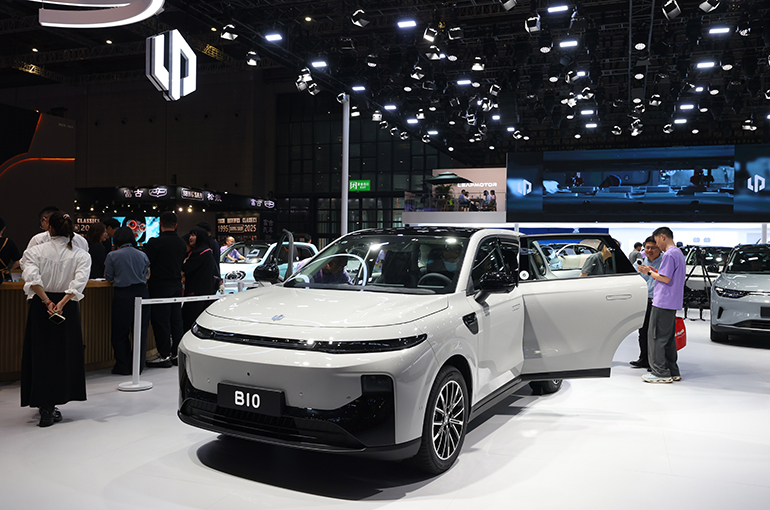
In June, Leapmotor Technology once again led Chinese new energy vehicle startups in sales, surpassing all competitors with monthly deliveries exceeding 90,000 units for the first time.
The company sold 93,376 new energy vehicles last month, representing a 95% increase compared to the same period last year and a 14% rise from May. This brings the total sales for the first half of the year to 356,487 units, setting a new record for Chinese NEV startups during this timeframe, according to the Hangzhou-based automaker.
Leading the pack behind Leapmotor, Nio and Xpeng Group both reported sales of over 40,000 units in June. The next six brands—Zeekr, GAC Hyptec Aion, Deepal, Li Auto, Aito, and Xiaomi Auto—each sold between 30,000 and 40,000 units.
Nio’s deliveries reached 40,597 vehicles last month, up 63% from the same period last year and 7.7% from May. The launch of multiple new models contributed to sales growth and reinforced Nio’s position in the premium market segment, the company noted.
Xpeng delivered 40,126 cars in June, marking a 16% increase from last year and a 25% jump from May. The rollout of its new Xpeng GX model began last month, with 6,739 units delivered to date. Yesterday, the 10,000th GX was produced.
Huawei Technologies’ smart car alliance, Harmony Intelligence Mobility Alliance, collectively delivered 50,624 new energy vehicles in June. The Aito brand, co-developed with Seres Group, contributed 30,199 units, accounting for 60% of the alliance’s total and showing a 12% decline from May.
Shangjie, a new energy vehicle brand developed jointly by HIMA and SAIC Motor, sold over 10,000 units in June. Meanwhile, the other three brands within HIMA—Maextro (created with JAC Motors), Luxeed (with Chery Automobile), and Stelato (with BAIC Group)—combined to sell around 10,000 vehicles total.
Traditional automakers’ NEV brands continued to see relatively modest sales in June. Dongfeng Motor’s Voyah sold 14,223 units last month, a 41% increase from the previous year but only slightly higher than in May. Data for SAIC’s IM Motors and Changan Automobile’s Avatr for June has yet to be released, though they sold 10,023 and 7,336 units respectively in May.
Between June 1 and 21, China’s retail NEV sales declined 10% year-over-year to approximately 583,000 units, yet they increased 11% compared to the same period the previous month, according to the China Passenger Car Association.
According to a report by global consulting firm, only seven out of 30 Chinese pure electric vehicle manufacturers are expected to reach profitability or break even by 2030. The industry is projected to see increased consolidation in the coming years, with less competitive companies likely to exit the market or become acquisition targets, the report notes.
 ChatGPT
 Perplexity
 Gemini AI
 Grok AI