Tag: US President

  • Trump’s Frustration with Netanyahu Over Iran Sparks Tensions at Leaders’ Meeting

    Trump’s Frustration with Netanyahu Over Iran Sparks Tensions at Leaders’ Meeting

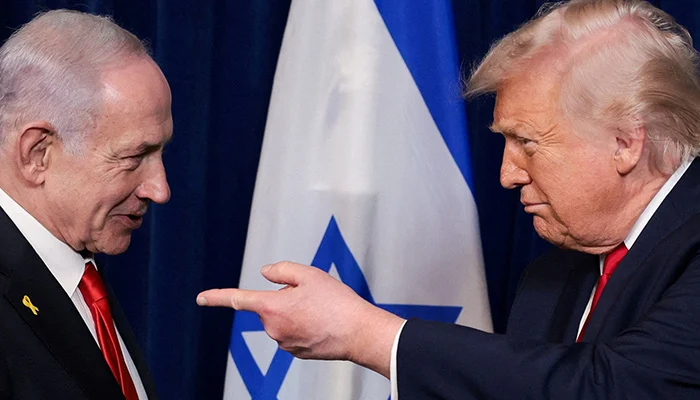
    During a press conference at Trump’s Mar-a-Lago club in Palm Beach, Florida, on December 29, 2025, US President Donald Trump pointed at Israeli Prime Minister Benjamin Netanyahu, signaling a tense moment between the two leaders.

    – Trump and Netanyahu’s meeting comes amid ongoing tensions concerning Iran’s strategies.
    – Netanyahu is actively seeking Trump’s support as Israel prepares for upcoming elections.
    – Trump is under scrutiny over calls for increased US involvement in the Iran conflict.

    Prior to their scheduled White House meeting on Tuesday, Trump expressed frustration with Netanyahu, indicating displeasure over leaked details of the Israeli leader’s talking points on Iran. When asked about reports that Netanyahu planned to discuss Iran’s underground facility near one of its nuclear sites—known as Pickaxe Mountain—Trump dismissed the importance, suggesting Netanyahu only brought it up to keep him engaged. He stated, “I don’t need Bibi to tell me that. Bibi’s telling me that because he wants me to stay involved,” and questioned why Netanyahu would publicly announce such information instead of sharing it privately during their meeting.

    The New York Post reported that Netanyahu was prepared to provide intelligence indicating Iran is expanding its nuclear infrastructure at Pickaxe Mountain while falsely claiming to pursue peace. Netanyahu’s office has yet to respond to comments about Trump’s remarks.

    Photographs shared by Netanyahu’s office showed the two leaders smiling broadly during their meet in the Oval Office, joined by Vice President JD Vance, Secretary of State Marco Rubio, and Defense Secretary Pete Hegseth. Trump had first briefed with Ukrainian President Volodymyr Zelenskyy in private before joining Netanyahu. Both meetings were described as “positive and productive,” with relations between the U.S. and Ukraine warming as Kyiv has made advances against Russian forces. Netanyahu faces increased frustration from the White House over the stalled progress in broader efforts to resolve Iran’s nuclear ambitions and is also under pressure from Trump supporters skeptical of deeper American involvement in the Middle East.

    The Israeli and Ukrainian leaders attended a memorial service in Washington honoring Senator Lindsey Graham, a staunch supporter of both Israel and Ukraine. Meanwhile, the conflicts in Ukraine and the Middle East are at pivotal stages. Trump announced a pause in US airstrikes, hoping to give diplomacy more room, while Zelenskyy emphasized the importance of advancing peace talks to end Russia’s invasion of Ukraine.

    Netanyahu’s relationship with Trump has been inconsistent, at times needing to be restrained from provocative military actions against Hezbollah in Lebanon. Netanyahu is reportedly seeking Trump’s endorsement for his reelection bid on October 27, aiming to bolster his standing at home, where polls remain unfavorable. Their upcoming discussion is expected to cover the Abraham Accords—agreements brokered during Trump’s administration to normalize relations between Israel and the UAE, Bahrain, Morocco, and Sudan. Trump has also expressed interest in including Saudi Arabia in these accords and recent efforts to negotiate a nuclear deal with Riyadh, which has so far rejected joining without a pathway to Palestinian statehood.

    Relations have improved between Trump and Zelenskyy since early tensions, especially as Kyiv has achieved some success in its fight against Russia, including targeted attacks on Moscow’s oil infrastructure. Zelenskyy post-meeting emphasized the need to intensify diplomatic efforts to end Russia’s invasion. They also discussed cooperation on missile defense and drone production, with Zelenskyy mentioning talks about licensing production of interceptors for Patriot systems and joint drone initiatives. Following their discussions, Zelenskyy was scheduled to meet with US senators at the Capitol.

  • Trump: New Air Force One to be ‘maxed out’ on security

    Trump: New Air Force One to be ‘maxed out’ on security

    JOINT BASE ANDREWS: President Donald Trump announced Sunday that his newly gifted Qatar-era Air Force One will undergo a month-long process to enhance its security features after concerns arose during a trip to Turkey.

    He flew his first mission on the refurbished Boeing 747-8 on July 1, but questions emerged following his return on July 10 from a NATO summit in Ankara, where he traveled on an older aircraft. The New York Times reported that the new aircraft lacked comparable security measures, such as anti-missile defenses, prompting subpoenas for their journalists by the Trump administration.

    When asked why he continued to fly on a plane not fully equipped with defensive capabilities, Trump explained, “It has a lot of features, but as I understand, in about a month, it will be sent for upgrades to fully maximize its security.” He added, “They will send it, and it’ll be fully equipped in about a month.”

    During his remarks after returning to Washington from the World Cup final in New Jersey, Trump didn’t specify what enhancements would be made or what “maxed out” meant. The 80-year-old Republican has previously dismissed concerns about the aircraft’s security features, initially stating he sent it to Britain from Turkey so military personnel could view it.

    The luxury aircraft was gifted last year by Qatar’s royal family after Trump expressed dissatisfaction with the aging jets that have served as the presidential fleet since 1990. Critics have raised ethical, constitutional, and security concerns, questioning the appropriateness of accepting a gift valued at hundreds of millions of dollars from a foreign government like Qatar.

    The aircraft now bears a new livery designed by Trump, featuring red, white, and navy blue colors that differ from the original white and light blue scheme. Two additional Boeing Air Force One planes are scheduled for delivery later this decade, though their deployment has been delayed and costs have gone over initial estimates.

  • Trump Restores Iran Port Blockade, Warns of Strikes on Energy Sites

    Trump Restores Iran Port Blockade, Warns of Strikes on Energy Sites

    President Donald Trump reimposed a naval blockade on all Iranian ports Tuesday, warning of potential strikes on key infrastructure such as power plants and bridges next week unless Tehran enters negotiations. The US military announced ongoing operations aimed at further degrading Iran’s ability to target commercial shipping in the Strait of Hormuz. Iran claims to have closed the strait again following renewed hostilities last week, which have strained an already fragile ceasefire after months of conflict that resulted in thousands of casualties.

    Trump indicated plans to target energy facilities and critical infrastructure if Iran does not negotiate, stating, “I’ll save the energy targets for last, but ultimately we’ll hit energy targets. Next week comes the power plants, next week comes the bridges—unless they get to the table and negotiate.” The 1949 Geneva Conventions prohibit attacking sites vital for civilian welfare. US negotiators have reportedly urged Iran to strike a deal, emphasizing the urgency.

    Early Wednesday, Iran’s military claimed to have launched drone attacks against US positions at Jordan’s Azraq base, while Iran’s Islamic Revolutionary Guard Corps reported targeting weapons and storage facilities in Bahrain and Kuwait. Kuwait’s defenses responded to Iranian drone threats, and a fire at a Kuwaiti facility was reportedly contained. Reuters has not independently verified these reports.

    The recent escalation has cast doubt on the effectiveness of a memorandum of understanding signed last month, intended to halt hostilities, as tensions threaten to drag the region back into conflict and further disturb global energy markets. The US said it struck a location near Bandar Abbas in Iran, with Iran reporting a strike near the southern port of Sirik. Iran’s Deputy Foreign Minister Kazem Gharibabadi rejected US pressure, stating, “If the US believes that tightening measures and economic sanctions will force us back to negotiations, it is mistaken.”

    Previously, about 20% of the world’s oil and gas shipments transited the Strait of Hormuz daily. Over the last week, Iran reportedly attacked seven commercial ships, causing injuries and casualties among crew members. The UAE reported the death of an Indian crew member and injuries to others when Iranian cruise missiles struck two Emirati oil tankers. The IRGC claimed responsibility for disabling two “offending” supertankers that ignored warnings, although their identities remain unknown.

    US President Trump floated a proposal for a 20% fee on maritime transit through the strait, which was met with criticism, including from the UN shipping agency. The US quickly withdrew the idea and said it would instead pursue investment agreements with Gulf nations. The naval blockade was reimposed at 2000 GMT, restricting Iranian vessel traffic, with more than 20 US Navy ships and hundreds of aircraft operating in the region.

    The conflict has become unpopular domestically, affecting fuel prices ahead of midterm elections. Brent crude oil prices have surged 15% over the past week, reaching levels not seen since mid-June at $85 per barrel. Since February, the war has resulted in thousands of deaths in Iran and Lebanon, with Iran retaliating against neighboring nations. While the global economy has largely absorbed the energy disruptions, the IMF warns that prolonged conflict—beyond mid-July—poses significant risks, especially as many countries have depleted their strategic oil reserves.

    In recent days, Iran claimed to have attacked a US Army base in Jordan with ballistic missiles, and Bahrain reported repelling an Iranian aerial assault. Iran’s Qeshm Island was reportedly hit by a US projectile, according to local media. Tehran insists it does not seek nuclear weapons, despite US assertions to the contrary. Iran wants sanctions lifted and recognition of its control over the Strait of Hormuz in exchange for negotiations.

    Some Gulf states have reportedly considered investment opportunities in the US as an alternative to transit fees, though specifics remain unclear. The situation remains highly volatile as the US intensifies sanctions and military presence in the region.

  • Trump Announces U.S. to Lift Sanctions and Potential F-35 Sale to Turkey

    Trump Announces U.S. to Lift Sanctions and Potential F-35 Sale to Turkey

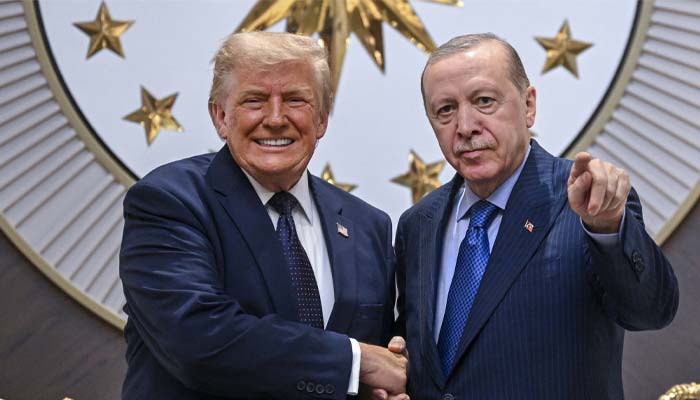
    Turkish President Recep Tayyip Erdogan greeted U.S. President Donald Trump upon his arrival at Ankara Airport during an official visit to Turkey ahead of the 36th NATO Heads of State and Government Summit in Ankara on July 7, 2026. — Reuters

    – Trump expressed his dissatisfaction with NATO’s stance on Iran while in Ankara.
    – He indicated that the U.S. is open to considering the sale of F-35 fighter jets to Turkey.
    – Erdogan hopes for a positive outcome regarding the F-35 aircraft issue.

    During their meeting at the NATO summit, President Donald Trump announced plans to remove sanctions on Turkey and was expected to decide on the potential sale of F-35 fighters to Ankara. “We’re going to lift the sanctions,” Trump told reporters when asked about measures under the Countering America’s Adversaries Through Sanctions Act (CAATSA).

    In 2020, the U.S. government imposed sanctions on Turkey due to its purchase of Russian S-400 missile defense systems and removed Ankara from the F-35 fighter jet program, a move Turkey deemed unjust and unlawful. Sources close to the matter mentioned Trump was likely to support the F-35 sale during his visit, despite unresolved legal and congressional hurdles.

    “This is a decision we’re going to make,” Trump stated, also mentioning discussions about trade with Erdogan. Current U.S. law prohibits F-35 sales to Turkey while Ankara retains the S-400s, citing security concerns since the Russian missile system could jeopardize U.S.-made combat aircraft.

    Trump also noted successful dialogues with Russian President Vladimir Putin and Ukrainian President Volodymyr Zelenskiy, expressing hope that the conflict in Ukraine would be resolved soon. “I had a very good conversation with President Putin,” Trump said, adding that both leaders are interested in reaching a deal. Following his conversation with Putin, Trump promptly spoke with Zelenskiy, with expectations of a meeting at the NATO summit on Wednesday, amid ongoing attacks on Russia’s energy infrastructure by Ukraine and recent deadly strikes in Kyiv.

    Zelenskiy emphasized the urgent need for air defense systems to counter Russian ballistic missile strikes.

    This visit marks the first American presidential trip to Turkey in over a decade, marked by a grand ceremony attended by Erdogan. Both leaders praised each other publicly during the event. Under Trump’s administration, concerns over Turkey’s human rights record have often been overlooked by Washington.

  • Trump halts Hormuz escort plan after Saudi blocks US base and airspace

    Saudi Arabia’s anger reportedly caused the suspension of a U.S. maritime operation. Qatar was informed only after the mission was already underway, and NBC News reports that Oman was consulted following the announcement.

    President Donald Trump abruptly paused a naval operation, called “Project Freedom,” intended to escort vessels through the Strait of Hormuz after Riyadh halted U.S. military access to critical bases and airspace, according to NBC, citing two U.S. officials. The operation was announced over the weekend as part of efforts to break Iran’s blockade of the strategic waterway, but it reportedly upset Gulf allies, especially Saudi Arabia, which was not consulted beforehand.

    Saudi Arabia responded by telling Washington it would no longer allow U.S. military aircraft to operate from Prince Sultan Airbase or transit Saudi airspace to support the mission. These restrictions forced the White House to pause the operation in order to restore military access. Officials also mentioned that a call between Trump and Crown Prince Mohammed bin Salman failed to resolve the issue, leading to the temporary suspension of Project Freedom to regain U.S. military access.

    The U.S. maintains fighter jets, refueling tankers, and air defenses at Prince Sultan Airbase in Saudi Arabia. Other Gulf partners, including Qatar, were caught off guard by the announcement, with NBC noting that Doha was contacted only after the operation had begun.

    A source within Saudi Arabia told NBC that Trump and the crown prince have been in regular contact. Saudi officials also engaged with Trump, Vice President JD Vance, U.S. Central Command, and Secretary of State Marco Rubio. The Saudi source added that Riyadh supported Pakistan’s diplomatic efforts to mediate between Iran and the U.S. to resolve the conflict.

    Asked if Saudi leaders were surprised by the Project Freedom announcement, the Saudi source replied, “The problem with that premise is the fast-moving nature of events.” NBC also reports that a White House official denied claims that regional allies weren’t informed in advance, asserting they had been briefed beforehand.

    Oman was only consulted after Trump publicly announced the operation, according to a Middle Eastern diplomat, though Muscat was “not upset or angry” about the situation.

    Before the operation was suspended about 36 hours after launch, the U.S. military had initiated additional naval deployments in the Gulf. Earlier, U.S. Central Command announced that two U.S.-flagged vessels successfully crossed the Strait of Hormuz under the mission.

    Trump stated that Project Freedom would be “paused for a short period” to see if a diplomatic solution to end the conflict can be reached and signed. An official explained that cooperation from regional partners’ airspace is essential due to geographic constraints, and in some cases, there are no alternatives.

    Following the suspension, Trump called Qatar’s emir, who discussed the ceasefire and the implications for maritime security and global supply chains. The Qatari official emphasized the importance of de-escalation during their conversation.

  • White House Cites Iran War End, Bypassing War Powers Deadline

    The Biden administration’s recent statement emphasizes that the ceasefire with Iran has effectively ended hostilities, aligning with the legal deadline for congressional notification. According to the 1973 War Powers Resolution, the president has 60 days to engage in military action before needing to seek congressional approval or request a 30-day extension due to unavoidable military necessity while withdrawing troops.

    The conflict ignited on February 28 when Israel and the U.S. launched airstrikes against Iran. On Friday, Iran’s state news agency IRNA announced that Tehran had submitted its latest negotiation proposal to Pakistani mediators. President Biden formally informed Congress of the ongoing conflict 48 hours after the initial airstrikes, setting the 60-day window to expire on May 1.

    As the deadline neared, congressional experts and analysts anticipated that Biden might bypass the legal time limit. A senior White House official noted that they believe the War Powers Resolution did not apply in this situation, asserting that “hostilities that began on February 28 have been effectively terminated” under their interpretation, though this view is contested.

    Democratic lawmakers continue to argue that the law does not allow for a ceasefire and emphasize that the ongoing deployment of U.S. naval vessels enforcing economic sanctions on Iran constitutes continued hostility rather than peace. Senator Jeanne Shaheen, the lead Democrat on the Senate Foreign Relations Committee, criticized the administration, stating, “Six months into this poorly managed war, President Biden still lacks a clear strategy or exit plan,” framing the upcoming deadline as a legal threshold that Biden must address.

    Republican members of Congress, who represent a slim majority in both chambers and largely support the president, have predominantly opposed resolutions calling for an end to the conflict. The war has resulted in thousands of casualties, billions in damages, and turmoil in global markets, disrupting energy supplies and increasing consumer prices nationwide.

    Polls indicate that the war remains unpopular among Americans, with support waning six months ahead of the November elections that will decide congressional control. President Biden’s approval ratings have dipped to their lowest of his current term, largely attributed to rising living costs linked to the conflict.

    The U.S. Constitution grants Congress the authority to declare war, but this restriction is often bypassed during short-term military operations or those deemed necessary to counter immediate threats. On Thursday, Biden was briefed on new military plans aimed at compelling Iran to cease hostilities. If hostilities restart, Biden can notify Congress, effectively restarting the 60-day clock, a common practice used by presidents from both political parties during intermittent conflicts since the passage of the War Powers Act.

    Just as with the Vietnam War—an unpopular conflict that was never formally authorized by Congress—the current situation reflects the ongoing tension between executive action and congressional war powers.

  • US Commander to Brief Trump on New Military Options Against Iran

    A potential military operation against Iran is being considered, with plans likely to include precision strikes against critical infrastructure sites. One suggested strategy involves securing the Strait of Hormuz shipping lane to ensure safe passage for commercial vessels. Additionally, there is a possibility of deploying ground forces to reopen vital oil routes.

    President Donald Trump is scheduled to be briefed on Thursday by Brad Cooper, the commander of U.S. Central Command, regarding these new military options, according to Axios, which cited anonymous sources. Neither the White House nor Centcom has officially commented on the reports yet.

    Sources indicate that Centcom has prepared a swift, targeted campaign of strikes aiming to disable Iran’s key infrastructure, possibly including military and civilian sites. The ongoing Iran conflict, which commenced three weeks ago, was triggered when the U.S. and Israel launched attacks on Iran on February 28. Iran retaliated with strikes against Israeli and Gulf state targets, including U.S. military bases, resulting in thousands of casualties and millions displaced.

    Trump has previously issued threats to target Iran’s civilian infrastructure, a move critics warn could constitute war crimes under international law, which prohibits attacks on facilities essential for civilian survival. The plan to seize part of the Strait of Hormuz for commercial shipping is also considered, potentially involving ground troops to restore the flow of oil through one of the world’s most critical maritime chokepoints, which handles about 20% of global oil and natural gas shipments.

    The conflict has negatively impacted markets and driven oil prices upward, with the Strait’s traffic coming to nearly a halt. U.S. officials hope these actions will coax Iran into a more flexible stance at the negotiating table regarding its nuclear program.

    Another possible operation involves special forces aiming to secure Iran’s stockpile of highly enriched uranium. While Iran denies seeking nuclear weapons, it maintains its right under the Nuclear Non-Proliferation Treaty to develop peaceful nuclear technology, including enrichment.

    Expected attendees at Thursday’s briefing include General Dan Caine, Chairman of the Joint Chiefs of Staff.

  • Venezuela’s Machado: No Regrets Giving Nobel to Trump

    Venezuela’s Machado: No Regrets Giving Nobel to Trump

    Venezuela opposition leader Maria Corina Machado stated on Saturday that she has no regrets about symbolically handing over her Nobel Peace Prize to President Donald Trump back in January.

    “In the world, there is a leader, a head of state who risked the lives of his country’s citizens for Venezuela’s freedom,” she said during a press conference in Madrid.

    Machado gave her Nobel medal to Trump during a meeting at the White House, just two weeks after he ordered U.S. forces to attack Caracas and try to seize Venezuelan leader Nicolas Maduro.

    Trump, who has long desired the Nobel Peace Prize, is currently involved in a Middle East conflict initiated with his ally, Israeli Prime Minister Benjamin Netanyahu, with airstrikes on Iran at the end of February.

    The Norwegian Nobel Committee, which awards the peace prize, clarified after Machado presented her 2025 Nobel medal to Trump that the honor itself “cannot be revoked, shared, or transferred to others.”

    Machado remarked that the military operation to detain Maduro, who is currently held in New York on U.S. drug charges, is “something Venezuelans will never forget.”

    She added, “Therefore, I have no regrets” about giving her Nobel medal to Trump.

    Having been in hiding before leaving Venezuela in December to attend her Nobel ceremony in Oslo, Machado said she is arranging her return to the country in coordination with Washington.

    Later, she addressed thousands of supporters in Madrid, urging them to prepare for their return home.

    “All we have done over these 27 years has been to prepare for a moment of reunion and the building of a nation that will be free forever,” she said, referencing the periods under Maduro and his predecessor Hugo Chavez.

    Last week, Venezuela’s opposition called for presidential elections.

    Machado has yet to announce whether she will run in future elections; she was barred from seeking the presidency in 2024, an election in which Maduro claimed re-election amid allegations of rigging by opposition groups.

  • Trump plans China visit in May after Iran war postponement

    Trump plans China visit in May after Iran war postponement

    A trip to Beijing is scheduled for May 14-15, according to the White House. Trump’s spokesperson mentioned that Xi Jinping understood the reason for the delay. Trump expressed anticipation that the visit to China would be “a monumental event.”

    In a recent announcement, the U.S. President revealed that he will meet with Chinese President Xi Jinping in May during his first trip to China in eight years. Originally planned for the upcoming week, the trip was postponed due to the ongoing Iran conflict. Trump’s attempt to reschedule reflects his desire to project strength amid Middle Eastern tensions while managing the fragile relationship between the two largest economies.

    Trump took to Truth Social on Wednesday to share that he would visit Beijing on May 14 and 15, and that he plans to host Xi Jinping for a reciprocal visit in Washington later this year.

    “Our teams are wrapping up preparations for these historic visits,” Trump stated. “I am very much looking forward to spending time with President Xi in what I am sure will be a monumental event.”

    China’s embassy said it had no further details about the visit, as Beijing usually keeps Xi’s schedule private until just a few days before events.

    The trip had been on the calendar for some time and was part of a broader effort by Washington to reset relations within the Asia-Pacific region. However, a series of developments have continually shifted priorities. In February, the Supreme Court limited the president’s authority to impose tariffs, a tool Trump used in negotiations with this country’s third-largest trading partner. That same month, a joint military operation between the U.S. and Israel against Iran heightened tensions with Beijing, which relies on Iran for a significant portion of its oil.

    Trump’s last visit to China was in 2017—the most recent by a U.S. president. The upcoming trip in May will mark the first in-person talks since an October meeting in South Korea, where the leaders agreed on a trade truce.

    While the trip will showcase many of Trump’s customary diplomatic styles, it is expected that tangible agreements may be reached in areas like agriculture exports and aircraft parts. Nonetheless, issues like Taiwan are unlikely to see significant progress; Trump has increased U.S. arms sales to Taiwan during his second term, angering Beijing, which claims the island as its territory.

    It remains uncertain whether the Iran conflict will be resolved before the leaders meet in China. Trump has sought support from major oil-consuming countries, including China, to help counter Iran’s attempts to shut the Strait of Hormuz, but so far, most responses have been limited. China, which imported about 12 million barrels of oil daily in early 2026—the highest in the world—has not directly responded to Trump’s requests.

    The White House indicated that Trump and Xi had discussed the possibility of rescheduling the trip. White House spokesperson Karoline Leavitt stated that Xi understood the reasons for the delay, emphasizing the importance of Trump being present during current military operations.

    Overall, the upcoming visit is seen as a significant step amid ongoing global tensions, with both leaders expected to balance diplomatic gestures with addressing complex geopolitical issues.

  • Trump’s Major U-turn: Sharp Shift on Iran Policy

    Trump’s Major U-turn: Sharp Shift on Iran Policy

    A sudden shift in Iran policy by U.S. President Donald Trump on Monday stunned global markets, marking one of his most dramatic reversals. Since regaining power last year, Trump has relied heavily on instinct-driven decisions, often making contradictory statements about Middle East conflicts, including a declaration on March 13 that the war would end when he “felt it in his bones.”

    Garret Martin, a professor of international relations at American University, notes, “Trump is a master of sudden pivots and switches, making it difficult to discern whether there’s a clear strategy or just constant improvisation.” These abrupt changes usually follow a pattern: the president issues threats—diplomatic, economic, or military—often with ultimatums that surprise the international community, then unexpectedly backtracks, claiming to have secured concessions that are rarely disclosed. This causes markets to fluctuate wildly.

    On Monday, oil prices fell sharply while stock markets surged after Trump announced on his social platform that the U.S. had engaged in talks with Iran about ending the conflict. Brent crude dropped over 14%, and West Texas Intermediate lost nearly 10%, while the Dow Jones soared by 700 points.

    Just days earlier, Trump had given Iran a 48-hour deadline to reopen the Strait of Hormuz, a critical oil shipping lane, threatening massive strikes against Iranian infrastructure without mentioning negotiations. Yet, on Monday, he set a new five-day deadline—giving space for ongoing talks—and spoke of “very productive” discussions with “highly respected” Iranian officials, who were not identified. However, Iranian officials denied any negotiations were active, tempering market enthusiasm.

    Trump boasted in Memphis about his negotiation skills rather than presenting any specific treaties or agreements. “My whole life has been about negotiation, and with Iran, we’ve been negotiating for a long time,” he said. “This time, they’re serious.”

    This pattern of behavior is often summarized with the acronym “TACO,” coined by Financial Times journalist Robert Armstrong in May 2025—standing for “Trump Always Chickens Out.” The term originated from Trump’s previous threats, such as imposing global tariffs or demanding the U.S. take over Greenland, which he ultimately abandoned to avoid market chaos.

    Initially, “TACO” referred to a market strategy—capitalizing on asset declines triggered by Trump’s aggressive announcements to buy low, hoping to sell at a profit once he reversed course. Many of his U-turns, including those involving relations with Greenland or Powell’s interest rate policies, create market turbulence but often lack accompanying deals, leaving allies and rivals uncertain about the stability of agreements, known for their fleeting nature.

    Politically, analysts think Trump’s reversals—like backing down on Iran—stem from various pressures: markets reacting negatively, Gulf nations exerting influence, and internal conflicts within his MAGA movement over his handling of the crisis. According to Martin, these factors often lead him to abandon previous threats to maintain political and market stability.

  • Trump raises Pakistan-India conflict aircraft deaths to 10

    Trump raises Pakistan-India conflict aircraft deaths to 10

    President Donald Trump has reiterated his claim that he was responsible for ending the Pakistan-India war. He stated that he warned both countries about tariffs, suggesting this pressure was pivotal in stopping hostilities. Trump asserts that during the conflict, approximately ten fighter jets were shot down, a figure he claims doubles his initial estimate.

    In a discussion on Fox Business, he explained, “I’ve settled eight wars. The majority of those were resolved because of tariffs.” He elaborated, “I told them, if you don’t resolve this, I’ll impose tariffs. I don’t want people to get hurt. They questioned what tariffs had to do with it, and I said—’You’ll be charged.’”

    Trump specifically mentioned the India-Pakistan crisis, describing it as potentially nuclear. “They were really close to a nuclear war,” he said, claiming, “Ten planes were shot down during the escalation.” He recounted that Prime Minister Shehbaz Sharif told him he had saved at least 10 million lives by preventing further fighting, implying that without tariffs, a nuclear conflict might have occurred.

    While Trump credits himself and Pakistan for halting the war, India has not acknowledged his role. Conversely, the Pakistani government publicly nominated the U.S. President for the Nobel Peace Prize, praising his efforts to de-escalate tensions.

    Last year in May, a significant military confrontation erupted between Pakistan and India, triggered by a terrorist attack on tourists in Pahalgam, IIOJK, which New Delhi claimed was supported by Pakistan. Islamabad denied involvement and proposed a neutral investigation into the incident, which resulted in 26 deaths.

    During the escalation, Pakistan shot down multiple Indian fighter jets, including three Rafales, along with dozens of drones. After more than 87 hours of conflict, a ceasefire brokered by the U.S. brought the hostilities to an end on May 10.

  • Trump Avoids Endorsing Vance or Rubio for 2028 Race

    Trump Avoids Endorsing Vance or Rubio for 2028 Race

    President Donald Trump on Wednesday sidestepped questions about who might succeed him in the 2028 presidential race, avoiding taking sides between his vice president, JD Vance, and Secretary of State Marco Rubio.

    Vance, the former Ohio senator, has indicated he plans to discuss with Trump the potential of running after the midterm elections in November. Meanwhile, there’s speculation among GOP insiders that Rubio, a Florida senator who ran unsuccessfully for the Republican presidential nomination in 2016, may also pursue the presidency.

    While Rubio hasn’t explicitly ruled out a run in 2028, he has spoken positively about Vance, calling him a strong candidate. When asked about Vance and Rubio during an NBC News interview, Trump mentioned he would likely support a successor but preferred not to delve into specifics at this time. “We’ve got three years ahead of us. I don’t want to start arguments or anything like that—it’s not a fight. But let me tell you, JD is fantastic, and Marco is fantastic,” Trump stated.

    He has frequently expressed that Vance and Rubio should consider running together on the same ticket. The upcoming 2028 race is expected to be highly competitive, with both major parties fielding large and diverse fields. Trump also hinted that one of the two might possess a more diplomatic style, saying, “One is slightly more diplomatic than the other,” while praising both as highly intelligent men.

    Trump speculated about the possibility of running for a third term, an idea he briefly flirted with last year before abandoning it. When asked if he envisioned any scenario where he might still be president when the next administration begins in January 2029, he responded, “I don’t know. It would be interesting.”

  • Trump pledges to de-escalate following Minneapolis shootings

    Trump pledges to de-escalate following Minneapolis shootings

    • Trump’s border advisor meets with Minnesota’s governor and Minneapolis officials.
    • Trump concedes that a government official’s presence may have contributed to rising tensions.
    • Calls for a fair and truthful investigation into recent killings.

    MINNEAPOLIS: President Donald Trump announced Tuesday that he intends to ease tensions in Minneapolis following the recent fatal shootings of two civilians, which sparked widespread criticism of his immigration policies. Trump’s “border czar” Tom Homan held discussions with local officials as part of his efforts to manage the fallout after immigration agents accidentally shot and killed 37-year-old nurse Alex Pretti on Saturday.

    The president also acknowledged that Gregory Bovino, a strict Border Patrol commander who is now expected to leave Minneapolis, is “a rather outspoken type,” and his involvement might have exacerbated the situation.

    “We’re planning to reduce some of the tensions,” Trump told Fox News, clarifying that this was not a retreat from previous positions but an attempt to de-escalate. He mentioned that Homan, a top official in U.S. border security known for a more restrained communication style, met with Minnesota Governor Tim Walz and Minneapolis Mayor Jacob Frey on Tuesday.

    Trump rejected the label “assassin,” used by a top aide to describe protester Alex Pretti. “I want a very honorable and honest investigation,” he stated. However, he did criticize Pretti for carrying a licensed firearm that was confiscated before he was shot.

    “I don’t like that he had a gun, and I don’t like that he had two fully loaded magazines,” the president said.

    Mayor Frey, after his meeting with Homan, stated that he discussed “the serious negative impacts” of federal operations on Minneapolis, reaffirming that the city “will not enforce federal immigration laws.” Former Democratic Vice President Walz called for “impartial investigations” into federal shootings and recommended a significant reduction in federal presence in the state.

    Pretti’s death has ignited national outrage. Former President Joe Biden called the situation “a betrayal of core American values,” with other ex-presidents like Bill Clinton and Barack Obama also voicing concern.

    This incident marks the second time this month that a U.S. citizen has been killed by immigration officers in Minneapolis, a city now at the center of nationwide debate over Trump’s mass deportation efforts. The first victim, protester Renee Good, was shot at point-blank range during a traffic stop on January 7.

    These fatalities have come amid months of increasing violence and aggressive enforcement by unidentified, heavily armed Immigration and Customs Enforcement (ICE) agents and Border Patrol officers, who have been detaining suspected immigration law violators on the streets. Despite multiple videos indicating Pretti posed no danger, officials initially claimed he was threatening federal agents.

    Trump defended Homeland Security head Kristi Noem, who called Pretti a “domestic terrorist,” asserting she’s performing well and will not resign. Conversely, he expressed reservations about Bovino, a Border Patrol official known for aggressive tactics and who had emphasized the threat Pretti allegedly posed.

    “Bovino’s a very good officer, but he can be a bit out there. Maybe that approach didn’t work in this case,” Trump remarked on Fox.

    Concern over the violence and the false narrative blaming Pretti for his own death quickly reached Washington. Senator Rand Paul proposed that the agents involved should be placed on administrative leave and announced that leaders from ICE, Border Patrol, and Citizenship and Immigration Services would appear before Congress next month. Democratic Senator John Fetterman criticized Homeland Security Secretary Kristi Noem’s handling of the situation, calling for her dismissal.

    The turmoil threatens to trigger a new government shutdown, as Democrats threaten to block the passage of routine spending bills scheduled for Senate votes later this week.

    In Minneapolis, a 68-year-old retiree, Stephen McLaughlin, voiced that the community is “sickened by all of this,” expressing fears that government actions aim to terrorize citizens—an occurrence that he finds deeply unsettling.

  • Trump rules out force or tariffs after Greenland agreement

    Trump rules out force or tariffs after Greenland agreement

    DAVOS: President Donald Trump announced on Wednesday that he has established a framework for a potential agreement regarding Greenland after meeting with NATO Secretary General Mark Rutte. He also stated that he would cancel the tariffs previously threatened against European allies.

    “We’ve formed the basis for a future deal concerning Greenland and the broader Arctic region,” Trump shared on Truth Social.

    While he didn’t reveal specifics of the framework, Trump indicated that the tariffs scheduled for February 1 against resisting European countries are no longer happening.

    “Based on this understanding, I will not implement the tariffs that were set to go into effect on February 1,” he added.

    Trump’s ambitions to acquire Greenland, a strategically significant Arctic island, from NATO ally Denmark has caused significant upheaval in global markets and diplomatic relations.

    During his speech at the World Economic Forum in Davos on Wednesday, Trump distanced himself from the use of force, instead calling for “immediate negotiations” with Denmark to buy the island.

    “If I decide to use overwhelming strength and force, we could become unstoppable — but I won’t do that,” Trump stated.

    “What I want from Greenland is simply a place called Greenland,” he added.

    Stocks on Wall Street opened higher Wednesday morning following his speech and surged further after his Truth Social statement.

    Trump emphasizes that Greenland, rich in minerals, is crucial for U.S. and NATO security against both Russia and China.

  • Is Donald Trump Venezuela’s De Facto Acting President?

    Is Donald Trump Venezuela’s De Facto Acting President?

    Washington: President Donald Trump has declared himself the “Acting President of Venezuela” shortly after a U.S. military operation resulted in the detention of Venezuelan President Nicolás Maduro.

    Trump posted an image on his social media platform, Truth Social, which resembled an edited Wikipedia entry, depicting himself as the “acting president” alongside his official portrait and title. The post also mentioned Vice President JD Vance as the “Vice President of Venezuela.”

    However, Venezuela’s official Wikipedia page does not list Trump as acting president, and no international organization has recognized or supported this claim.

    This announcement followed the U.S. operation that removed Maduro from power, after which he was flown to New York along with his wife to face federal drug trafficking charges. The strike came amid months of intense pressure, sanctions, and military actions targeting the oil-rich nation.

    In a subsequent press conference, Trump stated, “This was one of the most impressive displays of American strength and skill in U.S. history.” He added that Washington would oversee the country’s oil resources until a proper transition is established.

    During a court appearance on January 5, Maduro pleaded not guilty to four criminal charges, including narco-terrorism, conspiracy to import cocaine, and possession of illegal firearms and explosive devices. Maduro claimed he was “kidnapped” and declared his innocence.

    Maduro is accused of running a cocaine trafficking network linked to violent groups such as Mexico’s Sinaloa and Zetas cartels, Colombian FARC rebels, and Venezuela’s Tren de Aragua gang.

    UN Secretary-General Antonio Guterres expressed concern over the political instability in Venezuela and questioned the legality of the U.S. operation, describing it as the most significant U.S. intervention in Latin America since the 1989 Panama invasion. U.S. Special Forces reportedly entered Caracas by helicopter, broke through security barriers, and detained Maduro from a secure room.

    [Additional scripts and embedded social media elements are present in the original document, but have been omitted for clarity.]

  • White House weighs military move for Greenland acquisition

    White House weighs military move for Greenland acquisition

    The White House announced Tuesday that President Donald Trump is exploring options to acquire Greenland, including the potential deployment of the U.S. military, reigniting his interest in controlling the strategically significant island despite objections from Europe.

    According to a White House statement, Trump considers acquiring Greenland a vital national security goal to “deter adversaries in the Arctic region.” The statement added that the president and his team are evaluating various methods to achieve this foreign policy objective, emphasizing that utilizing the military remains an available option for the commander-in-chief.

    Greenland’s government has consistently stated it does not wish to join the United States. Leaders from major European nations and Canada stood in solidarity on Tuesday, asserting that the territory belongs to its people.

    A military intervention to seize Greenland from longstanding ally Denmark would have significant repercussions within NATO and could deepen tensions between Trump and European leaders. Nevertheless, these objections have not dissuaded Trump from considering turning Greenland into a U.S. hub amid rising interest from Russia and China in the Arctic.

    Trump’s renewed focus on Greenland, initially expressed in 2019 during his first term, has gained momentum recently, notably following the U.S. arrest of Venezuelan President Nicolas Maduro. Confident after Maduro’s capture last weekend, Trump declared that “American dominance in the Western Hemisphere will never be questioned again” and has pressured Colombia and Cuba to align with U.S. interests.

    After months of putting the idea aside, Trump has begun discussing Greenland once more. An anonymous senior U.S. official told reporters that Trump and his advisors are weighing several ways to acquire the island, from an outright purchase to establishing a Compact of Free Association (COFA), which would avoid fully annexing Greenland, home to about 57,000 residents. The official did not specify a potential price for the purchase.

    “Diplomacy and dealmaking are always the president’s preferred routes,” the official said. “If a fair deal can be negotiated to acquire Greenland, that would be his first choice.”

    During a classified briefing late Monday, Secretary of State Marco Rubio told lawmakers that recent threats aimed at Greenland didn’t indicate an imminent invasion, and that the goal remains to purchase the island from Denmark. Two sources confirmed the details to the Wall Street Journal.

    Some congressional members, including fellow Republicans, criticized the administration’s comments, reaffirming Denmark’s loyalty as a NATO ally. Democratic Senator Jeanne Shaheen of New Hampshire and Republican Senator Thom Tillis of North Carolina, co-chairs of the Senate NATO Observer Group, stated: “When Denmark and Greenland make it clear that Greenland is not for sale, the United States must respect Denmark’s sovereignty and treaty commitments.”

    Officials stress that Greenland’s mineral deposits—valuable for high-tech and military applications—are critical to U.S. interests. However, these resources remain largely untapped due to labor shortages, limited infrastructure, and other obstacles. An official remarked that the push to acquire Greenland remains a priority during Trump’s remaining three years in office.

  • Trump sets sights on five new targets after Venezuela

    Trump sets sights on five new targets after Venezuela

    An image posted by U.S. President Donald Trump on his Truth Social account shows him sitting near CIA Director John Ratcliffe and Defense Secretary Pete Hegseth, observing the U.S. military operation in Venezuela on January 3, 2026.

    WASHINGTON: A more confident President Donald Trump hinted at targeting additional countries after overthrowing Venezuela’s Nicolás Maduro, prompting questions worldwide: what’s his next move?

    During a half-hour exchange with reporters on Sunday aboard Air Force One, Trump criticized Colombia, Cuba, Greenland, Mexico, and Iran.

    Having previously campaigned for a Nobel Peace Prize and expressing disdain for interventionism, Trump now asserts that Washington has the right to pursue its interests in its neighborhood as it sees fit.

    Greenland
    Since the Venezuela operation, Trump has intensified his pursuit of Greenland’s annexation from Denmark.

    “Trump has listed numerous potential future targets, but Greenland appears to be the most probable focus for his administration,” said Asli Aydintasbas, a fellow at the Brookings Institution’s Center on the United States and Europe, to AFP.

    Trump argues that Greenland’s mineral wealth and semi-autonomous status are vital for national security, claiming Denmark is incapable of shielding Greenland from Russian and Chinese threats.

    In response, Danish Prime Minister Mette Frederiksen warned that any attempt to seize Greenland by force could jeopardize NATO itself.

    Alternatively, the U.S. might escalate diplomatic efforts, such as proposing a referendum in Greenland, to influence the territory without direct confrontation.

    Colombia
    Colombia has been the recipient of Trump’s most aggressive threats, with the president warning leftist leader Gustavo Petro to “watch his back” and expressing willingness to consider military action.

    Trump has accused Petro of collusion with drug traffickers—mirroring allegations made against Maduro before his capture.

    Petro responded Monday, asserting he was ready to “take up arms” in light of Trump’s threats.

    However, Colombia’s complex armed factions, remnants of its civil war, could complicate any direct intervention. Trump may instead be relying on Venezuela to pressure regional leaders into submission.

    “Essentially, he’s signaling that he can bully countries into compliance and insists that U.S. dominance must be accepted for them to maintain sovereignty,” Aydintasbas explained.

    Cuba
    Trump claimed that Cuba, a long-standing adversary of the U.S. and ally of Venezuela, was “ready to fall.”

    The island near Florida, governed by a communist regime, has historically been targeted by U.S. policymakers, particularly by Secretary of State Marco Rubio, a son of Cuban immigrants. Cuba reported the death of 32 Cuban security personnel during the Maduro operation.

    Trump predicted that military intervention in Cuba wouldn’t be necessary, believing that crippling sanctions and the loss of Venezuelan oil subsidies could topple Havana’s regime.

    Mexico
    On Sunday, Trump told Mexico to “get their act together,” criticizing recent pressures over drug trafficking and trade.

    He praised President Claudia Sheinbaum, whom he met in December during the U.S.-Mexico-Canada World Cup draw, calling her a “terrific person.”

    Trump pressed her to allow U.S. troops to combat drug cartels, claiming she previously refused.

    Sheinbaum responded Monday, rejecting U.S. dominance and asserting the Americas do not belong to any single power.

    Iran
    Iran, another major oil producer alongside Venezuela, faced U.S. airstrikes targeting its nuclear program in June and is now under renewed pressure from Trump regarding its crackdown on protests.

    Trump warned Sunday that Iran would “get hit very hard” if demonstrators are killed again.

    Senator Lindsey Graham was photographed holding a “Make Iran Great Again” hat during Trump’s flight on Air Force One.

    Aydintasbas cautioned against Trump becoming overly aggressive, noting that while he currently relishes his role as an “imperial president,” his interest could wane if conflicts intensify in Venezuela or the Middle East.