Tag: tariffs

  • Tariffs Could Slash U.S. GDP by 0.65% and Cost 600,000 Jobs

    Tariffs Could Slash U.S. GDP by 0.65% and Cost 600,000 Jobs

    Understanding the Economic Impact of Tariffs on the U.S. Economy

    The effects of tariffs imposed by the U.S. government, particularly those initiated during the Trump administration, have raised significant concern among economists and policymakers. Tariffs, which are taxes on imported goods, can serve various purposes, including protecting domestic industries and generating government revenue. However, their broader implications can be quite complex, as evidenced by a detailed report from The Tax Foundation elucidating the repercussions of recent tariff actions on the U.S. economy.

    Recent Tariff Actions and Their Implications

    In the report, it is highlighted that current tariff actions could potentially reduce the U.S. Gross Domestic Product (GDP) by up to 0.65 percent. This figure encapsulates several key measures, including:

    • Tariffs on China: The ongoing trade tensions with China have resulted in several tariffs that impact a wide range of goods.
    • Tariffs on Canada and Mexico: While some of these tariffs are currently paused, the uncertainty they create continues to affect market dynamics.
    • Global Steel and Aluminum Tariffs: These tariffs went into effect recently, further complicating the trade landscape.
    • EU Tariffs: A 25 percent tariff on certain EU goods, announced in February, adds additional strain, along with similar tariffs on motor vehicles and their parts set to take effect in April.

    This interplay of tariffs is projected to have far-reaching effects on employment, GDP, and consumer prices in the U.S. economy.

    Employment Projections and Job Loss

    The ramifications of tariff imposition are not limited to GDP impacts; they extend to employment figures as well. According to The Tax Foundation’s report, the aggregate effect of these tariffs could result in the loss of nearly 600,000 full-time jobs. This projection starkly contrasts with earlier estimates from the 2018-2019 trade war, where tariffs were believed to have lowered U.S. GDP by only 0.25 percent and caused approximately 170,000 job losses.

    The significant uptick in job loss forecast is concerning and highlights the potential for a negative feedback loop where reduced employment leads to decreased consumer spending, further affecting economic growth.

    The Impact on After-Tax Incomes

    Another troubling outcome of the tariff regime is the impact on after-tax incomes for American households. The report posits that tariffs could lead to a decrease in after-tax incomes ranging from 1.7 to 2.2 percent, translating into increased financial strain for consumers. As prices on imported goods rise due to tariffs, household budgets may become increasingly tight.

    In fact, the tariffs imposed during the 2018-2019 trade war had already exerted an additional financial burden on the average American household, estimated to amount to an extra tax of $300 to $600 in 2023. This figure underscores the tangible effects tariffs can have on everyday consumers and their purchasing power.

    Government Revenue from Tariffs

    Despite the negative repercussions on GDP and household incomes, tariffs also contribute substantially to government revenue. Projections indicate that by 2025, the revenue accrued from tariffs may reach between $229 and $263 billion. While this seems beneficial from a fiscal perspective, it’s critical to note that even in this scenario, tariff income would represent only a small fraction—less than ten percent—of the overall government budget.

    This aspect highlights the delicate balance policymakers must navigate: while tariffs can provide a source of revenue, their broader economic costs—evidenced in job loss and diminished consumer income—may ultimately offset the benefits they provide.

    Historical Context of Tariffs in the U.S.

    The discussion around tariffs is not new; historically, tariffs have been employed as a tool for economic policy and protectionism. However, their efficacy and impact can vary significantly based on global economic conditions, international relations, and domestic economic health. Understanding this historical context can provide valuable insights into the potential long-term effects of current tariff policies, particularly in an increasingly interconnected global economy.

    By analyzing these multiple facets of tariff impacts—GDP, employment, consumer prices, government revenue, and historical precedent—one can appreciate the intricate dynamics at play in the ongoing trade discourse. The situation remains fluid, with potential for policy adjustments as the government assesses the economic landscape moving forward.
  • Tariffs Could Slash Cross-Border Trade by Up to 97%

    Tariffs Could Slash Cross-Border Trade by Up to 97%

    Understanding the Impact of Tariffs on Cross-Border Trade: A Case Study

    Introduction to Tariffs and Their Economic Implications

    In recent years, the landscape of international trade has been dramatically altered by the introduction of tariffs. These taxes imposed on imported goods can have far-reaching consequences, not only for the countries directly involved but also for their trading partners. In this blog, we will delve into the implications of tariffs, particularly focusing on those implemented by the Trump administration on goods from Mexico and Canada, as highlighted by research from the Brookings Institution.

    Historical Context of Tariffs Under the Trump Administration

    The Introduction of Tariffs

    During the Trump administration, a series of tariffs were introduced on goods imported from neighboring countries, specifically Mexico and Canada. On a particular Tuesday, a 25% tariff was implemented on all Mexican goods and most Canadian goods entering the United States. This decision was part of a broader strategy to renegotiate trade agreements and protect domestic industries.

    Temporary Pauses and Negotiation Tactics

    However, the decision to impose tariffs was not static. By Thursday of the same week, the tariffs were paused for goods covered under the United States-Mexico-Canada Agreement (USMCA) until April 2. This pause affected approximately 50% of Mexican imports and 38% of Canadian imports. This back-and-forth approach to tariffs demonstrated the Trump administration’s aggressive negotiating style, causing uncertainty among businesses and consumers alike.

    Major Sectors Affected by the Tariffs

    Mining Sector

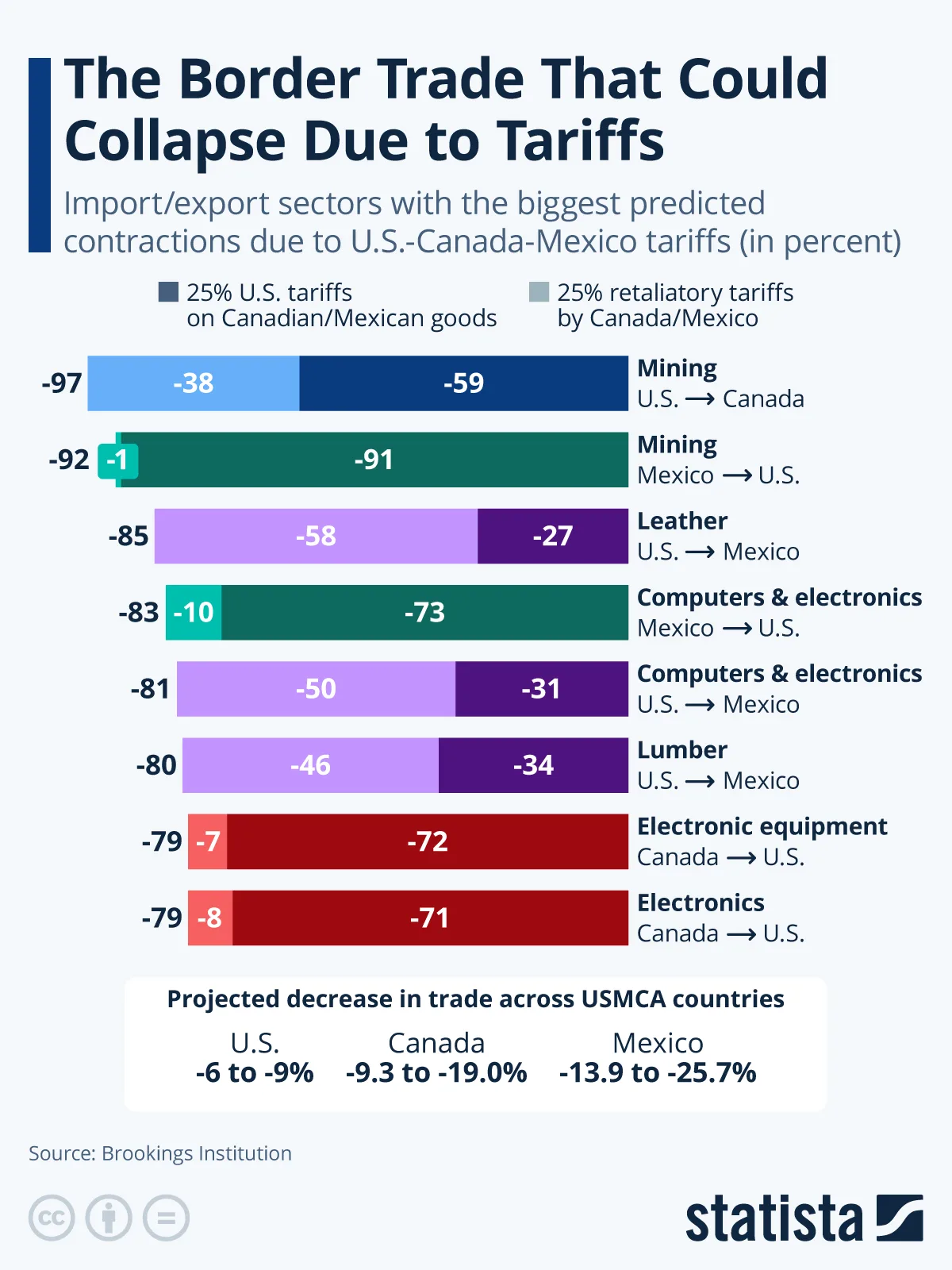
    The mining sector is among the most affected industries, as per the Brookings data. A reciprocal tariff scenario, where both the U.S. and Canada impose 25% tariffs on each other’s goods, could lead to a staggering 97% decline in U.S. mining exports to Canada. Conversely, Mexican mining imports into the U.S. would face similar repercussions, underscoring the fragility of cross-border trade relationships.

    • Estimated Impact of U.S. Tariffs: The U.S. tariff alone could decrease mining exports to Canada by nearly 60%.
    • Canada’s Mining Imports: The projected decline in Canadian mining imports to the U.S. could reach 70%, painting a bleak picture for an industry reliant on bilateral trade.

    Automotive Industry

    The automotive industry, a cornerstone of the U.S. economy, also stands to lose significantly due to imposed tariffs. As the most valuable import category, motor vehicles could experience a drop in trade volumes of approximately 25% for shipments leaving the U.S. and a more substantial 40-50% for incoming deliveries from Mexico and Canada.

    • Reciprocal Tariff Scenario: In a scenario where both Mexico and Canada respond with tariffs of their own, losses could escalate to 50-65%. The integrated nature of supply chains across North America means that any disruption could have cascading effects throughout the automotive sector.

    Consumer Sensitivity and Market Reactions

    Price Sensitivity in the Automotive Sector

    Consumer behavior plays a crucial role in the dynamics of tariffs and trade. Notably, the automotive sector contains products that consumers are particularly price-sensitive about. This sensitivity means that increased costs from tariffs could lead to higher vehicle prices, potentially reducing consumer demand and hurting sales.

    Industry Responses and Protections

    Automakers have voiced their concerns regarding the devastating potential of tariffs. Their supply chains are intricately woven across the borders, involving components and assemblies sourced from various countries. The notion of tariffs disrupts not only local production but also the international collaboration that has characterized the automotive industry for decades.

    The Broader Economic Consequences

    Economic Interconnectedness

    The web of international trade relationships is complex, and tariffs can significantly alter the dynamics of these relationships. As both Mexico and Canada are crucial trading partners for the U.S., the implementation of tariffs can lead to a reevaluation of trade agreements, balance sheets, and economic forecasts.

    Potential for Increased Costs

    All parties involved in cross-border trade face the threat of increased costs and operational difficulties. Businesses may need to find new suppliers or adjust pricing structures, complicating the overall trade climate and creating uncertainty in the marketplace.

    Strategic Considerations for the Future of Trade

    Reassessment of Trade Agreements

    As circumstances evolve, countries may need to reconsider their trade agreements and partnership strategies. The fluctuating nature of tariffs under the Trump administration illustrated the precariousness of trade relations, especially with neighboring nations who share extensive economic ties.

    Long-Term Effects on Domestic Industries

    While tariffs might be designed to protect specific domestic industries, they can lead to unintended consequences. The aforementioned mining and automotive sectors are prime examples of industries that could be severely impacted, prompting a need for policymakers to balance protectionist measures with the realities of globalization.

    Implications for Policy Makers

    With the landscape of tariffs continuously shifting, it’s crucial for policymakers to stay informed about the ramifications of such economic decisions. Analyzing data, understanding market reactions, and being aware of global trends are essential for crafting effective and sustainable trade policies that benefit all stakeholders involved. The effects of tariffs extend beyond immediate trade numbers—they shape the future of economic partnerships and global commerce.

  • Global Tariff Rates: Solomon Islands at 20.7%, U.S. at 1.5%

    Global Tariff Rates: Solomon Islands at 20.7%, U.S. at 1.5%

    The Evolution of Tariffs in Global Trade

    Tariffs, which are taxes imposed on imported goods, play a crucial role in shaping international trade dynamics. The landscape of tariffs has seen significant changes over the years, especially in the context of various geopolitical events. This blog explores recent trends and shifts in tariffs, particularly those influenced by U.S. trade policies.

    Historical Context of Tariffs in the U.S.

    Traditionally, the United States has advocated for low or zero tariffs. This approach was designed to encourage free trade and foster global economic relationships. However, the landscape began shifting under the Trump administration, which saw the introduction of tariffs on goods from China, Mexico, and Canada, as well as on steel and aluminum imports. This marked a significant departure from the decades-long U.S. trade policy, reflecting a more protectionist stance aimed at addressing trade imbalances and domestic economic pressures.

    Current Tariff Rates in the U.S.

    As of 2022, the World Bank reported that the U.S. maintained a weighted average tariff rate of 1.5 percent, positioning it amongst the countries with the lowest tariffs globally. This low rate aligns the U.S. with several European nations, highlighting a continued preference for minimal trade barriers. Nonetheless, the ongoing implications of trade wars, notably with China, have led to fluctuations in this rate. In 2019, data from Deutsche Bank indicated that the average tariff rate had surged to 7 percent, reflecting the tension and retaliatory tariffs imposed during the U.S.-China trade war.

    Global Tariff Landscape

    The global variation in tariff rates is striking. While developed nations often champion low tariffs, many emerging economies maintain significantly higher rates. For instance, in 2022, India recorded an average tariff of 11.5 percent, while China’s was notably lower at 3.1 percent. These rates illustrate the complex strategies nations employ in managing their trade relationships.

    Highest Tariff Rates by Country

    Certain countries have gained notoriety for their high tariff rates, often attributed to protective measures aimed at shielding domestic industries. In Africa, countries like the Republic of the Congo, Cameroon, and Equatorial Guinea have tariff rates exceeding 18 percent. Furthermore, the Solomon Islands boasts the highest weighted average tariff rate globally at 20.7 percent. These statistics highlight how varied regions of the world navigate their trade policies and the crucial role tariffs play in their economic strategies.

    The Impact of Free Trade Agreements

    While the World Bank’s data primarily reflects tariffs without accounting for specific free trade agreements, these agreements remain pivotal in reducing barriers. Countries engaged in significant trade partnerships typically implement lower tariffs as a means to bolster economic cooperation.

    Retaliatory Tariffs and Their Consequences

    As the U.S. implements tariffs, affected countries often respond with retaliatory tariffs, creating a cycle of escalation that impacts global trade. These tariffs can lead to increased costs for consumers and disrupt supply chains, ultimately affecting economic growth on both sides of any trade dispute.

    Conclusion: Navigating the Future of Tariffs

    The dynamic nature of tariffs illustrates the complexities of international trade and the balance nations seek between protecting domestic interests and fostering global economic relationships. As the global economy continues to evolve, so too will the strategies related to tariffs, reflecting ongoing negotiations, economic pressures, and the quest for competitive advantage in an interconnected world.

  • Trump’s Tariffs Could Raise Core Inflation by Up to 2.2%!

    Trump’s Tariffs Could Raise Core Inflation by Up to 2.2%!

    The Impact of Tariffs on U.S. Inflation: A Closer Look

    The introduction of tariffs by the Trump administration has been a significant topic in the realm of U.S. economic policy. The economic ramifications of these tariffs, particularly concerning inflation, have been extensively analyzed, with the Federal Reserve Bank of Boston offering some illuminating insights.

    Understanding Tariffs and Their Economic Implications

    Tariffs are taxes imposed on imported goods, which can serve as a protective measure for domestic industries. However, they also have downstream effects on prices for consumers. With the Trump administration’s tariffs, the potential for rising inflation has become a pressing concern for economists and policymakers alike.

    Projected Inflation Increases Due to Tariffs

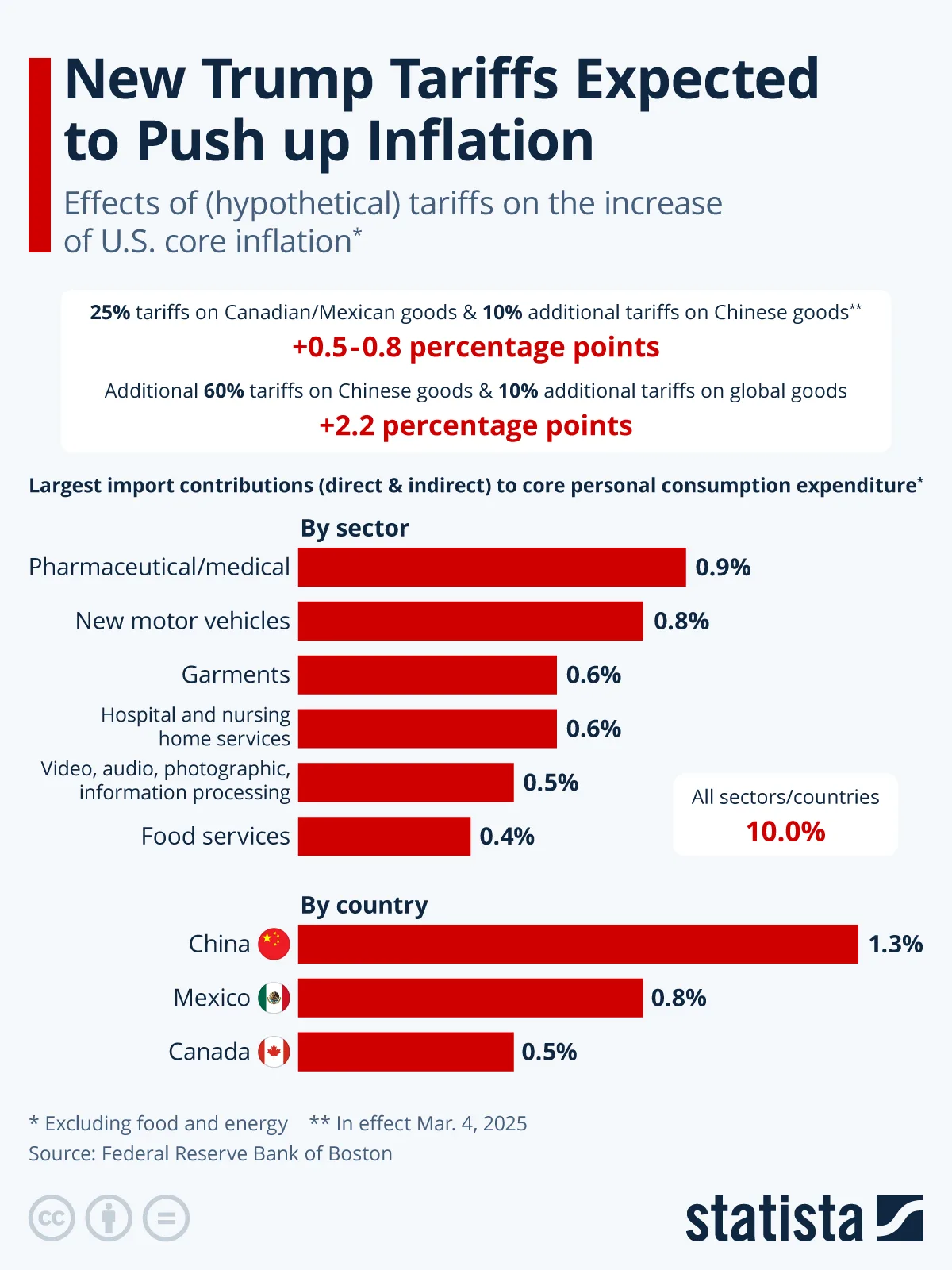
    According to findings from the Federal Reserve Bank of Boston, the tariffs enacted early in the Trump administration could lead to a noteworthy increase in core inflation. Specifically, it’s estimated that these tariffs could raise core inflation—an indicator that excludes food and energy prices—by approximately 0.5 to 0.8 percentage points.

    Moreover, considering additional tariffs that Trump suggested during his campaign, such as a proposed 60 percent tariff on Chinese goods and a blanket 10 percent tariff on all global imports, the forecasted impact on inflation becomes even more pronounced. These measures could potentially boost core inflation by as much as 2.2 percentage points.

    The State of Core Inflation

    Core inflation, which reached a peak of 6 percent in 2022, has shown signs of cooling down, standing at an annualized rate of 3.3 percent as of January 2023. However, with impending tariff actions, concerns arise about how these rates may shift once again. The direct correlation between tariffs and inflation presents a complex scenario for both consumers and the economy at large.

    Imported Goods and Vulnerable Sectors

    The calculations from the Federal Reserve Bank of Boston shed light on which sectors of the economy are most susceptible to these tariff-driven price increases. Approximately 10 percent of core personal consumption expenditures are tied to imports, highlighting the vulnerability of certain sectors to tariff-related pricing pressures.

    Key Vulnerable Industries

    1. Pharmaceuticals and Medical Products: A significant portion of medications and medical devices are imported, making this sector particularly sensitive to tariffs. Price hikes in this category could have serious implications for healthcare costs.

    2. Motor Vehicles: The automotive industry, reliant on parts and assembly from neighboring countries, stands to experience increased costs, which could translate to higher prices for consumers.

    3. Garments and Apparel: Clothing items, many of which are imported from countries like China and Vietnam, may see price surges, affecting consumers’ purchasing decisions.

    4. Hospital and Nursing Home Services: Tariffs can influence the costs associated with supplies and equipment in healthcare settings, potentially leading to higher service fees.

    5. Media and Information Processing: Industries related to audio, video, and photo services could also face increased expenses, contributing to an overall rise in consumer prices.

    The Broader Economic Context

    The implications of tariffs extend beyond inflation rates alone. They encompass the broader economic landscape, influencing consumer behavior, corporate strategies, and international trade relations. Understanding how tariffs shape these factors is vital for anticipating future economic trends and preparing for potential challenges in the economy.

    As the U.S. navigates this complex economic environment, the interplay between tariff policies and inflation will continue to be a critical area of focus for economists, businesses, and policymakers. The ongoing analysis of these tariffs and their implications for inflation will undoubtedly shape economic discourse in the coming years.

  • Tariffs Could Slash GDP by Up to 3% in North America

    Tariffs Could Slash GDP by Up to 3% in North America

    The Impact of U.S.-Mexico-Canada Tariffs on GDP and Employment

    In recent years, the global trading landscape has experienced significant shifts due to the imposition of tariffs, particularly during the Trump administration. A recent infographic highlights the potential repercussions of these tariffs on GDP and employment across the U.S., Mexico, and Canada.

    Overview of Recent Tariffs

    In an effort to curb illegal immigration and substance trafficking, U.S. President Donald Trump enacted a series of tariffs late one Tuesday night. This included a 25-percent tariff on all imports from Mexico, most imports from Canada, and an additional 10-percent tariff on various Chinese goods. This decision was made amidst ongoing discourse about protecting American industries and jobs.

    Responses from Trading Partners

    The immediate response from Canada was swift, with Prime Minister Justin Trudeau announcing a reciprocal 25-percent tariff on $30 billion worth of U.S. goods. They plan to escalate this measure, potentially targeting $125 billion in American imports within three weeks. Given that Canadian imports from the U.S. were valued at $269 billion in 2023, this retaliation could have severe implications.

    China’s reaction was also significant, implementing 10-15 percent tariffs on a range of U.S. agricultural products. These tariffs have the potential to disrupt a fragile trade balance, particularly as China had been a major buyer of U.S. agricultural goods post the previous trade war.

    Tariff Effects on GDP and Employment

    U.S. Economic Forecasts

    According to projections by the Brookings Institution, the tariffs imposed on Mexico and Canada could reduce U.S. real GDP growth by approximately 0.24 percentage points. Should these countries reciprocate with similar tariffs, this could escalate to a decline of 0.32 percentage points for the United States.

    • Employment Impact: Estimates suggest that the U.S. could face a loss of 0.11 to 0.25 percent in total employment. These figures underscore the potential disruption not only to domestic markets but also to the interlinked economies of the U.S.’s northern and southern neighbors.

    Impacts on Canada and Mexico

    Both Canada and Mexico face dire economic forecasts as a result of the U.S. tariff strategy. Since these two nations are heavily reliant on trade with the U.S. (exporting around 80% of their goods there), the risks are considerably heightened:

    • Canada: Expected GDP growth could decrease by over one percentage point, rising to more than three percentage points if retaliatory measures are fully enacted. Employment losses are forecasted to be between 1.3 to 2.5 percent under retaliatory conditions.

    • Mexico: The potential fallout is even more severe, with GDP estimates falling 2.3 to 3.6 percent and similar employment losses that threaten economic stability.

    Inflationary Pressures

    The tariffs are not solely an economic concern related to GDP and employment; they also carry inflationary implications. Brookings anticipates tariffs could raise inflation by an additional 1.33 percentage points in the U.S. In contrast, if Canada and Mexico respond with full retaliation, this effect may be somewhat mitigated to 0.77 percentage points. The Federal Reserve of Boston has also projected an increase in core inflation of between 0.5 to 0.8 percentage points.

    Trade Dynamics and Future Projections

    Decline in Exports

    The imposition of tariffs is predicted to cause a sharp decline in exports among the affected nations:

    • U.S. Exports: Forecasts indicate that U.S. exports to Canada and Mexico could plummet by 6 to 9 percent.

    • Canadian and Mexican Exports: In a retaliatory scenario, Canada could see its exports to the U.S. drop by 9 to 19 percent, while Mexico’s could fall even further, by 14 to nearly 26 percent.

    Affected Industries

    Certain industries are poised to be significantly affected due to the interconnected nature of the economies involved:

    • U.S. Imports: Key sectors such as computers, electronic equipment, and manufacturing may face critical disruptions. Mining, lumber, and metal exports could see declines ranging from 76 to 97 percent in the case of full retaliatory tariffs.

    • Motor Vehicle Market: Both Canada and Mexico are expected to experience a dramatic reduction (40 to 68 percent) in the number of motor vehicles exported to the U.S. Such a decline could substantially increase prices for one of the most valuable import categories for the United States.

    The ongoing saga of tariffs between the U.S., Canada, and Mexico presents a complex web of economic interactions that could have lasting effects on trade relationships, job markets, and inflation rates across North America. As nations navigate these challenges, understanding the layered impacts of such tariffs is essential for gauging future economic trajectories.

  • 70% of Americans Agree Tariffs Raise Prices: A Bipartisan Concern

    70% of Americans Agree Tariffs Raise Prices: A Bipartisan Concern

    Understanding American Perspectives on Tariffs and Inflation

    Tariffs have been a topic of heated debate in American politics, with their implications stretching far beyond economic circles into the everyday lives of citizens. In a climate marked by partisan divides, the public’s understanding and outlook on tariffs provide a fascinating insight into our collective economic consciousness.

    The Impact of Tariffs on Prices

    Recent research from YouGov and The Economist highlights a significant consensus among Americans regarding the economic impact of tariffs. Approximately 70% of respondents believe that tariffs on foreign goods generally lead to an increase in prices. This perspective transcends political affiliations, with a remarkable 87% of Democrats and 57% of Republicans acknowledging this inflationary effect.

    Survey Findings Breakdown

    The survey’s specifics reveal a nuanced understanding across the political spectrum:

    • Democratic Respondents: A strong majority (87%) aligns with the belief that tariffs drive prices higher. This assertion reflects broader concerns about inflation and economic stability across Democratic constituents.
    • Republican Respondents: While 57% agree that tariffs increase prices, this figure is quite compelling given the party’s strong emphasis on free-market principles. However, it’s noteworthy that 63% of Republicans recently supported a substantial 25% tariff on imports from Mexico and Canada. This duality presents an intriguing contradiction—supporting tariffs that they believe will inflate prices.

    The Minority Perspective

    Interestingly, the survey found that only 3% of Americans believed that tariffs exert any impactful force on prices, while a mere 2% felt that they would lower prices. Such low percentages indicate a broad skepticism about the potential benefits of tariffs, suggesting that the vast majority views them as a negative factor in terms of consumer costs.

    Republican Discrepancies

    Despite a significant portion of Republicans recognizing the inflationary consequences of tariffs—particularly in light of growing economic concerns—the support for tariffs on essential trading partners reveals a dilemma within the party. For many Republican voters, economic nationalism and the desire for more robust domestic manufacturing may take precedence over concerns about inflation. This paradox illustrates the complexities of political allegiance and economic perception, where the ideology of supporting American industries can collide with the practical outcomes of such policies.

    Economic Concerns Amplified

    The concern over inflation and tariffs has escalated given the context of rising prices across numerous sectors. Economists warn that implementing high tariffs could lead to further consumer price inflation, potentially exacerbating existing economic challenges. The potential re-acceleration of inflation poses a worrying prospect as it could affect everything from groceries to housing, impacting everyday American life.

    Historical Context of Tariffs

    Understanding the current sentiment requires a brief examination of America’s historical relationship with tariffs. Tariffs have long been used as a tool for protecting domestic industries. However, the results have sometimes led to unintended consequences, including trade wars, retaliatory measures from other countries, and increased costs for consumers.

    In Conclusion

    While the data indicates a strong consensus on the inflationary effects of tariffs among Americans, the prevailing political narratives and economic realities create a complex landscape. The intersection of ideology, economic reasoning, and public sentiment shapes the ongoing discourse around trade and tariffs.

  • EU’s 3.9M Tonnes of Russian Fertilizer Imports in 2023

    EU’s 3.9M Tonnes of Russian Fertilizer Imports in 2023

    EU’s Continued Purchase of Russian Fertilizers Amidst Ongoing Conflict

    The tension in Ukraine has sparked widespread debates regarding the European Union’s reliance on Russian commodities, particularly fertilizers. Despite extensive sanctions imposed on Russia’s gas and oil sectors, a significant proportion of fertilizers continues to flow into Europe. This blog delves deeper into the implications of this ongoing trade and the reactions surrounding it.

    The Context of the Ongoing Conflict

    Background of the Ukraine War

    Since the onset of the Ukraine war in February 2022, numerous countries, particularly in the West, have expressed solidarity with Ukraine through various sanctions aimed at crippling Russia’s economy. These measures focused primarily on the energy sector, which is crucial for funding the conflict, yet they also unveiled a complicated dependency on other commodities, notably fertilizers.

    Economic Sanctions: A Double-Edged Sword

    The sanctions imposed on Russia aimed to stifle its economic capabilities and limit its capacity to finance military operations. However, the consequences of these sanctions have demonstrated that some sectors, such as agriculture, have remained untouched. The ongoing importation of Russian fertilizers poses a significant dilemma for policymakers.

    Recent Data on Fertilizer Imports

    Import Figures and Trends

    Recent data from Eurostat reveals that the EU imported approximately 3.9 million tonnes of Russian fertilizers in 2023 alone. This trend continued into 2024, where an additional 3.7 million tonnes were recorded in just the first nine months. Notably, the import figures for July 2024 were striking, showing an increase of 50 percent compared to July 2021, underscoring the EU’s continued reliance on Russian agricultural outputs.

    EU’s Trade Policies

    The European Commission has proposed significant tariff increases on Russian fertilizers, aiming to raise the current tariff from 6.5 percent to a staggering 100 percent over three years. This proposal indicates a shift in strategy, as the EU seeks to reduce its dependency on Russian commodities without compromising agricultural productivity within its borders.

    Proposed Tariffs and Their Implications

    Tariff Structure

    If implemented, the new tariffs would substantially increase the cost of importing nitrogenous fertilizers, potentially amounting to €315 per tonne, while other fertilizers could rise to €430 per tonne. This initiative aims not only to curtail financial flows to Russia but also to foster domestic production and diversify supply chains within the EU.

    Potential Outcomes for European Agriculture

    While the protective measures are designed to bolster local farmers, many within the agricultural sector are apprehensive. The increased production costs resulting from higher tariffs could lead to challenges for European farmers, especially amidst fears that domestic supply might not keep pace with demand.

    The Call for Increased Economic Pressure

    CEPA’s Report and Recommendations

    The Center for European Policy Analysis (CEPA) has recently reiterated its position regarding the need for enhanced economic pressure on Russia. A report released by the organization advocates for secondary sanctions targeting companies that continue to bolster Russia’s war efforts. CEPA’s critique highlights the perceived caution of the Biden-Harris administration’s foreign policy approach, arguing that a more robust stance is essential to prevent a prolonged stalemate in the conflict.

    Global Food Security Concerns

    One of the EU’s critical considerations has been global food security. The reluctance to impose sanctions on Russian agricultural products stems from fears that such measures could exacerbate food shortages worldwide. The balancing act between supporting domestic production and ensuring global food supply remains a contentious issue.

    Farmers’ Concerns

    Production Costs and Demand

    European farmers are voicing their worries over anticipated increases in production costs attributed to the proposed tariffs. There are significant uncertainties about whether the local agricultural sector can rise to the challenge of meeting demand, particularly in light of potential shortages and rising prices.

    The Future of Agricultural Independence

    The debate surrounding dependency on Russian fertilizers is not just about economic factors; it delves into profound issues of agricultural independence and resilience in the face of geopolitical conflicts. As EU policymakers navigate these complex waters, the future of farming in Europe hangs in the balance.

    In navigating the intricate relationship between agricultural dependency and geopolitical considerations, the EU faces pivotal decisions that will shape its economic landscape for years to come.

  • U.S. Trade Leverage: 43% Imports and 41% Exports at Stake

    U.S. Trade Leverage: 43% Imports and 41% Exports at Stake

    The Unconventional Use of Tariffs in Trade Wars

    Tariffs have long been tools of economic policy, utilized historically to generate government revenue and shield domestic industries from overseas competition. However, the contemporary political landscape, particularly under President Donald Trump’s administration, showcases a novel application of tariffs as instruments of political leverage rather than mere economic tools.

    Tariffs as Political Tools

    In the early days of his second administration, President Trump has made his stance on tariffs increasingly clear. Instead of employing them solely for the traditional purposes of revenue generation or protective measures, Trump has redefined tariffs as bargaining chips in diplomatic negotiations. His approach suggests a shift in how economic policies are leveraged in the global arena, focusing on achieving political goals over conventional economic outcomes.

    The Announcement of New Tariffs

    On February 1, President Trump announced a dramatic shift in economic policy by implementing a 25-percent tariff on all imports from Canada and Mexico, alongside an additional 10-percent tariff on goods from China. Unlike previous tariffs aimed at supporting American industries, these new tariffs are framed as efforts to combat what Trump describes as the "flood of illegal aliens and drugs" entering the U.S. He has targeted these nations while attributing significant blame for issues surrounding the illicit fentanyl trade.

    Economic Impact on Trade Partners

    To grasp the implications of these tariffs, it’s essential to consider the significance of the U.S. trade relationships with Canada, Mexico, and China. In 2023, these three nations comprised 43 percent of U.S. goods imports and 41 percent of U.S. exports. This substantial interdependence means that retaliation or additional tariffs could adversely impact American businesses and consumers as well.

    Trade Dependency Ratios

    The World Bank’s data highlights a vital point of comparison between the U.S. and its trade partners. In 2023, U.S. trade—defined as the sum of imports and exports of goods and services—represented about 25 percent of the nation’s Gross Domestic Product (GDP). In contrast:

    • China: 37 percent of GDP tied to trade.
    • Canada: A staggering 67 percent.
    • Mexico: Even higher at 73 percent.

    These figures indicate a profound dependency on trade for Canada’s and Mexico’s economies, making them particularly vulnerable to U.S. tariffs.

    Leverage in Negotiations

    The dominance of the U.S. market poses a unique advantage for American policymakers. With roughly 80 percent of both Mexican and Canadian exports directed toward the U.S., the imposition of high tariffs could disrupt their economies significantly. This reliance delivers a strategic bargaining advantage to the Trump administration during negotiations.

    China’s Different Position

    Conversely, the situation with China reveals a more complex scenario. While China is a substantial trade partner, its economic structure is less reliant on U.S. markets compared to its North American counterparts. In 2023, U.S. purchases constituted only 15 percent of Chinese exports, suggesting that the tariffs imposed by the U.S. may have limited impact on the Chinese economy. As a result, the U.S. may find it more challenging to negotiate favorable terms in trade discussions with China.

    The Future of U.S. Trade Policy

    The evolving landscape of trade policy in the U.S. highlights a significant departure from traditional economic strategies. The ongoing shifts underline the importance of understanding how interconnectedness and dependency shape international relations. As the U.S. navigates these turbulent waters, the outcomes of trade wars could have far-reaching effects on both domestic and global economic policies.

    By analyzing the intricate dynamics of trade relationships, it becomes evident that the implementation of tariffs transcends mere economics, embedding themselves within the broader context of geopolitical strategy. As global interdependencies continue to evolve, the implications of such tariffs are bound to reverberate across borders, influencing markets and policies worldwide.

  • JPMorgan: Trump’s Tariffs on North America to Surprise Markets

    JPMorgan: Trump’s Tariffs on North America to Surprise Markets

    JPMorgan anticipates heightened volatility in the stock market as investors digest the ramifications of these recent measures, particularly in light of the currently high valuations of large-cap U.S. stocks.

    The analysis underscores the necessity for portfolios to be well-diversified and structured to endure market turbulence during uncertain times.

    The firm advises that maintaining a resilient portfolio through effective diversification is crucial.

    This strategy is designed to help investors navigate ongoing uncertainties without jeopardizing their short-term needs or long-term objectives.

    The research highlights the need to focus on potential impacts on regional economic stability within North American markets.

    “These tariffs introduce considerable uncertainty to our economic and market forecasts,” states the Global Investment Strategy team at JPMorgan in their report.

    “We previously thought that substantial tariffs on Canada and Mexico were improbable due to their possible detrimental effects on North American growth.”

    The potential consequences extend beyond immediate market reactions, as noted in the analysis.

    The economies of Mexico and Canada are at an increased risk due to their reliance on exports, while U.S. markets must brace for both direct impacts and possible retaliatory actions from trading partners.


    Check out the latest edition of FinTech Magazine and join the dialogue at our global conference series, FinTech LIVE.

    Explore our upcoming events and grab your tickets today.


    FinTech Magazine is a proud BizClik brand.

  • Get Ready for Higher Gadget Prices as Tariffs Hit Trade Partners

    Get Ready for Higher Gadget Prices as Tariffs Hit Trade Partners


    Shoppers in the United States are bracing for an impending price increase that may have widespread implications across various sectors, including budget-friendly electronics, trendy clothing, and electric vehicles. President Donald Trump has recently enacted a new series of significant tariffs on imports from Canada, Mexico, and China, utilizing the International Emergency Economic Powers Act (IEEPA) and the National Emergencies Act (NEA).

    Goods imported from Mexico and Canada will incur a 25% tariff, while items from China will face an additional 10% duty. According to the Tax Foundation, these tariffs will directly impact American consumers' wallets.

    “The tariffs on Canada and Mexico alone are projected to increase taxes by $958 billion from 2025 to 2034, translating to an average tax hike exceeding $670 per US household in 2025.”

    President Trump has stated, “A 10% tariff on China will remain in place until we achieve full cooperation from the Chinese government concerning fentanyl. China is at the center of the fentanyl crisis affecting American lives.”

    — The White House (@WhiteHouse) February 1, 2025

    Items sourced from China—including popular consumer electronics like iPhones—are likely to see price increases. Previously, many top-selling electronics like smartphones and televisions had been exempt from tariffs.

    “The proposed 10% blanket tariff could affect the pricing of virtually anything manufactured in China and exported to the US, impacting a wide range of products—everything from toys to laptops,” said analysis from the BBC.

    Exemptions Are Eliminated

    The situation may worsen with retaliatory tariffs. Experts suggest that most businesses will likely pass the increased costs onto customers. China has threatened retaliatory measures, while both Mexico and Canada have already declared their own counter-tariffs.

    The White House also noted the de minimis exemption has been revoked. Items imported into the US valued at $800 or less previously benefited from no tariffs, taxes, or fees.

    The Low-Cost Advantage Disappears

    The de minimis threshold was previously set at $200 before Congress raised it to $800 in 2016. Its elimination could significantly impact shoppers, particularly those purchasing from popular e-commerce sites like Shein and Alibaba.

    According to US Customs and Border Protection, over $47 billion worth of goods entered the US under the de minimis exemption, contributing to the rapid growth of sites like Shein at the expense of domestic competitors.

    Wacom Movink tablet and laptop side by side.
    Nadeem Sarwar / Digital Trends

    For many lower-income customers, these de minimis purchases were invaluable, offering lower prices despite longer delivery times. The increase in prices will also extend to food, alcoholic beverages, household appliances, and especially electric vehicles.

    According to government data, the US imported over $150 billion in motor vehicles and parts from Mexico last year, with Canada contributing $34 billion in vehicle imports.

    The ramifications of these tariffs will be felt by all four trading countries involved. “Intermediate goods—especially in the automotive sector—cross borders multiple times before final assembly. Imposing tariffs at each production stage could have disastrous effects,” warns the Peterson Institute for International Economics.

    While there is still substantial uncertainty regarding how the tariffs will unfold and their ultimate impact on consumer prices, it is clear that a trade war is underway, and its inflationary effects will likely be felt soon.

  • Only 45% of Americans Understand Tariffs, Survey Reveals

    Only 45% of Americans Understand Tariffs, Survey Reveals

    Understanding Tariffs: The Basics

    What Is a Tariff?

    A tariff is a government-imposed tax on imports, meaning it is a fee levied on goods brought into a country from abroad. This tax is primarily paid by the importing companies, which can lead to an increase in prices for consumers. Essentially, tariffs can be used as a tool to control foreign trade and protect domestic industries by making imported goods more expensive.

    Survey Insights on Tariff Awareness

    According to a recent survey conducted by Ipsos in December 2024, the understanding of tariffs among the American public is surprisingly low. Only 45 percent of respondents could correctly identify a tariff as a tax on imports. This gap in knowledge raises questions about public awareness regarding trade policies that significantly impact the economy.

    Misconceptions Surrounding Tariffs

    Common Misunderstandings

    The survey highlighted several misconceptions regarding tariffs. Notably, 17 percent of respondents believed that the exporting country pays the tax to the importing country. This narrative, which has been popularized by various political figures, including former President Trump, can create confusion about how tariffs actually function in the economic landscape.

    Other Incorrect Definitions

    In addition to the misconception that exporting countries bear the cost of tariffs, respondents had a few other incorrect definitions. Some thought tariffs were trade agreements allowing one country to charge fees on another, while others confused them with subsidies paid to domestic producers. Alarmingly, nearly a quarter (23 percent) of those surveyed admitted they did not know what a tariff is at all.

    The Political Context of Tariffs

    The Role of Tariffs in Trump’s Economic Vision

    Tariffs have played a central role in President Trump’s economic policies since his election campaign. His administration took a strong stance on trade, frequently emphasizing the need to impose tariffs on various goods to protect American industries. This led to heightened tensions in international trade relations and significant discussions surrounding the implications of such measures.

    Targeted Industries for Tariffs

    In a recent address to House Republicans, President Trump specified the industries most likely to face tariff increases, including pharmaceuticals, semiconductors, and steel. By focusing on these sectors, the administration aimed to bolster domestic production and safeguard American jobs from international competition.

    Financial Implications of Tariffs

    The financial scope of proposed tariffs has varied throughout Trump’s presidency. He has mentioned imposing tariffs upwards of 10 percent on goods imported from significant trading partners such as Canada, Mexico, and China. Such percentages can have substantial effects on consumer prices and the overall economy, making public understanding of tariffs even more crucial.

    The Importance of Public Awareness on Economic Issues

    The Need for Education on Tariffs

    Given the significant impact tariffs can have on both the economy and everyday life, increasing public knowledge and understanding of this subject is essential. A lack of clarity around economic policies can lead to confusion and misinformed opinions, ultimately influencing political decisions and civic engagement.

    Future Implications for Trade Policy

    As trade policy remains a hot topic in American politics, understanding tariffs and their implications will be of growing importance. As economic discussions continue to evolve, so too must the public’s grasp of such critical concepts. The Ipsos survey serves as a reminder of the need for ongoing education around trade-related topics in order to foster informed citizens who can actively participate in discussions regarding economic policy.