Tag: ceasefire

  • Key Highlights of the Peace Board’s Gaza Ceasefire Proposal

    Key Highlights of the Peace Board’s Gaza Ceasefire Proposal

    The Board of Peace has issued a 15-point “roadmap” to implement President Donald Trump’s Gaza ceasefire proposal. This plan outlines steps toward disarming Hamas and gradually withdrawing Israeli forces from Palestinian territories.

    Key highlights include:

    • Both Israel, Hamas, and other Palestinian factions will cease military activities.
    • The timeline and detailed procedures will be established within 14 days once all parties endorse the plan; extensions may be possible.
    • The National Committee for the Administration of Gaza (NCAG) will deploy into Gaza and begin assuming governing responsibilities.
    • Progress to subsequent phases depends on verified completion of prior commitments.
    • An International Verification Committee (IVC) will oversee verification and monitor violations during the process.
    • Gaza will be managed under the principle of “One Authority, One Law, One Weapon,” with NCAG operating according to Palestinian laws and international standards.
    • Newly trained police officers will integrate into existing structures after thorough vetting; personnel not meeting standards will be reassigned civilian roles. All police weapons will transfer to NCAG control.
    • A process to decommission, store, and manage Hamas’s heavy weapons, military sites, depots, and tunnels will be gradually implemented by NCAG, tied to phased Israeli withdrawals.
    • Weapons will not be transferred to Israel or other non-Palestinian entities; ultimately, NCAG will hold all weapons.
    • A temporary International Stabilization Force (ISF) will be stationed in Gaza to separate Israeli forces from NCAG-controlled areas.
    • The ISF will monitor ceasefire compliance, train Palestinian police, secure humanitarian aid, and support NCAG, but will not perform policing or societal security functions.
  • Iran vows to honor ceasefire amid Trump’s truce end

    Iran vows to honor ceasefire amid Trump’s truce end

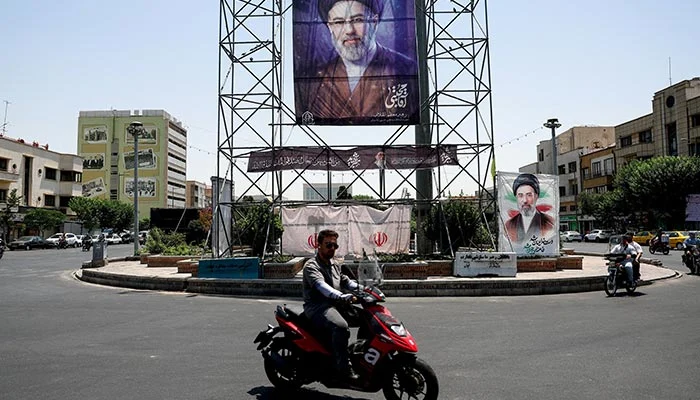
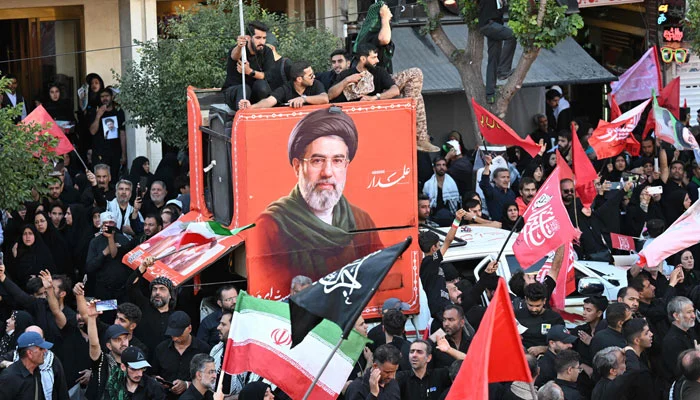
    Crowds gather along a street around a portrait of Iran’s Supreme Leader Mojtaba Khamenei at the Shrine of Imam Reza, Iran’s most sacred site, in Mashhad on July 9, 2026. — AFP

    – Iran maintains it must control the Strait of Hormuz.
    – Araghchi will travel to Oman for talks, according to state media.
    – Prime Minister Shehbaz Sharik urges Iran to protect the fragile peace they’ve fought to establish.

    Iran asserts it has fulfilled its promise regarding a ceasefire with the United States, despite President Donald Trump claiming the truce has ended, though he also indicated he’s open to further negotiations with Iran. These statements mark a significant decline in relations amidst recent skirmishes that threaten the fragile agreement aimed at solidifying the months-long ceasefire into lasting peace, avoiding a return to full-scale regional conflict.

    On Saturday, Trump intensified the rhetoric, posting on Truth Social that if Iran attempts or manages to assassinate him, he would “completely decimate” Iran. This followed his earlier indication that he was open to further talks, even as he declared the ceasefire was over, just weeks after Washington and Tehran signed an agreement promoting peace.

    While direct negotiations between Iran and the U.S. have not resumed since last month, reports indicate a mediator from Qatar was in Tehran following exchanges of missile fire. Trump tweeted, “The Islamic Republic of Iran has asked us to continue ‘talks’. We’ve agreed, but the U.S. has made it clear that the ceasefire is over.” Earlier at a NATO summit, Trump also declared the ceasefire’s end, dismissing Tehran’s diplomacy as “a waste of time.”

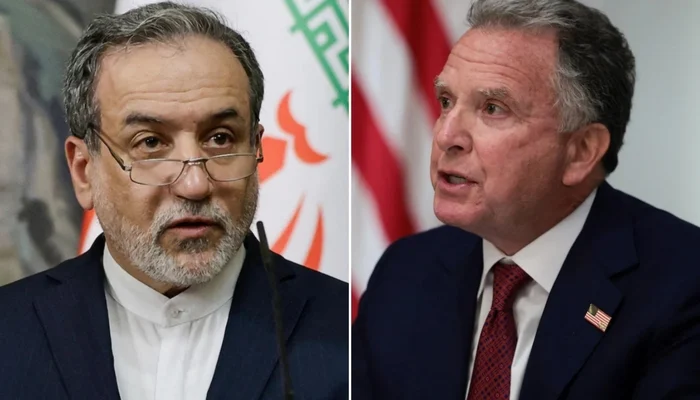
    Iran’s Foreign Minister Abbas Araghchi responded Saturday, asserting that Iran has “kept its word so far,” accusing the U.S. Treasury Secretary of violating the memorandum of understanding. This agreement stipulated Iran would maintain its current nuclear program status, and the U.S. would refrain from imposing new sanctions or deploying additional forces, pending a final deal. Araghchi emphasized that “mutual compliance” is essential, pointing out violations by the U.S.

    Although both nations held one direct round of talks in Switzerland and engaged in indirect negotiations in Qatar, no diplomatic progress has been evident recently.

    The tense rhetoric coincides with reports that Washington has given Iran an ultimatum: cease attacks on commercial ships in the Strait of Hormuz and recognize the waterway’s open status by Saturday. The Strait, a vital shipping corridor for global oil supplies, remains a flashpoint with Iran, which effectively closed it in response to U.S.-Israeli strikes earlier this year. Iran insists it must control Hormuz—covering Iranian and Omani waters—and has proposed charging fees for ships passing through.

    Recent U.S. strikes in the region followed attacks on ships and prompted Iranian reprisals against American bases in the Gulf. Additionally, the U.S. Treasury revoked a temporary waiver allowing Iran to produce and sell crude oil, canceling a license effective through August 21.

    Iranian officials, including Araghchi, are headed to Oman for discussions on the Strait. Qatar continues to advocate diplomacy, with reports noting a Qatari delegation in Tehran trying to reinforce Qatar’s role as a mediator after condemning Iran’s recent attacks on a Qatari LNG tanker. Iran denies involvement.

    Prime Minister Shehbaz Sharif, involved in mediating the crisis, spoke with Qatar’s emir and Iran’s President Pezeshkian to urge protecting the peace. Meanwhile, Iran’s chief negotiator, Mohammad Bagher Ghalibaf, issued a defiant statement, emphasizing that Iran will never surrender in this confrontation and affirming the country’s readiness to defend itself.

  • Iran and US Reach Deal to Pause Attacks and Resume Negotiations

    Iran and US Reach Deal to Pause Attacks and Resume Negotiations

    Iran and the U.S. have agreed to cease hostilities in the Persian Gulf and restart discussions concerning their conflict over the Strait of Hormuz, according to a U.S. official on Sunday. This development offers hope of preserving a temporary peace agreement amid recent exchanges of strikes that have heightened tensions.

    “Technical negotiations are expected to continue on all aspects of the Memorandum of Understanding (MOU). Both parties will temporarily stand down, allowing vessels to move freely,” the official stated. The MOU, signed on June 17, outlines the reopening of the Strait of Hormuz for maritime traffic.

    Axios, reporting first on the ceasefire, cited a senior U.S. official indicating that discussions will reconvene Tuesday in Qatar. This diplomatic effort follows days of tit-for-tat military actions triggered after Iran attacked a cargo vessel in the Strait of Hormuz last week, with both nations accusing each other of violating the ceasefire agreement brokered in June.

    Earlier on Sunday, Iran launched missile and drone strikes against U.S. military targets in Kuwait and Bahrain, shortly after President Donald Trump warned that Iran risks its existence if it refuses to honor commitments to cease hostilities.

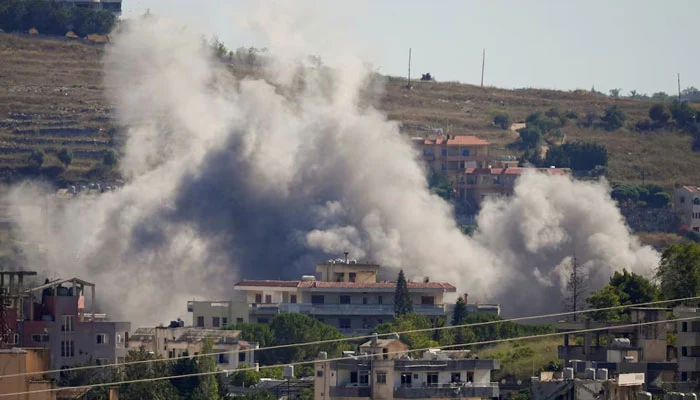
    Concurrently, Israel reported striking Iranian-backed Hezbollah positions in southern Lebanon again, destroying underground facilities used by the group. This strike followed a recent ceasefire agreement with Lebanon. Iran has emphasized that the conflict in Lebanon must end if the broader peace efforts are to succeed.

    The U.S. military also conducted strikes on Iran following an attack on a commercial tanker in the Strait, a critical global energy shipping route that Iran has largely hindered during the ongoing conflict.

    Trump, expressing increasing frustration, warned on social media that if Iran refuses to abide by the peace process, the U.S. might be compelled to “militarily complete the job” they initially began, declaring, “The Islamic Republic of Iran will no longer exist!”

    The initial 14-point peace plan was designed to stop the violence instigated by the U.S. and Israel, which started on February 28, involve reopening the Strait of Hormuz, and facilitate negotiations on Iran’s nuclear program.

    Despite a recent round of mediated talks led by U.S. Vice President JD Vance and Iranian parliamentary speaker Mohammad Baqer Qalibaf in Switzerland, fighting has continued and even intensified after the U.S. waived some sanctions on Iran.

    Shortly after Trump’s warning, Kuwait reported its air defenses intercepting missile and drone attacks, and Bahrain issued alerts of siren sounds in response to what was described as an Iranian attack, damaging a residential building with no reported casualties. Bahrain has urged the UN Security Council to hold an urgent session to address Iran’s actions.

    Kuwait also intercepted two ballistic missiles, with no casualties or damage reported. Meanwhile, Qatar announced that one of its citizens died from shrapnel injuries resulting from a vessel incident linked to military operations, with another person injured during the same event, details of which remain unclear.

  • US, Iran Diplomats Head to Talks as Israeli Strikes Persist

    US, Iran Diplomats Head to Talks as Israeli Strikes Persist

    Iran’s Foreign Minister Abbas Araghchi and U.S. envoy Steve Witkoff were heading to Switzerland for discussions, according to Axios. Meanwhile, ongoing Israeli airstrikes threaten to undermine a fragile ceasefire that is seen as crucial for ending the conflict involving Iran.

    In Lebanon, a ceasefire was declared following recent escalations, but overnight Israeli attacks in the southern region resulted in at least five casualties, Lebanese state media reported. The ceasefire, effective around 4 p.m. on Friday, was a prerequisite for initiating 60 days of U.S.-Iran negotiations aimed at resolving disputes over Iran’s nuclear program and other contentious issues. These negotiations are vital for reopening the Strait of Hormuz and stabilizing global oil markets.

    Witkoff is en route to Switzerland to join Jared Kushner, who is already present. Araghchi was also scheduled to travel there on Saturday, Axios stated. The White House did not comment on Witkoff’s travel plans, and Iran has not confirmed Araghchi’s itinerary.

    Vice President JD Vance had previously canceled plans to visit the Swiss mountain resort of Bürgenstock as preparations for technical talks advanced amidst rising tensions between Israel and Hezbollah. Switzerland remains prepared to facilitate these talks, with ongoing preparatory efforts by the Swiss foreign ministry.

    The interim agreement, signed earlier this week, requires the U.S., Iran, and their allies to cease all military operations immediately and permanently in all regions, including Lebanon. Notably, Israel, which is excluded from these negotiations, asserts it is not a participant.

    In discussions with Pakistan’s foreign minister, Araghchi emphasized that the U.S. would be accountable for any violations, including the breach of ceasefire in Lebanon. The conflict intensified when Hezbollah launched attacks on Israel in early March, prompting Israel to retaliate and invade southern Lebanon.

    Ahead of upcoming talks in Washington between U.S. Secretary of State Marco Rubio and Lebanese President Joseph Aoun, the Lebanese presidency highlighted the importance of a comprehensive ceasefire as a cornerstone of those negotiations.

    The ongoing conflict has resulted in over 7,000 deaths, primarily in Iran and Lebanon, and has contributed to rising global energy prices and inflation. Oil prices fell approximately 8% this week, partly due to increased shipments through the Strait of Hormuz following the interim deal. Prior to Iran’s blockade, the strait accounted for nearly a fifth of the world’s oil and liquefied natural gas exports.

    Iran’s body responsible for managing the strait announced plans to waive scheduled fees during the interim negotiations. The agreement offers Iran relief from economic sanctions, unfreezes assets worth billions, and includes immediate U.S. waivers on oil exports, along with a proposed $300 billion reconstruction fund and other financial incentives.

    President Trump continued to defend the deal amid criticism, asserting that the conflict has weakened Iran. He stated on social media that Iran’s economy was collapsing and that the U.S. would hold the line for 60 days, emphasizing that Iran would receive no financial aid during this period.

  • Lebanon Ceasefire Reached After US-Iran Talks in Switzerland Cancelled

    Lebanon Ceasefire Reached After US-Iran Talks in Switzerland Cancelled

    A ceasefire agreement has been reached between Israel and Hezbollah in Lebanon after escalating hostilities threatened to derail broader peace negotiations over Iran. The recent clashes cast doubt on the progress toward a lasting Middle East peace deal. U.S.-Iran negotiations scheduled for Switzerland on Friday were postponed due to renewed fighting, adding uncertainty to the vital discussions about reopening the Strait of Hormuz to international shipping.

    President Donald Trump later told NBC News that he had spoken with Israel and encouraged them to accept a ceasefire. He was quoted saying, “Sometimes you just have to calm down and think ahead,” though he didn’t specify whether he had directly contacted Israeli Prime Minister Benjamin Netanyahu.

    An American official confirmed that the ceasefire took effect around 4 p.m. Lebanon time (1 p.m. GMT), following exchanges of fire. Negotiators from the U.S. and Qatar, with assistance from Iran, had finalized the agreement. Both Hezbollah and an Israeli official verified the ceasefire to Reuters. The Israeli official noted that as long as Hezbollah refrains from attacking, Israel will not consider it a time of war. Israel intends to maintain its forces in southern Lebanon, where it controls a strip along Israel’s northern border.

    Lebanese sources reported that Israel conducted around twelve airstrikes during the initial hour of the ceasefire, with no strikes recorded after 5 p.m. Local tensions remain high, and the conflict could influence upcoming negotiations, particularly since ending the fighting in Lebanon is a prerequisite for a broader U.S.-Iran accord.

    Unresolved issues persist despite recent agreements. The memorandum signed by the leaders of Iran and the U.S. grants a 60-day window to reach a comprehensive deal regarding Iran’s nuclear program or to extend the current interim agreements. While negotiations were set to begin in Switzerland’s mountain resort of Buergenstock, Vice President JD Vance canceled his participation, and the talks have been delayed.

    Switzerland’s foreign ministry stated that preparations are ongoing and remain willing to facilitate the discussions. Hassan Fadlallah, a Hezbollah lawmaker, indicated that Iran’s stance depends on a comprehensive ceasefire, while Lebanon’s government is advised against direct negotiations with Israel while attacks continue.

    The interim deal calls for the U.S., Iran, and their allies to immediately and permanently end military actions on all fronts, including Lebanon. Israel, however, is excluded from this agreement and states it is not a party to the negotiations.

    Iran’s Foreign Minister Abbas Araqchi, in a call with Pakistan’s deputy prime minister, warned that the U.S. would bear responsibility for any violations of the deal, including the cessation of hostilities in Lebanon.

    The conflict’s origins trace back to March 2, when Hezbollah fired at Israel, prompting Israeli military responses and an incursion into southern Lebanon. Since then, Lebanese authorities report 18 deaths and 33 injuries from recent heavy airstrikes in eleven southern towns. The Israeli military announced four soldiers were killed in an incident in Lebanon but provided no further details. Israel claims its strikes targeted Hezbollah operatives and infrastructure in response to violations by the group.

    Lebanese President Joseph Aoun condemned the Israeli attacks but expressed hope that the escalation would not obstruct efforts to establish a comprehensive ceasefire. The ongoing conflict between the U.S. and Israel against Iran, which started with airstrikes on February 28, has resulted in over 7,000 deaths, mainly in Iran and Lebanon, and increased global energy prices, fueling inflation worldwide.

    Oil prices have eased since the interim deal was signed, as tankers move through the Strait of Hormuz again — a key choke point that Iran previously blockaded. The Iran-backed body managing the strait announced it would waive fees for its use during the 60-day negotiation period.

    The recent agreement also envisions economic relief for Iran, including the unfreezing of billions of dollars in assets and immediate U.S. waivers for its oil exports. Negotiators have 60 days to settle the status of Iran’s nuclear program unless an extension is agreed upon, and to establish a $300 billion reconstruction fund for Iran along with other financial incentives.

    Trump reiterated his support for the deal amid criticism from some in Washington, including Republican members of Congress concerned that he may have conceded too much—especially as the U.S. approaches midterm elections in November.

  • Visual Journey: 111 Days from US-Iran Conflict to Peace

    Visual Journey: 111 Days from US-Iran Conflict to Peace

    Following persistent diplomatic efforts orchestrated by Pakistan, the United States and Iran finalized the Islamabad Memorandum of Understanding (MoU), bringing an end to the prolonged conflict that commenced on February 28, 2026, and quickly spread across the Middle East.

    Initially, the US and Israel launched attacks against Iran, targeting alleged military sites, which prompted Tehran to retaliate with missile and drone strikes throughout the region. The action resulted in Iran effectively shutting down the Strait of Hormuz, a vital channel for global trade. In response, the United States implemented a blockade on ships entering and leaving Iranian ports.

    Pakistan’s diplomatic mediation proved instrumental in bringing the conflicting parties to the negotiation table, leading to a tentative ceasefire on April 8. Pakistani officials are widely recognized for providing a neutral ground and maintaining diplomatic dialogue, which allowed a fragile pause in hostilities, culminating in the signing of the peace deal.

    February 28 marked the day of attack, dubbed ‘D-day,’ when the US and Israel initiated military operations against Iran, targeting what they claimed were military infrastructure.

    A significant incident during this period was the bombing of a girls’ primary school in Minab, Iran, which resulted in numerous civilian casualties and became one of the most sensitive issues of the conflict. The attack on the school, located in southern Iran, drew widespread condemnation.

    Iran, later confirming the death of its Supreme Leader, Ayatollah Ali Khamenei, declared that he was martyred in the US-Israeli strikes. Public mourning scenes filled Tehran’s streets following the news.

    Amid escalating tensions, Iran announced the closure of the Strait of Hormuz to international shipping, transforming the conflict into a global energy crisis as oil prices soared worldwide. Satellite images captured smoke emanating from vessels near Bandar Abbas, indicating ongoing maritime disruptions.

    Further hostilities included Israeli military operations across Lebanon and the occupied territories, with targeted strikes and ground searches conducted in response to Hezbollah and other militant activities. The region experienced increased airstrikes and missile launches, with Iran retaliating with attacks against US and allied targets in the Gulf region and Jordan.

    In a surprising turn, the United States and Iran signed the MoU in Islamabad, facilitated by Prime Minister Shehbaz Sharif’s intermediary role. The agreement laid the groundwork for peace, with formal signing ceremonies attended by high-ranking officials from both sides.

    Following the peace accords, Iran named Mojtaba Khamenei, son of the late Ayatollah Khamenei, as the new supreme leader, signaling regime continuity despite the ongoing military conflict. The change in leadership was symbolized by public displays of his photos alongside the late leader’s images.

    Despite the signed agreement, hostilities reignited briefly, with intense exchanges of strikes, missile launches, and retaliatory attacks on military and civilian targets. Iran’s Revolutionary Guards claimed to have launched attacks against U.S. bases in Jordan and other Gulf locations in retaliation for previous strikes around the Strait of Hormuz.

    Ultimately, the US and Iran agreed to resume limited offensive actions, yet the peace process continued to be fragile. The deal was formally sealed with Prime Minister Shehbaz Sharif’s involvement, marking a significant step toward ending the conflict that had engulfed the region for months.

  • Israel and Iran exchange fire for the first time since truce

    Israel and Iran exchange fire for the first time since truce

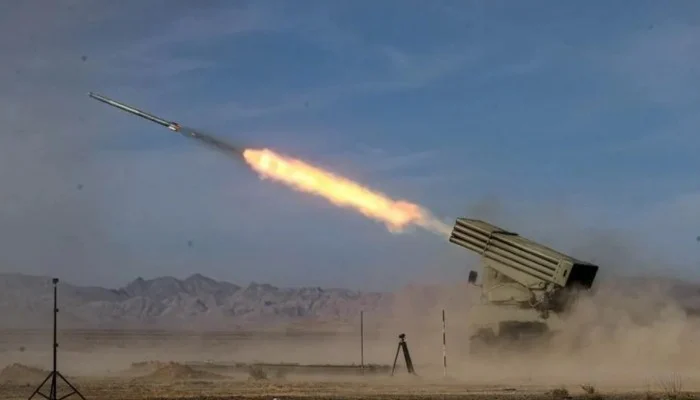
    A missile was launched during a military exercise in Isfahan, Iran, on October 28, 2026. — Reuters

    – This marks the first exchange since a two-month truce.
    – No casualties have been reported so far.
    – Houthis have announced a ban on shipping through the Red Sea.

    Israel and Iran reportedly exchanged strikes on Monday for the first time since a ceasefire took hold two months ago, despite calls from U.S. President Donald Trump urging restraint.

    The escalation involved Israel targeting Iranian forces after Tehran launched retaliatory actions against Israel, following an airstrike on southern Beirut, where Hezbollah operates as Iran’s proxy.

    This confrontation comes after weeks of diplomatic talks aimed at ending the ongoing regional conflict that was ignited by US and Israeli strikes on Iran earlier this year on February 28.

    No casualties have been confirmed in either Israel or Iran so far.

    The attacks included an assault on an Iranian petrochemical complex and a missile strike on Israel by Yemen’s Houthi rebels.

    The Israeli Defense Forces claimed to have struck and dismantled Iranian missile defenses located across various parts of the country.

    In Jerusalem and Ramallah, AFP journalists reported hearing multiple explosions, and the Israeli military stated it was intercepting a new wave of Iranian missiles.

    Iran’s Revolutionary Guards declared they had targeted Israel’s Nevatim and Tel Nof air bases in response to Israel’s missile attacks, calling them “legitimate targets.”

    Tehran accused the U.S. of provoking the renewed fighting and warned that the conflict could disrupt peace negotiations.

    “Few believe that the Zionist regime would have acted without prior coordination with the United States,” said Iranian Foreign Ministry spokesperson Esmaeil Baqaei during a Tehran press conference, attended by AFP. “Naturally, the diplomatic efforts to end this imposed war will be affected, but they are still ongoing across all channels.”

    Meanwhile, Yemen’s Iran-backed Houthi rebels announced they launched a missile attack on Israel on Monday— the first since early April— and declared a complete ban on Israeli shipping in the Red Sea, raising fears of significant disruption to this key maritime route.

    “In response to recent acts of aggression, we declare a total ban on Israeli maritime navigation in the Red Sea,” the Houthis said in a statement.

    President Trump called on both Israeli Prime Minister Benjamin Netanyahu and Iran to de-escalate, but Israel accused Tehran of making a “grave mistake.”

    “I am the one making the decisions. I call all the shots. Netanyahu doesn’t call the shots,” Trump told the Financial Times on Sunday. He advised Iran to stop firing missiles and return to negotiations for a deal.

    The EU’s chief diplomat, Kaja Kallas, urged both sides to remain calm and resume negotiations, while China echoed those calls, stating that “resuming hostilities isn’t in anyone’s best interest,” according to Foreign Ministry Spokesman Lin Jian.

    Iran insists that any peace agreement ending the war must also halt the broader conflict in Lebanon, where Israel is targeting Hezbollah.

    Iranian officials have warned that recent strikes— including an attack on Beirut’s southern suburbs— serve as warnings that wider military action could follow if aggression continues.

    An attack on Iraqi Kurdistan targeting “terrorist groups” added to the tension, as Iran accuses Kurdish factions of advancing Western or Israeli interests.

    Earlier, Israel responded to Hezbollah’s fire by hitting a military command center in Beirut’s Dahiyeh district, resulting in two deaths and 20 injuries, according to Lebanon’s health authorities.

    Hezbollah later launched missiles and drones at Israeli military positions early Sunday, prompting Israeli warnings of retaliation.

    Iranian officials, including Parliament Speaker Mohammad Bagher Ghalibaf, accused the U.S. of signaling support for the Beirut attack, claiming American and Israeli assets are now “legitimate targets.”

    Iran’s top military commander said Israel’s strikes in Beirut crossed red lines.

    The conflict has driven crude oil prices higher amid fears of blocking the Strait of Hormuz, a vital corridor threatened by Iran’s recent siege actions, adding pressure on already strained Iranian society.

    “I feel numb,” said Elaheh, a 32-year-old fitness trainer from Ahvaz. “Life feels like a joke. Things are terrible. We’re just trying to survive,” she added, pointing to rising costs of living.

    Diplomatic efforts continue quietly— Pakistani officials, including Interior Minister Mohsin Naqvi, recently visited Tehran and delivered a “special letter” to Iran’s Supreme Leader, though they have now returned to Pakistan, according to official sources.

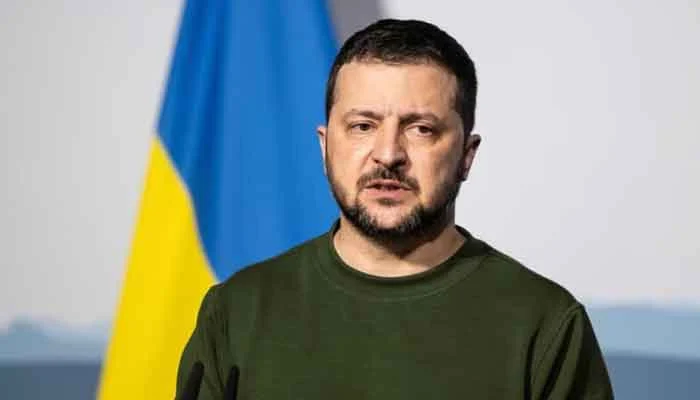
  • Zelenskiy Urges Putin to Enter Peace Talks in Open Letter

    Zelenskiy Urges Putin to Enter Peace Talks in Open Letter

    Ukrainian President Volodymyr Zelensky addressed the nation in an open letter to President Vladimir Putin on Thursday, proposing that the two leaders meet to negotiate an end to more than four years of conflict. Zelensky emphasized that Kyiv is prepared to continue fighting if necessary, but expressed hope for peace.

    He noted that most Russians are weary of the ongoing missile and drone attacks, economic hardship, and fuel shortages in Ukraine, and are seeking stability. Zelensky pointed out that with the U.S. primarily focused on the Iran conflict, waiting for the European situation to regain prominence would be unwise.

    He stressed that the first step toward peace must occur at the frontlines, advocating for a full ceasefire during negotiations—an approach he described as standard practice. Zelensky cited the U.S.’s capacity to oversee ceasefire lines and suggested that a specific date be set for a meeting, mentioning Switzerland, Turkey, and Arab nations as potential host countries for such talks.

    Zelensky urged Putin not to be afraid to pursue a pathway out of the war, framing it as a crucial step. He proposed that Ukraine is willing to resolve the conflict through direct engagement between the two nations, emphasizing that if Russia’s leader does not see it as time to end the war, Ukraine will continue its fight for survival.

    He also implied that ongoing conflict could threaten Putin’s political standing, referencing Russian history: “When Russia gets tired, change happens.”

    The Kremlin responded that they had received Zelensky’s letter and that Putin would be briefed on its contents. Ukrainian Foreign Minister Andrii Sybiha announced on social media that the letter would also be officially sent through diplomatic channels, calling it a serious proposal with clear steps and an invitation for a personal meeting.

    Sybiha emphasized the importance of a meaningful response, stating, “It is time to end this war. It’s time for peace.”

  • Israel, Lebanon Reach Ceasefire Agreement, Boosting Iran Deal Hopes

    Israel, Lebanon Reach Ceasefire Agreement, Boosting Iran Deal Hopes

    Israel and Lebanon have reached an agreement to cease hostilities, according to the Trump administration on Wednesday. This development provides renewed hope for a broader agreement ending the ongoing US-Israeli conflict over Iran.

    Earlier, Tehran tied any potential deal with the US to an end to the fighting between Israel and Lebanon. In response to US military actions near the Strait of Hormuz, Iran struck Kuwait, damaging the airport and injuring dozens of civilians.

    The ceasefire between Israel and Lebanon is dependent on a complete halting of fire from Hezbollah, which is aligned with Iran, and the withdrawal of all its operatives from the South Litani area, the US State Department stated after talks in Washington. The joint statement emphasized that, under US guidance, both sides agreed to quickly develop pilot zones where the Lebanese Armed Forces would take exclusive control, excluding all non-state actors.

    Lebanon and Israel plan to continue negotiations to build confidence and address remaining issues. They are scheduled to reconvene in the week of June 22 for political and security talks aimed at reaching a comprehensive agreement.

    Despite a ceasefire agreed upon last month, hostilities had persisted. Israel entered Lebanon in March, targeting Hezbollah, which responded by firing across the border in support of Iran.

    Recent attacks in Kuwait and the Strait of Hormuz have tested the fragile ceasefire between the US, Israel, and Iran. The conflict has caused oil prices to rise by nearly 2%, with the Strait remaining largely closed over three months after US and Israeli strikes on Iran.

    Kuwait International Airport was shut down following an attack involving Iranian drones and missiles that caused damage, one death, and over 60 injuries. Kuwait Airways and Jazeera Airways resumed flights after implementing safety measures, according to officials.

    Iran’s Revolutionary Guards claimed they did not fire at Kuwait’s airport, blaming U.S. interceptor missiles for the damage. The US military countered, asserting that Iranian drones deliberately targeted the airport.

    Earlier reports from Iranian media indicated potential attacks on the US Fifth Fleet headquarters in Bahrain, a nearby US airbase, and a vessel named Panaya. Central Command dismissed these claims, stating that its bases remained unharmed and that Iranian ballistic missiles had failed to hit their targets in the region.

    The US conducted additional defensive strikes in southern Iran, targeting missile launch sites and Iranian boats seeking to mine waterways. Strikes also targeted Qeshm Island near the Strait of Hormuz following attempted Iranian attacks.

    Since US and Israeli strikes on Iran began in late February, Tehran has frequently launched attacks against targets in the Gulf region, which hosts US military installations. These hostilities have flared intermittently, despite an April ceasefire, as efforts continue to reopen the Strait of Hormuz, a critical route that previously handled about 20% of global oil and LNG shipments.

    Recently, Iran and the US indicated some progress toward a preliminary agreement to halt hostilities and reopen the Strait, although details are still under negotiation. Iran’s Foreign Minister Abbas Araqchi stated that talks had not been cut off but no significant progress had been made. The negotiations involve demands from Iran for access to billions in oil revenues, waivers on sanctions related to crude exports, removal of a US blockade on ports, and continued influence over the Strait.

    US President Donald Trump, facing pressure to lower fuel prices, has prioritized preventing Iran from developing nuclear weapons. Iran maintains its nuclear program is peaceful. In a recent podcast, Trump claimed Iran had agreed not to pursue nuclear weapons, with discussions involving Supreme Leader Khamenei. Later, Trump suggested that negotiations with Iran might see progress over the upcoming weekend.

    The conflict has resulted in thousands of deaths, predominantly in Iran and Lebanon, and has disrupted energy supplies worldwide, contributing to economic strain. The clash between Israel and Hezbollah has reignited, with Israeli drone strikes killing at least six people in southern Lebanon and targeting a vehicle near Beirut. Israel also intercepted an aircraft believed to be launched by Hezbollah.

    Iran’s Foreign Minister warned that Iran would respond decisively if Israel attacks Beirut. Trump acknowledged during a podcast that he had referred to Netanyahu as “crazy” during an expletive-laden phone call over the Lebanese fighting, urging an end to the escalation. Netanyahu, in an interview, noted that while there might be tactical disagreements with Trump, they share common views on Iran.

  • China’s Chief Diplomat Urges US and Iran to Find Common Ground

    China’s Chief Diplomat Urges US and Iran to Find Common Ground

    Chinese Foreign Minister Wang Yi departed the Great Hall of the People in Beijing during Russian President Vladimir Putin’s visit on May 20, 2026, as captured in a Reuters photo. Wang emphasized that Beijing is actively coordinating with involved parties and supporting mediation efforts. Meanwhile, the United States conducted strikes on missile sites and vessels attempting to lay mines in the region, escalating tensions. Iran has accused the U.S. of violating the ceasefire and issued warnings of retaliation.

    In a statement to the UN Security Council, Wang Yi reiterated China’s call for all parties involved in the delicate Middle East ceasefire to honor the truce. He expressed hope that both the U.S. and Iran would make concessions, emphasizing China’s ongoing diplomatic efforts. Wang also highlighted China’s support for mediation efforts by Pakistan, the United States, and Iran and urged all sides to continue meeting halfway to restore peace in the Middle East.

  • US Launches New Strikes on Iran Despite Ceasefire

    US Launches New Strikes on Iran Despite Ceasefire

    People walk past a mural featuring Iran’s late Supreme Leader Ayatollah Ali Khamenei and the former leader of the Islamic Revolution, Ayatollah Ruhollah Khomeini (not shown), in Tehran, Iran, May 25, 2026. — Reuters

    – Missile sites and mine-laying boats targeted in attacks.
    – Recent strikes cast doubt on US-Iran negotiations.
    – Oil markets react sharply after US operations in southern Iran.

    US forces launched attacks on missile installations and boats attempting to plant mines in southern Iran, according to US Central Command. These actions threaten a fragile ceasefire and raise questions about the prospects for a diplomatic resolution to the ongoing Middle East conflict.

    The timing coincided with top Iranian officials arriving in Doha for renewed negotiations to de-escalate the long-standing conflict, amidst increased hostilities from Israel’s military against Iran-backed Hezbollah in southern Lebanon.

    Oil prices showed volatility after the strikes, with concerns rising over the potential disruption of the Strait of Hormuz, a critical chokepoint for global oil supplies, due to an Iranian sea blockade.

    US Central Command spokesperson Tim Hawkins explained, “US forces carried out self-defense strikes in southern Iran today to defend our personnel from threats posed by Iranian forces.” He noted that targets included missile launch sites and boats attempting to deploy mines, but did not provide specific details.

    Iran’s state broadcaster IRIB reported loud explosions near Bandar Abbas around midnight local time (2030 GMT Monday). The authorities assured that the situation remained normal and were investigating the cause of the blasts.

    These developments jeopardize a ceasefire that has been in place since April 8, amid ongoing efforts by the US and Iran to reach an agreement ending a conflict that has severely disrupted energy markets worldwide.

    Oil prices Tuesday morning stayed below $100, with West Texas Intermediate decreasing by more than 5%, while international Brent crude saw slight increases.

    An additional setback to peace prospects came when Israeli Prime Minister Benjamin Netanyahu vowed to crush Hezbollah in Lebanon. Iran has insisted that any peace deal must include the conflict in Lebanon as well.

    President Trump also suggested on social media that Iran should surrender its enriched uranium to the US for destruction or have it destroyed within Iran with international oversight. He wrote, “The Enriched Uranium (Nuclear Dust!) will either be immediately transferred to the United States for destruction or, preferably, destroyed on-site in coordination with Iran and witnessed by the Atomic Energy Commission or an equivalent agency.” The reference to the Atomic Energy Commission was unclear, as the agency was dissolved in 1974.

    Earlier Monday, Trump pressed for a broader Arab coalition, urging countries like Saudi Arabia, the UAE, Qatar, Pakistan, Egypt, Turkey, Bahrain, and Jordan to join the Abraham Accords—a set of normalization agreements brokered in 2020 between Israel and several Arab nations. He claimed to have discussed efforts to end the war with their leaders over the weekend.

    The US-Iran ceasefire persists as diplomats continue negotiations, though Iran continues to exert control over Gulf shipping through the Strait of Hormuz, with the US Navy attempting to blockade Iranian ports.

    While some see the Abraham Accords as a step toward peace, they are deeply unpopular in many parts of the Middle East, particularly because they do not resolve the Israeli-Palestinian conflict. Gulf countries like Saudi Arabia and Qatar have stated they will not normalize relations with Israel unless an independent Palestinian state is established.

    Anna Jacobs from the Arab Gulf States Institute in Washington commented, “Gulf security is more threatened than ever due to President Trump’s reckless decisions, and Arab states are unlikely to normalize ties with Israel under these circumstances.”

    Secretary of State Marco Rubio hinted that a quick deal might be possible, stating, “We thought we might have some news last night, maybe today,” during a visit to New Delhi. However, Iran’s foreign ministry spokesperson Esmaeil Baqaei dampened hopes, saying, “While we have reached a large portion of an agreement, an imminent signing cannot be assured.”

    Israeli Prime Minister Netanyahu announced that he has ordered military escalation in Lebanon, accusing Hezbollah of drone attacks against Israeli forces. He emphasized that any final agreement with Iran must fully eliminate its nuclear threat before peace can be achieved. Iranian officials maintain that nuclear negotiations have been postponed until after an initial agreement on their uranium enrichment program is reached.

  • Israel, Lebanon Extend Ceasefire by 45 Days After U.S. Talks

    Israel, Lebanon Extend Ceasefire by 45 Days After U.S. Talks

    A 45-day extension to the ceasefire between Israel and Lebanon has been agreed upon, following negotiations facilitated by the United States. The talks, the third round since Israel increased airstrikes on Lebanon after Hezbollah launched missiles at Israel on March 2, concluded on Friday with plans for future discussions.
    “The ceasefire established on April 16 will be extended for an additional 45 days to allow for further progress,” said U.S. State Department spokesperson Tommy Pigott on X. He mentioned the negotiations were “highly productive,” with the original ceasefire set to expire this Sunday.
    Both Lebanese and Israeli representatives expressed optimism about the talks, which aim to resolve long-standing conflicts. Since the escalation, Israel’s bombing and ground operations in southern Lebanon displaced approximately 1.2 million people. A ceasefire was announced last month after initial diplomatic efforts involving U.S. and Israeli ambassadors in Washington.
    Despite ongoing exchanges of fire primarily in southern Lebanon—where Israeli forces maintain a self-declared security zone—both sides continue to engage in negotiations. Lebanon’s delegation, participating despite Hezbollah’s objections, emphasizes a need for hostilities to end. Israel maintains that disarming Hezbollah is essential for any durable peace agreement.
    These high-level meetings mark the most significant contact between Lebanon and Israel in decades, expanding to include security and military officials. Pigott announced that a new “security track” of negotiations will commence at the Pentagon on May 29, with another political session scheduled in Washington from June 2-3.
    “The goal is to foster lasting peace, mutual recognition of sovereignty and territorial integrity, and secure borders,” Pigott stated.
    Lebanon’s delegation highlighted their desire to convert the ceasefire’s momentum into a comprehensive peace agreement, asserting that the extension creates vital space to bolster institutions and develop a stable political path.
    Israeli ambassador to the U.S., Yechiel Leiter, described the negotiations as “frank and constructive,” emphasizing that although challenges remain, the chances for success are promising. “Our main priority throughout these talks is the safety of our citizens and soldiers,” he said.

  • Ukraine and Russia clash over US-backed ceasefire violations

    A ceasefire brokered by the U.S. is now showing signs of serious tension on its second day, as both Russia and Ukraine accuse each other of breaching the agreement through attacks over the weekend. The three-day halt, announced Friday by President Donald Trump, is part of a broader U.S.-led effort to restore peace. Despite months of diplomatic efforts, the conflict, which has lasted more than four years, remains unresolved.

    Since Saturday morning, Ukrainian officials reported over 200 clashes on the battlefield, with three individuals killed in Russian drone strikes near the front lines. President Volodymyr Zelenskiy noted that Russia has mostly avoided large-scale air and missile assaults but continues to push its forces along parts of the front line where they are advancing. He added that Ukrainian troops are actively defending their positions and responding to Russian actions.

    Russia’s Defense Ministry accused Ukraine of ignoring the truce, claiming they intercepted 57 Ukrainian drones in a single day and responded accordingly on the battlefield. Zelenskiy also predicted that the United States would guarantee the exchange of 1,000 prisoners of war from each side, a key component of the ongoing peace efforts.

    Earlier this week, both Russia and Ukraine announced separate ceasefires—Russia’s beginning Friday and Ukraine’s on Wednesday—yet each accused the other of violations shortly after their implementation. On Sunday, reports indicated that one person each in Ukraine’s Zaporizhzhia, Dnipropetrovsk, and Kherson regions were killed in Russian drone attacks. Additionally, regional authorities reported multiple injuries: eight in Kharkiv, including children, and seven in Kherson, with some wounded by drone or artillery strikes.

    In Dnipropetrovsk, a rescue vehicle was hit by a drone, wounding a 23-year-old driver. Ukraine’s air defenses shot down all 27 long-range drones launched by Russia overnight, according to Kyiv’s military command. Overall, nearly 210 clashes have taken place along Ukraine’s front line of approximately 1,200 kilometers since early Saturday, though verifies for the battlefield specifics remain unconfirmed.

    Diplomatic efforts are faltering, especially as Russian forces pursue an ongoing offensive in Ukraine’s eastern Donetsk region, which Moscow insists must be ceded by Kyiv before they consider ending their invasion. Meanwhile, negotiations mediated by the U.S. have stalled, particularly over control of the Zaporizhzhia nuclear power plant—Europe’s largest.

    Moscow has sent mixed signals about future peace prospects. Kremlin spokesperson Dmitry Peskov suggested peace is a “very long way off,” while President Vladimir Putin implied that the war might be approaching its end. U.S. envoy Steve Witkoff and Jared Kushner are expected to visit Moscow soon to continue diplomatic discussions, with recent meetings in Miami focusing on humanitarian issues and steps toward peace.

    In broader diplomatic developments, Germany dismissed Putin’s proposal for ex-Chancellor Gerhard Schröder to facilitate talks between the EU and Russia aimed at securing peace in Ukraine.

  • Putin Labels NATO-backed Force ‘Aggressive’ in Victory Parade Speech

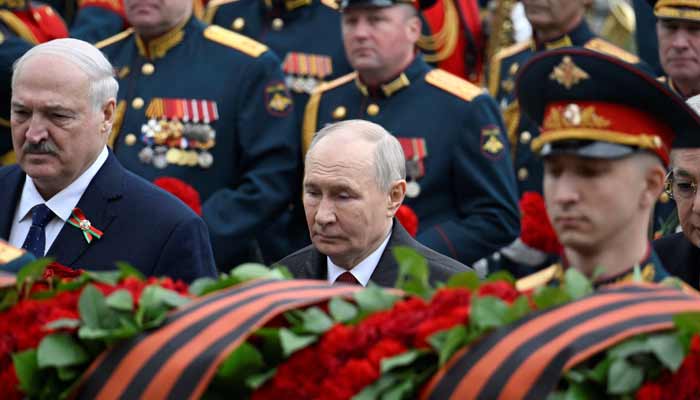
    Russian President Vladimir Putin attends a ceremony to lay flowers at the Tomb of the Unknown Soldier by the Kremlin wall in central Moscow, Russia, on May 9, 2026. — Reuters
    Russian President Vladimir Putin attends a ceremony to lay flowers at the Tomb of the Unknown Soldier by the Kremlin wall in central Moscow, Russia, on May 9, 2026. — Reuters

    • No Russian military hardware was visible during the event.
    • Putin references Soviet victory to boost support for the military.
    • Overnight drone exchanges between Ukraine and Russia.

    During the Victory Day parade on Red Square, President Vladimir Putin declared that Russian forces in Ukraine are combating an “aggressive force” supported by NATO countries and justified his war aims as “just.” His speech was delivered in a defiant tone.

    Putin frequently emphasizes Soviet triumph over Nazi Germany in World War II as a core part of his 25-year leadership narrative, with celebrations traditionally marked with grandeur and pomp.

    Recent Ukrainian long-range attacks have heightened Kremlin security and led to a scaled-down observance this year, with no military hardware on display—the first time in nearly 20 years—and mostly officials from Russia’s allied nations in attendance.

    Moscow and Kyiv agreed to a three-day ceasefire around the parade, following a last-minute appeal from U.S. President Donald Trump. Moscow threatened a significant strike on central Kyiv if Ukraine interfered with the parade plans.

    At the parade, Putin invoked Soviet victory to rally support for his military efforts in Ukraine, stating, “The remarkable achievement of the WWII generation inspires our soldiers today.” He added, “They face an aggressive force supported by NATO, yet our heroes continue to advance.” Later, he expressed his firm belief that their cause is just.

    Three-Day Ceasefire

    After attempts at truce earlier this week failed, Trump announced on Friday that a ceasefire between Russia and Ukraine would be in effect from May 9 for three days. He described it as “possibly the beginning of ending a long, deadly conflict,” and noted that the ceasefire would include a prisoner exchange.

    Ukrainian President Volodymyr Zelensky ordered his military not to attack during the ceasefire and confirmed his government would honor the truce to facilitate the exchange of 1,000 detainees from each side. Zelensky stated that the lives of Ukrainian prisoners are more critical than the historic event at Red Square.

    Both Ukrainian and Russian official sources reported a reduction in drone attacks overnight.

    The ongoing war, now in its fifth year, has resulted in hundreds of thousands of deaths and remains Europe’s deadliest conflict since WWII. Negotiations mediated by the U.S. have seen little progress since February, when attention shifted to Iran.

    Prior to Trump’s announcement, Zelensky had expressed reluctance to agree to a ceasefire during the parade and warned against attendance by Moscow’s allies. Russia had threatened to strike Kyiv heavily if the parade was disrupted and advised foreign diplomats to evacuate the city ahead of the event.

    In Kyiv, security was tight, with empty streets and disrupted mobile internet. Only leaders from Belarus, Malaysia, Laos, and Slovak Prime Minister Robert Fico were expected to attend, notably lower-profile than last year’s Chinese delegation with Xi Jinping.

    On Friday, Zelensky expressed hope that U.S. diplomats would visit Ukraine soon to help restart peace negotiations.

  • Trump calls for 3-day ceasefire in Russia-Ukraine conflict

    A three-day ceasefire has been announced to take effect from May 9 to May 11, in the ongoing conflict between Russia and Ukraine. This pause coincides with the Soviet Union’s victory celebrations over Nazi Germany in World War II and a military parade in Moscow’s Red Square.

    President Donald Trump revealed on social media that the truce will involve halting all active military operations and a prisoner exchange, releasing 1,000 detainees from each side. “Hopefully, this marks the start of the end for a very long, deadly, and bitter war,” Trump stated, noting continuous progress in peace talks.

    Following a phone conversation with Vladimir Putin on April 29, Trump indicated that a temporary ceasefire was possible. Last year, Putin had suggested a similar three-day halt, but it was not coordinated with Ukraine.

    Ukraine has proposed an open-ended ceasefire starting at midnight on Tuesday (2100 GMT), urging Russia to match the effort. Meanwhile, Russia has announced its own ceasefire for May 8 and 9, aiming to align with Victory Day commemorations and a parade in Moscow.

    Negotiations appear to be at a standstill, with discussions about eastern Ukraine’s Donetsk region stuck over demands that Kyiv withdraw troops from certain territories, which Ukraine refuses. Both sides have accused each other of violating previous ceasefires.

    In recent developments, Ukraine’s chief negotiator, Rustem Umerov, has traveled to Miami for talks with U.S. representatives, as diplomatic efforts to end the war face setbacks. The deadlock revolves around territorial disputes, with Russia insisting Kyiv retreat from contested regions and Ukraine pledging to defend its current positions.

  • US and Iran Clash in Hormuz Amid Ceasefire Talks

    On Thursday, the U.S. and Iran fired at each other, marking their most intense conflict since both sides agreed to a temporary ceasefire. Iran stated that everything returned to normal afterward, while the U.S. claimed it didn’t want to escalate the situation.

    Iran’s military alleges that the U.S. attacked two ships entering the Strait of Hormuz and launched strikes on Iranian land. The U.S. military responds that it retaliated against Iranian assaults.

    President Trump told an ABC reporter that the ceasefire was still active and minimized the clash, calling it “just a love tap,” according to her social media post.

    Iranian state media reported that the situation had stabilized following the strikes. These hostilities came as Washington was waiting to hear Iran’s reaction to a U.S. proposal aimed at ending the fighting, though key issues such as Iran’s nuclear program would remain unresolved for now. Since the ceasefire started on April 7, there have been intermittent exchanges of gunfire between the two nations.

    Iran’s top military command accused the U.S. of breaching the ceasefire by attacking an Iranian oil tanker and another vessel, as well as conducting airstrikes on civilian areas on Qeshm Island and nearby coastal regions in Bandar Khamir Sirik. In response, Iran said it targeted U.S. military ships east of the Strait and south of Chabahar. A spokesperson for Iran’s Khatam al-Anbiya Headquarters claimed the strikes caused significant damage, but the U.S. Central Command denied any of its assets were hit.

    CENTCOM indicated Iran used missiles, drones, and small boats in its attack, which targeted three U.S. Navy destroyers. The U.S. responded by striking missile and drone sites and other locations. The military emphasized it does not seek escalation but remains prepared to defend American forces.

    Later, Iran’s Press TV reported that after hours of fighting, the situation on Iranian islands and coastal cities near the Strait of Hormuz had returned to normal.

    This isn’t the first time the sides have exchanged fire since the ceasefire. Just days earlier, the U.S. military said it destroyed six Iranian small boats and intercepted cruise missiles and drones to prevent Iran from disrupting a U.S. naval effort to facilitate shipping through the Strait.

    Previously, the U.S. floated a proposal to formally end the conflict, although it does not address Iran’s nuclear activities or the reopening of the Strait—an essential route that handles about 20% of global oil and gas shipments. Iran has not yet committed to the plan.

    Separately, the U.S. imposed sanctions on Iran-supported figures, including Iraq’s deputy oil minister and three militia leaders. Meanwhile, Israel announced it had killed a Hezbollah commander in an airstrike in Beirut, the first such attack there since last month’s ceasefire. A key Iranian demand in negotiations with Washington has been a halt to Israeli strikes in Lebanon.

  • US Official Declares Iran War Truce Ended, Igniting War Powers Deadline

    A senior official from President Donald Trump’s administration announced on Thursday that the ongoing ceasefire between the US and Iran, which started in early April, is considered to have “ended” hostilities for the purpose of the upcoming congressional war powers deadline. Trump faced a legal deadline on Friday to either end the US’s involvement in Iran or seek congressional approval to extend military engagement, but indications suggested the deadline would pass without any significant changes to the current situation.

    “The hostilities that commenced on Saturday, February 28, are deemed terminated for War Powers Resolution purposes,” the official stated, referencing the administration’s interpretation. Since the ceasefire took hold over three weeks ago, there have been no reported exchanges of fire between US forces and Iran.

    Previously, analysts and congressional staff anticipated that Trump might inform Congress of either a 30-day extension or a deliberate disregard for the deadline, with the administration asserting that the ceasefire effectively ended the conflict.

    The 1973 law governing military action permits the president to conduct hostilities for a maximum of 60 days before needing congressional approval or requesting a 30-day extension based on “unavoidable military necessity” for troop safety.

    The conflict began with airstrikes initiated by Israel and the US on February 28, with Trump officially notifying Congress two days later. This initiated a 60-day countdown that would culminate on May 1.

    Defense Secretary Pete Hegseth said in a Senate hearing on Thursday that he believed the 60-day timeline had paused during the ceasefire. However, Democrats in Congress contested that interpretation, arguing no such legal provision exists.

    While the U.S. Constitution grants Congress the authority to declare war, the law typically does not restrict the president’s ability to undertake limited, short-term military actions aimed at immediate threats. Since the conflict’s outset, the Republican-led Congress has consistently blocked Democratic efforts to pass resolutions demanding US withdrawal or requiring formal congressional authorization for ongoing military operations.

    In response to the initial US and Israeli strikes, Iran retaliated with attacks on Israel and Gulf states hosting American military bases. These exchanges have led to thousands of deaths and forced millions to flee their homes.