Tag: AMD

  • AMD’s RDNA 4 Could Surprise Us in Many Ways

    AMD’s RDNA 4 Could Surprise Us in Many Ways

    After seeing numerous leaks, I believed I had a solid understanding of what to expect from AMD’s upcoming RDNA 4 architecture. However, it seems I may have missed the mark in several areas.

    Recent leaks suggest that AMD’s next high-performance graphics card will not be labeled the RX 8800 XT, as many had anticipated, but will instead carry the name RX 9070 XT. Furthermore, the first leaked benchmark results for this GPU provide an early look at its performance, which might be somewhat disappointing.

    To begin with, let’s discuss the naming convention for RDNA 4, which took many by surprise. Over the weekend, a series of leaks indicated that the anticipated flagship model of AMD’s upcoming generation won’t be the RX 8800 XT. An advertisement spotted on Reddit from AMD’s official account, discovered by VideoCardz, appears to have revealed the official render for the GPU. Prominent leaker Hoang Anh Phu confirmed that this model is indeed the RX 9070 XT.

    Another leaker on the Chiphell forum echoed these findings, as referenced by HXL on X (formerly Twitter). Moreover, VideoCardz announced that an unnamed motherboard vendor has asserted that the RDNA 4 lineup will be classified as the Radeon 90-series. This represents a significant shift in the expected naming pattern, as most sources initially thought we would see the RX 8000 series. Personally, I was particularly eager for the RX 8800 XT, which is now said to likely be the RX 9070 XT.

    Confirmed, this is RX 9070 XT.

    — Hoang Anh Phu (@AnhPhuH) December 23, 2024

    This brings me to the leaked benchmark results, shared by All_The_Watts on X. This leaker, who has a reliable history, not only corroborated the new naming convention but also revealed Time Spy benchmark results for the RX 9070 XT. Although this synthetic benchmark doesn’t fully capture real-world GPU performance, it offers a glimpse into how it measures up to its competitors.

    The RX 9070 XT achieved a score of 22,894 points in the Time Spy test, positioning it as a competitor to the RX 7900 GRE and the RTX 4070 Ti. However, it falls significantly short of the RX 7900 XT by over 15%. Given that many had speculated that AMD’s new flagship would stack up against the RTX 4080, it is hard not to feel a small disappointment with this initial score.

    Nevertheless, it is essential to remember that this is merely one benchmark. It’s premature to form a complete opinion on how fast the RX 9070 XT actually is. More benchmark results are likely to surface as we approach January 6 when AMD is expected to officially unveil RDNA 4 and clarify many of these uncertainties.

    👀 ⛴️👑 pic.twitter.com/TbvuyV0uLu

    — All The Watts!! (@All_The_Watts) December 23, 2024

  • AMD Next-Gen Gaming Laptop Chips Might Have Leaked

    AMD Next-Gen Gaming Laptop Chips Might Have Leaked

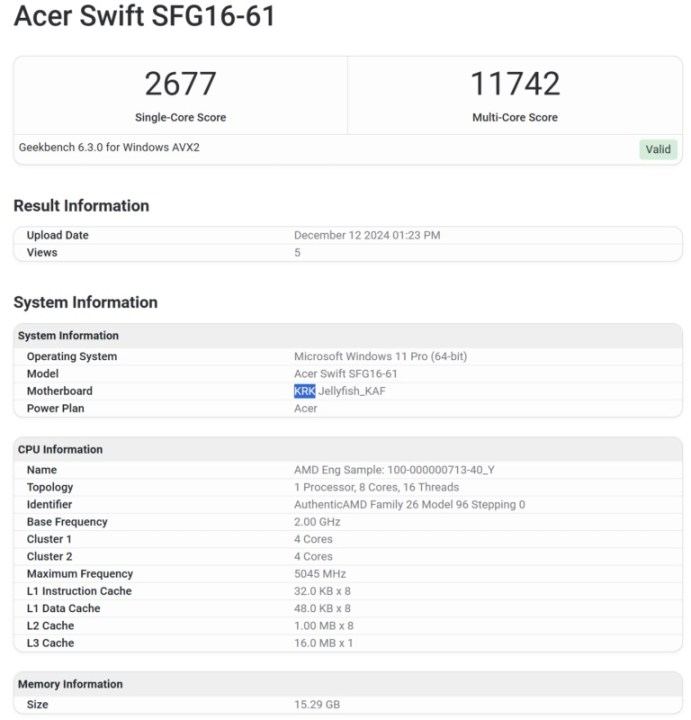
    AMD is gearing up to launch its Strix Point Halo and Krackan Point APUs, with a release expected in January at CES 2025. Recently, details emerged about an Acer Swift Go 16 laptop featuring one of these new AMD chips, identified through a Geekbench listing.

    The disclosed information reveals that this laptop is equipped with an engineering sample of the Krackan Point processor, carrying the OPN Code “100-000000713-40_Y,” likely corresponding to the Ryzen AI 7 350. This chip comprises eight cores structured into two clusters of four, employing both Zen 5 and Zen 5c designs. It has a base frequency of 2GHz and can achieve a maximum boost frequency of 5.05GHz, along with 16MB of L3 cache and 8MB of L2 cache.

    Leaked Geekbench 6 scores of upcoming AMD Krackan Point Ryzen AI 7 350.
    Geekbench

    The Acer laptop with the Ryzen AI 7 350 achieved scores of 2677 in single-core and 11742 in multi-core evaluations via Geekbench 6.3. According to Tom’s Hardware, the Krackan CPU is set to compete against Intel’s Lunar Lake chips, notably the Core Ultra 7 258V, and outperforms AMD’s own Hawk Point-based Ryzen 7 8845HS. However, it’s worth noting that it falls short of the Ryzen AI 9 HX 370 in multi-core performance, as the Strix Point CPU boasts a total of 12 cores.

    Additionally, this APU is anticipated to incorporate the Strix Point’s XDNA 2 NPU (Neural Processing Unit), which is capable of 50 tera operations per second (TOPS). It will also feature a Radeon 860M RDNA 3.5 integrated GPU with 8 compute units. Meanwhile, the high-performance Strix Halo range is expected to introduce the Ryzen AI Max branding, potentially delivering an even more powerful integrated GPU to rival Nvidia’s RTX 4060 in laptops.

    Subscribe for weekly insights on the tech behind PC gaming


    Check your inbox!

    While these details haven’t been confirmed, they align with previous leaks from Zhangzhonghao, a leaker known for sharing information about upcoming releases. AMD is set to present a variety of next-generation processors, which includes the Krackan Point APUs and Ryzen AI Max CPUs for laptops featuring RDNA 3.5 graphics.

    The high-performance Strix Halo models could comprise the Ryzen AI Max+ 395 (16 cores), 390 (12 cores), and 385 (8 cores). New Fire Range CPUs, based on the Zen 5 architecture, will specifically target gaming laptops.

    AMD may also unveil X3D laptop CPUs, alongside next-gen Ryzen Z2 chips for handheld gaming devices, promising improved performance over the already successful Ryzen Z1 Extreme.

  • Windows 11 Recall Now Affects Intel And AMD

    Windows 11 Recall Now Affects Intel And AMD

    Microsoft's Recall feature.
    Microsoft

    Microsoft is rolling out support for the Recall AI feature to Copilot+ PCs equipped with Intel and AMD processors, following the resolution of several prior issues.

    Initially, Recall was launched exclusively for Copilot+ PCs powered by Qualcomm processors in a Windows 11 update at the end of November, granting Windows Insiders in the Dev Channel the ability to use this AI tool to capture “snapshots” of their devices for future reference.

    After addressing a number of glitches, including malfunctioning snapshots, the Recall feature is now deemed stable enough to extend its compatibility to more Copilot+ PCs. Users on Intel and AMD systems will receive the latest Recall update—version 26120.2510 (KB5048780)—on Friday. This update remains exclusive to Windows Insiders in the Dev Channel.

    Despite earlier concerns over privacy with this feature, Microsoft remains committed to ensuring its safe functionality. Although the necessary models will be installed with the update, users must manually activate the snapshots function for Recall to operate. Furthermore, users can manage the duration of how long snapshots are saved or deleted, and sensitive information like credit card numbers, passwords, or personal identification details will not be recorded in these snapshots.

    The update also enhances security measures for the feature. Users will now need to employ Windows Hello facial recognition for identity verification before accessing their snapshots. In addition, utilizing BitLocker and Secure Boot is essential for the feature to function properly.

    Microsoft is also promoting the “Click to do” capability within Recall, which allows users to interact with elements within a snapshot by simply clicking on them, enabling actions like copying text or saving images using the Windows key combined with a mouse click.

    Since its initial announcement earlier this year, Recall has faced numerous challenges. It was originally scheduled for a preview release in June but was postponed several times due to various controversies and issues.


  • AMD’s New RX 8800 Might Exceed Expectations

    AMD’s New RX 8800 Might Exceed Expectations

    The anticipation surrounding AMD’s upcoming generation of graphics cards has been a lesson in expectations management. Initial leaks regarding RDNA 4 hinted at an exceptionally powerful flagship GPU, but it has become apparent over the past few months that AMD is not pursuing that route. Rather, the focus seems to be on catering to the mainstream market, likely targeting GPUs that could compete with the RTX 4070. However, it seems the next-gen flagship may be more potent than we initially believed. We have gained insights into which GPUs are on the horizon and when we can expect their debut.

    Let’s discuss the timing first. Jack Huynh, AMD’s Senior Vice President and General Manager of Computing & Graphics, announced on X (formerly Twitter) that the company plans to hold a press conference during CES 2025.

    This announcement aligns with ongoing speculation about a GPU reveal at the event, but we now have a specific date: January 6 at 11 AM PT. Huynh also indicated that AMD will showcase a “new generation of innovation across gaming, AI for PCs, and commercial applications.” It’s also likely that AMD will cover RDNA 4 developments for laptops and unveil new processors like the Ryzen 9000X3D series, which includes both 12-core and 16-core models.

    Save the date 🗓️

    Join us for the @AMD Press Event on Monday, January 6, at 11 AM PT.

    Excited to share the stage with some incredible special guests as we unveil our next generation of innovation across gaming, AI PC, and commercial. You won’t want to miss it! 🎮💻✨

    Catch the… pic.twitter.com/IadsTDZfTx

    — Jack Huynh (@JackMHuynh) December 3, 2024

    In a stroke of good fortune, AMD has also indirectly confirmed two GPUs expected to debut at the event. According to findings shared by VideoCardz, references to the RX 8800 and RX 8600 graphics cards surfaced in updates for AMD’s ROCm software library.

    This aligns with earlier leaks indicating that AMD’s next-gen offerings will include a flagship Navi48 GPU alongside a budget-friendly Navi44 variant, which are likely the two cards mentioned. While this information isn’t official, it seems quite plausible that we can expect the RX 8800 and RX 8600 to arrive in January or soon after. There are also rumors of an RX 8800 XT variant based on inputs from Seasonic’s power consumption calculator.

    Recently, additional leaks have provided insight into the anticipated performance levels of the RX 8800 (with or without the XT label), and the projections are promising. A prominent leaker, known as zhangzhonghao, shared on Chiphell (via VideoCardz), that the RX 8800 XT aims to make significant advancements in ray tracing capabilities.

    It’s believed that the GPU will deliver performance comparable to Nvidia’s RTX 4080, which is priced around $1,000, especially in the popular game Resident Evil 7 Biohazard. Reports suggest ray tracing performance could be as much as 45% better than that of the RX 7900 XTX. Additionally, it has been suggested that the RX 8800 XT could require about 25% less power than the current flagship model, potentially optimizing power consumption to around 270 watts.

    Increased performance with reduced power requirements sounds favorable for consumers. However, much will hinge on the pricing strategy for the GPU. More specifics are expected to surface during AMD’s press conference in January.

  • AMD’s New Laptop GPU Could Compete With Nvidia RTX 5090

    AMD’s New Laptop GPU Could Compete With Nvidia RTX 5090

    AMD has traditionally lagged behind in the realm of top-tier gaming laptops, particularly when it comes to graphics. However, fresh information from Golden Pig Upgrade Pack on Bilibili suggests that AMD is not backing down on its laptop GPU development. In fact, the company seems poised to launch four discrete graphics cards specifically designed for laptops. The leading model might even compete effectively with one of Nvidia’s upcoming high-end GPUs, although there’s no guarantee they will perform equally well.

    The leaker provided a slide that outlines the four laptop GPUs that AMD plans to introduce in its forthcoming RDNA 4 series. While the specific names of the graphics cards aren’t disclosed, the slide highlights chip names, power consumption ranges, and memory configurations.

    The flagship model, known as the R25M-E6 (the ‘M’ indicating that it is a laptop GPU), is rumored to support a power range of 80 to 175 watts and will feature 16GB of VRAM on a 256-bit memory interface. This positions it to potentially rival Nvidia’s RTX 5090, as reports indicate that the Nvidia RTX 50-series flagship may also offer 16GB of memory for laptops. However, more recent leaks suggest it could have 24GB of VRAM due to the integration of advanced memory modules, which could alter the situation further.

    Get your weekly breakdown of the tech powering PC gaming


    Check your inbox!

    The next GPU, the R25M-P6, offers a total board power (TBP) range of 80 to 175 watts and features 12GB of VRAM on a 192-bit memory bus. Following that, there are the more budget-friendly options, the R25M-P6 and the R25M-P4. These models are designed with 8GB of VRAM, a 128-bit memory interface, and TBPs varying from 75 to 150 watts and 50 to 130 watts, respectively.

  • AMD Ryzen 5 9600X Price Drops Nearly $50 in Two Months

    AMD Ryzen 5 9600X Price Drops Nearly $50 in Two Months

    AMD has recently launched its Zen 5 processors, hitting the market just over two months ago. As they work to establish their presence among the top contenders, regular discounts are making these chips more appealing to buyers. Currently, the Ryzen 5 9600X is available for nearly $50 less than its initial suggested retail price.

    The Ryzen 5 9600X stands out as the most affordable option in the latest lineup, debuting at a manufacturer’s suggested retail price (MSRP) of $280—$10 cheaper than its predecessor. While this price drop is welcome, it still exceeds the launch price of the 7600X, which has seen multiple price reductions since its release. Presently, the 7600X can be found for around $225, though it’s possible to nab it for even less.

    You can currently purchase the Ryzen 5 9600X for $234 on platforms like Amazon and Newegg, according to VideoCardz. The listed price might be higher, but a coupon can reduce the cost by an additional $15. If you’re on Amazon, just check the box next to Apply $15 coupon. For Newegg shoppers, the promo code BFDDYA56 is needed to claim the same discount, bringing the total to $234.

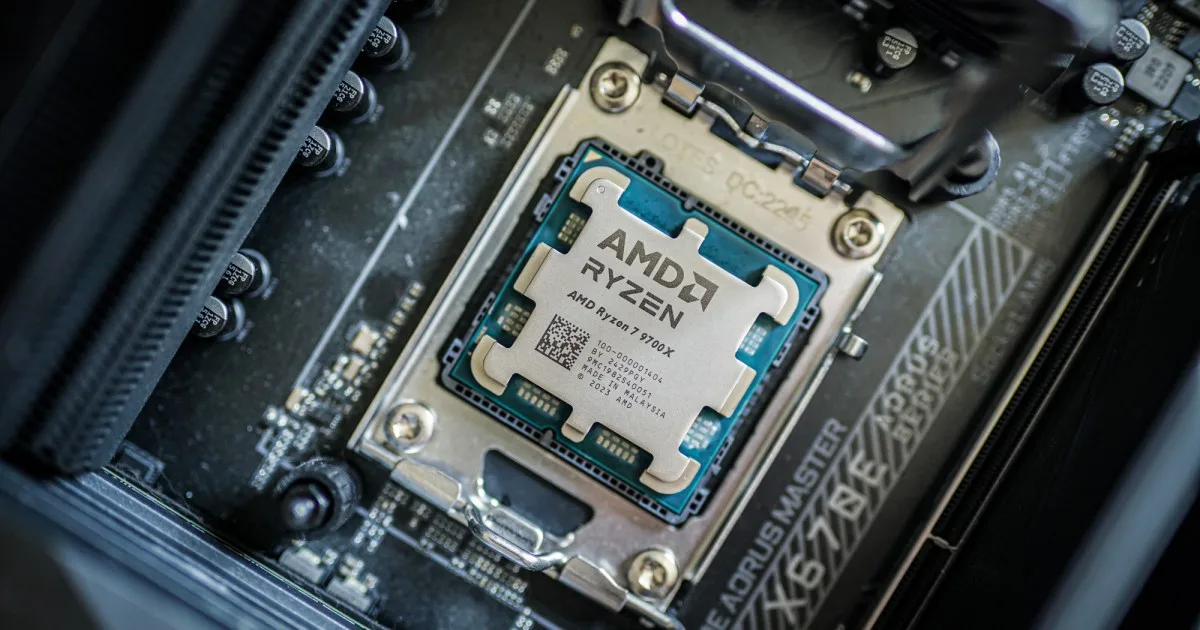
    The AMD Ryzen 7 9700X installed in a motherboard.
    Jacob Roach / Digital Trends

    The Ryzen 5 9600X features six cores, 12 threads, and a total cache of 38MB, with a maximum clock speed of 5.4GHz. In our analysis of the CPU, we observed a slight increase in performance over the previous generation. The Zen 5 architecture is generally superior in productivity, making the 9600X a solid option for those not necessarily focused on gaming. While the 7800X3D remains the top choice for gamers, the upcoming 9800X3D may challenge that status. Nevertheless, the 9600X is a cost-effective option for building a PC that utilizes the AM5 socket.

    Although the Ryzen 5 9600X and 7600X offer similar performance (only a few percentage points differentiate them in various benchmarks), the 9600X benefits from an increase in thermal power design (TDP), updated to 105 watts from 65 watts via a BIOS update, thereby unlocking additional performance potential. This and other enhancements give the 9600X a slight edge over its predecessor.

    With the previous Ryzen 5 7600X priced just $10 lower, take advantage of this discount to upgrade to the newer generation from AMD. While this discount may not be officially sanctioned by AMD, its future availability remains uncertain.

  • AMD Ryzen 7 9800X3D Officially Shakes Up The Market

    AMD Ryzen 7 9800X3D Officially Shakes Up The Market

    It was only a matter of time, wasn’t it? After a series of whispers in the tech community over the last few months, AMD has officially unveiled the Ryzen 7 9800X3D, slated for release on November 7. This new CPU aims to solidify its place among the top processors by leveraging an enhanced eight-core Zen 5 architecture along with 3D V-Cache technology to boost gaming performance.

    In line with prior speculation, the pricing for the CPU is set at $479, nearly $30 above the Ryzen 7 7800X3D. AMD asserts that the 9800X3D offers an average gaming performance gain of 8% compared to its predecessor and delivers a whopping 20% improvement over Intel’s recent Core Ultra 9 285K. Furthermore, AMD indicates that minimum frame rate performance has improved, citing a 31% enhancement in 1% lows during gameplay of The Last of Us Part One.

    Performance of the Ryzen 7 9800X3D.
    AMD

    AMD has also introduced its second-generation 3D V-Cache, which features a notable alteration. Instead of stacking cache on top of the processor, this new configuration places the cache as a single die beneath the chip. According to AMD, this innovative layout helps to keep the cores cooler, enabling the CPU to reach a maximum boost clock speed of 5.2GHz. Moreover, this design opens the door to overclocking, making the Ryzen 7 9800X3D the first of its kind with full overclocking capabilities.

    This latest iteration maintains much of what worked in its predecessor. Along with the new Zen 5 architecture, the Ryzen 7 9800X3D is equipped with a total of 104MB of cache, eight cores, and 16 threads. The power consumption also remains at a 120-watt TDP; nevertheless, similar to the Ryzen 7 7800X3D, it’s expected to operate below that limit during gaming sessions.

    Thrilled to announce the next chapter in gaming excellence! The world’s top gaming processor, the @AMD Ryzen 7 9800X3D is set to elevate our community. Let’s level up together! 🚀🎮 pic.twitter.com/2ykzt6UeFc

    — Jack Huynh (@JackMHuynh) October 31, 2024
    However, this means it might not be as energy-efficient. The new placement of the cache allows for more effective cooling of the cores, which translates to the potential for increased power demands. This is particularly significant if users opt for full overclocking, a feature previously limited to AMD’s Precision Boost Overdrive (PBO) for 3D V-Cache CPUs.

    As is typical with pre-launch benchmarks, we will need to test the Ryzen 7 9800X3D on our rigs to assess its actual performance. An 8% increase in gaming capabilities is certainly a promising prospect, especially considering the Ryzen 7 7800X3D has yet to face serious competition, even when pitted against the Core Ultra 9 285K and the Ryzen 9 9950X.

  • AMD CEO Hints at RDNA 4 Amid 69% Gaming Revenue Decline

    AMD CEO Hints at RDNA 4 Amid 69% Gaming Revenue Decline

    AMD CEO Lisa Su presenting at CES 2023.
    AMD

    AMD enthusiasts have been buzzing about the expected launch of AMD’s next-generation RDNA 4 graphics cards. Recently, AMD’s CEO Lisa Su clarified many of these speculations. While earlier predictions suggested that AMD’s most advanced graphics cards would debut at the close of 2024, the company has now confirmed that the RDNA 4 series is scheduled for an early 2025 release. This news comes on the heels of a substantial decrease in AMD’s gaming revenue.

    For several months, AMD has remained tight-lipped about RDNA 4, commonly referred to as the RX 8000 series. However, various leakers have provided insight regarding the anticipated release timeline for these new GPUs. At the start of 2024, there was optimism among insiders, with some suggesting the RX 8000 series could hit the market as early as summer. As time passed without an announcement, many adjusted their forecasts, predicting a launch in 2025 instead. Insights from AMD’s third-quarter earnings call have confirmed these latter predictions were indeed accurate.

    During the earnings call, Su addressed the noticeable downturn in gaming graphics revenue, underscoring the preparation for the RDNA 4 architecture release. “In gaming graphics, revenue declined year-over-year as we prepare for a transition to our next-gen Radeon GPUs,” she stated, as referenced by VideoCardz. She further emphasized that the RDNA 4 series will present not only a marked improvement in gaming performance but also enhanced ray tracing capabilities and the integration of new AI features.

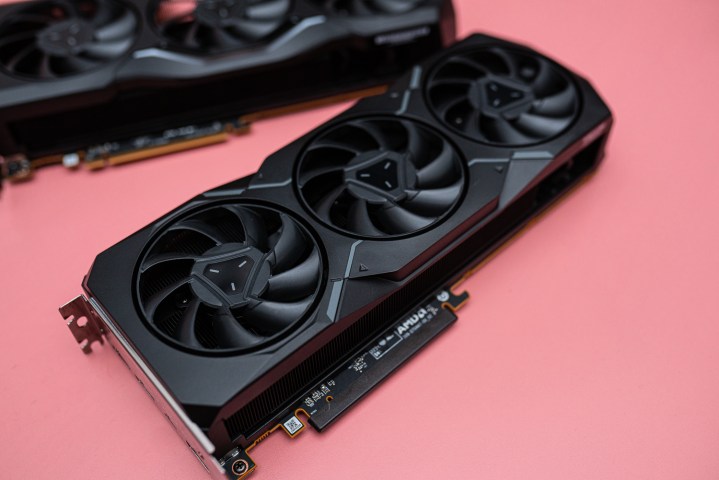
    RX 7900 XTX and RX 7900 XT displayed against a pink background.
    Jacob Roach / Digital Trends

    Su’s remarks about performance improvements spark curiosity. AMD has indicated a focus on the mainstream market for its upcoming GPUs, as discussed in a recent dialogue with Tom’s Hardware. Some leakers suspect that the new flagship may not surpass the RX 7900 XTX in terms of performance, leading to skepticism surrounding the anticipated increase. However, AMD aims to enhance the performance-to-cost ratio of its GPUs, which could be a strong selling point.

    A previous earnings call revealed a staggering 48% year-over-year drop in AMD’s gaming revenue. The outlook appeared bleak, and the recent report shows that AMD’s gaming segment revenue plummeted by 69% compared to the prior year, attributing this decline primarily to a “decrease in semi-custom revenue.”

    As competitors like Nvidia gear up for their RTX 50-series launch in early 2025, and with both companies poised to announce new developments at CES 2025, the GPU market is gearing up for a competitive showdown.

  • AMD Ryzen 7 9800X3D Price May Be Higher Than Anticipated

    AMD Ryzen 7 9800X3D Price May Be Higher Than Anticipated

    Recent leaks surrounding the AMD Ryzen 7 9800X3D signal that AMD is gearing up to launch its top gaming processor very soon. Initial listings for the CPU have emerged, providing insight into potential pricing, which appears to be on the rise. While the prices vary significantly, a common theme is a notable increase. Adding to the buzz, leaked benchmark data has revealed an impressive boost clock speed.

    Although the 9800X3D’s public appearance might seem premature, it’s widely believed that AMD will unveil the chip this week, right after Intel’s release of the Core Ultra 200-S. The Ryzen 7 9800X3D is expected to be officially launched in the first week of November, prompting several retailers to jump ahead and post early listings.

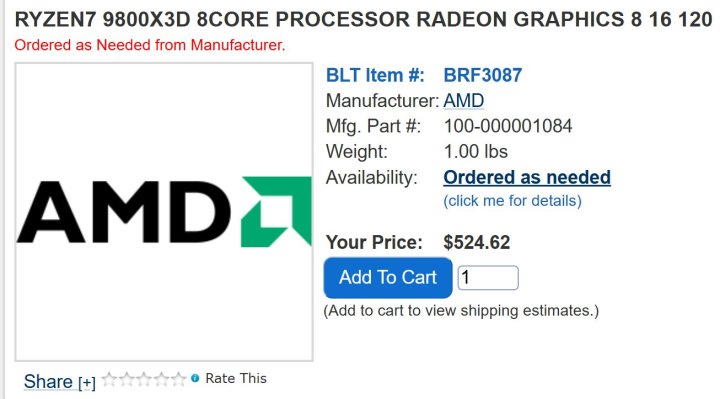
    The AMD Ryzen 7 9800X3D listed at an etailer.
    ShopBLT

    As noted by harukaze5719 on X (formerly Twitter), Shop BLT has the 9800X3D priced at $525. This marks a considerable jump from the $450 launch price of the 7800X3D. On a more positive note, Tech America (via momomo_us) lists the CPU at a more palatable $484. While this is still an increase, it’s seen as more justifiable.

    Determining the perfect price for the 9800X3D is challenging, particularly since the 7800X3D is nearly sold out across many platforms, sustaining its high demand—this could pave the way for a pricier successor to the best gaming CPU available. In contrast, the 9700X debuted at $360, leaving us uncertain about the performance leap the 9800X3D will deliver in terms of synthetic benchmarks, though its gaming capabilities are expected to surpass those of its predecessor.

    Benchmarks of the Ryzen 7 9800X3D.
    Anandtech forum users

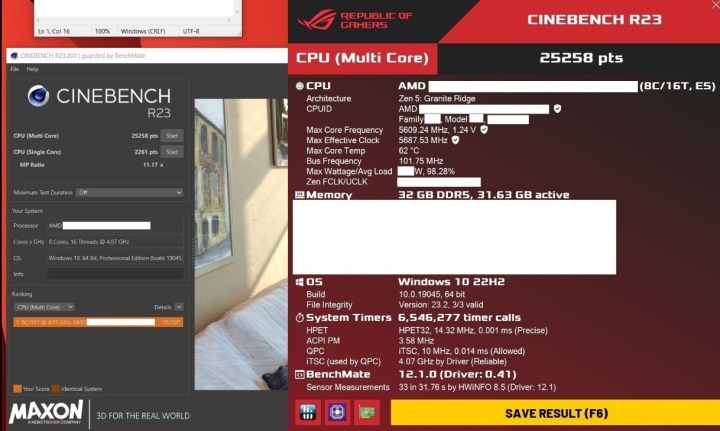
    According to benchmarks shared by users such as Igor_Kavinski and itsmydamnation on the Anandtech forums, the Ryzen 7 9800X3D appears to feature a significant boost in clock speed. It’s reportedly capable of reaching 5.7GHz, a notable enhancement over the 5GHz maximum of the 7800X3D. These scores were obtained from an engineering sample utilizing Precision Boost Overdrive (PBO). The testing environment noted running Windows 10 22H2, which suggests that further performance gains may be achievable, especially following recent updates for Zen 5 processors.

    The CPU also achieved 25,258 points in the Cinebench R23 multi-core test, outpacing both the 9700X and the 7800X3D, though it still trails significantly behind the Core i9-14900K. Nevertheless, the 3D V-Cache should ensure that the Ryzen 7 9800X3D excels in gaming scenarios. The key question is not its level of performance, but rather how much of an upgrade it will be over its predecessor.

    Another source, uncovered by VideoCardz, indicates an advancement in the base frequency for the Ryzen 7 9800X3D as well. MaxSun has reported a base clock of 4.7GHz, significantly higher than the 3.8GHz clock of the 9700X. As the launch date approaches, further details on the CPU’s final specs will soon become available, but for now, it’s wise to approach these developments with a degree of caution.

  • Turbo Mode Promises Up To 35% Faster Gaming On Ryzen Chips

    Turbo Mode Promises Up To 35% Faster Gaming On Ryzen Chips

    The Ryzen 9 9950X installed on a motherboard.

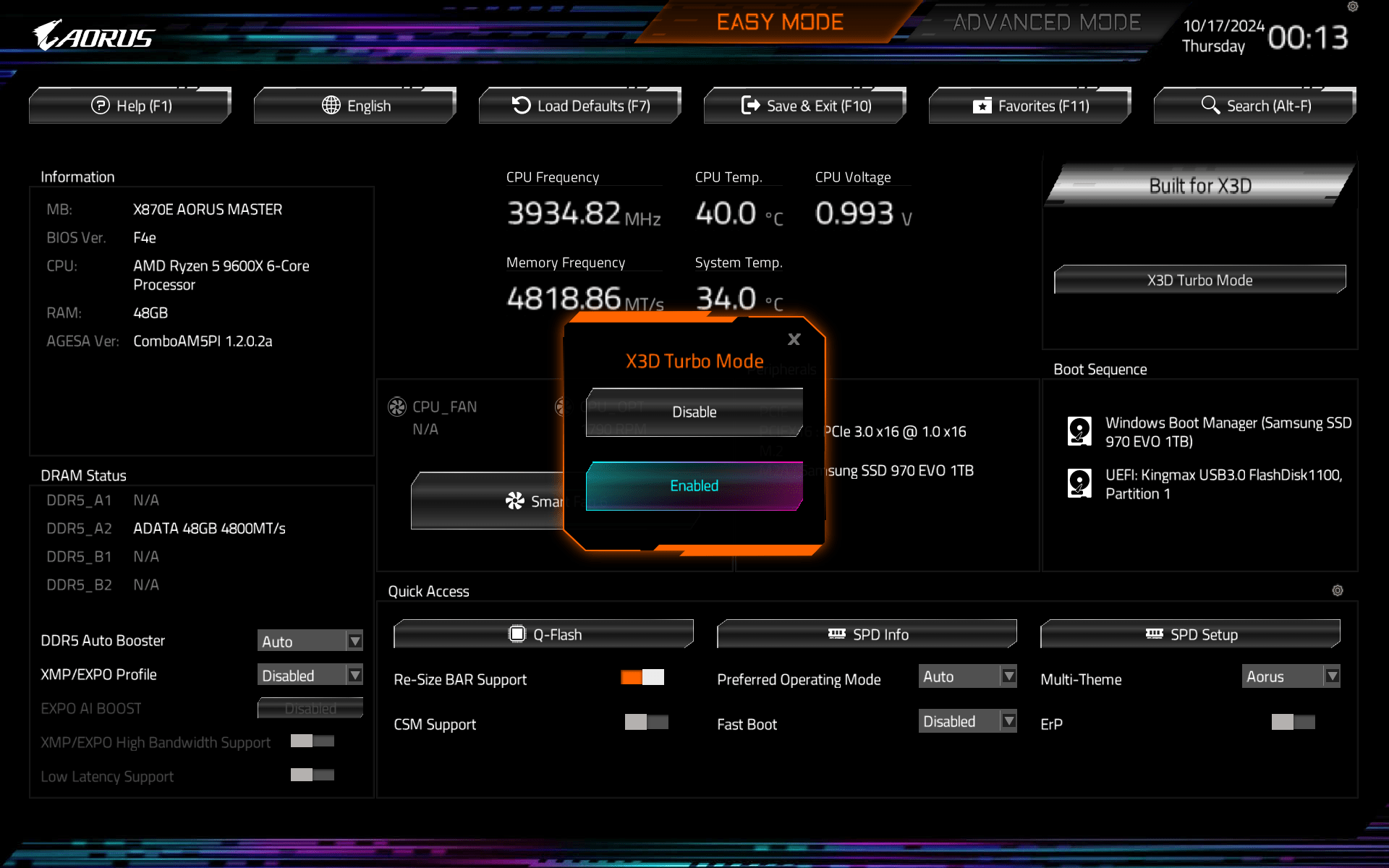
    The Ryzen 9000 series has not quite hit the mark that AMD enthusiasts anticipated. Fans are eagerly awaiting the X3D model, while Gigabyte has unveiled a new Turbo Mode for its motherboards, claiming to enhance gaming performance by 20% to 35%.

    This feature, touted as a “groundbreaking BIOS enhancement,” aims to optimize performance for motherboards, including the X870E, X870, and 600 series, specifically for the Ryzen 7000X3D and Ryzen 9000 series processors.

    Perhaps the most intriguing detail from Gigabyte’s announcement is the reference to a forthcoming Ryzen 9000 X3D processor, projected to deliver the most substantial performance increase of up to 35%. This processor is already generating excitement as one of the top contenders in the market upon its launch. Conversely, the non-X3D Ryzen 9000 models are expected to see a more modest 20% boost. Notably, Gigabyte claims that the X3D Turbo Mode enables the Ryzen 9000 processors to achieve gaming performance comparable to that of their X3D siblings.

    X3D Turbo Mode displayed in the BIOS.

    However, Gigabyte did not specify the exact performance improvements expected for Ryzen 7000X3D processors. As Tom’s Hardware points out, there’s no detailed explanation on how Turbo Mode operates, with Gigabyte merely referring to it as “wizardry.”

    The prospect of this performance boost is exciting and may enhance the Ryzen 9000 chips’ value. Just a few months after their launch, AMD rolled out a 17% performance upgrade for these processors, and Gigabyte’s Turbo Mode could potentially increase that performance even further. The announcement of the upcoming Ryzen 9000X3D was particularly captivating for consumers.

    Gigabyte has indicated that the X3D Turbo Mode is currently available through the latest beta BIOS update, inviting users to explore the performance improvements for themselves.

  • AMD Is Phasing Out The Ryzen 7 5800X3D

    AMD Is Phasing Out The Ryzen 7 5800X3D

    The Ryzen 7 5800X3D has earned its status as a legendary processor, remaining one of the top choices on the market even years after its introduction. This CPU marked the closing chapter for the AM4 socket and Zen 3 architecture while introducing AMD’s groundbreaking 3D V-Cache technology, which significantly enhanced gaming performance. However, it seems that the 5800X3D is finally approaching its obsolescence.

    While AMD has not made any official announcements regarding the product’s status, a German tech outlet, PCGamesHardware, has declared that “the Ryzen 7 5800X3D is dead.” Their assertion is supported by the fact that the CPU has become difficult to find, especially in Europe and the U.S. It’s notably absent on major platforms such as Amazon, and it’s currently available from one third-party seller on Newegg for $500, shipped from Israel—an excessive price for this processor in 2024.

    At my local Micro Center, I spotted a lone Ryzen 7 5800X3D in stock, but it was only available for in-store purchase, likely indicating that it’s part of their last remaining inventory. The newer Ryzen 7 7800X3D also faced similar availability issues recently, but it’s back on the market, albeit with an increased price tag starting around —$150 more than it was just a few months ago.

    It is no surprise that CPUs featuring 3D V-Cache technology are gradually disappearing from shelves. A series of leaks and speculations suggest that AMD plans to introduce its next generation Ryzen 7 9800X3D soon, with potential release dates ranging from late October to November, and the most conservative predictions pointing to January 2025. Regardless, it appears that AMD is preparing to launch this new gaming CPU and is likely working to make space in the market for it.

    For users still utilizing the AM4 platform, alternatives are accessible despite the dwindling stock of the Ryzen 7 5800X3D. The newer is a viable option. Sharing the same silicon as the Ryzen 7 5800X3D, the 5700X3D operates at slightly lower clock speeds. This leads to a performance drop of about 3% to 5% in gaming, but in many instances, it performs comparably to its predecessor.

    Though the Ryzen 7 7800X3D has returned to availability at a higher cost, it appears that the Ryzen 7 5800X3D may be on its way out for good. Approaching three years since its launch, while it remains a powerful gaming CPU, newer and faster alternatives are now available.

  • Ryzen 7 9800X3D Launch May Be Disappointing

    Ryzen 7 9800X3D Launch May Be Disappointing

    While discussions about processors often overlook emotion, the anticipation surrounding the AMD Ryzen 7 9800X3D has reached a fever pitch thanks to a flurry of leaks and rumors. Recently, a post on the Chiphell forum, referenced by Wccftech, suggested that the announcement for this highly anticipated CPU will take place on October 25, with an expected release in the first week of November.

    At first glance, this news may not seem groundbreaking—hardware launch news is commonplace. However, the last couple of weeks have been saturated with chatter about what is likely AMD’s most eagerly awaited processor of this generation. Recently, a leaked document from an internal MSI briefing compared the Ryzen 7 9800X3D to the previous generation’s Ryzen 7 7800X3D, indicating performance gains ranging from 2% to 13%. Although the slides originally published by HardwareLuxx were taken down, the removal hints at their authenticity (VideoCardz has retained copies of these images).

    Compounding the excitement, the YouTube channel Moore’s Law is Dead recently showcased a slide that appeared to come from an AMD presentation, revealing the packaging design of the Ryzen 7 9800X3D. This design bears a striking resemblance to an official AMD promotional item distributed to retailers during the launch period of the Ryzen 9 9950X, adding some credibility to the leak. While not confirmed, the slide indeed looks plausible to anyone familiar with AMD’s presentations.

    Everything suggests that the Ryzen 7 9800X3D could be launching in the near future, whether it be in a matter of weeks or a couple of months. Not to mention, the dwindling stock of the highly successful Ryzen 7 7800X3D adds to the urgency. However, despite optimistic release date predictions, concerns persist regarding performance and pricing. The MSI slide indicates only a slight improvement in gaming performance over the earlier Ryzen 7 7800X3D, which poses a challenge given the rumored pricing of the new CPU.

    It will have an MSRP of $499.

    — Sebastian Castellanos (@Sebasti66855537) October 15, 2024
    Renowned leaker Sebastian Castellanos has mentioned that the Ryzen 7 9800X3D will carry an MSRP of $499, which is $50 higher than the launch price of the Ryzen 7 7800X3D. Just a month ago, the Ryzen 7 7800X3D was widely available for about $300 before disappearing from retailer inventories. If the forthcoming Ryzen 7 9800X3D indeed commands a premium price while delivering only marginal performance enhancements, it may not be warmly received by consumers.

    As of now, AMD hasn’t made any formal announcements regarding the Ryzen 7 9800X3D. However, if the launch is imminent—as it seems—it won’t be long before we receive all the pertinent information. Notably, the expected launch date coincides with just one day after the release of Intel’s Arrow Lake CPUs, indicating that AMD might be positioning itself to steal some thunder from Intel.

  • AMD’s Top GPUs Now More Affordable Than Ever

    AMD’s Top GPUs Now More Affordable Than Ever

    According to multiple sources, it seems we won’t be seeing AMD’s next-generation RDNA 4 graphics cards this year. On the upside, this presents a great opportunity for gamers eager to purchase a quality GPU right now. Retailers are likely looking to offload existing inventory ahead of the eventual RDNA 4 release, which has resulted in significant discounts on current-generation AMD graphics cards. Now is an excellent moment to take advantage of these sales.

    Let’s kick things off with the RX 7700 XT. When it launched at $450, it faced stiff competition from the better-performing RX 7800 XT, which retailed for $500. Thankfully, things have improved, and you can now find the RX 7700 XT for as little as $350 on platforms like Amazon and Newegg. This price is much more aligned with what it should have initially cost, but be aware that this deal specifically applies to the PowerColor Fighter model. Other versions of the RX 7700 XT can be found in the $360 to $500 range.

    The RX 7700 XT performs admirably for 1440p gaming. It wasn’t that the card lacked capability; rather, it was overshadowed by the RX 7800 XT, which offered superior performance and better value. Regrettably, the RX 7800 XT’s price has remained stable, with the cheapest version currently available at around $470.

    RX 7900 XTX and RX 7900 XT on a pink background.
    Jacob Roach / Digital Trends

    Stepping up the RDNA 3 series, we find another solid deal: the RX 7900 XT. The XFX Speedster MERC310 model is now priced at just $660 on both Amazon and Newegg. When it was initially launched alongside the flagship RX 7900 XTX, its list price was an eye-watering $900. However, that price has steadily dropped over the last two years. Currently, $650 represents the lowest price ever for this powerful 4K gaming GPU.

    Get your weekly teardown of the tech behind PC gaming


    Check your inbox!

    Even the RX 7900 XTX has seen a drop in price, with certain models now available for around $860. Initially launched at $1,200, it has undergone several price reductions since its release. Although the current price is lower, it doesn’t present as significant of a value when compared to the previous two models.

    Radeon logo on the RX 7900 XTX.
    Jacob Roach / Digital Trends

    What makes some of these offers even more enticing is that the RX 7700 XT comes bundled with two AMD games: Warhammer 40,000: Space Marine 2 and Unknown 9: Awakening, valued at approximately $60. This adds extra value to an already appealing deal. A big shoutout to VideoCardz for highlighting these deals early — the duration of these discounts remains uncertain.

    With GPU prices finally on the decline, now is a fantastic time to purchase a graphics card. Anticipation is building for the AMD RX 8000 series and Nvidia RTX 50-series, both of which are expected to launch in the coming months. Based on historical trends, these next-gen cards will likely carry a hefty price tag.

  • AMD Ryzen 9000 CPUs Are Now Much Faster

    AMD Ryzen 9000 CPUs Are Now Much Faster

    AMD has recently revealed exciting enhancements for some of its top processors. The company introduced several upgrades to the Ryzen 9000 series, which include a significant increase in thermal design power (TDP) for select CPUs and improvements in core-to-core latency that have been anticipated by many. Additionally, AMD has expanded support for faster DDR5 RAM, among other announcements made today.

    The latest BIOS iteration, dubbed AGESA PI 1.2.0.2, introduces various updates, but the most noteworthy change is the elevation of the TDP for two of its processors.

    Previously, both the Ryzen 7 9700X and Ryzen 5 9600X were fixed at a TDP of 65 watts, a limitation that some users found restrictive compared to the 120-watt TDP of the Ryzen 9 9900X and the especially high 170-watt Ryzen 9 9950X. AMD justified this design by stating that it aimed for these lower-tier CPUs to provide efficient performance. However, to appeal more to enthusiasts, the company has now bumped the TDP of the 9700X and 9600X to 105 watts.

    Increasing the TDP by over 60% via a firmware update might seem risky, but AMD assures users that these CPUs have been validated at the 105W level. Furthermore, this TDP increase is officially covered by the warranty, allowing you to unlock it without the fear of voiding your warranty. That said, a more robust CPU cooler will be necessary to manage the additional heat generated.

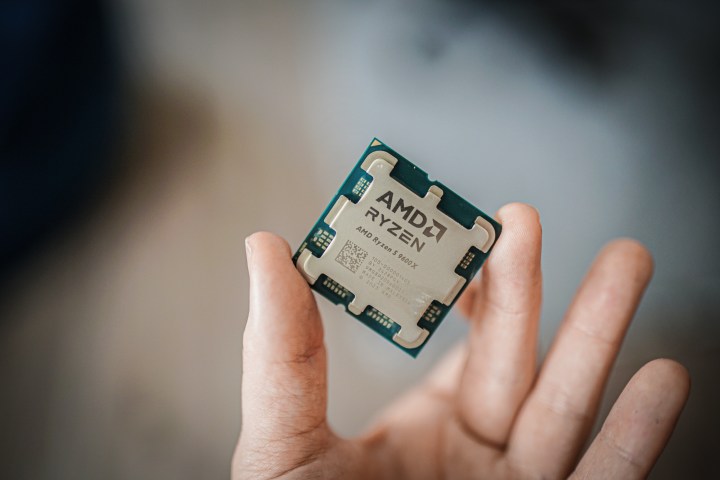
    The AMD Ryzen 5 9600X between two finger tips.
    Jacob Roach / Digital Trends

    AMD has not clarified how the increased TDP might impact clock speeds or overall performance, leading to a likely need for reviewers to conduct new tests on these CPUs. Nevertheless, considering the modest generational improvements from Zen 4 to Zen 5, this adjustment in TDP appears to be a promising development.

    Additionally, there’s the previously mentioned enhancement in core-to-core latency. Both users and reviewers had pointed out that the inter-core latency on the Ryzen 9000 series was about 50% greater than that of the Ryzen 7000 line. Those who updated their firmware last week have reported that AMD has rectified this issue, successfully lowering latency by 50% on the Zen 5 architecture.

    On the hardware side, AMD has now enabled EXPO support for DDR5-8000 memory. This level of RAM is among the highest available and is typically unnecessary for most gamers. AMD claims that upgrading from DDR5-6000 to DDR5-8000 can reduce latency by approximately 1 to 2 nanoseconds.

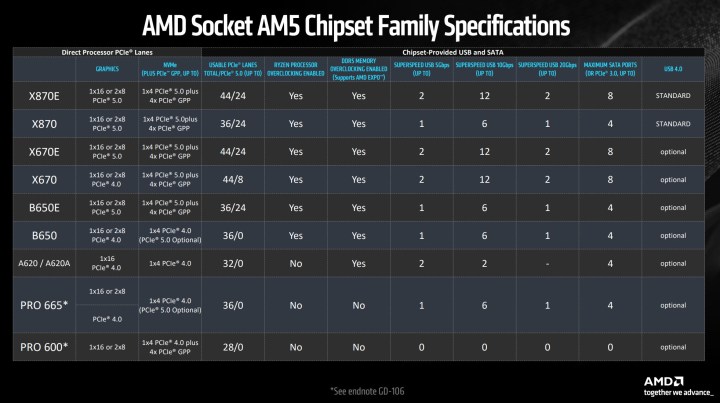
    A chart of all the AM5 motherboards.
    AMD

    AMD also introduced the new X870 and X870E motherboards that maximize the capabilities of the AM5 socket. These motherboards support the full-speed capabilities of PCIe Gen 5.0 for both graphics and storage, arriving just in time for the anticipated RTX 50 series, which is expected to utilize this technology.

    Benchmarks for the new Ryzen 9000 CPUs generally indicate they excel in productivity workloads but exhibit limited increases in gaming performance. Additionally, it has come to light that these CPUs have been operating about 10% slower than expected. Fortunately, this should be rectified by forthcoming mandatory Windows updates that will enhance branch prediction optimizations. Once everything is accounted for, we’ll be better positioned to evaluate whether these updates significantly enhance CPU performance.

  • Shipments Rose 48% Despite Weak GPU Market

    Shipments Rose 48% Despite Weak GPU Market

    The discrete graphics card sector seems to be experiencing a lull with no fresh releases for quite some time. Yet, surprisingly, GPU shipments are performing better than anticipated. A recent report from Jon Peddie Research (JPR) reveals that shipment numbers for add-in board (AIB) GPUs surged by an impressive 47.9% compared to last year. But what’s behind this growth? Let’s dive into the details.

    First and foremost, the statistics are quite promising. Total GPU shipments jumped from 8.7 million units in the first quarter of 2024 to 9.5 million in the second quarter, reflecting a 9.4% increase. This is a significant deviation from the common trend, especially considering the 10-year average is a decline of 7.1%.
    AIB GPU market share.
    Jon Peddie Research

    This kind of increase runs counter to typical market patterns. Generally, GPU shipments tend to decline in the first half of the year, but this year bucks that trend. It’s hard to overlook the impact of Nvidia’s RTX 40 Super release at the start of 2024. However, we must also consider the launches of new models like the RTX 4070 during the first half of 2023. Plus, both AMD and Nvidia introduced new GPUs in late 2022, contributing to the previous year’s first and second-quarter statistics. Whatever the reasons, the gains we’re seeing this year are certainly notable.

    The GPU AIB market share over the years.
    Jon Peddie Research

    When we look at manufacturer-specific data, it’s consistent with the overall near 50% year-on-year shipment increase. Nvidia continues to dominate the market, holding an impressive 88% share, reflecting a 61.9% rise in shipments compared to the previous year and a 9.7% increase from the last quarter. In contrast, AMD shows more modest growth with a 3% increase year-on-year and 9% from the previous quarter.

    On the other hand, the situation for Intel appears grim. Intel held a mere 2% market share in the discrete GPU sector in the second quarter of 2023 due to its Arc Alchemist line, but this year shows 0% share. Significant changes are unlikely until Intel releases its Battlemage GPUs, which may arrive later this year or early next year—but those plans remain unconfirmed.

    The GPU industry continues to exhibit unexpected developments. Given the rise of gaming laptops and the steady improvement of integrated graphics, a decline in shipments at the beginning of the year wouldn’t have been a surprise. While Nvidia’s RTX 40 Super has surely played a role in these favorable statistics, can it truly account for the nearly 48% gain? There is hope that this could signal a broader upward momentum, as Dr. Jon Peddie indicated, “After a typical dip in the first quarter, we’ve experienced four quarters of growth.” It should be noted, however, that overall shipments are down compared to two years ago, and it’s essential to remember that shipments do not equate to actual sales.

    We are still anticipating updates regarding upcoming GPUs from AMD, Intel, and Nvidia, and once these releases hit the market, we can expect the graphics card landscape to thrive in the coming months.

  • Intel Nearly Created The Chip For PlayStation 6

    Intel Nearly Created The Chip For PlayStation 6

    AMD has played a crucial role in powering Sony’s gaming consoles for the past two generations. However, a recent report reveals that Intel was in the running to create the chip for the yet-to-be-announced PlayStation 6. According to information from Reuters, there was a competitive bidding process between Intel and AMD for the contract, and ultimately, Intel did not secure the deal.

    The negotiations with Intel reportedly fell through due to disagreements over the profit margins from each chip sold to Sony. Discussions spanned several months in 2022 and involved high-level executives, including the CEOs of both companies, along with numerous engineers and decision-makers.

    In addition to financial concerns, compatibility issues also posed a challenge for Sony. Since previous consoles like the PS4 and PS5 utilize AMD technology, moving to Intel’s architecture could jeopardize backward compatibility, an important feature for console users. While compatibility between AMD and Intel isn’t typically a significant issue for PCs, it becomes far more critical in the tightly integrated ecosystem of game consoles, which operate on specialized software and their own distinct operating systems.

    Intel has faced a series of financial challenges recently, including reports of record-low revenue, leading to investor lawsuits and an announcement of job cuts amounting to about 15% of its workforce. The company also canceled plans for its 20A manufacturing node in favor of focusing resources on its 18A technology, for which it has secured contracts with major clients, including Microsoft and the U.S. Department of Defense. Losing out to AMD for the PS6 contract could have meant missing out on approximately $30 billion in potential revenue.

    While the bidding climate ultimately boiled down to a showdown between Intel and AMD, other firms like Broadcom were also considered for the PlayStation 6 partnership. In response to these developments, an Intel spokesperson expressed disagreement with the characterization of events but opted not to comment further on its current or potential negotiations with customers.

  • AMD Turns Thin Laptop Into A Gaming Powerhouse

    AMD Turns Thin Laptop Into A Gaming Powerhouse


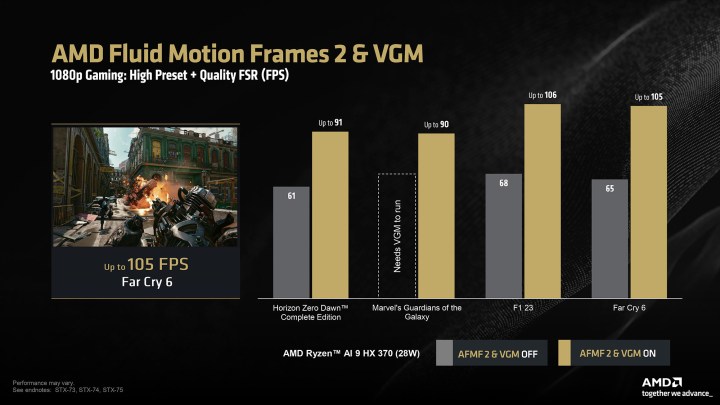
    AMD has unveiled a new driver for its Ryzen AI 300 processors, which brings a powerful feature potentially enhancing gaming performance significantly. This innovation, known as Variable Graphics Memory (VGM), enables the integrated graphics to convert up to 75% of a system’s memory into dedicated graphics memory. AMD claims that this feature not only enhances gaming performance but also allows certain otherwise unplayable games to run smoothly.

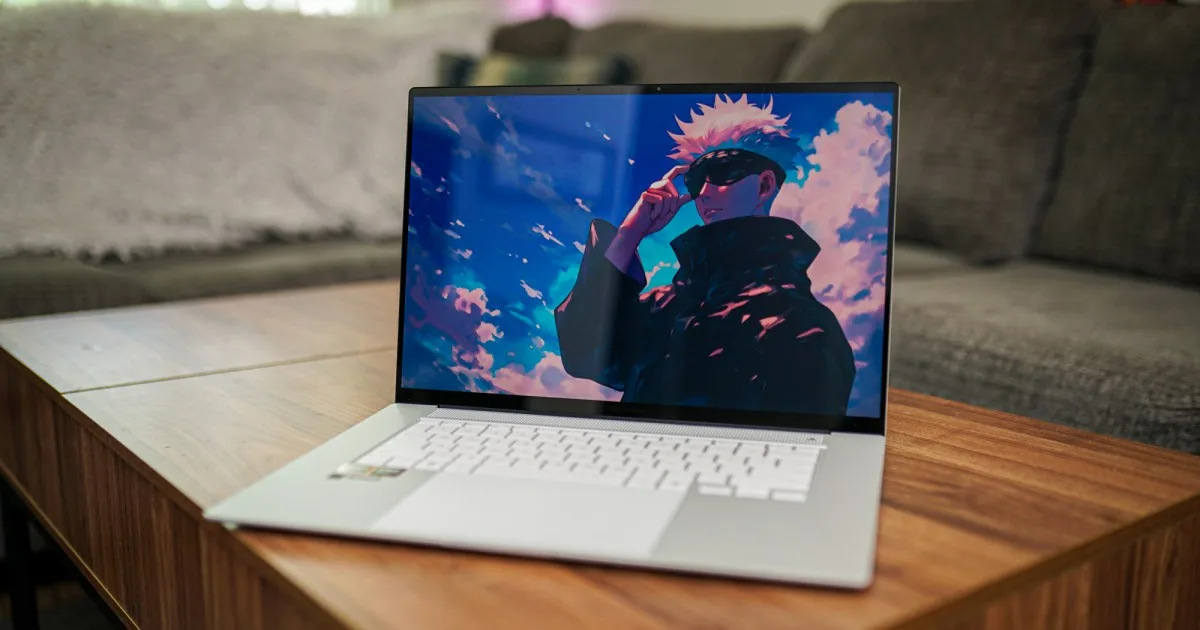
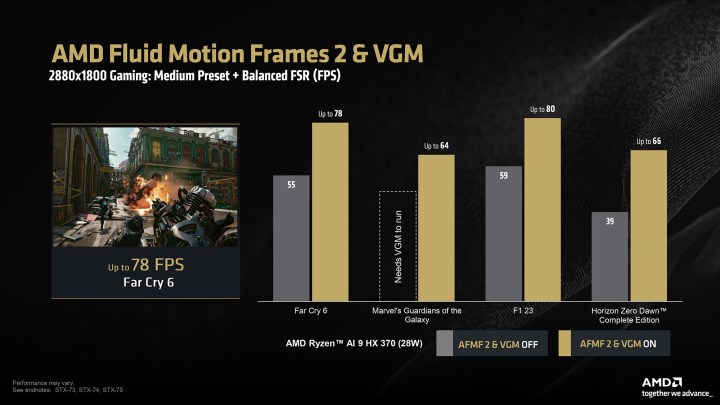
    The Ryzen AI 300 series is primarily designed for slim, portable laptops, including models like the Zenbook S 16, which are not specifically aimed at gamers. Alongside VGM, the latest driver has activated AMD’s Fluid Motion Frames 2 (AFMF 2) feature for these processors. Together, these functionalities could lead to noticeable performance gains, as illustrated in benchmarks for the Zenbook S 16 shown below.

    Performance at 1800p for Ryzen AI 300 processors.
    AMD

    One notable example is Guardians of the Galaxy, which AMD states requires VGM to even function. This is due to certain games having strict memory requirements hard-coded within them. Typically, the integrated graphics on a Ryzen AI 300 processor are allocated just 512MB of dedicated memory, which may lead to issues or crashes in titles that need more. VGM resolves this limitation effectively.

    Performance for AMD Ryzen AI 300 processors at 1080p.
    AMD

    However, it appears that most performance gains stem from AFMF 2. In less demanding scenarios for integrated graphics, testing showed that the Ryzen AI 9 HX 370 could achieve nearly 100 frames per second (fps) or even exceed that in various gameplay tests at 1080p resolution.

    The advancements in AFMF 2 represent a significant leap from its predecessor. The frame generation feature now accommodates nearly any game and delivers much better image quality and stability. Additionally, support has been extended to OpenGL and Vulkan, making it compatible with a wide range of PC games.

    Both AFMF 2 and VGM are accessible through a technical preview driver. This update also includes enhancements for the newly launched Warhammer 40K: Space Marines 2. As with any preview driver, users might encounter minor bugs, and AMD encourages feedback on any issues that arise during use.