Tag: AMD

  • AMD SVP Says AI Is Overhyped And Working On New Invents

    AMD SVP Says AI Is Overhyped And Working On New Invents

    At an exclusive press event during IFA 2025, AMD’s Senior Vice President and General Manager of the Computing and Graphics Group, Jack Huynh, shared his insights on the current state and future of artificial intelligence. He emphasized that we are only beginning to explore AI’s potential and that the technology has a long way to go.

    Huynh noted how rapidly AI advancements have accelerated over the past year and a half. He pointed out that what once focused on text-to-image translation has now evolved into text-to-video, including voice integration, illustrating the remarkable pace of development.

    Despite frequent claims that AI is overhyped, Huynh believes the opposite—that the technology is still significantly underappreciated. He remarked, “Many folks think AI is overhyped—I see it as underhyped,” adding that the growth is exponential and that there are many untapped possibilities.

    Huynh and his team are looking ahead three to five years, working on AI innovations that have yet to be invented. While current devices, such as new laptops featuring Microsoft’s Copilot AI—like the recently announced Acer Swift Air 16—show AI integration, practical use cases remain limited. However, Huynh believes the best is yet to come; the industry will see many more groundbreaking applications of AI in the coming years.

    He envisions AI as a powerful tool capable of advancing humanity, though realising this potential will take some time.

    Looking forward, AMD has announced that CEO Dr. Lisa Su will deliver the opening keynote at CES 2026 in January. The event will be held in the Palazzo Ballroom at the Venetian Hotel in Las Vegas on January 5th at 6:30 p.m. Pacific Time.

    Media coverage will bring updates, analyses, and the latest news from the show floor. AMD isn’t alone in pushing the AI frontier—recently, Razer introduced a new developer tool for gaming, and OpenAI is working on replacing Siri with ChatGPT on iPhones. As advancements continue, the industry remains eager to see how these innovations will shape the future.

  • How To Update AMD Drivers to Keep Your PC Running Smoothly

    Even if you own one of the top gaming computers, regular maintenance is essential to keep it running smoothly. One crucial aspect is keeping your drivers up to date, which significantly influences your PC’s performance. Whether you have an AMD graphics card, processor, or motherboard chipset, having current drivers can make a noticeable difference in how well your system operates.

    Updating drivers for your AMD hardware is straightforward and can be done in several ways. Here’s a guide to help you easily keep your GPU and chipset drivers current, ensuring your gaming and computing experience remains optimal.

    Using AMD Auto Detect for Easy Driver Updates

    If you prefer a simple, hassle-free method, AMD’s Auto Detect and Install tool is a reliable option. This utility automatically identifies your hardware and suggests the appropriate drivers, streamlining the update process.

    Step 1: Visit AMD’s official support page to download the Auto Detect and Install tool.

    Step 2: Launch the program and allow it to scan your system—this may take a few minutes and might be quicker if you close other applications. After the scan completes, AMD will present a list of available drivers for your system.

    Step 3: From the list, you can choose to skip certain drivers or proceed with installation. You also have options to customize the installation, including performing a clean reset of your drivers, which can be useful if you’re troubleshooting issues.

    Step 4: The utility will first update your GPU drivers, including integrated graphics if present, and then your chipset drivers if you use a Ryzen processor. Deselect any drivers you don’t want to update and click “Install.” Once the installation finishes, restart your computer to apply the changes.

    Manually Downloading AMD Drivers

    Some users prefer to select and install drivers manually, especially if they want more control over the process or need specific versions.

    Step 1: Confirm your hardware details, such as the exact model of your graphics card or chipset. This information is crucial for downloading the correct drivers.

    Step 2: Go to AMD’s official download page and select the appropriate category—graphics, processor, chipset, etc. Then, specify your hardware model, operating system, and download the specific driver file.

    Step 3: Run the downloaded installer. The setup will check compatibility and suggest drivers. You can choose to perform the standard installation or select additional options, such as a factory reset, to remove old drivers completely before installing new ones.

    Step 4: After installation, restart your PC to complete the process.

    Updating AMD GPU Drivers with AMD Adrenalin

    Another user-friendly way to keep your GPU drivers up to date is by utilizing AMD’s proprietary software, AMD Software: Adrenalin Edition. This program is often pre-installed if you have AMD drivers, but if not, it can be easily downloaded from AMD’s website.

    Step 1: Download and install AMD Adrenalin from AMD’s official site.

    Step 2: Launch the software by right-clicking on your desktop and selecting it from the menu. You may need to create an account or log in.

    Step 3: In the main window, go to the Drivers section. Here, click Check for Updates to see if new driver versions are available.

    Step 4: If updates are found, you can choose to download and install them directly within the software. For a smooth update process, it’s best to close other applications beforehand.

    Keeping Your Drivers Up to Date

    Regular driver updates are essential for maintaining optimal performance and stability in your gaming or work sessions. Whether you prefer automated tools or manual downloads, staying current ensures your hardware works as intended and helps prevent compatibility issues.

    By following these straightforward steps, you can efficiently manage your AMD drivers, keeping your system in peak condition with minimal effort.

  • AMD May Offer A Better-Priced RX 9070 With One Trade-Off

    AMD May Offer A Better-Priced RX 9070 With One Trade-Off

    AMD’s RX 9070 XT and RX 9070 are strong contenders among top-tier graphics cards, yet the RX 9070 faces a challenging position in the current GPU landscape. With the recent launch of the RX 9070 GRE, the standard variant may be at risk. Recent leaks indicate that the pricing for the two cards will be strikingly similar, which could spell trouble for both models.

    The RX 9070 GRE (Great Radeon Edition) has officially debuted in China, as noted by IT Home. This graphics card does feature some downgraded specifications compared to both the RX 9070 XT and RX 9070, which was expected, similar to the RX 7900 GRE that turned out to be quite impressive.

    AMD’s RX 9070 GRE is equipped with 3,072 cores (or 48 compute units), a peak clock speed of up to 2.79GHz, and 12GB of GDDR6 memory over a 192-bit interface, purportedly clocked at 18Gbps (according to VideoCardz). This choice raises eyebrows, especially since the majority of the RDNA 4 lineup boasts 20Gbps memory speeds. If accurate, these 18Gbps modules would yield an effective bandwidth of 432GB/s.

    The specifications place the RX 9070 GRE squarely between the RX 9070 and the anticipated RX 9060 XT. AMD claims that it will be 6% faster than the RX 7900 GRE. While this margin may seem minimal, the RX 7900 GRE is often sold out or priced excessively, giving the RX 9070 GRE an opportunity to excel, even without major performance improvements.

    The current GPU market conditions may pose challenges for the RX 9070 non-XT as well. The RX 9070 GRE is anticipated to be a step down, but its price point is rumored to hover just below that of the RX 9070. In China, the RX 9070 is priced at 4,449 Chinese yuan (RMB), while the RX 9070 GRE may start at 4,199 RMB—making it only 7% cheaper.

    Given that the RX 9070 is priced closely to the RX 9070 XT, it could soon face another competitor in the RX 9070 GRE. With their prices so closely aligned and performance likely not significantly differing, many gamers might prefer the GRE option. However, it’s worth noting that all three GPUs are currently performing well in the market despite being priced above their suggested retail prices (MSRP).

    Currently, AMD has not confirmed a global release for the RX 9070 GRE. Yet, with the last-gen model being a China-only launch before going global, it’s likely that the same path will occur for the RX 9070 GRE. For now, we’ll have to wait for further developments.

  • AMD RX 9070 GRE Leaked Specs Reveal Gamer Essentials

    AMD RX 9070 GRE Leaked Specs Reveal Gamer Essentials

    After its debut, AMD’s RX 9070 XT quickly gained recognition, appearing on numerous lists as one of the top graphics cards. However, many gamers are eager for more options. With inconsistent availability and challenges in securing a GPU at the manufacturer’s suggested retail price (MSRP), there’s growing anticipation for new releases from AMD. Fortunately, recent leaks suggest that AMD may have exciting announcements on the horizon, including specs that could pique the interest of gamers.

    According to a leak by VideoCardz, the upcoming RX 9070 GRE, which stands for “Great Radeon Edition,” is on its way. The previous generation’s RX 7900 GRE has been praised for offering exceptional value, effectively bridging the gap between premium and mainstream graphics cards. While this leak is merely speculative, it’s a positive sign for the future of AMD’s offerings.

    Now, let’s look at what the leaked information reveals about the RX 9070 GRE. The graphics processing unit (GPU) is expected to feature 3,072 stream processors (often referred to as cores). This represents a decrease compared to the RX 9070 XT’s 4,096 cores and the standard RX 9070’s 3,584 cores, meaning some cores will be disabled in the GRE.

    While this decrease in core count is notable, the RX 9070 GRE is expected to counterbalance that with higher clock speeds, potentially reaching boost clocks of 2.79GHz. On the memory front, the card is anticipated to include 12GB of GDDR6 RAM with a 192-bit memory interface. However, this version’s memory clocked at 18Gbps falls short compared to the 20Gbps available in the RX 9070 XT. Thus, the overall bandwidth is likely to be 432GB/s, which is lower than the flagship models that offer 640GB/s.

    It’s worth noting that the RX 9070 GRE may not see a global release immediately. Its predecessor launched initially in China before eventually making its way to the international market, where it gained a following. If the RX 9070 GRE follows a similar trajectory, it could benefit from a later global rollout.

    AMD is anticipated to announce the RX 9060 XT in the coming months. If this occurs, the RX 9070 GRE could serve as an effective mid-range option between the RX 9070 and the RX 9060 XT. With 12GB of VRAM and a 192-bit bus, it may meet the needs of gamers effectively, but its success will hinge on competitive pricing and availability. The current market’s 16GB and 8GB options featuring a 128-bit bus are often inadequate for demanding AAA titles, giving the GRE a distinct advantage in terms of specs.

  • Amazon Has AMD And Nvidia GPUs But Requires Prime Membership

    Amazon Has AMD And Nvidia GPUs But Requires Prime Membership

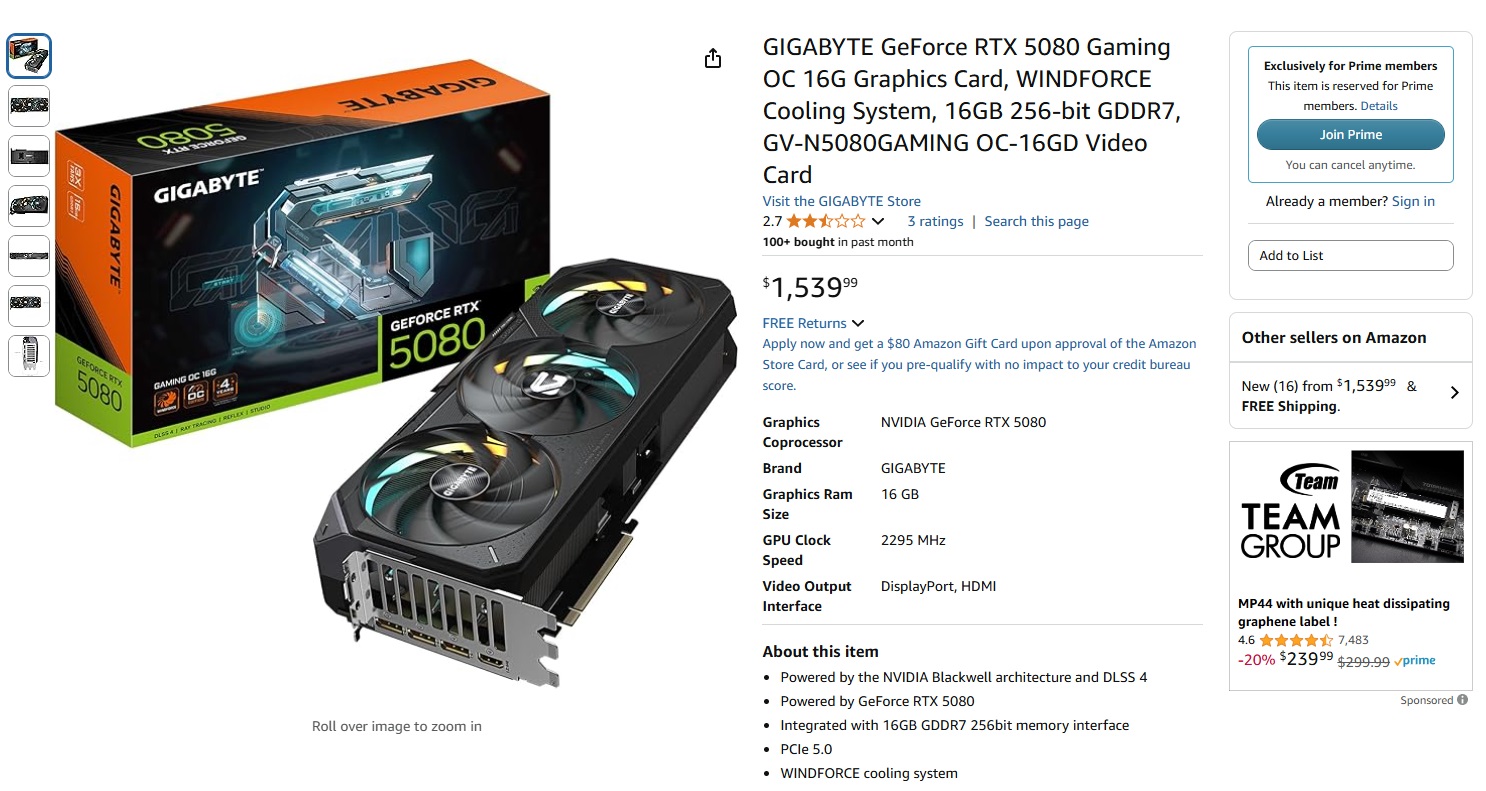
    Amazon seems to be taking steps to address the issue of GPU scalping by reserving a portion of its inventory of Nvidia RTX 5000 and AMD Radeon 9000 series graphics cards exclusively for Prime subscribers. As reported by Club386, certain high-end GPUs are only accessible to Prime members, which could help mitigate the effects of scalpers and resellers. Interestingly, Amazon has not officially categorized this initiative as an anti-scalping measure, leaving some room for conjecture regarding its underlying purpose.

    A range of Nvidia RTX 5000 series graphics cards, including the RTX 5080 and RTX 5070, are currently marked as “reserved for Prime members” on Amazon, meaning that non-Prime users cannot purchase them. The top-tier RTX 5090 is notably absent from this reservation, likely due to its steep price tag, while the RTX 40 series remains unaffected, potentially because of limited availability.

    In the same vein, several AMD Radeon 9000 series GPUs, such as the XFX Quicksilver Radeon RX 9070 OC and Sapphire Pulse Radeon RX 9070 XT, are similarly restricted to Prime members. However, these GPUs are currently being sold at inflated prices.

    Whether intentional or not, this strategy may deter individuals hoping to buy GPUs in bulk for resale at marked-up prices. Scalping has long plagued the GPU market, with high demand and limited supply often leading to exorbitant prices on secondary platforms. By requiring a Prime subscription, Amazon introduces a paywall that may discourage opportunistic sellers while giving genuine gamers and enthusiasts a better chance at purchase.

    This development could be beneficial for those frustrated by previous shortages, but it also raises concerns about accessibility. Critics argue that requiring a paid membership can place an extra burden on consumers who are already facing the high costs associated with new GPU technologies.

    Neither Nvidia nor AMD have publicly commented on Amazon’s apparent strategy, leaving questions about whether this is a collaborative effort or a standalone decision by the retailer. Additionally, it remains unclear if this policy will extend beyond initial launch periods or apply to future product releases.

    For now, those aiming to secure one of these next-generation GPUs might consider a Prime subscription as a potential advantage in their quest to make a purchase.

  • Microsoft Adds Copilot+ AI Tools for Intel and AMD PCs

    Microsoft Adds Copilot+ AI Tools for Intel and AMD PCs

    If you invested in a new AI-powered Copilot+ PC equipped with the latest Intel or AMD processor, and noticed the absence of certain features, your wait is finally over. Several of those Copilot+ enhancements are now becoming available for devices that utilize Intel and AMD processors.

    It’s been nearly a year since Microsoft unveiled the Copilot+ PC classification, designed to prioritize AI capabilities. Up until now, Qualcomm was the exclusive chip supplier for these devices.

    In late 2024, competing chip manufacturers entered the Copilot scene with the release of AMD’s Ryzen AI 300 series and Intel’s Core Ultra 200V series processors. However, many features remained inaccessible to those using Intel and AMD machines.

    That situation is finally changing today. Microsoft announces that Copilot tools such as Live Captions, Cocreator, Restyle Image, and Image Creator will now be available on Copilot+ hardware powered by Intel and AMD.

    What is changing?

    Starting with Live Caption, this functionality provides captions for videos, audio, and real-time interactions like meetings conducted in English. It can also translate text from over 40 different languages into English, as well as 27 languages into Chinese.

    In the future, a new feature called Voice Access will enable users to manage their PC using natural language commands. This feature is already rolling out to Copilot+ devices with Qualcomm chips, with support for AMD and Intel hardware anticipated soon.

    For creative tasks, the AI-powered Cocreator feature is now available in Paint across all device types. Microsoft claims it helps make artistic creation and image enhancement more intuitive and accessible. Users can blend text-based editing with freehand drawing, providing added flexibility.

    Through the Photos app, users of Intel and AMD machines will also gain access to the Restyle Image and Image Creator tools. The Image Creator function allows for generating images based on text descriptions, similar to how you would interact with ChatGPT to create Ghibli-inspired art. The Restyle tool, meanwhile, applies artistic effects to images in a preset manner.

    All of these AI features will be available on AMD and Intel-powered Copilot+ PCs with the March 2025 Windows update. It’s intriguing to consider why these capabilities were initially absent from Intel and AMD devices, even though they satisfied the minimum AI performance criteria.

    Unfortunately, this trend of missing features is not expected to end soon. Recently, Microsoft announced enhancements to the Windows Search experience, which will significantly simplify locating files, photos, and settings. Regrettably, this improvement will only be available for Snapdragon-based Copilot+ devices.

  • AMD GPU Stock Issues Likely To Improve, But Cost Concerns Remain

    AMD GPU Stock Issues Likely To Improve, But Cost Concerns Remain

    A variety of AMD RX 9000 series graphics cards.
    AMD

    The launch of AMD’s RX 9000 series was a huge success, capturing the attention of gamers everywhere. These graphics cards vanished from store shelves almost instantly, leaving many enthusiasts eagerly awaiting restocks. Fortunately, we’ve received some promising updates: additional GPUs are on their way. However, there’s a catch—there are concerns about pricing.

    This update comes from Frank Azor, AMD’s chief architect for gaming solutions and marketing. Responding to feedback on the RX 9070 XT, Azor expressed gratitude and noted, “More supply is coming. Thank you for your patience.”

    Indeed, the RX 9000 series was a quick sell out, a strong showing for AMD that hasn’t always been a given. They accurately priced the cards, and reviews have praised their performance. In fact, the supply seemed more substantial than what Nvidia has managed to provide, despite claims about the availability of the RTX 50-series cards.

    Get your weekly teardown of the tech behind PC gaming


    Check your inbox!

    In essence, the stars aligned for a favorable GPU launch, reflected in a recent survey showing over 70% of gamers preferring AMD over Nvidia’s RTX 50-series.

    More supply is coming. Thank you for your patience.

    — Frank Azor (@AzorFrank) March 13, 2025

    With additional graphics cards on the horizon, one might assume that the situation is improving. However, it’s not that straightforward. There’s a strong desire for AMD GPUs at their suggested retail price (MSRP), but achieving this may prove difficult. Some retailers have already indicated they may not be able to offer the cards at MSRP moving forward.

    AMD RX 9070 XT available on Amazon.
    Amazon

    I’m constantly monitoring GPU prices, and a quick look at Amazon and Newegg reveals concerning news. Amazon has only a limited selection of RX 9070 XT cards at extravagant prices, while Newegg shows its entire inventory sold out, offering just one card at MSRP, with the rest priced between $670 and $860.

    It seems many gamers share this sentiment. Responses to Azor’s tweet mostly revolve around whether the cards will maintain their MSRP, which is entirely reasonable. At a price point of $600, these GPUs represent excellent value; however, an additional $250 or more alters that equation significantly. For now, all we can do is remain patient and hope that AMD can reach an agreement with its add-in board (AIB) partners.

  • PS5 Pro To Gain AMD’s FSR 4 Upscaling Soon

    PS5 Pro To Gain AMD’s FSR 4 Upscaling Soon

    Sony is preparing to elevate the visual capabilities of the PlayStation 5 Pro by incorporating AMD’s FidelityFX Super Resolution 4 (FSR 4) technology for upscaling. This initiative is part of a partnership between Sony and AMD, referred to as Project Amethyst, which aims to enhance the graphical quality of the console.

    FSR 4, which was recently announced alongside AMD’s Radeon RX 9070 and RX 9070 XT graphics cards featuring RDNA 4 architecture, employs machine learning to produce image quality comparable to Nvidia’s Deep Learning Super Sampling (DLSS). Unlike earlier versions, FSR 4 utilizes hardware-based machine learning techniques for upscaling, resulting in improved performance and enhanced visual clarity.

    Mark Cerny, the lead system architect for PlayStation, recently discussed the impact of this collaboration with AMD in an interview with Digital Foundry. He highlighted that the neural network and training strategies employed in FSR 4 are significant advancements that surpass the current PlayStation Spectral Super Resolution (PSSR).

    The incorporation of FSR 4 into the PS5 Pro is projected for gaming titles set to release in 2026, with ongoing modifications to ensure compatibility with the console’s design. Cerny expressed optimism about the PS5 Pro’s machine learning potential, which boasts a peak capacity of 300 8-bit Tera Operations Per Second (TOPS), aligning it closely with AMD’s latest graphics processing units.

    The enhancements in machine learning and ray tracing will serve as pivotal upgrades for the PS5 Pro, potentially deriving from the AMD’s Amethyst project. During the unveiling of RDNA 4, AMD showcased a demonstration that utilized path tracing and neural rendering, along with a denoising capability similar to Nvidia’s ray reconstruction.

    Although it remains early to ascertain the overall success of this integration, it represents a significant leap in upscaling technology for the PS5 Pro, promising gamers sharper and more stable visuals in upcoming titles.

  • AMD RX 9070 XT Outshines Nvidia’s $1,000 GPU With A Catch

    AMD RX 9070 XT Outshines Nvidia’s $1,000 GPU With A Catch

    The AMD RX 9070 XT debuted last week, garnering mostly positive reactions from the gaming community. Anticipated to perform competitively against Nvidia’s RTX 5070 Ti, the RX 9070 XT has unexpectedly outperformed expectations, even surpassing the formidable RTX 5080, which retails for over $1,000.

    Prominent overclocker Der8auer put the RX 9070 XT through rigorous testing, yielding fascinating findings. Initially, it was believed the RX 9070 XT would only compete with the RTX 5070, yet it has demonstrated capabilities that outshine both the RTX 5070 Ti and the 5080 in recent assessments. Notably, Der8auer utilized a high-end variant of the card, which he overclocked and undervolted to achieve these results.

    Overclocking and undervolting a GPU can be an intricate process, often leading to rewarding outcomes—this instance certainly highlights that. Der8auer aimed to push the card to its maximum advertised clock speed of 3,060MHz for the PowerColor RX 9070 XT Red Devil. Simply overclocking was insufficient; he only achieved 3.1GHz by raising the power limit to 110%. After attempting to undervolt by 200mV, he encountered crashes. Ultimately, he stabilized the GPU by running it at -170mV, which allowed it to reach a remarkable 3.4GHz—an unprecedented frequency for many graphics cards.

    A benchmark of the RX 9070 XT and the RTX 5080 FE.
    der8auer

    The results from the overclocking and undervolting experiments were outstanding, leading the RX 9070 XT to take the top spot in Der8auer’s benchmarks, edging out the Nvidia RTX 5080 Founders Edition, albeit by a slight margin.

    This performance is particularly striking given that the RTX 5080 is priced at $999 for the Founders Edition, while the RX 9070 XT starts at $599. This specific model is priced at $790 due to its premium features, making the price difference more significant than anticipated. Nevertheless, both graphics cards are currently sold out, rendering the point largely academic.

    It’s worth noting that Der8auer did not employ ray tracing or path tracing during his benchmark of Cyberpunk 2077. Given Nvidia’s historical advantage in optimizing ray tracing workloads, this could mean even better performance for the RX 9070 XT. Furthermore, the RTX 5080 was tested without overclocking, which would likely have shifted the results in its favor—but nonetheless, this accomplishment serves as a solid win for AMD.

  • Beware Of Fake AMD Ryzen 7 9800X3D CPUs On Amazon

    Beware Of Fake AMD Ryzen 7 9800X3D CPUs On Amazon

    Purchasing a top-notch processor through a retailer like Amazon can feel like a secure choice, but that’s not always the reality. A hardware reviewer recently ordered an AMD Ryzen 7 9800X3D CPU from Amazon, only to discover it was counterfeit. Although the packaging appeared authentic, the actual hardware inside was entirely different from the powerful CPU expected. To make matters worse, there are still misleading listings for that same CPU on Amazon at present.

    Crmaris, an unfortunate customer from HWBusters, was in search of an additional Ryzen 7 9800X3D CPU for testing and decided to buy one from Amazon Germany. According to the reviewer, this CPU was advertised as sold by Amazon and described as brand new, which typically suggests it would arrive in perfect condition.

    However, upon opening the box, which appeared legitimate, the disappointment set in immediately. Instead of the expected product, Crmaris found a CPU with poorly printed lettering claiming it was a Ryzen 7 9800X3D. The label misleadingly stated it was both diffused in the U.S. and Taiwan, but manufactured in China. The front’s shoddy appearance was just one of the red flags; it also sported an altered heat spreader and entirely different pin configurations.

    Two CPUs side by side; one a real Ryzen 7 9800X3D, one a fake.
    HWBusters

    To add insult to injury, the text on the heat spreader turned out to be a sticker. Once removed, it revealed that the CPU was actually an outdated AMD FX processor dating back to 2011. Unsurprisingly, this old model would not fit into an AM5 socket motherboard and certainly wouldn’t provide performance anywhere near that of the Ryzen 7 9800X3D.

    Since this item was sold directly by Amazon and not as a returned product (which might have allowed a previous buyer to switch out the CPU), a thorough investigation is needed on Amazon’s part. The reviewer sought a refund and was informed it could take up to three weeks for the funds to be returned to his account.

    This incident prompted me to take a look at listings on Amazon U.S., and I quickly came across one that seemed suspiciously affordable. This particular listing is sponsored and appears prominently at the top of the search results. It’s sold by a third-party vendor, lacks reviews, and is priced at $429. This price raised a red flag when compared to Newegg, where the is actually listed at $589, which aligns more closely with its true market value. (Regrettably, due to ongoing supply limitations, the 9800X3D remains quite pricey even months after its release.)

    In summary, it’s crucial to exercise caution when purchasing components online. If something appears off, don’t hesitate to pursue a refund—counterfeit products can unfortunately appear just about anywhere.

  • AMD RX 9070 XT May Soon Be Significantly More Expensive

    AMD RX 9070 XT May Soon Be Significantly More Expensive

    Following the criticism aimed at Nvidia’s RTX 50 series launch, which many deemed a “paper launch,” a wave of relief washed over consumers when AMD’s RX 9000 series became available in significantly greater quantities. However, with the initial stock expected to quickly sell out, AMD may soon experience similar pricing challenges as seen across the graphics card market: increasing prices, seemingly at every turn.

    The cards officially premiered yesterday, yet many were found listed at prices well above the suggested retail price (MSRP). In some instances, overclocked models were marked up by as much as $250 over the starting price of $600. Despite AMD’s assurances of working closely with retailers to maintain availability at MSRP, early reports suggested that many of these competitively priced models disappeared rapidly, raising concerns about their return.

    Notably, two major European retailers have indicated that prices for AMD’s latest GPUs will rise after the initial shipment at MSRP is exhausted. One Swedish retailer stated that the current batch of cards will be sold at the recommended price, but subsequent shipments are expected to be sold at higher rates.

    Get your weekly deep dive into the technology fueling PC gaming


    Check your inbox!

    There are inconsistencies among different manufacturers; while one retailer received a single shipment of Asus and Sapphire cards, these will sell at MSRP until stock runs out. However, that same retailer has a second shipment of PowerColor cards on the way, which are already slated for price increases once the first batch is sold.

    Newegg's stock of the RX 9070 XT.
    Newegg

    In the meantime, Overclockers UK has revealed that they have a significant number of RX 9070 XT cards available, but price hikes are inevitable. As they noted, “MSRP is capped in quantity of a few hundred, so prices will jump once those are sold through.” The future of restocks and pricing remains uncertain as the market evolves.

    This situation, while frustrating for consumers, is not entirely surprising. If these pricing trends hold true across all retailers, it suggests that AMD has made an effort to offer availability at MSRP but is not committed to maintaining that for an extended period. The current GPU market is experiencing turmoil, with many new releases quickly selling out, making price increases a rather predictable outcome.

    As it stands, a glance at several leading U.S. retailers confirms that AMD’s RX 9000 series launch has been largely successful, with listings already out of stock at Newegg and Amazon.

  • AMD RX 9070 XT Could Exceed MSRP By $250 Again

    AMD RX 9070 XT Could Exceed MSRP By $250 Again

    AMD is gearing up to take on some of Nvidia’s top graphics cards with the launch of the RX 9070 XT and its standard version. There’s hope among gamers that these models will soon become widely available at their suggested retail price (MSRP). However, it’s concerning that certain models might launch with a price tag that’s as much as $250 higher, mirroring Nvidia’s recent trend with the RTX 50-series, which have been priced significantly above expectations.

    Even though the cards aren’t officially available for purchase yet, Best Buy has a variety of RX 9070 XT and non-XT models listed, although they’re labeled as “coming soon.”

    On a positive note, several models are tagged at their MSRP, which stands at $599 for the 9070 XT and $549 for the RX 9070. Unfortunately, some other cards are critically overvalued right from the start.

    Screenshot of XFX Radeon RX 9070 pricing.
    BestBuy

    Take the XFX Mercury AMD Radeon RX 9070 XT OC as an illustration. This overclocked model, which is adorned in white, often carries a premium price. Despite its features, it’s currently listed at $849, reflecting a stark $250 increase over the MSRP.

    Additionally, plenty of RX 9070 non-XT models are priced on the higher side as well. The priciest one I could find is listed at $669—while it’s not as considerable an increase, it still represents a significant markup.

    AMD hasn’t released its own branded versions of these graphics cards, often referred to as Made By AMD (MBA), but it has assured customers of collaboration with its partners to boost availability. There’s hope that this encompasses not only the pricier overclocked versions but also more competitively priced models sold at MSRP.

    Getting pricing right will be crucial for AMD as it competes against Nvidia. At $600, the RX 9070 XT is quite affordable, especially since it’s said to compete with the Nvidia RTX 5070 Ti, which begins at $750. However, if the price jumps to $850, the situation changes dramatically.

  • AMD’s 9950X3D May Have a High Launch Price

    AMD’s 9950X3D May Have a High Launch Price

    AMD is preparing to unveil two of its most powerful processors, the Ryzen 9 9950X3D and the Ryzen 9 9900X3D. Leaks indicate that their release is just around the corner, with a projected launch date of March 12. Recent information has surfaced regarding the pricing of the 9950X3D, suggesting that it may come with a steep price tag upon its debut.

    The formidable gaming CPU’s price was disclosed by the leaker known as 9550pro on X (formerly Twitter). Utilizing a price-checking plugin, they revealed that the Ryzen 9 9950X3D is listed at 5599 RMB (Chinese yuan), which roughly converts to about $772 based on current exchange rates. In contrast, the 9900X3D is expected to retail for 4599 RMB, translating to approximately $634—approximately $140 cheaper.

    When comparing these figures to the MSRP of the prior-generation AMD Ryzen 9 7950X3D, which launched at $699, there appears to be a noticeable price increase. The 7950X3D saw several price reductions over time, with its lowest pricing estimated at around $530. However, as production slowed, availability decreased, leading to a rise in price. Currently, it hovers around $734, just shy of the anticipated cost for the new 9950X3D. Given these circumstances, many might feel it’s no longer worth purchasing this older model.

    Get your weekly insights into the technology that powers PC gaming


    Check your inbox!

    Regarding the potential price of $772 for the Ryzen 9 9950X3D, it raises some concerns. However, it’s important to note that this information comes from a Chinese retailer, and prices may vary in the U.S. Earlier, the Ryzen 9 9950X3D was briefly listed on Newegg for $699 at launch, matching the price of the 7950X3D when it was released. Thus, things may not be as dire as they initially seem.

    As of now, AMD has not officially confirmed the release date or pricing for the new Ryzen processors, although they did unveil the specifications during their CES 2025 keynote.

  • AMD’s New GPUs Might Face A Surprise Motherboard Issue

    AMD’s New GPUs Might Face A Surprise Motherboard Issue

    Component manufacturers are continually enhancing their protocols, and AMD is part of that evolution. Widely recognized for its graphics cards, the company is transitioning its latest 9000 series GPUs to the Unified Extensible Firmware Interface (UEFI) firmware standard. This shift marks a move away from the traditional pre-boot BIOS setup that has served as the standard for executing various system tasks over the years.

    According to PC World, some computer enthusiasts might assume that UEFI and pre-boot BIOS serve the same function. However, AMD has made it clear in its support documentation that UEFI will be its exclusive firmware standard for graphics cards like the Radeon RX 9070 and 9070 XT. The reasons for this transition include enhanced security, wider compatibility with various interfaces, quicker firmware updates, support for larger hard drives, compatibility with newer PC hardware, Windows Secure Boot support, and faster shutdown, startup, sleep, and resume times.

    While AMD has confidence in its decision, some users running Windows 10 on older motherboards might find themselves facing challenges. As noted by PC World, most systems that are at least a decade old typically feature motherboards that support UEFI. Nevertheless, many Windows 10 users seem inclined to stick with their familiar operating system until after October 14, 2025, when Microsoft plans to cease support.

    Statistics from the gaming platform Steam reveal that more than 40% of users are currently on PCs running Windows 10, which could present issues regarding compatibility with Windows 11 if their hardware does not meet the standard. Unfortunately, testing a PC motherboard’s compatibility with UEFI versus BIOS isn’t straightforward based on Steam’s data.

    This development could be AMD’s strategy to encourage the transition to Windows 11. Users are still able to circumvent the problem by upgrading their motherboards while continuing to use Windows 10.

    Moreover, customers reluctant to upgrade should expect increasing pressure to move away from outdated software. Importantly, Microsoft has indicated that it aims to implement a fee for Extended Security Updates (ESU) for anyone who continues to use Windows 10 past its end-of-life date.

    Discover the latest insights on PC gaming technology


    Check your inbox!

  • AMD FSR 4 Uses AI for Up to 3.7X Gaming Performance

    AMD FSR 4 Uses AI for Up to 3.7X Gaming Performance

    AMD has finally unveiled the technical specifications and pricing for its new Radeon RX 9070 series GPUs, based on the RDNA 4 architecture. Following a somewhat lackluster introduction at this year’s Consumer Electronics Show (CES), the company organized a dedicated online event today to delve into architectural insights and innovative features we can expect from the RX 9070 and RX 9070 XT graphics cards.

    In conjunction with the launch of the Radeon RX 9000 series, AMD also revealed significant updates to its upscaling and performance enhancement technologies. FidelityFX Super Resolution (FSR) 4 signifies a major transformation in AMD’s strategy regarding image upscaling and frame generation, while HYPR-RX has been fine-tuned to further enhance gaming performance.

    Highlights of AMD's FSR features
    AMD

    FSR 4 diverges from earlier versions by fully utilizing the AI accelerators found in AMD’s RDNA 4 architecture. Unlike FSR 3.1, which depended on conventional spatial upscaling, FSR 4 introduces AI-driven improvements for enhanced image clarity and smoother motion. Initially, this iteration will be exclusive to RDNA 4 GPUs, although there might be some compatibility with RDNA 3 and RDNA 2 in the future, albeit uncertain. AMD has stated that FSR 3.1 will still be available.

    AMDs FSR 4 technology overview
    AMD

    A standout feature of FSR 4 is its synergy with frame generation, enabling the AI cores in RX 9000-series GPUs to produce additional frames, akin to Nvidia’s approach with DLSS frame generation. While AMD has yet to reveal whether FSR 4 employs a transformer-based neural network like DLSS 4 or a convolutional neural network (CNN), early comparisons show a distinct enhancement compared to FSR 3.1. The update also claims readiness for neural rendering, indicating potential future developments that may integrate with Microsoft’s Cooperative Vectors.

    Performance uplift potential with AMD's FSR 4
    AMD

    According to AMD, using FSR 4 with frame generation could yield a performance boost of up to 3.7x. Moreover, FSR 4 will be compatible with current games that utilize FSR 3.1, although the implementation details remain unclear. It may require users to enable it manually through driver settings instead of automatic integration.

    List of games supporting FSR 4 at launch
    AMD

    At its launch, more than 30 games will support FSR 4, with AMD’s goal of increasing this number to over 75 titles by the end of 2025. As is the case with all frame-generation technologies, real-world performance and responsiveness will vary based on individual game implementations.

    HYPR-RX, AMD’s performance enhancement suite that operates with a single click, is also getting significant updates. This feature brings together a variety of performance-boosting technologies, including FSR/RSR, Radeon Anti-Lag, Radeon Boost, and AFMF 2, delivering a comprehensive solution for users aiming to enhance FPS without needing manual adjustments.

    Enhancements in AMD's Fluid Motion Frames 2.1
    AMD

    An essential part of this update is AFMF 2.1 (AMD Fluid Motion Frames), which introduces refinements to frame generation, reducing ghosting, enhancing fine details, and improving overlay detection. Although HYPR-RX can provide notable performance increases in certain games, the extent of these improvements can vary depending on the specific title and system configuration.

    AMD’s introductions of FSR 4 and enhancements to HYPR-RX signify a bold shift towards AI-driven gaming technologies, placing them squarely in competition with Nvidia’s DLSS and Reflex ecosystem. While the initial exclusivity of FSR 4 to RDNA 4 GPUs may constrain its adoption at first, its compatibility with existing FSR-supported titles could incentivize developers to embrace this new standard. Moreover, the updates to HYPR-RX offer an effortless way for casual gamers to optimize their performance with minimal hassle. As these technologies begin to roll out, practical benchmarks will ultimately determine their effectiveness and influence on the gaming industry.

  • AMD’s Plan For Your Next Budget-Friendly PC

    AMD’s Plan For Your Next Budget-Friendly PC

    AMD continues to support its Zen 3 architecture with the introduction of six new processors tailored for those on a budget. The Ryzen 3 5305G, Ryzen 3 5305GE, Ryzen 5 5605G, Ryzen 5 5605GE, Ryzen 7 5705G, and Ryzen 7 5705GE have been identified in AMD’s official records, with initial mentions popping up in a recent post on Reddit. This expansion of the Ryzen 5000G series underscores AMD’s strategy to cater to consumers seeking both affordability and solid performance, while also keeping established technology relevant.

    The newly released processors are essentially updated versions of the existing Ryzen 3 5300, Ryzen 5 5600, and Ryzen 7 5700 models. Featuring integrated Radeon Vega graphics, the “G” variants are particularly suited for users who don’t require a separate graphics card. On the other hand, the “GE” models are designed for lower power consumption, sporting a thermal design power (TDP) of just 35W, making them ideal for compact or energy-efficient builds like small form-factor PCs or home theater systems. Among these, the Ryzen 7 5705G stands out with eight Zen 3 cores and a boost frequency reaching 4.6GHz. The Ryzen 5 5605G offers six cores, while the Ryzen 3 5305G packs four cores, aimed at handling everyday tasks and office productivity.

    New AMD Ryzen 5000G chip variants spotted on Reddit
    u/yeathemen on Reddit

    With these updates to the Ryzen 5000G series, AMD is equipping budget-conscious PC builders and system integrators with access to reliable processors that deliver good performance. These chips are particularly well-suited for users looking for a cost-effective blend of efficiency and power, making them ideal for home office setups, budget workstations, and media centers. With integrated graphics and lower power demands, they serve as an appealing all-in-one CPU option, reducing the need for an additional graphics card and the associated costs.

    AMD’s ongoing support for the AM4 socket ensures that users with first-generation Ryzen processors, dating back to 2017, can upgrade to these modern CPUs without the hassle of changing out their motherboards.

    Get your weekly breakdown of the technology behind PC gaming


    Check your inbox!

    Although AMD has not yet disclosed specific details regarding specifications, availability, or pricing, the long-term compatibility offered by the AM4 platform can create some confusion for budget-conscious consumers who may not be familiar with Ryzen’s various generations. As noted by Tom’s Hardware, there is often an expectation that a processor released in the current year should feature cutting-edge technology, even if it isn’t the most powerful option available. Naturally, consumers with limited budgets want to feel confident that their systems will remain upgradeable for years to come.

  • AMD RX 9070 XT Could Match RTX 4080 Performance

    AMD RX 9070 XT Could Match RTX 4080 Performance

    As the launch of AMD’s Radeon 9000 graphics cards approaches, performance benchmarks for the Radeon RX 9070 XT have reportedly surfaced. According to VideoCardz, AMD recently held an exclusive media event, revealing architectural insights and performance metrics for the RX 9070 XT, hinting at a significant improvement over earlier models and a tough challenge to Nvidia’s products.

    The leaked performance indicators show that the Radeon RX 9070 XT exhibits a remarkable performance boost over the Radeon RX 7900 GRE, with speeds ranging from 42% to 168% faster at 4K resolution under ‘ultra’ settings across more than 30 games. On average, the RX 9070 XT outstrips the RX 7900 GRE by 38% at 1440p and 42% at 2160p. Notably, in titles that extensively rely on ray tracing, such as Cyberpunk 2077 and Hitman 3, the RX 9070 XT shows performance enhancements between 164% and 168%.

    Furthermore, the Radeon RX 9070 XT is said to surpass the standard RX 9070 by averages of 16.1% at 1440p and 18.3% at 2160p. Even the non-XT version performs impressively, yielding a 20% performance increase over the Radeon RX 7900 GRE at 1440p and a 21% increase at 2160p.

    Interestingly, AMD did not pit the RX 9070 XT against Nvidia’s newly released RTX 5070 Ti, citing limited access to the card. Instead, they chose to compare it with the RX 7900 GRE, not their flagship RX 7900 XTX. While AMD did not elaborate on this decision, the company claimed that the RX 9070 series would deliver competitive performance alongside the RTX 4070, RTX 4080, and the latest RTX 50-series.

    While leaked benchmarks can provide a preview of performance, they should be approached cautiously, as final optimizations, driver updates, and independent tests could yield different outcomes.

    AMD unveiled the Radeon RX 9070 and 9070 XT during CES 2025, but the presentation left many details—such as specifications, pricing, and real-world performance—unclear. The focus instead was on broad themes like AI-driven gaming improvements and the announcement of FidelityFX Super Resolution 4 (FSR 4), leaving enthusiasts hungry for more information and amplifying the impact of these leaks.

    The latest RDNA 4 architecture from AMD is anticipated to bring substantial enhancements in ray tracing capabilities, with the RX 9070 XT showcasing significant advancements in ray-traced game performance compared to its predecessors. Additionally, the forthcoming AI-enhanced FidelityFX Super Resolution 4 (FSR 4) technology is set to debut alongside the RX 9070 series, offering improved image quality and performance in compatible titles.

    If these early benchmarks are accurate, the RX 9070 XT could emerge as a viable alternative to Nvidia’s high-end graphics cards, potentially altering the competitive landscape. AMD is scheduled to hold an event on February 28 to provide further insights into its new RDNA 4 graphics cards, with the Radeon RX 9070 and RX 9070 XT expected to hit the market on March 6, although AMD has yet to make an official confirmation.