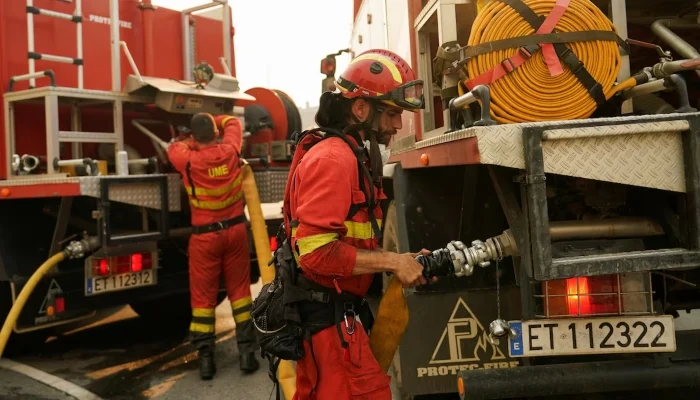
Madrid’s local authorities have declared a state of emergency due to a series of wildfires approaching communities near Madrid and in the neighboring province of Avila, forcing the evacuation of over 10,000 residents. Fire crews are battling these fires amid challenging weather conditions and widespread resource mobilization from multiple public agencies, complicating containment efforts.
The Interior Ministry explained that the emergency declaration was necessary because of multiple simultaneous fires, harsh weather, and the demand for extensive support across various government sectors. Experts consistently link the increasing severity of wildfires in Spain and southern Europe to climate change. Abundant plant growth after an unusually rainy spring has dried out under intense summer heat, fueling rapid fire spread.
The Madrid regional government requested assistance, warning that several active fires—which are located in Villa del Prado, San Martin de Valdeiglesias, and Almorox in nearby Castile-La Mancha—could surpass current firefighting capabilities. Additionally, there are concerns that the fire in Burgohondo, Avila, might reach Madrid’s outskirts soon, due to shifting weather conditions.
In total, over 10,000 residents from Villa del Prado, San Martin de Valdeiglesias, Pelayos de la Presa, and Aldea del Fresno have been evacuated. Under Spain’s Civil Protection Law, declaring a state of emergency places control directly in the hands of the interior minister, who coordinates all response efforts. This marks the first wildfire-related emergency of its kind in Spain.
Authorities have deployed more than 270 emergency personnel and 40 ground units to affected areas, alongside multiple units of the Military Emergency Unit (UME). So far this year, over 100,000 hectares have burned across Spain—approximately the country’s entire average annual burned area over the past decade. Thirteen fatalities have been reported, making 2026 one of the deadliest wildfire seasons in recent history.