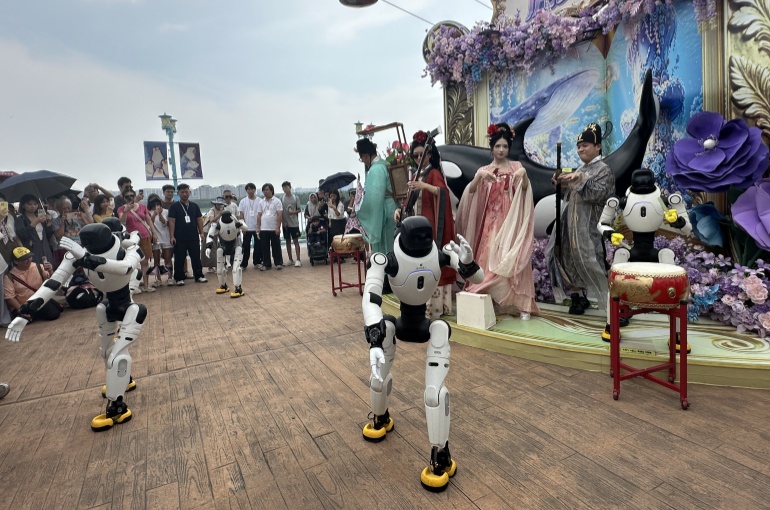
The 2026 World Artificial Intelligence Conference recently launched in Shanghai, in collaboration with the city’s Culture and Tourism Administration. This year’s event introduced 16 themed routes focused on cultural tourism, offering participants the opportunity to explore diverse AI applications while experiencing iconic city sights.
One of the standout features is the AI Entertainment & Tourism Experience Route, which blends artificial intelligence with urban cultural experiences. New intelligent products and services debuted, including interactive AI tour guide robots, AI-based visa assistance, smart guided tours, and AI-generated micro-dramas. This initiative marks a transition from conceptual ideas to tangible, real-world applications of AI in cultural tourism.
Innovative, AI-powered services are rapidly transforming Shanghai’s cultural and tourism sectors. At the Shanghai History Museum, a humanoid robot named Li Xiaobo has been officially introduced as an intelligent tour guide. Equipped with autonomous route planning and obstacle detection capabilities, Li Xiaobo interacts with visitors through friendly gestures, offering both expert knowledge and a welcoming demeanor.
Yesterday at Shanghai Haichang Ocean Park, several robotic dancers performed a traditional Chinese dance live. Robots also served as on-site guides, sharing science facts and participating in sea lion shows as dance partners, enriching the entertainment experience.
For international visitors, local tourism authorities launched Hu Xiaoyou, an AI-powered city life assistant. This platform compiles cultural and tourism resources across 36 major categories and over 100 subcategories, supporting more than ten languages. It handles all stages of travel planning—from pre-trip arrangements to guided tours and ticket purchases—serving nearly 20 million visitors so far.
At the event, several cultural tourism projects showcased companion robots resembling small plush toys, which can be attached as pendants or dolls. These interactive devices support voice communication, allowing tourists to chat, stay engaged during their trips, and enjoy a sense of companionship.
Additionally, the conference highlighted its first youth-oriented AI music show, featuring winning entries from a recent AIGC music competition performed on the West Bund stage, emphasizing AI’s expanding role in creative content production.