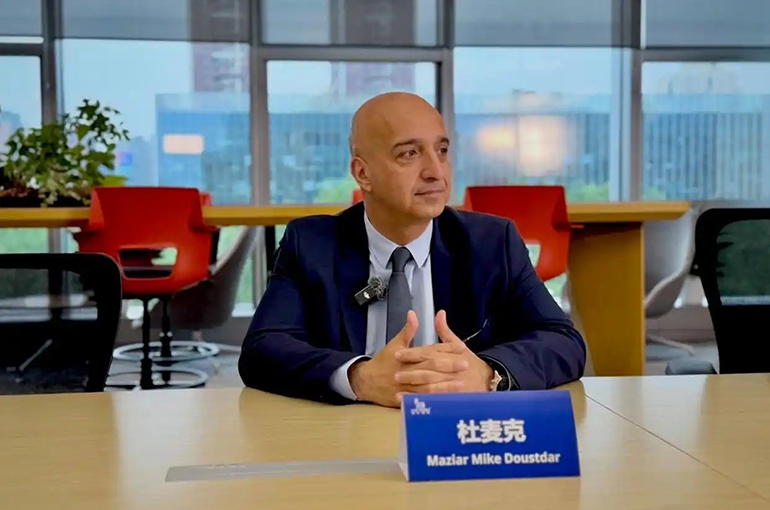
Novo Nordisk plans to submit its oral Wegovy weight-management pill for regulatory approval in China within the next few weeks or months, according to the company’s CEO. This submission could lead to China’s first approved oral peptide GLP-1 (glucagon-like peptide-1) weight-loss medication, further strengthening the company’s position in one of its key growth regions. China remains the second-largest market for the Danish pharmaceutical giant, behind only the United States, a status unchanged since the CEO took the helm last August.
During his first visit to China in his new role, the CEO was accompanied by other senior executives, including the Chairman of the Board, the Chairman of the Foundation, and a Vice Chairman. He expressed strong confidence in the readiness for the Wegovy launch in China. The medication has already seen significant commercial success in the U.S. and the United Arab Emirates. In China, the company plans to take a dual-track approach, combining healthcare provider-led clinical promotion with digital health initiatives and social media engagement to meet both medical and consumer demands for weight management while adhering to local regulations.
When asked if Wegovy might eventually be manufactured within China, the CEO noted that the tablets are currently produced at facilities in Denmark and the United States. The company is still evaluating potential future manufacturing sites. He emphasized that Novo Nordisk typically does not build factories in every market but instead selects strategic locations for large-scale investments to benefit from economies of scale. China is considered a core strategic market.
The company has established an integrated value chain in China, with its Tianjin plant serving as a key strategic asset that could support future expansion plans.
Beyond weight loss, Novo Nordisk’s semaglutide is recognized globally as the first approved GLP-1 therapy for obesity management. Once approved locally, Wegovy would be China’s first oral peptide-based GLP-1 obesity treatment. While Eli Lilly submitted an application for an oral weight-loss drug earlier this year, their candidate is a small-molecule product, not a peptide-based GLP-1 therapy.
The CEO also praised China’s efforts to expedite approval processes for innovative medicines. He mentioned that recent reforms now enable filing and launching of new drugs within a year, marking a significant acceleration. The company continues to work with Chinese regulators to improve review timelines while ensuring patient safety.
He highlighted that obesity and GLP-1 therapies are often misunderstood—many people see obesity treatment solely as weight reduction, while investors tend to focus on weight-loss percentages and overlook the broader health benefits, such as protection for cardiovascular health, liver, and kidneys. Addressing these unmet medical needs requires ongoing innovation, and the company is exploring additional applications for its GLP-1 portfolio beyond weight management.
The company anticipates its next major breakthrough will come from addressing these unmet needs, with future pipeline candidates designed to provide benefits to multiple organs—including the heart, liver, kidneys, brain, bones, and muscles—beyond just weight loss.