
Select Language:
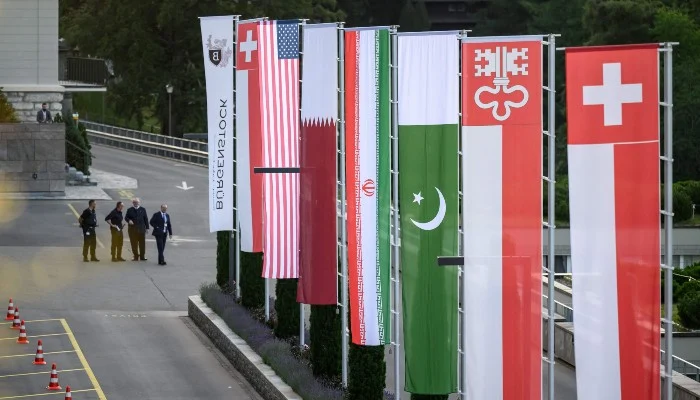
Negotiations at the technical level between the United States and Iran are scheduled to take place in Switzerland, as both sides aim to progress with the implementation of the Islamabad Memorandum of Understanding, brokered by Pakistan.
Iran is pressing for tangible actions from the U.S. regarding its commitments, while Washington seeks advancement on Iran’s nuclear activities and the ceasefire in Lebanon.
These discussions at Burgenstock mark the first formal engagement since the MoU was signed on June 17. The Foreign Office described the meetings as efforts to support the agreement’s implementation and to maintain dialogue between Tehran and Washington.
Iran’s Representation
Led by Parliament Speaker Mohammad Bagher Ghalibaf, Iran’s delegation also includes Foreign Minister Abbas Araghchi and senior officials from security, the central bank, and oil sectors. Iran emphasizes the importance of concrete steps from the United States to fulfill its obligations under the interim agreement and demands clarity on how Washington plans to execute these commitments.
Iranian Foreign Ministry spokesperson Esmaeil Baqaei warned that the broader understanding could face difficulties unless the U.S. acts swiftly. Lebanon will likely remain a significant issue, with Iran contending that ongoing Israeli attacks threaten the ceasefire framework established under the regional US-Iran understanding.
United States’ Representation
The U.S. delegation is led by Vice President JD Vance, accompanied by President Donald Trump’s special envoy Steve Witkoff and Jared Kushner. Prior to traveling to Switzerland, Vance stated that the U.S. hopes to make progress on Iran’s nuclear program and Lebanon’s ceasefire—both critical issues for these talks.
The negotiations follow a 60-day ceasefire arrangement under the interim deal, with both parties expected to address unresolved issues surrounding Iran’s nuclear activities and regional stability.
Pakistan and Qatar’s Roles
Pakistan’s Prime Minister Shehbaz Sharif and Chief of Defence Forces Field Marshal Asim Munir are participating, reflecting Pakistan’s ongoing role as mediator that facilitated the signing of the MoU. The Foreign Office reaffirmed Pakistan’s support for the understanding and indicated the prime minister would hold bilateral meetings with delegations from Iran, Qatar, Switzerland, and the U.S.
Qatar is also involved, supporting diplomatic efforts related to the U.S.-Iran agreement and actively contributing to regional de-escalation efforts.
Potential Obstacles
The primary challenge lies in implementation. Iran requires evidence that the U.S. is honoring its commitments, while Washington demands progress on nuclear and Lebanon ceasefire issues. Tensions across the Strait of Hormuz also threaten stability, as Iran’s Revolutionary Guard has declared the waterway closed, though commercial traffic continues as per U.S. military reports.
Furthermore, ongoing Israeli attacks in Lebanon and the potential for renewed clashes with Hezbollah pose significant risks to the broader ceasefire framework.
 ChatGPT
 Perplexity
 Gemini AI
 Grok AI